Herb · Lamiaceae
Lavender
Lavandula angustifolia
Give it full sun and sharp drainage, keep the soil lean, and lavender repays you with fragrance for years.
Full sun
Every 10–21 days
USDA 5–9
18–35 in · 45–90 cm
Overview
Few plants set a mood the way lavender does. A Mediterranean subshrub with silvery foliage and fragrant purple spikes, it belongs to the mint family and asks for the sunny, gravelly edges of a garden that other plants pass over. Along a path, a terrace wall, or a gravel courtyard, it lends a place that unhurried, sun-warmed calm, and once settled it carries drought and heat without a fuss.
Its keeping is a lesson in restraint, which is part of its charm: lavender wants lean soil and sharp drainage above all, and thrives where the gardener does little. Rich ground and an anxious watering can are its undoing, since soggy roots rot fast. Sited high, drained hard, and watered with a light hand, a single plant will anchor the same corner of a garden for a decade or more.
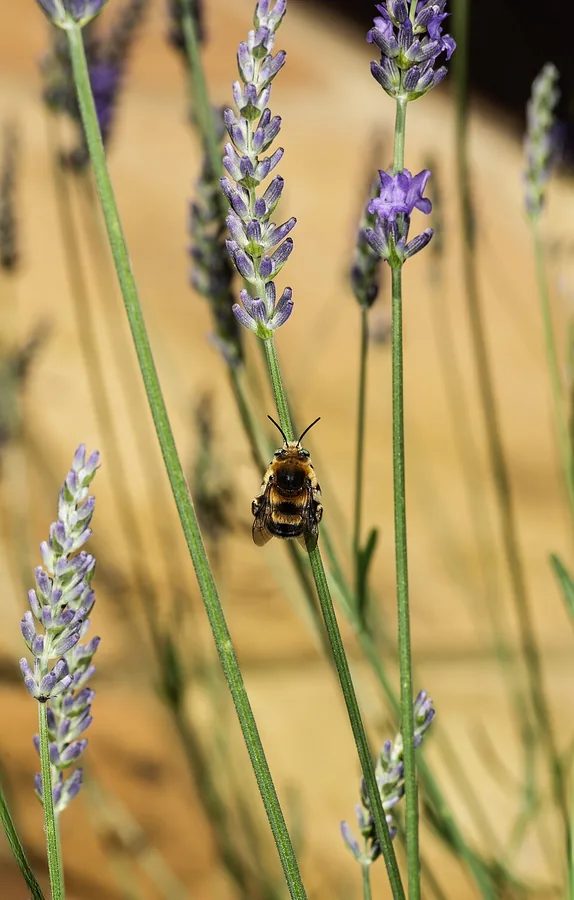
Its pleasures reach well past the border. The spikes dry beautifully for a linen drawer or the kitchen shelf, they draw bees through the long days of summer, and a simple annual shear keeps the plant dense and compact, a soft mound that frames a doorway or edges a seating area rather than sprawling into bare wood. Kept lean and trimmed, it holds its shape and scent, and its place in the daily rhythm of a home, for years.
Care
The short version: full sun, lean and sharply drained soil, and very little water once it has settled in. Prune it each year after it flowers, skip the fertilizer, and never let water pool around the crown.
Light
Lavender wants full sun, 6 or more hours a day, and a bright, open aspect is what lets it flower freely. In less light it grows leafy and shy of bloom, reaching toward whatever brightness it can find. That same sun keeps the foliage dry and disease at arm's length.
Water
Water a young plant weekly only until it takes hold, then ease right back. A settled lavender is drought-tolerant and asks for no more than about half a gallon every couple of weeks, if that. Soggy soil is the quickest way to lose it.
Soil
Give it lean, sandy or gravelly ground that drains sharply, the kind of poor soil that suits a gravel garden. A pH of 6.5 to 7.5, neutral to a touch alkaline, suits it, and loam or shallow rocky soil serves too, so long as it never stays waterlogged. Rich soil only makes it floppy.
Temperature
English lavender is hardy across -4°F to 95°F (-20°C to 35°C) in zones 5 through 9. Hard winters and cold, wet soil are the real threats, not the heat of summer.
Humidity
Lavender favors dry air, around 30% to 50% humidity, and sulks in muggy, still conditions. Where summers turn humid, open spacing and good airflow keep the foliage clear of fungal trouble.
Feeding
Feed it next to nothing. A thin top-dressing of coarse compost at planting is all it wants, since richer feeding grows soft, floppy stems and dulls the scent. Lean ground gives the finest fragrance.
Pruning
Shear the plant back by a third to a half each year, just after it flowers, to hold its neat mounded shape and lengthen its life. Keep the cuts in the green growth and never enter the old bare wood, which rarely resprouts.
Repotting
In a container, repot every 2 to 3 years in spring into a pot only a little larger, using a gritty, free-draining mix. Circling roots, fast-drying soil, and sparse flowering tell you it has outgrown its home.
Size & spacing
A mature plant stands about 18 to 35 inches (45 to 90 cm) tall and spreads roughly 24 to 35 inches (60 to 90 cm) wide, a soft cushion of a shape. Give each one that much room so air moves freely and the leaves stay dry.
When to plant
Lavender rewards a patient calendar. Sow indoors in late winter, set the young plants out in spring once frost has passed, and by early to mid-summer the purple spikes rise for cutting, best taken just as the buds begin to open, ready for a vase, a drying line, or the linen cupboard.
Northern hemisphere
Southern hemisphere
Typical months for a temperate climate: start earlier in warm zones, later where spring frosts linger.
- Sow: late winter, 10-12 weeks before last frost; germination is slow and erratic
- Plant: spring after the last frost, once soil has warmed and drains freely
- Harvest: Purple flower spikes appear early to mid-summer; harvest spikes just as the buds begin to open for the strongest fragrance, and dry in a cool airy place
Hardiness
USDA hardiness zones: 5–9
Temperature: down to -29°C
Troubleshooting
Almost every trouble a lavender runs into traces back to too much water or too little sun, with the rest owing to a missed annual prune. Match what you see to the notes below, and correct the setting rather than chasing the symptom.
Wilting and decline even while the soil stays wet
The most common way a fine lavender is lost is root rot, often the Phytophthora kind, and it announces itself as a wilt above soil that never dries. The problem is water lingering against the roots rather than any shortage, so the answer is drainage, not the watering can. Withhold water, resettle the plant on a raised mound of gritty soil, and part with any specimen whose roots have already darkened and softened.
Fix:
- Stop supplemental watering immediately
- Replant into a raised bed, mound, or gritty sharply draining soil
- Discard plants with extensively rotted roots rather than trying to save them
The whole plant never wakes after winter
A lavender still brown as spring arrives has usually come through winter damage, whether cold injury in zone 5 and colder or rot from cold, wet soil at the crown. Because the plant is a late riser, hold your judgment until late spring, then cut back to any live green wood you find. In hard-winter gardens, a sharply drained, sheltered spot and dependable cultivars such as 'Munstead' or 'Phenomenal' make all the difference.
Fix:
- Wait until late spring before removing the plant, since lavender breaks dormancy late
- Cut back to any live green wood found
- Replace dead plants, choosing hardy cultivars such as 'Munstead' or 'Phenomenal'
Bare woody base with growth only at the tips
Left to its own devices, a lavender loses its neat form and turns woody and leggy, its greenery marooned at the ends of long, bare stems. A shear of a third to a half just after flowering restores the tidy mound that makes the plant such an asset in a border, provided the cuts stay in the green, since the old wood beneath seldom breaks again. A plant that has already sprawled into bare wood is best replaced from cuttings.
Fix:
- Shear back by one-third to one-half into green growth right after flowering
- Stay above the old bare wood, which rarely resprouts
- Replace very old, collapsed plants with new ones from cuttings
Spotted, yellow, or moldy leaves in damp crowded growth
Where the air sits damp and still, fungal leaf spot creeps in, taking hold first in the crowded heart of the plant where nothing dries. The remedy is generous spacing and an annual prune to let the plant breathe, watering at the base in the morning, and clearing away the marked foliage. A plant with room around it and light through it fares far better than one leaning on a spray.
Fix:
- Thin and space plants to improve air circulation
- Water at the base in the morning, keeping foliage dry
- Remove and dispose of affected foliage and debris
A green, healthy plant with barely any bloom
When a handsome, leafy lavender withholds its flowers, the cause is nearly always too little sun or too much feeding. The plant asks for six hours or more of direct light and lean ground, while rich, fertilized soil coaxes out foliage where you wanted spikes. Give it the sunniest spot you have, set the feed aside, and prune only after bloom so next year's flowers are never cut away.
Fix:
- Move or transplant to a spot with 6+ hours of direct sun
- Stop fertilizing and let the soil stay lean
- Prune only after flowering so next season's bloom wood is not removed
Toxicity
As a houseplant hazard, lavender is mild rather than menacing. The oils in its leaves and flowers, chiefly linalool and linalyl acetate, can unsettle a pet's stomach if a good deal is eaten, and the concentrated essential oil is far more dangerous than the plant. For the household, the dried flowers are a gentle culinary herb, safe in small amounts.
Toxic to
Cats · Dogs · Horses · Rabbits · Livestock · Birds
Safe for
People
Cats Mild
A curious household cat that samples the oils may drool, be sick, or lose interest in its food, all down to the linalool. A single nibble tends to pass on its own, though the concentrated essential oil is a far graver danger and should never come near a cat.
Dogs Mild
Should a dog chew the leaves or flowers, expect a little drooling, an upset stomach, or a skipped meal. The living plant is only a minor bother; the real worry is undiluted lavender oil.
Horses Mild
Unable to vomit, a horse tends to register it instead as a flat appetite and mild stomach discomfort. A few grazed mouthfuls seldom amount to more.
Rabbits Mild
The same aromatic oils that trouble cats and dogs can leave a rabbit off its feed and queasy. Keep it out of the daily diet and reserve it for the occasional sprig.
Livestock Mild
Grazing animals usually pass over the strong-scented foliage, and a small taste does little beyond a fleeting stomach upset. Only large quantities give real cause for concern.
Birds Caution
Nothing firm is on record, yet birds are delicate around strong aromatic oils, so the wiser course is to keep lavender, and its oil above all, out of their reach.
People Culinary use
For the household, the dried flowers are a kitchen herb for baking and tea in small amounts, and safe to eat. The concentrated essential oil, though, has no place in food.
The garden plant is a mild hazard, but concentrated lavender essential oil is far more dangerous, especially to cats - never apply oil to pets or let them ingest it.
Helpline numbers

United States
ASPCA Animal Poison Control: (888) 426-4435 (fee applies)

United Kingdom
Animal PoisonLine: 01202 509000 (fee applies)

Australia
Animal Poisons Helpline: 1300 869 738
Varieties
Lavenders differ mainly in hardiness, in size, and in how much heat and humidity they will take, which shapes where each one belongs. These few turn up most often.
'Hidcote'
A compact form of about 20 inches (50 cm), long treasured for low edging thanks to its deep violet-blue spikes.
'Munstead'
A compact, cold-hardy heirloom that carries a garden through zone 5 winters where many lavenders would fail.
'Phenomenal' (Lavandula × intermedia)
A full, bushy lavandin hybrid prized for strong winter hardiness and a rare ease with heat and humidity.
French lavender (Lavandula stoechas / L. dentata)
Known for its tufted rabbit-ear bracts and tender to roughly zones 8 to 11, so cold-climate gardens keep it as an annual or a container piece.
How to propagate
Lavender comes easily from cuttings and more slowly from seed, and only cuttings keep a named cultivar true to type.
Stem cuttingsEasy
Summer, from non-flowering side shoots · 2-6 weeks to root in warm, moist potting mix
Cuttings are the surest way to raise more lavender and the only way to hold a named cultivar true to type. In summer, take a non-flowering side shoot, cut just below a node, strip the lower leaves, and dip the base in rooting hormone. Kept near 70°F (21°C) in moist mix, it roots in about 2 to 6 weeks.
SeedModerate
Sow indoors in late winter, 10-12 weeks before last frost · 2-4 weeks to germinate; plants take a full season or more to reach flowering size
Seed is the slower and less certain route. Sow indoors in late winter, 10 to 12 weeks before the last frost, and look for uneven germination over 2 to 4 weeks, with a full season or more before the plants flower. Named cultivars will not come true from seed, so the seedlings vary.
Myths
Lavender is completely safe for pets because it is a calming herb.
In fact the ASPCA lists lavender as toxic to cats, dogs, and horses, and eating the plant can bring mild nausea, vomiting, and a lost appetite. The concentrated essential oil is the true hazard, cats above all, so keep it well clear of animals.
Lavender needs rich soil and generous regular watering to thrive.
On the contrary, lavender is at its best in lean, sandy, sharply drained soil and shrugs off drought once settled. Rich soil and frequent watering invite floppy growth and root rot, the most common undoing of the plant.
Hard pruning into the old woody base will rejuvenate a leggy lavender.
Cut into the bare old wood and it rarely offers new shoots. Prune each year after flowering, take no more than half, and stay in the green growth, and replace any plant that has already gone mostly woody.