Herb · Lamiaceae
Garden Sage
Salvia officinalis
A sun-loving Mediterranean herb that brings quiet, gray-green calm to a kitchen garden and years of leaves to the table.
Full sun
Every 7–14 days
75 days
USDA 4–8
Overview
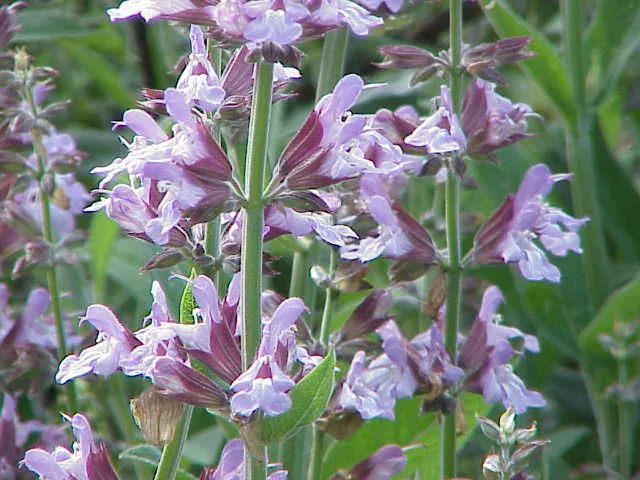
Garden sage carries a certain Mediterranean ease into any planting. A woody perennial in the mint family, it settles into a sunny kitchen garden or the edge of a border with soft gray-green foliage and a warm, savory scent that rises whenever you pass. Come early summer, spikes of bluish-lavender flowers lift above the leaves and pull bees into the space. Give it a season and it becomes a fixture that asks for almost nothing.
Where sage truly belongs is the sunniest, best-drained corner you can offer, the kind of dry, open spot that suits its heat-loving temperament. It stands up to hot afternoons and dry weeks with the same unbothered poise, though it never takes to heavy, wet ground. Hardy to zone 4, it holds its place in the garden year after year, an anchor that returns each spring and only mellows with age.
Sage rewards a cook's daily rhythm as much as a gardener's eye. Gather leaves through spring and summer, ideally before the plant flowers, and you keep the kitchen in easy reach of fresh seasoning. A light spring prune keeps it shapely, and when a plant finally turns woody, a fresh one from a cutting slips neatly back into the same spot.
Care
The short version: give sage the sunniest, fastest-draining spot you have, water only when the top half dries, feed lightly if at all, and prune each spring to keep its shape.
Light
Sage wants full sun, at least six hours a day, and it repays a bright, open spot with the oils that carry its flavor. A little afternoon shade does no harm, but a shadier position leaves the plant loose and the leaves flat, so save it the sunniest place in the garden.
Water
Let the top half of the soil dry before watering again, since sage is drought-tolerant once established and looks its best kept on the dry side. A drink every 7 to 14 days suits it, a little more for containers on a warm terrace. Standing wet is the one thing that undoes it.
Soil
Set sage into well-drained sandy or loamy soil, loose and open underfoot. A pH of 6.0 to 7.5 suits it, but the free drainage matters far more than the number, since a soggy footing is what turns the roots.
Temperature
Sage takes the seasons in stride, holding from cold as low as -20°F (-29°C) to summer heat near 95°F (35°C). That easy range is why an established plant keeps its spot outdoors through winter across much of the country.
Humidity
Sage prefers the dry side, around 30% to 50% humidity, in keeping with its sun-baked origins. Damp, still air invites powdery mildew, so an airy, open position does the plant more good than any moisture ever could.
Feeding
Keep feeding restrained, as sage is a light feeder whose flavor fades when it is pushed. A modest helping of balanced fertilizer or compost in spring is plenty, and in good garden soil it can go without entirely.
Pruning
A light prune in spring, as new growth begins, keeps sage neat and full rather than sprawling, and there are leaves to gather all season. Time still tells, and the plant turns woody, so plan to refresh a tired specimen every 3 to 5 years.
Repotting
Sage in a pot appreciates repotting every 1 to 2 years, or when roots circle the base and water slips straight through. Step up only one pot size, since an outsized container holds the excess moisture that never sits well with this herb.
Size & spacing
A settled plant reaches 16 to 30 inches (40 to 75 cm) tall and spreads 18 to 35 inches (45 to 90 cm) across, a tidy mound for the front or middle of a bed. Leave each one that much room so air moves freely and the planting stays healthy.
When to plant
Sage keeps a long, steady presence in the garden rather than a fleeting season. Sow indoors in late winter or set young plants out in spring once frost has passed, then let the herb settle in for years. Harvest through spring and summer, and cut just before the early-summer flowers for the fullest flavor at the table.
Northern hemisphere
Southern hemisphere
Typical months for a temperate climate: start earlier in warm zones, later where spring frosts linger.
- Sow: 6-8 weeks before the last spring frost
- Plant: spring after danger of frost has passed
- Harvest: Spikes of bluish-lavender to pinkish-lavender flowers appear in early summer; harvest leaves anytime during spring and summer, best before flowering for peak flavor.
Hardiness
USDA hardiness zones: 4–8
Temperature: down to -34°C
Troubleshooting
Sage is an unfussy fixture, and the few problems it meets almost always come back to too much water or close, humid air. A glance at the leaves, roots, and older stems is usually enough to catch things early. Match what you see below, then set it right.
A drooping plant with dark, softened roots in wet ground
Sage has no patience for wet ground, and steady moisture brings on root rot that leaves the roots soft, brown, and mushy. A collapsed plant is past saving, so lift the worst and let the soil dry. The lasting answer is better drainage, from a raised bed to a pot with holes to a lighter hand at the watering can.
Fix:
- Reduce watering and allow soil to dry
- Improve drainage or move to a raised bed or container with drainage holes
- Remove severely affected plants
Bare, woody lower stems below a leafy crown
This is simply age settling in, nothing more. Over a few seasons the lower stems harden and empty while the fresh leaves gather at the top. A light spring prune keeps a plant handsome for a good while, but woodiness always wins in the end, so plan to replace it every 3 to 5 years.
Fix:
- Prune lightly in spring to encourage bushy growth
- Replace plants every 3-5 years as they become woody
A pale, powdery bloom dulling the leaves
That chalky film is powdery mildew, which arrives when the air turns humid and still around a crowded planting. Open up the spacing so air can move, water at the base rather than over the top, and clear away the worst leaves. A sunny, breezy position with dry foliage keeps the planting clean.
Fix:
- Improve air circulation by thinning and spacing plants
- Avoid overhead watering and water at the base
- Remove and discard affected foliage
Toxicity
For a home shared with animals, garden sage is a reassuring choice. The ASPCA lists Salvia officinalis as non-toxic to cats and dogs, and the culinary leaves are harmless to people and other pets alike. The single thing to keep out of the way is concentrated sage essential oil, which is high in thujone and quite apart from the herb on the windowsill.
Safe for
People · Cats · Dogs · Horses · Rabbits · Livestock · Birds
Cats None
Sage is a safe companion for cats, listed by the ASPCA as non-toxic. A passing nibble does no harm, though a cat that overindulges on any leafy plant may meet a brief, passing upset.
Dogs None
Dogs share a garden with sage without concern. The culinary leaves are non-toxic, so a stolen mouthful from the herb bed is nothing to worry over.
Horses Safe
Sage sits well with horses, holding nothing harmful in its aromatic leaves, and its strong scent tends to keep them at a polite distance anyway.
Rabbits Safe
Rabbits can be offered a few sage leaves in safety, an occasional herb rather than a daily green, with no toxin to give pause.
Livestock Safe
Grazing goats, sheep, and cattle can browse sage untroubled, since the plant holds nothing that harms them.
Birds Safe
Backyard birds and poultry come to no harm near sage, a safe herb to keep where they roam and forage.
People Safe
For people, sage is a treasured kitchen herb, its leaves safe to cook with and eat. Only the concentrated essential oil, rich in thujone, asks for restraint.
Concentrated sage essential oil is high in thujone and should be kept away from pets and not confused with the edible herb; the plant and culinary leaves themselves are non-toxic. As with any plant, ingestion of large amounts of foliage may cause mild gastrointestinal upset.
Varieties
Past the familiar green, a handful of ornamental sages earn a place for the color and interest they lend a planting, all while staying useful in the kitchen. These are the ones worth choosing by name.
'Berggarten'
A compact form with large, rounded gray-green leaves that rarely flowers, keeping a full, mounded look that suits a tidy herb bed.
'Icterina'
A golden sage edged in green and yellow, a bright note for the front of a planting.
'Purpurascens'
Purple sage, whose young foliage arrives a soft reddish-purple and lends a warmer tone to the bed.
'Tricolor'
A variegated sage marked with green, white, and purple-pink, an easy way to add quiet color to a herb border.
How to propagate
Keeping sage going is refreshingly simple, with three approaches to choose between depending on your patience and the season at hand.
Stem cuttingsEasy
Late spring to summer from softwood cuttings · 3 to 6 weeks to root
Cuttings are the quickest way to carry a favorite sage into a new part of the garden. Take a softwood cutting from a non-flowering shoot in late spring or summer, set it in moist, well-drained mix, and in about 3 to 6 weeks it roots into a match for its parent.
SeedModerate
Start indoors 6-8 weeks before last frost or sow outdoors after frost · Germinates in about 2-3 weeks; plants reach maturity around 75 days
Seed asks for patience, since sage comes up slowly and unevenly. Start it indoors 6 to 8 weeks before the last frost or sow outdoors once frost has passed, watch for germination in about 2 to 3 weeks, and allow roughly 75 days before the plant earns its place.
LayeringEasy
Spring to summer · Several weeks to a few months to root
Layering lets a low branch root itself while it stays joined to the parent. Pin a trailing stem to the soil in spring or summer, give it several weeks to a few months to root, then lift the new plant into its own spot.
Myths
Garden sage is unsafe to grow around cats and dogs.
This one can be set aside. The ASPCA lists Salvia officinalis as non-toxic to both cats and dogs, so the herb by the kitchen door is safe around the household's animals. The caution people recall belongs to the concentrated essential oil, which is high in thujone, not to the leaves that season dinner.