Houseplant · Marantaceae
Calathea White Fusion
Goeppertia lietzei 'White Fusion'
Get the water and humidity right and this living watercolour becomes the quiet focal point of a room.
Bright indirect
61–75°F · 16–24°C
USDA 11–12
4–20 in · 10–50 cm
Overview
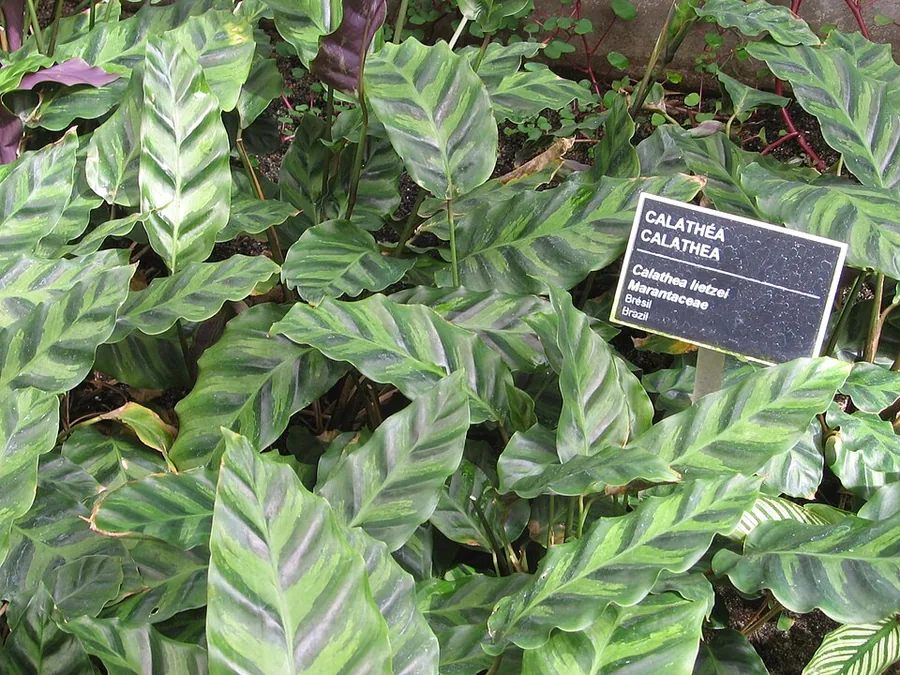
Calathea White Fusion is the statement piece of the prayer plant family, the kind of foliage that draws the eye the moment someone walks into a room. Its accepted name is now Goeppertia lietzei 'White Fusion', after the genus parted from Calathea, though most homeowners still shop for it under the older label. It comes from the shaded, humid floor of the Brazilian rainforest, and that origin sets the tone for the calm, sheltered spot it wants in a home.
It carries a reputation for being particular, and that is part of its character rather than a flaw. The pale areas of the leaf hold little of the green that toughens ordinary foliage, so they scorch in a sunny window and brown along the edges in a dry, heated room. Pair its slow, unhurried growth with that sensitivity, and it suits a home where someone enjoys tending a plant rather than forgetting it in a corner.
Settle it into the right setting and the payoff is considerable. The leaves close upward at dusk and open again with the morning, a rhythm called prayer movement that lends the family its name and quietly marks the passing of the day in a room. Keep the humidity high, the water clean, and the light bright but never direct, and it holds its place as one of the most arresting plants a home can showcase.
Care
The short version: a bright corner out of direct sun, clean water rather than straight tap, soil kept evenly moist, and a room held above 60% humidity as steadily as the home allows.
Light
Place it where it gets bright indirect light and keep it clear of direct sun, which scorches the pale tissue quickly. It will sit happily in partial shade or medium indirect light, though a too-dim corner leaves the new leaves small and washed of colour, losing the look that makes it worth displaying. An east or west window, or a few feet back from a bright one, frames it beautifully.
Water
Keep the compost evenly moist through spring and summer, then ease back to just moist in winter, watering at the soil and keeping the leaves dry. What you pour matters most to its appearance: tap water salts, chlorine, and fluoride brown the edges, so reach for distilled water, rainwater, or tap water left to stand for 24 hours.
Soil
Set it in a moist but well-drained mix, peaty or loam-based, with perlite worked through for drainage; a peat-free compost serves just as well. It asks nothing special of pH and grows contentedly anywhere from 6.0 to 8.0.
Temperature
Keep its corner warm and steady, between 61°F and 75°F (16°C to 24°C). Cold draughts and sudden swings unsettle it, so place it away from doorways and chilly windowsills, and never let the spot fall below 16°C.
Humidity
This is the detail that decides how well it looks at home. Hold the room above 60% humidity, higher still where you can, since dry air crisps the edges and tempts in spider mites. A humidifier keeps the most reliable level, while a pebble tray or a grouping of plants lends a tasteful assist.
Feeding
Feed it monthly through the growing season, April to September, with a balanced liquid fertiliser at the usual strength, then pause over winter as growth quiets. Its slow pace means it never asks for a heavy feeding routine.
Pruning
Upkeep is light. Trim away any dead, browned, or damaged leaves at the base, and remove leaves with widespread crispy edges or scorched pale patches to keep the display crisp. Beyond that it needs little attention.
Repotting
Repot it every few years in spring or summer, once roots circle the pot or push out of the drainage holes, the plant dries faster than before, or new growth comes in weak. Move it up just one pot size into fresh mix, and treat the repot as the moment to divide it for a second display.
Size & spacing
It stays compact, reaching only 4 to 20 inches (10 to 50 cm) tall and about as wide, and arriving there slowly across several years. That tidy scale lets it perch on a shelf, anchor a desk, or join a grouped arrangement where shared humidity keeps it thriving.
Troubleshooting
Almost everything that troubles this plant shows on the leaves, and most of it leads back to water, light, or the humidity of the room it sits in. Notice the early signs and the cause is usually easy to settle before the look suffers. Match what you see below to find the likely reason.
A drooping plant sitting in damp soil
When the plant slumps despite soggy soil, root rot from overwatering is the cause behind the unhappy display. The roots turn brown and soft rather than firm and pale, and they can no longer carry water to the leaves. Ease off the watering and let the pot drain fully, then repot into fresh, well-drained mix, remove the rotted roots, and choose a vessel with drainage holes so it stays presentable.
Fix:
- Reduce watering frequency and let excess drain fully
- Repot into fresh, well-drained mix, removing rotted roots
- Ensure the pot has drainage holes
Bleached patches spoiling the pale tones
The pale areas of this cultivar hold barely any chlorophyll, so direct sun scorches them long before it would touch the green. The damage gathers on whichever leaves sit closest to a strong window, marring the very tones that make the plant a centrepiece. Set it back from the glass into bright indirect light, or drape a sheer curtain to filter a harsh exposure and keep the display intact.
Fix:
- Move out of direct sun to a bright spot with indirect light or light shade
- Use an east/west-facing position or diffuse strong light with a sheer curtain
A dull silvery cast and faint webbing on the foliage
A tired, silvery speckling on the leaves and fine webbing beneath them announce spider mites, which slip in whenever a room runs dry. Rinse the foliage and wipe the undersides, lift the humidity to make the setting less hospitable, and treat with insecticidal soap or horticultural oil, repeating as the label advises until the plant regains its polish.
Fix:
- Rinse foliage and wipe undersides of leaves
- Raise humidity, as mites thrive in dry conditions
- Treat with insecticidal soap or horticultural oil, repeating per label
Crisp brown edges marring the leaves
The complaint that surfaces most often, and it usually traces to tap water. Salts, chlorine, and fluoride settle into the leaf and singe the edges, an effect that dry rooms and uneven watering only sharpen. Pour distilled water, rainwater, or tap water rested for a full day, hold the room above 60% humidity, and trim the worst edges so the plant looks composed on its shelf again.
Fix:
- Switch to distilled water, rainwater, or tap water left to stand 24 hours so chlorine evaporates
- Raise humidity above 60% with a pebble tray, grouping, or humidifier
- Keep compost evenly moist, never letting it fully dry out
- Trim severely browned edges for appearance
Fresh leaves arriving plain and undersized
When the newest leaves open greener and smaller than their elders, the spot is simply too dim for the look you want. Too little light also leaves the plant thin and stretched, a far cry from the lush silhouette it should cut. Relocate it to a brighter corner with bright indirect light, away from shadowed nooks, and the fresh foliage returns with the colour that earns it its place.
Fix:
- Move to a brighter spot with bright indirect light
- Avoid deep shade or low-light corners
Toxicity
Reassuring news for a home with animals: this is a safe plant to live alongside. The ASPCA lists Calathea and prayer plants as non-toxic to cats and dogs, with no poisonous compounds, so a curious nibble does no harm. The one small note is that the sap can bother sensitive skin, so a rinse of the hands after trimming is all it takes.
Safe for
People · Cats · Dogs · Horses · Rabbits · Livestock · Birds
Cats Safe
A household cat can share the room freely, as the ASPCA lists this plant non-toxic to cats. A cat that helps itself to a lot of any houseplant may feel briefly unsettled, but nothing here is poisonous.
Dogs Safe
A resident dog is just as welcome beside it. A dog that chews a leaf might drool or have a loose stool for a day, as with any greenery, yet the foliage holds nothing harmful.
Horses Safe
Prayer plants in this family are listed non-toxic to horses, with no toxic principles. As an indoor piece it rarely shares space with a horse, and it would pose no danger if one reached it.
Rabbits Safe
A house rabbit can taste a leaf without harm. There are no toxins to consider, though a large helping of any new greenery can loosen a rabbit's gut for a short spell.
Livestock Safe
Grazing animals encounter no toxic compounds in this plant. Kept indoors as decor, it stays well clear of where they feed, and it would cause no poisoning if eaten.
Birds Safe
A pet bird is perfectly fine near it. The leaves carry nothing toxic, so a bird that lights on the plant or pecks a leaf comes to no harm.
People Safe
It suits a home with children. The single caveat is that the sap can leave a faint skin irritation on sensitive people, so rinse your hands once the trimming is done.
Although classified non-toxic, NC State notes the sap may cause minor skin irritation/contact dermatitis in sensitive individuals; ingestion of any plant material can still cause mild gastrointestinal upset
How to propagate
There is a single way to make more of this plant, and it pairs neatly with the repot that refreshes a crowded display.
DivisionModerate
Late spring, typically at repotting · Several weeks to a few months
There is only one way to make more of this plant, since it takes from neither a stem nor a leaf cutting. The moment to do it is late spring, usually paired with the repot it is due for anyway. Ease the rhizomatous clump into sections, each keeping its own roots and shoots, and settle them into pots of their own. Offered warmth and humidity, the new divisions find their footing over the next few weeks to a few months.
Myths
Calatheas, including this prayer plant, are poisonous to cats and dogs.
The truth runs the other way. The ASPCA lists Calathea and Prayer Plant, both in the Marantaceae family, as non-toxic to cats and dogs alike. It earns a place in a pet-friendly home without a moment's hesitation.
The correct botanical name for this plant is Calathea lietzei.
That name has slipped out of date. Kew's Plants of the World Online recognises Goeppertia lietzei as the accepted name, with Calathea lietzei held as a synonym. A whole set of former Calatheas have since been rehomed under Goeppertia, Ctenanthe, and Stromanthe.
You can water a Calathea with ordinary tap water.
Tap water is often the very source of those brown leaf edges. Its salts, chlorine, and fluoride settle into the tissue and singe the margins over time. Choose distilled water or rainwater instead, or let tap water rest for 24 hours so the chlorine can disperse.