Houseplant · Marantaceae
Prayer Plant
Maranta leuconeura
Give it softened water, steady moisture, and humid air, and the prayer plant closes its leaves as the room settles into evening.
Bright indirect
USDA 11–12
6–18 in · 15–46 cm
Overview
The prayer plant brings a calm, living rhythm to a room. Through the day its leaves lie open across a table or shelf, and as the light drops in the evening they fold upward like hands at rest, a small nightly ritual that suits a home winding down. It belongs to the Marantaceae family and traces back to the shaded rainforest floor of Brazil, which is why it feels at ease in the softer corners of a house.
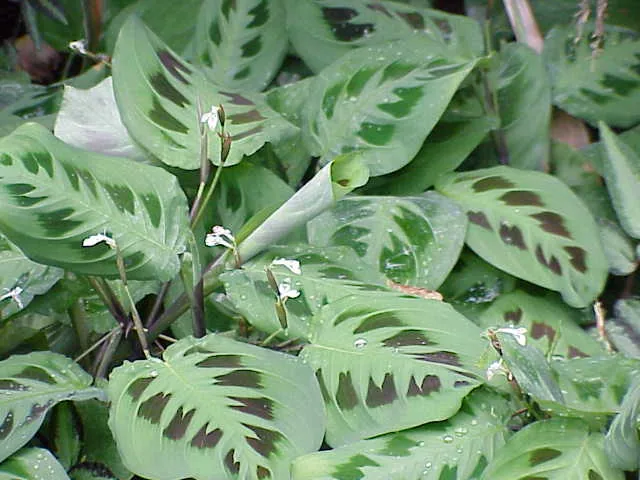
As a decorating piece it earns its keep with pattern. The leaves read as painterly from across a room, whether the red herringbone veining or the darker, track-like markings on green, and the effect works against plain pots and neutral walls. Staying under 18 inches (46 cm) tall, it settles onto a bookshelf, a bedside table, or a desk without ever crowding the space.
Its fussy label is really about placement and routine more than difficulty. Give it softened water, steady moisture, and a humid spot and it stays handsome; leave it by a dry radiator on tap water and the edges brown. Slot it into the right corner and a daily watering habit, and you have a pet-safe houseplant that closes the day with a gesture of its own.
Care
The short version: a bright spot out of direct sun, rainwater or filtered water keeping the soil evenly moist, and a warm, humid setting that stays above 60°F (15.6°C).
Light
Give it bright, indirect light, the kind a sheer-curtained window offers, and keep it clear of direct sun that bleaches the pattern and scorches the leaves. It holds up in medium or low light too, so a dim reading nook stays an option, though the color looks richest where the light is bright and filtered.
Water
Keep the soil evenly moist through spring and summer, then let it dry a little from autumn into late winter as part of the seasonal routine. What goes in the can matters as much as the schedule, since the plant is sensitive to fluoride, chlorine, and salts that brown the tips. Rainwater, distilled, or filtered water keeps it looking its best.
Soil
Pot it in a moist, humusy, well-drained mix with a soil base so the roots stay evenly damp without sitting wet. A free-draining blend spares you the rot that follows waterlogged soil, and it lets you choose a decorative pot with confidence.
Temperature
Keep the room warm and above 60°F (15.6°C). Cold drafts and chilly windowsills leave a mark, so in winter set it away from doors and vents, toward the steadier warmth of an interior wall.
Humidity
It favors high humidity, which makes a bathroom or a kitchen a natural home, and dry air shows up as brown, crisp edges. A pebble tray, a small humidifier, or a cluster of plants nearby keeps the moisture up and the display intact.
Feeding
Feed it monthly with a balanced houseplant fertilizer through spring and summer, then ease off from autumn to late winter. A restrained hand suits it, since overfeeding scorches the foliage and undoes the look you are after.
Pruning
It asks for very little upkeep. Trim away any damaged, faded, or brown-tipped leaves to keep the plant looking composed on the shelf, and there is nothing more to do.
Repotting
Repot in spring once the roots crowd the pot or slip through the drainage holes, which is a fine moment to move it into a handsomer container. It is also the natural time to divide the plant if another room could use one.
Size & spacing
It keeps a low profile, 6 to 18 inches (15 to 46 cm) tall and 6 to 24 inches (15 to 61 cm) across. That spreading, trailing habit flatters a hanging planter or the edge of a high shelf, where the leaves can drape and soften a hard line.
Troubleshooting
Nearly every complaint a prayer plant raises appears in its leaves, and most trace back to the room it lives in, its water, light, or humidity, rather than any disease. Notice the early signs and the setting is usually easy to adjust. Find the look that matches yours below, then refine the spot.
Wilting leaves and soft, mushy stems
Soil left soggy invites root rot, and the sign is roots gone brown and soft instead of firm and pale. Lift the plant, cut away the spoiled roots, and settle it into fresh, well-drained mix. From there, water only when needed and never leave the decorative pot holding standing water.
Fix:
- Remove from soggy soil and trim rotted roots
- Repot into fresh well-drained mix
- Water only when appropriate and ensure drainage
Fine webbing and faint yellow speckling on the leaves
Warm, dry air can bring spider mites, which settle on the undersides of the leaves and leave fine webbing and pale yellow specks that dull the display. Rinse the foliage, raise the humidity, and treat with insecticidal soap or horticultural oil. Keep it apart from the rest of the collection until the mites are gone.
Fix:
- Rinse foliage and raise humidity
- Treat with insecticidal soap or horticultural oil
- Isolate affected plant
Brown, crisp tips spoiling the leaf edges
Those brown, brittle edges are leaf burn, and the usual cause is the minerals in tap water rather than any neglect. Fluoride, chlorine, and salt settle along the margins, and heavy feeding in dry air deepens the mark. Move to rainwater, distilled, or filtered water, lighten the feeding, and lift the humidity to keep the display clean.
Fix:
- Use rainwater, distilled or filtered/dechlorinated water
- Reduce fertilizer frequency and strength
- Raise humidity (humidified room or pot on a tray of wet pebbles)
- Trim damaged tips for appearance
Faded pattern and pale, bleached patches
When the coloring loses its depth and pale, scorched patches creep in, too much direct sun is the reason. This is a shade dweller by nature, so a harsh window overwhelms it. Shift it into bright indirect light and filter any strong sun, and fresh leaves return to their proper tone.
Fix:
- Move to bright indirect light out of direct sun
- Filter strong window light
Leaves lying flat through the evening
Part of this plant's charm is the way it folds up at night like praying hands, so leaves that stay flat point to poor light or general stress rather than illness, and the color usually holds. Give it bright indirect light by day and true darkness at night, then steady the watering, humidity, and temperature so the nightly gesture returns.
Fix:
- Provide adequate bright indirect light during the day and natural darkness at night
- Correct watering, humidity and temperature to reduce stress
Toxicity
For a home shared with pets, the prayer plant sits easily on the safe list. The ASPCA records it as non-toxic to cats, dogs, and horses, with nothing poisonous in the leaves. A pet that grazes on it may feel briefly unsettled, but there is no real danger to worry over as it earns its place in the room.
Safe for
People · Cats · Dogs · Horses · Rabbits · Livestock · Birds
Cats None
Cats are safe around it. The ASPCA finds no toxic principles, so the worst a determined chewer risks is a brief, mild stomach upset.
Dogs None
Dogs are just as safe, with nothing poisonous in the leaves. A large mouthful may leave a dog briefly queasy, and nothing beyond that.
Horses Safe
Horses have the ASPCA's clearance too. With no toxin present, a curious taste does them no harm.
Rabbits Safe
No toxic compounds means a rabbit can share the room with the plant safely, though it is no stand-in for their usual forage.
Livestock Safe
Grazing animals face no poisoning risk from the foliage, and as a tropical houseplant it seldom shares their surroundings.
Birds Safe
Pet birds are in no danger near it. The leaves hold no toxins, so a moment of perching or pecking does no harm.
People Safe
It is safe to keep where children roam. Nothing in the plant is poisonous, though it is grown for its looks rather than the table.
Although non-toxic, ingestion of plant material can still cause mild gastrointestinal upset in pets
Varieties
A couple of named forms turn up most often, each with its own signature markings. These are the two worth choosing between.
var. erythroneura (Herringbone / red-veined prayer plant)
The most striking choice for a room, with a bright red midrib and red veins branching across dark green leaves in a herringbone pattern.
var. kerchoveana (Rabbit's-foot / rabbit tracks)
A softer, paler green option carrying two rows of dark blotches down each leaf, the markings that gardeners compare to rabbit tracks.
How to propagate
It multiplies without fuss, and spring is the season to do it, whether the plan is to divide a full clump or start a fresh cutting for another corner of the home.
DivisionEasy
Spring, at repotting · Several weeks
The simplest way to fill another corner is to divide the plant in spring while repotting. Ease the clump into sections, each keeping its own roots and shoots, then pot them separately in containers that suit their new rooms. Allow each division several weeks to settle before it grows on.
Stem cuttingsModerate
Spring to summer · Several weeks to root
It also takes from stem cuttings snipped just below a node in spring or summer, an easy way to start a plant for a gift or a second spot. Set the cutting in moist mix and keep it warm and humid. Give it several weeks to root.
Myths
The prayer plant is unsafe to keep around cats and dogs.
The ASPCA lists the prayer plant and the wider Maranta group as non-toxic to cats, dogs, and horses, with no toxic principles on record. It belongs in a pet-friendly home without a second thought, even if an enthusiastic nibble might bring a brief stomach upset.
The leaves fold at night for religious reasons.
The evening fold is nyctinasty, a natural day and night sleep movement, and nothing more mystical than that. After dark the leaves lift and close into a praying-hands shape, the very gesture that gave the plant its name and much of its appeal.