Vegetable · Solanaceae
Tomatillo
Physalis philadelphica
Plant a pair for fruit, set them in full sun, and let tart green husks carry a garden table right through the season.
Full sun
Every 4–7 days
59–86°F · 15–30°C
60–100 days
Overview
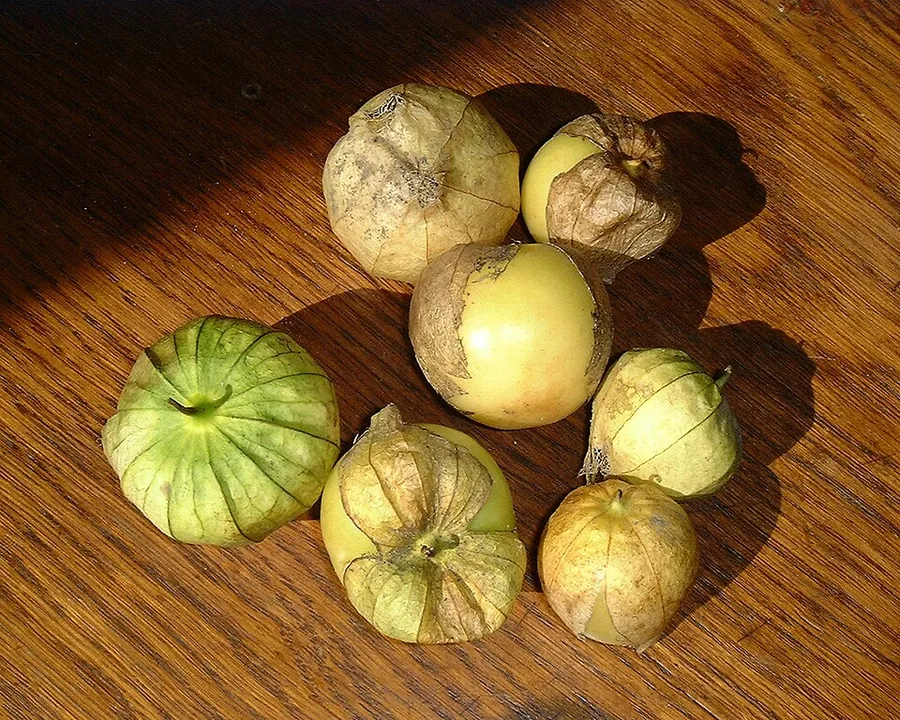
The tomatillo brings the tart, green heart of a good salsa verde straight from the garden to the table, each fruit tucked into its own papery husk. It keeps company with the tomato in the nightshade family, yet stands apart as Physalis philadelphica, brighter and sharper on the palate with a firmer bite. A staple across Mexico and Central America for centuries, it comes into its own while still green, an easy pleasure for the kitchen gardener.
In the plot it reads as a generous, informal presence, a fast warm-season annual that spreads into a big, branching plant and leans companionably on a cage or stake. One habit shapes how it is planted: a lone tomatillo will not crop. Set two or more together so they pollinate one another, and the husks fill instead of hanging empty, a small choice that pays off all summer.
Give it full sun, steady water, and room to sprawl, and a single pair can keep a household in salsa well past what a small family expects. The harvest suits an unhurried routine: gather the fruit once the husk turns tan and begins to split, choosing it firm rather than soft, ready for the pot.
Care
The short version: give tomatillos a sunny bed, rich and free-draining soil, and close to an inch of water each week, and grow a pair side by side so they pollinate and earn their place at the table.
Light
Tomatillos ask for full sun and thrive on as many hours of direct light as the day offers. Give them a shaded, stingy spot and the plant grows leggy and flowers and fruits poorly, so choose the brightest corner of the plot.
Water
Offer about 1 inch of water a week and keep the soil evenly moist, which brings the most uniform, kitchen-worthy fruit. Settled plants take a short dry spell in stride, so water deeply once or twice a week rather than often and shallow. Direct it to the base and spare the leaves to keep disease at a distance.
Soil
Set them in rich, well-drained sandy or silty loam worked with organic matter, and pass over heavy, wet clay. A pH of 6.0 to 7.0 keeps the bed in their favor.
Temperature
They settle happily into the warm span of 59°F to 86°F (15°C to 30°C). Frost undoes them at either end of the season, so wait to plant out until the cold has well and truly left.
Humidity
Everyday outdoor humidity suits them, and there is no figure to chase. Airflow does the real work, since still, damp foliage is where most disease finds its opening.
Feeding
Feed lightly at planting in spring and keep to a low-nitrogen hand, adding phosphorus and potassium only where a soil test asks. Too much nitrogen grows a lush, leafy plant that is slow to flower and slow to fruit.
Pruning
Tomatillos want almost no pruning. Stake or cage the sprawling, indeterminate plants and lift away the lowest leaves that rest on the soil to keep disease down, but leave the shears mostly idle.
Size & spacing
Each plant rises 3 to 4 feet (90 to 120 cm) and spreads nearly as far, so give every one 3 to 4 feet (90 to 120 cm) to itself. That generous spacing lets air move through the bed and keeps the big, branching plants from crowding their neighbors.
When to plant
Tomatillos keep a warm-weather calendar and turn away from frost entirely. Sow the seed indoors in late winter, move the plants out when the soil warms in late spring, and let the harvest carry from midsummer into the golden edge of fall as the husks fill and split.
Northern hemisphere
Southern hemisphere
Typical months for a temperate climate: start earlier in warm zones, later where spring frosts linger.
- Sow: 6-8 weeks before the last spring frost
- Plant: After all danger of frost has passed and the soil has warmed (late spring)
- Harvest: Harvest about 60-75 days after transplanting, when fruit fills the husk and the husk turns tan and begins to split
Hardiness
USDA hardiness zones: 5–11
Temperature: down to -29°C
Troubleshooting
A tomatillo season rarely goes far wrong, and when it does the signs are plain: empty husks, chewed leaves, or stems settling onto the soil. Read them early and the fix is simple. Match what the plant is showing below and act while a light touch still turns things around.
Husks that fill out but stay hollow
Nine times in ten this is a pollination shortfall, not a fault in the soil. A tomatillo needs a partner to fruit, so a plant standing alone leaves you papery husks with nothing to show inside. Grow two side by side, lighten the nitrogen, and draw bees in with flowers nearby, and the fruit arrives.
Fix:
- Grow at least two plants, ideally two different varieties, for cross-pollination
- Encourage pollinating insects
- Avoid high-nitrogen fertilizer
Leaves left ragged or eaten to the veins
A handful of pests work the foliage, led by the three-lined potato beetle, alongside tomato hornworms, cutworms, and flea beetles. Happily, the papery husk keeps the fruit intact even as the leaves suffer. On a small planting, lift the beetles and caterpillars off by hand, do away with any egg masses, and keep watch so an early outbreak never takes hold.
Fix:
- Handpick beetles, larvae, and hornworms on small plantings
- Remove and destroy egg masses
- Scout plants regularly
A leafy plant that flowers and fruits little
An excess of nitrogen turns a tomatillo leafy and shy of fruit. The plant looks deep green and full of vigor while the flowers and fruit fall behind. Set aside the high-nitrogen feed and give only the phosphorus and potassium a soil test calls for.
Fix:
- Stop applying high-nitrogen fertilizer
- Apply phosphorus and potassium per soil test only as needed
Stems that sink down onto the soil
A tomatillo grows into a large, branching, indeterminate plant, and as the fruit gathers, the stems lean down to the ground. Cage or stake it and tie the main stems up as they rise. Put the support in place at transplanting, before the plant grows too large to guide.
Fix:
- Stake or cage plants for support
- Tie up main stems as they grow
Toxicity
There is a clean line to keep at the table: the ripe, husked fruit belongs in the kitchen, while the rest of the plant does not. Leaves, stems, and unripe green fruit hold a natural compound called solanine that unsettles the stomach, so keep the green parts clear of pets, livestock, and small children, and let only the firm ripe fruit into the pot.
Toxic to
Cats · Dogs · Horses · Rabbits · Livestock · Birds
Safe for
People
Cats Caution
A cat that tastes a leaf or an unripe fruit may drool, lose interest in food, and feel out of sorts for a time. The green parts hold solanine, so the foliage is best kept well beyond a cat's reach.
Dogs Caution
A dog that chews the leaves or green fruit can drool, be sick, and turn listless. The episodes tend to be mild, though the leaves and stems are no place for a dog to graze.
Horses Caution
The green parts can leave a horse slobbering and dull with a soured stomach. Keep an eye on grazing horses near any stray plants at the edge of a paddock.
Rabbits Caution
With solanine in the leaves and stems, the foliage makes a poor choice for rabbits. Leave the greens off the menu rather than chance a digestive upset.
Livestock Caution
Cattle, goats, and sheep may react to the solanine in the foliage and unripe fruit with gut and nervous-system trouble. Fence them clear of the plants and gather up any stems and husks they might chew.
Birds Caution
The green parts are best kept away from poultry and pet birds, as the same alkaloid reaches them too. A piece of the ripe, husked fruit is a far kinder offering for a bird.
People Ripe fruit safe
For people, the ripe, husked tomatillo is a kitchen mainstay and safe to cook and enjoy. Leave the leaves, stems, and unripe green fruit out of the pot, since those hold solanine.
The ripe, husk-filled, firm fruit is safe to eat and is the harvested vegetable. Only the leaves, stems, and unripe (immature) fruit are the concern; keep pets and children from chewing green plant parts and discard unripe fruit and husks.
Helpline numbers

United States
ASPCA Animal Poison Control: (888) 426-4435 (fee applies)
Poison Control: (800) 222-1222



Canada
Poison Centres: 1-844-764-7669
Varieties
A short, dependable cast of tomatillos suits most gardens, from early green pickers to large-fruited and purple selections. These are the names worth planting by.
Toma Verde
An early, well-loved pick that ripens flat, apple-green fruit with a bright, tangy edge.
Purple de Milpa
Offers smaller fruit that blush purple and carry a sharper, more intense tartness than the green kinds.
Grande Rio Verde
A green tomatillo chosen for heavy yields of large, sizable fruit.
Gigante
A vigorous grower that brings notably big green fruit to the basket.
How to propagate
Tomatillos start easily from seed indoors, in the manner of tomatoes, with a single rule that shapes the sowing: never settle for just one plant.
SeedEasy
Start seeds indoors 6-8 weeks before the last spring frost; transplant after frost danger passes and soil warms · Transplant-ready in roughly 6-8 weeks; fruiting begins about 60-100 days after transplanting
Tomatillos begin indoors from seed, much as tomatoes do, about 6 to 8 weeks before your last spring frost. The seedlings are ready for the garden within that same span, once frost has passed and the soil has warmed. Sow two or more plants so they can cross-pollinate, and watch for the first fruit around 60 to 100 days after transplanting.
Myths
Tomatillos are simply unripe green tomatoes.
They are a plant of their own, Physalis philadelphica, grown inside a papery husk no tomato ever wears. They come ripe while green and hold firmer and far tarter than any tomato at the market.
A single tomatillo plant will fill a harvest basket alone.
One plant sets next to nothing, since tomatillos depend on cross-pollination. Grow at least two together, ideally two varieties, and the fruit follows in kind.
The whole tomatillo plant is as edible as its fruit.
Only the ripe, husked fruit belongs on the plate. The leaves, stems, and unripe fruit carry solanine-type alkaloids and are poisonous, so they stay out of the kitchen and away from grazing animals.