Bulb · Iridaceae
Spring Crocus
Crocus vernus
Set the corms in autumn and the spring crocus delivers the season's first color, often rising straight through the snow.
Full sun
Every 7–14 days
USDA 3–8
2–6 in · 5–15 cm
Overview
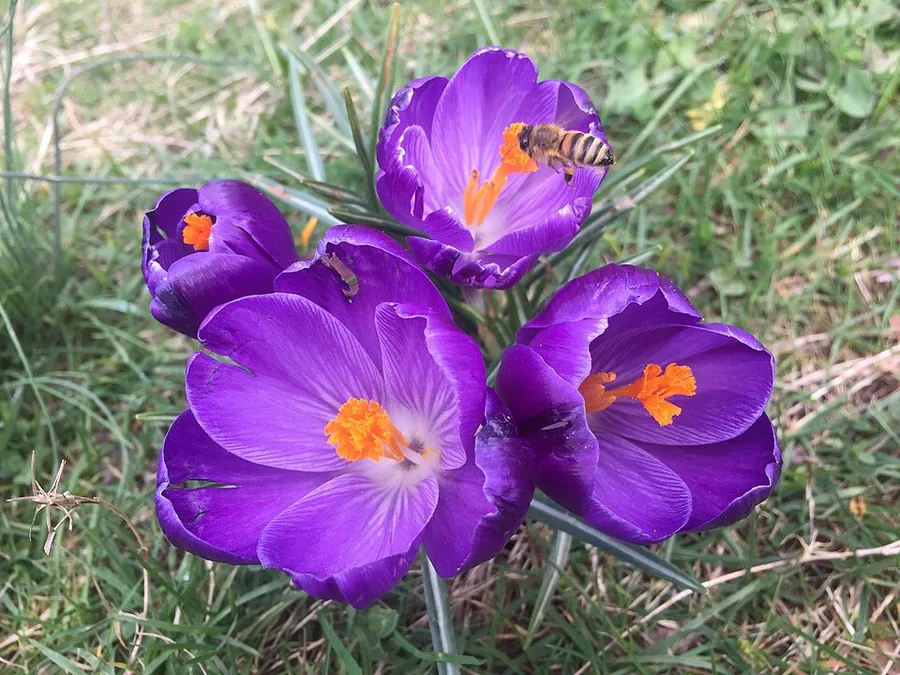
Few plants announce the end of winter as early as the spring crocus, lifting small cups of purple, white, and lilac while the soil still holds a chill. It grows from a corm, a compact swollen stem that packs away all the plant needs to flower, and it comes back faithfully season after season. Picture it loose across a lawn, tracing the edge of a border, or gathered in pools beneath bare trees where the rest of the garden has yet to stir.
A member of the iris family, it keeps close to the ground at just 2 to 6 inches (5 to 15 cm), which is why it earns its keep in drifts where sheer numbers make the moment. The display arrives as a brief flush that holds for about three weeks, then the plant retires below ground for the summer. Leave it undisturbed and the planting widens year by year into a more generous sweep.
This is the genuine spring crocus, only mildly toxic to people and pets and entirely unlike the dangerous autumn crocus so often mistaken for it. Its demands are slight: a bright, well-drained corner and the discipline to step back once the flowers have finished.
Care
The short version: tuck the corms into a sunny, gritty, well-drained spot in fall, keep medium moisture running through the bloom, then let them sit dry and untouched over summer while the leaves yellow before any trimming.
Light
Full sun rewards crocuses with the fullest, most generous flowering, though they take partial sun or light shade without complaint. A position under deciduous trees suits them nicely, since the corms catch their light in early spring before the canopy fills in above.
Water
While they are growing and flowering, give them medium, steady moisture, watering about every 7 to 14 days when rain falls short. After the foliage dies back, ease off and keep them dry, because the corms rest through summer and rot in waterlogged ground.
Soil
It all comes down to drainage. Choose a gritty, sandy or loamy soil worked with a little organic matter and a pH between 6.0 and 7.0, and steer clear of heavy clay, which traps the water that finishes off corms.
Temperature
Hardy to the core, these plants endure winters as low as -40°F (-40°C) and brush off late frosts. Their growth happens in cool weather and they slip into dormancy once summer heat sets in, tolerating daytime warmth up to roughly 75°F (24°C).
Humidity
There is no air moisture to fuss over here. Ordinary outdoor humidity suits them perfectly, and the real concern is keeping the soil from sitting wet around the resting corms.
Feeding
Mix a low-nitrogen bulb fertilizer or bone meal into the soil as you plant, and that is nearly the whole job. Each corm already stores the food for one bloom, so a gentle feed in fall and early spring covers everything it asks for.
Pruning
Pruning barely enters the picture. Leave the foliage to yellow at its own pace for about 6 weeks after the flowers go over, allowing the corm to refuel for the next round, then tidy away the spent leaves.
Repotting
Settled in the ground, crocuses manage on their own for years. Lift and divide a clump every 4 to 5 years when you spot fewer or smaller flowers, congested corms, or a slip in overall vigor.
Size & spacing
These stay petite, topping out at just 2 to 6 inches (5 to 15 cm) with a matching spread. Space the corms 3 to 6 inches (8 to 15 cm) apart to leave them room to multiply into a fuller drift.
When to plant
The crocus schedule runs against the grain of most flowering plants. The corms go in during fall, weeks ahead of the first hard freeze, and spend the cold months rooting quietly underground. Their reward is the first mild stretch of spring, often as early as February, with the show winding down by early summer.
Northern hemisphere
Southern hemisphere
Typical months for a temperate climate: start earlier in warm zones, later where spring frosts linger.
- Plant: Plant corms in fall, about 3-4 inches deep and 3-6 inches apart, 6-8 weeks before the ground freezes.
- Harvest: Early spring (February to April), blooming for about three weeks.
Hardiness
USDA hardiness zones: 3–8
Temperature: down to -40°C
Troubleshooting
About as forgiving as a flowering plant comes, the crocus runs into trouble mainly through wet soil, rodents on the hunt, or corms crowding one another below ground. Find the match below and the remedy is usually straightforward. Step in early on each one, before it works its way through the entire planting.
Mushy corms that never make it to the surface
Standing water at the corm is the quiet undoing of a planting. Corm rot takes hold where heavy clay or a low, damp pocket lets moisture linger, and the proof is obvious once you lift one: soft, brown, sour tissue. Discard whatever has gone, then give the survivors a fresh start in gritty soil loosened with sand or compost so water moves through quickly.
Fix:
- Lift and discard rotted corms
- Replant healthy corms in gritty, well-drained soil
- Amend beds with sand or organic matter to improve drainage
A freshly planted bed pocked with holes and gaps
To a hungry yard, a new corm planting reads as a buffet. Squirrels, chipmunks, mice, and voles will turn the bed over and clean it out long before any green shows. A sheet of hardware cloth or wire mesh laid over the soil keeps them out until shoots arrive, and sweeping away the loose papery husks removes part of what tips them off in the first place.
Fix:
- Cover planting areas with hardware cloth or wire mesh until growth emerges
- Plant corms at the recommended depth and firm the soil
- Remove planting debris and papery corm husks that attract rodents
An old drift that has thinned to a few small blooms
A planting that once put on a generous show and has since gone sparse is almost always a case of overcrowding, with the corms multiplying until they jostle for room below the surface. Trimming the leaves away before their time produces the same fade, because the corm is left without a chance to bank energy for the season ahead. Wait for the foliage to die back, then lift and divide the clump, reset it at proper spacing, and going forward let those leaves yellow at their own pace.
Fix:
- Dig and divide crowded clumps after foliage dies back
- Replant divided corms at proper spacing
- Allow foliage to remain about 6 weeks after bloom
Toxicity
A reassuring note for homes with pets and children: the spring crocus is only mildly toxic. A chewed leaf or corm might bring a little drooling, vomiting, or diarrhea, yet nothing perilous. The detail worth holding onto is that it is an altogether separate plant from the autumn crocus (Colchicum), which is lethal, so be certain which one shares your garden.
Toxic to
Cats · Dogs · Horses · Rabbits · Livestock · Birds · People
Cats Mild
Should a cat take a curious bite of a leaf or corm, expect some drooling, vomiting, or a short run of diarrhea. The episode clears on its own, and this spring bloomer bears no resemblance to its lethal autumn namesake.
Dogs Mild
A dog inclined to chew the plant usually ends up drooling with a briefly unsettled stomach. Symptoms stay light, though a sizable mouthful is reason enough to phone the vet.
Horses Mild
A horse that browses the leaves may show some mild stomach upset and loose droppings. The effect stays minor, a far cry from the grave poisoning tied to the autumn crocus.
Rabbits Mild
Let a rabbit sample the foliage and you may notice soft stools and a subdued, off-its-feed stretch. The safe move is to keep this one well clear of the hutch and the run.
Livestock Mild
Cattle, goats, and sheep tend to leave it be, yet an inquisitive bite can stir up a touch of digestive upset that settles fast.
Birds Caution
Solid information on pet birds is thin, so the sensible course is to keep it out of reach rather than assume it has been cleared as safe.
People Caution
Treat this strictly as something to look at, never to eat. A swallowed corm or leaf can stir mild nausea and a queasy stomach, so make sure inquisitive children keep every part out of their mouths.
Keep corms and plants away from pets that chew on plants; wash hands after handling.
Helpline numbers

United States
ASPCA Animal Poison Control: (888) 426-4435 (fee applies)
Poison Control: (800) 222-1222



Canada
Poison Centres: 1-844-764-7669
Varieties
Most of the crocuses sold for the garden are the large-flowered Dutch kind, chosen as much by color as by name. These turn up the most often.
Pickwick
A natural attention-getter at the front of a bed: pale lilac brushed with bold deep-purple stripes for a feathered, two-tone effect.
Flower Record
Built to register from a distance, its large solid deep-purple flowers open wide and land as a clean block of color across the yard.
Jeanne d'Arc
Pure white and willing to spread on its own, the pick for naturalizing across lawns and drifting under trees.
Remembrance
Glossy deep violet-purple blooms with a faint sheen that picks up the low light of early spring.
Striped Beauty
Light purple lined with a deeper purple, a gentler reading of the bicolor look than the bolder Pickwick.
How to propagate
DivisionEasy
After foliage dies back in late spring or early summer, replant in fall. · Replanted divisions establish over one season and bloom the following spring.
The easiest route to a wider sweep is to lift a crowded clump every 4 to 5 years once the foliage has died back, ease the corms apart, and set them out again at proper spacing that fall. Given a single season to settle, they return to flower the next spring.
Offsets & pupsEasy
Lift in summer dormancy; separate naturally formed cormels. · Small cormels may take 1-2 years to reach flowering size.
Around the base of each corm, small cormels form on their own. Lift them through summer dormancy, twist them loose, and grow them on for a year or two until they reach blooming size.
SeedModerate
Sow ripe seed in containers in late summer or fall. · Seed-grown plants take several years (often 3-4) to reach flowering size.
Ripe seed will take in containers sown late summer or fall, but patience is the cost, with flowers 3 to 4 years out. Named cultivars do not come true from seed, so go this way only if a mix of seedlings suits you.
Myths
Every crocus is one and the same, so they all carry the same risk to pets.
What looks like one plant is really two that happen to answer to the same name. The spring kind you set out for early color rates only mildly toxic, with a queasy stomach the worst of it. Its autumn counterpart, Colchicum autumnale, sits in a separate family and carries colchicine, capable of bloody vomiting, organ damage, and bone marrow suppression in cats, dogs, and horses. Identify which one is in your beds before you weigh the danger.
A crocus will only bloom if you feed it generously.
Every corm arrives with enough stored food to flower once, so that opening spring looks after itself. A modest, low-nitrogen feed mixed in at planting is the whole of it, and heaping on extra fertilizer buys you no more blooms.