Bulb · Iridaceae
Japanese Iris
Iris ensata
Give it acidic soil, full sun, and summer water to spare, and Japanese iris crowns a waterside setting with broad, butterfly-flat blooms.
Full sun
Every 1–3 days
USDA 4–9
2–4 ft · 0.6–1.2 m
Overview
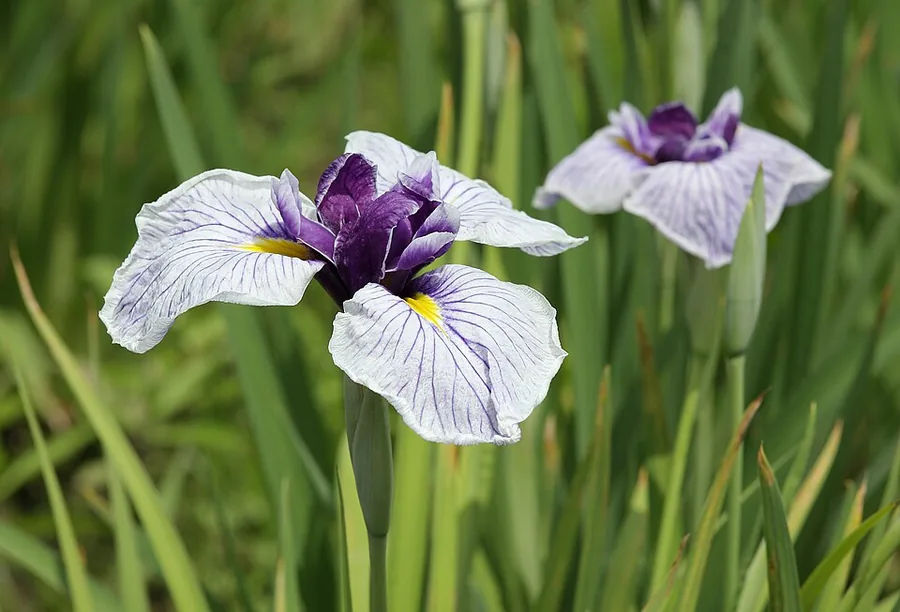
Japanese iris is the plant to reach for when a garden wants a moment of poise near water. It opens flat, wide flowers above tall, swordlike leaves in early summer and returns from a spreading rhizome each year, gathering into a clump that frames a pond edge or settles any damp corner of a bed. The blooms span 3 to 6 inches across in blue, purple, pink, lavender, and white, a palette that slips into almost any planting scheme.
Placed well, it shapes the mood of a whole outdoor room. Give it acidic, organic soil that holds water, full sun with perhaps a little afternoon shade, and a steady drink through the season, and it earns a spot beside a bench, a path, or a reflecting pool where the summer routine slows down. Lime and a waterlogged winter crown are the two things a considered setting should design out.
Site it thoughtfully and Japanese iris proves hardy from zone 4 to zone 9 and easy company through the year. Get the setting wrong, with alkaline ground or a boggy winter spot, and the display gives way to yellow leaves and rotted roots that no styling can rescue.
Care
The short version: full sun to light afternoon shade, rich acidic soil kept wet through the growing season yet drained in winter, a hearty feed during active growth, and a division every three years or so.
Light
Give Japanese iris full sun for the fullest flowering, with a little afternoon shade welcome where summers run hot. It will take partial shade, but the show fades along with the light.
Water
Keep the soil consistently moist to wet through the growing season, watering every one to three days, and it will happily hold a place in standing water up to 6 inches (15 cm) deep in summer, which is what makes it such a natural at the water's edge. Ease off sharply in winter, since a saturated, dormant crown rots.
Soil
Plant in rich, organic, acidic soil that holds moisture, aiming for a pH of 5.5 to 6.5. Lime and alkaline ground lock out nutrients and dull the foliage, so never work lime into the bed.
Temperature
Japanese iris is tough across a wide range, hardy roughly from -29°F to 95°F (-34°C to 35°C). That cold tolerance is what lets it hold its place in the garden through winter in zones 4 to 9.
Humidity
Ordinary outdoor air suits it, so there is no number to chase. What shapes the look far more is wet roots in summer and good airflow around the leaves to keep pests and leaf diseases from spoiling the scene.
Feeding
This is a heavy feeder, so feed through spring and early summer with a balanced fertilizer or plenty of organic matter to keep the stand full and handsome. Stay clear of any lime-based product, which pushes the soil the wrong way.
Pruning
Cut the spent flower stalks once the bloom is done, then cut the foliage back in late fall after it dies down for a tidy winter bed. Clearing the old leaves also removes the quiet corners where pests and disease overwinter.
Repotting
Lift and divide the clump about every three years after flowering finishes to keep the planting looking its best. Smaller flowers, a crowded clump with a dying center, or fading vigor are the cues that its time has come.
Size & spacing
A mature clump stands 2 to 4 feet (61 to 122 cm) tall and spreads 18 to 24 inches (46 to 61 cm) wide, an easy scale to work into a border or a poolside grouping. Give each plant that much room so air moves freely and the leaves stay healthy.
When to plant
Japanese iris moves through the year on a graceful, dependable schedule. Set rhizomes out in fall or spring about 2 inches deep, let the broad flowers open from June into July as the garden peaks, then cut the clump back once the foliage dies down in late fall.
Northern hemisphere
Southern hemisphere
Typical months for a temperate climate: start earlier in warm zones, later where spring frosts linger.
- Sow: Sow seed in fall or stratify; germination is slow and erratic.
- Plant: Plant rhizomes in fall or spring, setting them about 2 inches deep.
- Harvest: June to July (mid-summer)
Hardiness
USDA hardiness zones: 4–9
Temperature: down to -34°C
Troubleshooting
Most of what troubles Japanese iris comes down to water and soil chemistry rather than pests. Keep a watchful eye on the leaves and the crown, and read the early signs below before a setback undoes a season's display. Match what you see, then act while it still helps.
Soft rhizomes and a clump that has collapsed
When a once-elegant clump slumps and the crown turns soft, the diagnosis is crown and rhizome rot, and it traces back to a crown left standing in water over winter. This iris carries a poolside planting all summer on generous water, yet it resents a boggy, saturated site the moment it goes dormant. Lift the clump, pare away the soft, foul-smelling tissue, and reset the sound divisions in a spot that stays moist through the season but drains when the garden goes quiet.
Fix:
- Remove and discard affected rhizomes
- Move or replant divisions in a site that is moist in summer but well drained in winter
- Avoid standing water and boggy soil during dormancy
Yellowing leaves and a lackluster stand
When the foliage pales to yellow and the stand looks lackluster, the soil has usually turned too alkaline, a condition called lime-induced chlorosis. This iris asks for acidic ground and cannot draw up iron once the pH drifts high, so the fresh green that anchors a waterside scene slips away. Test the soil, work in organic matter to lower the pH, keep the water steady through the season, and feed this hungry plant. Lime has no place here.
Fix:
- Acidify soil and amend with organic matter
- Increase watering during active growth
- Feed during the growing season
Silvery leaves and flowers past their best
A silver cast across the leaves and twisted buds tells you thrips have set in, tiny insects that spoil the poised, tailored look this plant lends a border. Ragged edges and telltale slime trails point instead to slugs and snails on their nightly rounds. A rinse from the hose sees off a light thrips run, tidying away sheltering debris keeps the molluscs at bay, and a stronger control waits until the damage genuinely threatens the display.
Fix:
- Hose off light infestations
- Remove debris that shelters slugs and snails
- Use appropriate controls if damage is heavy
Toxicity
For all its refinement, the whole plant should be treated as off limits to animals. The rhizomes and roots hold irisin and irritant terpenoids that bring on drooling, vomiting, and diarrhea in cats, dogs, horses, and grazing stock, and the rhizome is the worst part. Nothing here is food, so keep it away from pets, livestock, and small children, and pull on gloves before you handle cut rhizomes.
Toxic to
Cats · Dogs · Horses · Rabbits · Livestock · Birds · People
Cats Toxic
A cat that samples the planting tends to drool, be sick, and grow listless, with loose stools not far behind. The rhizome holds the most, so a household cat inclined to dig in the beds is the one to watch.
Dogs Toxic
In a dog, look for steady drooling, an unsettled stomach, and a dull, weary air. Diarrhea usually joins in, and a dog that unearths and worries a rhizome takes the strongest dose.
Horses Toxic
Grazing on the leaves or roots leaves a horse drooling, uninterested in feed, and loose in the gut. The roots carry the most irisin, so a horse that lifts a whole clump fares worst.
Rabbits Toxic
The same irritant terpenoids that trouble cats and dogs unsettle a rabbit's delicate digestion, bringing drooling and diarrhea. Keep the entire plant clear of the hutch and the run.
Livestock Toxic
Cattle, goats, and sheep that browse the foliage or root up rhizomes can drool, scour, and lose their appetite. Set a fence between the clumps and any animal at pasture.
Birds Caution
Firm evidence for birds is thin, yet the irritant compounds make this a plant to keep away from pet and backyard fowl rather than risk a curious peck.
People Caution
No part of this plant belongs on the table, and the rhizome can bring on stomach upset if eaten, so keep it beyond the reach of small children. Handling cut rhizomes can irritate the skin as well, which is reason enough for gloves at dividing time.
Wear gloves when dividing or handling rhizomes, as sap can cause skin irritation; keep cut rhizomes away from pets.
Helpline numbers

United States
ASPCA Animal Poison Control: (888) 426-4435 (fee applies)
Poison Control: (800) 222-1222



Canada
Poison Centres: 1-844-764-7669
Varieties
Most Japanese iris sold today are named hybrids, but a couple make useful reference points when you are composing a scheme.
Variegata
Its bold white-striped, swordlike leaves keep a waterside planting looking composed for weeks on either side of the flowering season.
Iris ensata (species form)
The wild parent of the garden hybrids, offering flat, butterfly-like blooms 3 to 6 inches across in blue, purple, pink, lavender, or white for a more naturalistic scheme.
How to propagate
The graceful way to extend a Japanese iris planting is to split an established clump, though the patient gardener can also raise it from seed.
DivisionEasy
Late summer or early fall, after flowering finishes (about every 3 years) · One to two growing seasons to reach full bloom
Division is the graceful way to widen a planting and to renew a clump that has begun to tire at the center. Once the flowers fade in late summer or early fall, and roughly every three years, lift the clump, part the rhizomes, and settle the pieces about 2 inches deep in rich, acidic, evenly moist soil. Leave lime out of the mix, and allow the new divisions a season or two to find their feet before they bloom in full.
SeedModerate
Sow in fall; germination is slow and erratic · Two or more years to flowering from seed
Seed is the unhurried, unpredictable path, since the seedlings seldom echo the parent. Sow in fall, expect uneven and drawn-out germination, and plan on two or more years before the first flowers arrive. Keep the mix acidic and steadily moist the whole way through.
Myths
Japanese iris must stand in water the year through.
It does relish wet, acidic soil through the growing season and will take standing water up to about 6 inches deep in summer, which is why it reads so at home by a pool or pond. The turn comes in winter, when a dormant crown left in soggy ground rots. Keep it wet while it grows, but well drained once it rests.
Iris is safe around pets since it is only a garden flower.
For all its poise, iris is listed by the ASPCA as toxic to cats, dogs, and horses, with the irritant compound concentrated in the rhizome. A pet that chews it can end up drooling, being sick, and loose in the gut. Treat every part as off limits to animals, the roots most of all.