Bulb · Iridaceae
Reticulated Iris
Iris reticulata
Set the little bulbs in fall and greet spring with icy blues and golds while winter still lingers.
Full sun
Every 7–14 days
USDA 5–9
4–6 in · 10–15 cm
Overview
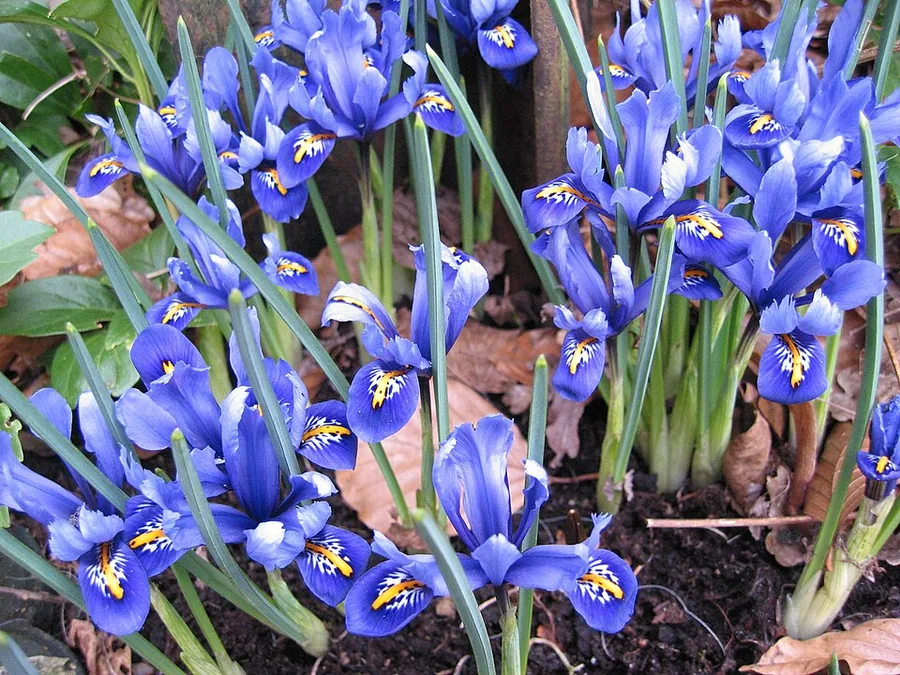
Reticulated iris opens the gardening year with a quiet flourish, one of the first blooms to soften the late-winter gray around a home. It rises from a small bulb wrapped in a netted coat, the source of its name, and flowers in early spring before the rest of the plot has stirred. At just 4 to 6 inches tall, it settles gracefully into a rock garden, along the front of a border, or in a pot set by an entrance where its arrival is easy to catch each morning.
In the garden it reads as understated rather than showy, a scatter of small blooms in blues, purples, and pale icy tones warmed by a flick of orange or gold. It flowers for a couple of weeks, long enough to shape the mood of an early-season border or a doorstep container. Planted as a generous drift, it lends a considered, well-kept look to the coldest corner of the year and pairs neatly with a slow morning coffee spent watching the season turn.
Care
The short version: plant the bulbs in fall in full sun and sharp-draining soil, water through spring growth, then step back and let them bake dry while they rest in summer.
Light
Give this iris full sun for its fullest flowering, though it accepts partial shade where a spot demands it. A bright, open position pays off twice, since it also dries the soil through summer, exactly what the resting bulbs prefer.
Water
Keep the soil moist through spring while the plant grows and blooms, then ease right back. Once the foliage fades and the bulb settles into its summer rest, let the ground stay fairly dry so it can set next year's buds. It carries a summer drought with no complaint.
Soil
Sharp drainage counts more than anything else here. Plant in average, well-drained soil across a pH of 6.1 to 7.8, and pass over any spot that stays soggy, since wet feet in summer are what rot the bulbs.
Temperature
The bulbs are remarkably hardy, holding from about -20°F to 100°F (-29°C to 38°C), so winter is no concern at all. That winter chill is in fact what they need to flower well come spring.
Humidity
Ordinary outdoor air suits it fine, so there is no level to fuss over. What truly matters to this plant is dry summer soil, far more than anything happening in the air.
Feeding
Work a low-nitrogen bulb fertilizer or bone meal into the soil at planting in fall, with a light second feed in early spring. Keep the nitrogen restrained, since too much pushes leaf at the expense of flower.
Pruning
Leave the foliage after the flowers fade and let it die back on its own, since those green leaves are recharging the bulb for next year. Take away only the leaves that have fully withered.
Repotting
The bulbs prefer to be left undisturbed and ask for lifting only as flowering declines, usually every few years. Divide them once the foliage has died back, easing apart the crowded clumps and the small bulblets.
Size & spacing
Each plant stays neat at 4 to 6 inches (10 to 15 cm) tall and 3 to 5 inches (8 to 12 cm) across. Set the bulbs about 3 to 4 inches (8 to 10 cm) apart so the planting reads as a composed, tidy drift.
When to plant
This iris keeps to a graceful fall-to-spring rhythm. Set the bulbs into the ground in autumn so they root before the cold, then anticipate flowers in March to early April, a welcome first note while the rest of the garden still sleeps.
Northern hemisphere
Southern hemisphere
Typical months for a temperate climate: start earlier in warm zones, later where spring frosts linger.
- Plant: Plant bulbs in fall, 3-4 inches (8-10 cm) deep and 3-4 inches apart
- Harvest: March to early April (early spring)
Hardiness
USDA hardiness zones: 5–9
Temperature: down to -29°C
Troubleshooting
The few issues that touch this iris tend to gather in two places, at the bulb below ground or on the soft spring leaves. A little familiarity with them keeps the early display looking its best. Match what you see below and step in early.
Soft bulbs failing quietly below the soil
A bed that holds water through summer invites fusarium basal rot, which softens the base of the bulb and moves upward in brown or pinkish streaks. Cut one open and the basal plate reads discolored and mushy. An affected bulb is beyond saving, so discard it, put the drainage right, and set clean bulbs into a drier position.
Fix:
- Discard affected bulbs
- Improve drainage and avoid summer irrigation
- Plant healthy bulbs in a new, well-drained site
A brilliant debut season, then a bare encore
The most common disappointment here is a bulb going blind, which is why a dazzling first spring can give way to nothing the next. Once it flowers, the bulb parts into small offsets, and each needs a few years to reach flowering size again. Plant at 3 to 4 inches, let the soil stay dry through summer, and fold in a few fresh bulbs each fall so the display carries on year to year.
Fix:
- Replant supplemental bulbs annually for consistent bloom
- Plant bulbs deeper (3-4 inches) to discourage splitting
- Lift and grow on small bulblets in a nursery bed until they reach flowering size
Torn leaves and buds spoiling the spring display
Nothing undoes the tidy look of an early planting like slugs and snails, which chew the soft spring growth and leave ragged holes and silvery trails behind. Slip out after dark or lift the debris nearby to find them, then remove them by hand. Keeping the damp corners clear and the drainage sharp around the bed keeps their numbers in check.
Fix:
- Hand-pick slugs and snails
- Remove garden debris and mulch near plants
- Use iron-phosphate slug baits if needed
Toxicity
Keep the whole plant beyond the reach of pets and people. Every part carries irritant compounds called irisin and terpenoids, and the bulb is the most potent of all, so a chewed bulb brings drooling, vomiting, and diarrhea. Wear gloves when you handle them and store any spare bulbs where pets and children cannot reach.
Toxic to
Cats · Dogs · Horses · Rabbits · Livestock · Birds · People
Cats Mild
A cat that chews the bulbs or leaves tends to drool and bring its food back up, then grow listless and turn from its bowl, with loose stools following. Watch the bulb most closely, since that is where the irisin and terpenoids gather thickest.
Dogs Mild
A dog that unearths and gnaws a bulb usually drools heavily and vomits, with diarrhea and a subdued, tired mood close behind. The keen diggers carry the most risk, so both stored and planted bulbs belong well out of reach.
Horses Mild
A grazing horse can salivate, scour, and lose its usual liveliness after taking any part of the plant. As with the smaller animals, the bulb is the source of the worst of the trouble.
Rabbits Mild
The same irritant compounds unsettle a rabbit's gut, so the plant and its bulbs should stay off the menu entirely. Since a rabbit's digestion falters so readily, any drooling or loose stools deserves a quick call to the vet.
Livestock Mild
Cattle, goats, and sheep generally pass over the bitter foliage, though a hungry animal that samples it can drool and scour. Fence stock away from the beds and never scatter lifted bulbs across pasture.
Birds Caution
Reliable information on iris and birds is scarce, so the wiser course is to treat it as a hazard rather than a harmless nibble. Keep curious pet birds clear of cut stems and stored bulbs to be safe.
People Caution
No part of this iris belongs on the table, and the bulb is the most toxic piece, so swallowing it brings stomach pain, nausea, and vomiting. Handling the bulbs can also redden sensitive skin, so wear gloves and keep children from putting any part in their mouths.
Wear gloves when handling bulbs; sap can cause skin irritation/contact dermatitis in sensitive people. Store bulbs out of reach of pets.
Helpline numbers

United States
ASPCA Animal Poison Control: (888) 426-4435 (fee applies)
Poison Control: (800) 222-1222



Canada
Poison Centres: 1-844-764-7669
Varieties
A short cast of named selections accounts for most of what you will find offered, each drawn to a different shade of blue. These are the ones worth knowing before you plant.
Harmony
It carries sky-blue to royal-blue flowers lifted by a bright yellow-orange ridge down the falls.
Clairette
It sets pale blue standards over darker blue falls that are flecked with white.
Gordon
It presents light blue flowers finished with a bold orange blotch on each fall.
Katharine Hodgkin
This much-admired hybrid blends icy pale blue with soft yellow, laced throughout with fine dark veining.
Companions
This iris looks best beside other early bulbs that flower at the same time and want the same sun and sharp drainage.
Plant near
Galanthus (snowdrops): Blooms at the same early-spring time and shares full sun, well-drained conditions for layered early color.
Crocus: Early-spring bulb with matching light and drainage needs; combines for naturalized rock-garden displays.
Chionodoxa (glory-of-the-snow): Early-blooming companion bulb that thrives in the same sunny, well-drained sites.
How to propagate
The easiest way to gather more is simply to let the bulbs multiply themselves, though you can also divide crowded clumps or take the slow path from seed.
Offsets & pupsEasy
After foliage dies back in late spring or early summer · Several years for bulblets to reach flowering size
The plant increases itself, so this is mostly a matter of guiding what it already does. After the leaves die back in late spring or early summer, lift the clump and the parent bulb will have parted into small offsets, more so where it sat shallow. Separate the bulblets and replant them, keeping expectations patient, since each takes several years to size up and flower and most stay blind that first spring.
DivisionEasy
After foliage dies back, when flowering declines · 1-3 seasons
When a settled clump grows crowded and flowering eases off, divide it. Let the leaves wither, then lift the bulbs, part them gently, and reset them at the right depth and spacing. They find their feet again over the next one to three seasons.
SeedModerate
Sow ripe seed in fall; requires cold stratification · Several years to flowering
Seed is the unhurried route for those willing to wait. Sow ripe seed in fall and let winter's cold release its dormancy, then allow a long stretch, since seedlings need several years to reach blooming size.
Myths
Reticulated iris bulbs return in full force every spring on their own.
Most plantings give a lovely first showing, then soften as the bulbs split into small bulblets that need several seasons to mature. Slipping a few fresh bulbs in each fall is what keeps the display dependable, rather than leaving the original planting to repeat unaided.
A small ornamental iris must be harmless to pets.
Its modest size counts for nothing here. Every iris is toxic to cats, dogs, and horses, and the bulb carries the most irritant compounds, bringing on drooling, vomiting, and diarrhea if an animal chews it.