Shrub · Hydrangeaceae
Slender Deutzia
Deutzia gracilis
The quietly elegant shrub that turns a spring border into a soft drift of white and then bows out gracefully.
Full sun
Every 5–10 days
USDA 5–8
2–5 ft · 0.6–1.5 m
Overview
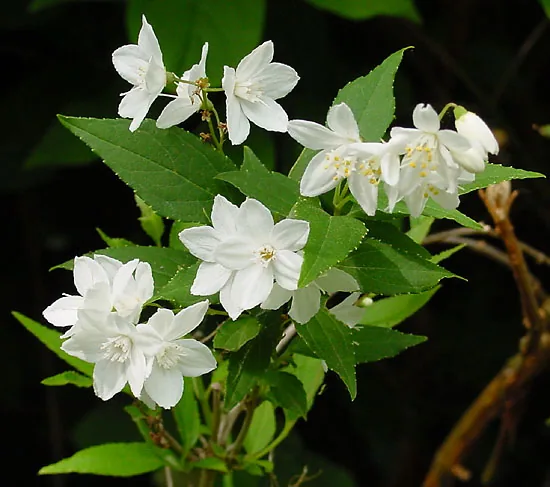
Slender deutzia is the kind of shrub a designer reaches for when a planting needs a soft, restful moment. A low, graceful native of Japan, it drapes its arching stems in small white spring flowers and reads as understated rather than showy. Because it keeps to only 2 to 5 feet (61 to 152 cm) in height and width, it settles beautifully at the front of a border or along an entry path, where it frames a route without ever blocking the view.
Part of its appeal is how little it demands of the spaces it furnishes. It holds up to cold at -20°F (-29°C), takes clay, loam, or sand, and adapts to soil from acidic to alkaline, so it slips into established beds and new gardens alike. Pair it with sun and good drainage and it carries itself, which is why it sits so comfortably in low-effort, easy plantings.
Its season is brief but well timed, with the white display lasting about 10 to 14 days in mid to late spring before the shrub recedes into a calm green backdrop for everything that follows. Certain cultivars extend the styling with burgundy fall color or bright lime foliage that lifts a quieter corner. It is a plant that creates a moment, then steps back to let the rest of the garden speak.
Care
The short version: place it in full sun to part shade in any well-drained soil, water it through dry spells, and reserve pruning for the days right after it flowers so next spring's display stays intact.
Light
Deutzia flowers most generously in full sun, the better to anchor a bright spring border, though it keeps its composure in partial sun or partial shade. Where summers turn hot, a little afternoon shade preserves the leaves from bleaching, so a sheltered placement reads cleaner in the warmest gardens.
Water
Keep the soil consistently moist but well drained, watering through establishment and any dry spell so the planting never looks stressed. Let the surface dry slightly between waterings rather than holding it soggy. Once settled, it asks for little, getting by on a drink every 5 to 10 days in dry weather.
Soil
This is an accommodating shrub for almost any bed, content in clay, loam, or sand. What it wants is moist, well-drained ground, and it adapts across a broad pH of 6.0 to 8.0, fitting in whether the soil leans acidic or alkaline.
Temperature
Deutzia is dependable across a wide range, hardy through USDA zones 5 to 8 and steady in cold to about -20°F (-29°C). It also tolerates summer heat near 100°F (38°C), though the foliage stays more presentable with some afternoon shade in hot-summer settings.
Humidity
Ordinary outdoor air suits it, so there is no number to manage in the garden. What counts for a clean look is good air movement, since crowded, damp foliage is what invites the occasional spot.
Feeding
Deutzia is a light feeder and keeps its good looks on very little. A balanced slow-release shrub fertilizer or a layer of compost in early spring sees it through the year. Keep nitrogen modest, since a surplus pushes soft growth that draws aphids.
Pruning
Timing shapes the whole season, because deutzia blooms on old wood. Prune just after flowering, thinning up to one-third of the oldest stems to hold an open, graceful outline that suits a refined border. Avoid late-summer or fall cuts, which quietly sacrifice next spring's display.
Repotting
Deutzia is happiest in the ground and rarely needs repotting, so it sits best as a planted feature rather than a container piece. If grown in a pot, move it up only when roots circle the container or push through the drainage holes, or when water runs straight through without soaking in.
Size & spacing
Allow for a mounding shrub of 2 to 5 feet (61 to 152 cm) tall and about as wide. Give each plant roughly that much room so the arching stems can spread into their natural shape and the planting keeps an airy, uncrowded line.
When to plant
Set deutzia in place in spring or fall, when mild weather lets the roots settle before heat or hard frost. Its flowering moment is short, arriving in mid to late spring across roughly March to May, so position it where that drift of white will be part of the daily view from a window or a path. The single date worth marking is pruning, which waits until the show has finished.
Northern hemisphere
Southern hemisphere
Typical months for a temperate climate: start earlier in warm zones, later where spring frosts linger.
- Plant: Spring or fall
- Harvest: Mid-to-late spring (March to May), blooming for about 10 to 14 days
Hardiness
USDA hardiness zones: 5–8
Temperature: down to -29°C
Troubleshooting
Deutzia rarely disrupts a planting, and the few issues it brings are cosmetic rather than structural. A handful of pests visit the fresh growth in spring, and a hot spell can wash some color from the leaves. Match what you see below to know whether a small adjustment is needed or whether the shrub will simply move past it.
Fresh spring shoots turned sticky and insect-ridden
Those soft little insects gathering on the freshest tips are aphids, drawn to the new spring growth where the sap runs sweetest. They leave a sticky residue and can curl the young leaves, which spoils an otherwise tidy planting. A hard jet of water clears them, and the lady beetles and lacewings already in the garden will tidy up the rest.
Fix:
- Spray colonies off with a strong jet of water
- Apply insecticidal soap or horticultural oil to affected growth if populations are heavy
- Encourage natural predators such as lady beetles and lacewings
Leaves marked with wandering pale ribbons
Those pale, wandering trails are the mark of leaf miner larvae feeding between the leaf's two surfaces, beyond the reach of any spray. Pick off and bin the most marked leaves to bring the numbers down and keep the foliage looking clean. On a healthy deutzia the damage stays superficial and rarely warrants more attention.
Fix:
- Remove and destroy mined leaves to reduce the population
- Tolerate light damage, which is mostly cosmetic on an otherwise vigorous shrub
Foliage gone pale where the summer sun hits hardest
When the most exposed leaves wash out to pale or near-white in a hot, bright spell, that is foliage bleaching, the heat thinning the chlorophyll. It looks worse than it is and the shrub recovers its color. In hot-summer regions, an afternoon-shaded position and evenly moist soil keep the planting fresher through the heat.
Fix:
- Provide afternoon shade in hot-summer climates
- Keep soil evenly moist to reduce heat stress
Leaves freckled with dark, irregular marks
Discrete dark spots that surface in damp weather point to leaf spot disease, a fungal nuisance that seldom amounts to much on this shrub. Remove the marked leaves and thin any crowded stems so air can drift through the canopy. Water at the base rather than over the top, and the look usually returns to normal on its own.
Fix:
- Remove and dispose of affected leaves
- Improve air circulation by thinning crowded stems
- Avoid overhead watering
Toxicity
For a home with pets or young children, deutzia arrives reassuring: slender deutzia is non-toxic in every direction. The ASPCA clears it for dogs, cats, and horses, and NC State Extension reports no toxicity. It can take its place anywhere in the garden a curious nose or hand might reach.
Safe for
People · Cats · Dogs · Horses · Rabbits · Livestock · Birds
Cats None
Listed by the ASPCA as non-toxic, slender deutzia gives a curious cat that tastes a leaf nothing to fear.
Dogs None
Dogs are equally safe around it. A mouthful of foliage will not poison them, though a dog that swallows a lot of any plant may still get a mild, passing stomach upset.
Horses None
Horses have no reported toxicity to contend with, so a deutzia near a paddock is no cause for concern.
Rabbits Safe
Rabbits can graze the shrub without harm, since not one of its parts holds a toxin.
Livestock Safe
Cattle, goats, and sheep grazing nearby face no danger from this plant.
Birds Safe
Birds that perch in it or peck at its foliage and spent flowers meet no poisoning risk.
People Safe
People are not at risk from slender deutzia, which makes it a sound choice for gardens where children play. It earns its place for the flowers rather than the table, so no part of it belongs on a plate.
No special handling precautions are needed; the plant is non-toxic.
Varieties
A few named cultivars refine the plain species with brighter foliage or a tighter silhouette, each suited to a slightly different setting. These are the selections most often found.
Nikko
A dwarf, dense mound rising only 1 to 2 feet, polished enough to serve as a groundcover, with green leaves that deepen to burgundy by autumn.
Chardonnay Pearls
A compact selection styled around its lime-yellow foliage and pearl-like buds that open to white flowers.
Pink Minor
A compact form whose pink buds open into white flowers carrying a soft blush of pink.
How to propagate
Extending a deutzia planting is straightforward, whether by rooting a summer cutting or letting a low stem root itself where it rests on the ground.
Stem cuttingsEasy
Summer · Several weeks to root; transplantable the following season
The most graceful route to more deutzia is a softwood cutting taken in summer, which roots with little fuss. Allow several weeks for roots to form, then leave it be until the following season, when it is ready to take its place permanently in the garden.
LayeringEasy
Spring to summer · One growing season or more
Layering makes refined use of the shrub's low, arching stems. From spring through summer, settle a stem against the soil and it will root where the two meet. Count on a full growing season or more before the new plant is rooted enough to separate and lift into its own spot.
Myths
A pet-friendly landscape has no room for deutzia, a shrub reputed to be toxic to animals.
The record says otherwise: the ASPCA lists slender deutzia as non-toxic to dogs, cats, and horses, and NC State Extension agrees. It can be planted freely around pets and children, which makes it an easy choice for a family garden with nothing to second-guess.
A quick shaping suits deutzia in any season, since it tolerates trimming the whole year through.
Deutzia carries its flowers on old wood, so a cut in late summer, fall, or just before bloom strips away next spring's display along with the stems. Prune only right after the flowers fade, and the planting keeps its spring moment year after year.