Shrub · Hydrangeaceae
Hydrangea
Hydrangea macrophylla
Give it rich, moist soil and afternoon shade, and the hydrangea fills a summer garden with armfuls of bloom.
Partial shade
Every 3–7 days
USDA 3–9
3–10 ft · 0.9–3 m
Overview
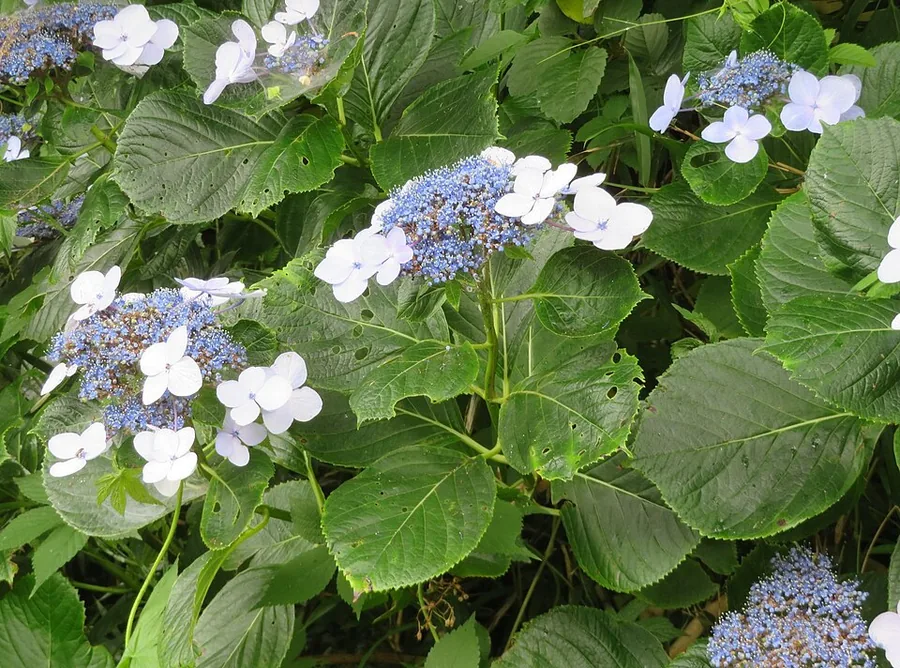
Few shrubs set a summer mood the way a hydrangea does, its rounded mophead heads, flat lacecaps, or tall cones softening a border, a shady doorway, or the edge of a terrace where you take your morning coffee. The best loved of them, the bigleaf hydrangea, turns blue in acidic soil and pink in alkaline, a quiet piece of alchemy that lets you tune the plant to a home's palette. It grows fast and flowers generously, reaching 3 to 10 feet (90 cm to 3 m) across the species and filling whatever corner you give it.
Placed well, a hydrangea does more than bloom, it frames a space. Some types flower on old wood, forming buds the summer before, while others flower on new wood grown that same season, and that single difference shapes when you tend it and how a hard winter reads in next year's display. Choosing a species suited to your setting settles half the seasonal rhythm before you plant.
Beyond the flowers, a hydrangea asks for an easy, settled routine. It wants steady moisture, shelter from the harshest afternoon sun, and soil rich in organic matter, and in return it holds a corner of the garden for years as a long-lived perennial shrub that only grows more presence with age.
Care
The short version: give it rich, moist, well-drained soil with morning sun and afternoon shade, water deeply about once a week, and prune to match whether your type blooms on old or new wood.
Light
Hydrangeas look and grow best in partial shade, ideally morning sun with cover through the hot afternoon, which makes them a natural for a filtered, part-day corner. Bigleaf types in particular scorch and wilt in full afternoon sun, while panicle types take a good deal more of it. Deep shade is the one setting to avoid, since it thins the flowers a display depends on.
Water
Keep the soil evenly moist, watering deeply about once a week and more often in heat or in a pot, so the plant holds its poise through a warm spell. The name itself hints at the thirst, and bigleaf types are the first to flag when the border dries. A layer of mulch keeps that moisture in place and the roots cool.
Soil
Plant in rich, moist, well-drained soil full of organic matter, the kind that keeps a border looking cared for. A pH of 5.0 to 6.5 suits them, on the acidic side, and for bigleaf and mountain types that acidity is also the lever that steers the flowers toward blue.
Temperature
These are hardy, dependable shrubs, comfortable from about -20°F to 95°F (-29°C to 35°C) across the tougher species, which lets them anchor a garden year after year. A late spring frost is the real hazard, since it can take the formed buds on old-wood types and quiet a season's display.
Humidity
Ordinary outdoor humidity suits a hydrangea, so there is no target to manage. Air movement matters far more than the number, because a crowded, still corner invites leaf spot and powdery mildew onto the foliage that sets off the flowers.
Feeding
A balanced 10-10-10 fertilizer given a few times from spring through mid summer keeps the plant in good form. A light hand serves the display best, since too much nitrogen pushes leaves and holds back the flowers you planted it for.
Pruning
Time the cuts to the bloom wood to keep the show intact. Prune old-wood bloomers like bigleaf, oakleaf, and mountain right after they flower and no later than August 1, and prune new-wood bloomers like panicle and smooth in late winter or early spring before growth starts.
Repotting
Hydrangeas are rarely repotted, since most take a permanent place in the garden. Where one lives in a container on a terrace or by a door, move it up a size when roots circle the pot, grow from the drainage holes, or water runs straight through without soaking in.
Size & spacing
Depending on the species, hydrangeas reach 3 to 10 feet (90 cm to 3 m) tall and spread 3 to 6 feet (90 to 180 cm) wide, so plan the spot with that presence in mind. Give each shrub room to fill out, both for the look of the planting and so air moves freely and disease stays away.
When to plant
Hydrangeas settle happily across zones 3 to 9, so the seasonal rhythm comes down to two moments: when to plant and when to prune. Set new shrubs into the garden through the mild weather of spring or fall, look forward to bloom from late spring through summer, and let the bloom-wood type set the pruning date.
Northern hemisphere
Southern hemisphere
Typical months for a temperate climate: start earlier in warm zones, later where spring frosts linger.
- Plant: Spring or fall
- Harvest: Late spring through summer; some reblooming types again in late summer
Hardiness
USDA hardiness zones: 3–9
Temperature: down to -40°C
Troubleshooting
Most hydrangea worries settle into a short, familiar list: a plant that wilts in the heat, one that offers leaves but no flowers, or foliage marked by spots or yellowing. Match what you see below to its likely cause, then act before it dims the display.
Blooms and leaves sagging through the heat of the day
A hydrangea that softens and slumps by mid-afternoon is usually caught between thirst and too much hot sun, the two working against it at once. Bigleaf plants are the first to lose their poise under strong light, then gather themselves again as the evening cools and the soil takes up water. Set the shrub where it catches gentle morning sun and rests in afternoon shade, keep it watered deeply, and mulch the base so the border holds its composure through a hot spell.
Fix:
- Water deeply to keep soil evenly moist
- Mulch to conserve moisture and cool the roots
- Site bigleaf hydrangeas where they get morning sun and afternoon shade
A healthy plant that refuses to bloom
When a fine-looking shrub gives you leaves but withholds its display, the usual reason is pruning at the wrong moment. Old-wood bloomers form next season's buds soon after this year's flowers fade, so a fall or spring trim quietly carries the show away with the clippings. A hard winter or late frost can undo the buds as well, and heavy shade or excess nitrogen tips the plant toward foliage over flower. Learn whether yours blooms on old or new wood, and the timing that restores the display falls into place.
Fix:
- Prune old-wood bloomers only right after flowering
- Protect old-wood types from late frosts
- Reduce shade and avoid heavy nitrogen feeding
Marked foliage or a fine white cast over the leaves
Two fungal issues can dull the foliage that frames the flowers. Cercospora and other leaf spots print purple-edged marks with tan centers, while powdery mildew settles a pale film over crowded plants where the air hangs still. Neither undoes a healthy shrub, though both take hold in damp, close corners. Clear away the marked and fallen leaves, water low at the base to spare the foliage, and give the planting room so a little air keeps moving through it.
Fix:
- Remove and dispose of affected and fallen leaves
- Use drip or soaker irrigation to keep foliage dry
- Improve air circulation and apply a labeled fungicide if needed
Foliage paling to yellow with the veining still green
Foliage that pales to yellow while the veins hold their green is the mark of iron chlorosis, and it dims the backdrop your blooms depend on. It sets in when the soil turns too alkaline for the plant to take up iron, showing first on the newest leaves. Test the soil and ease the pH toward the slightly acidic range hydrangeas favor, work in organic matter for better drainage, and add iron only once a test confirms the shortfall.
Fix:
- Test and adjust soil pH toward slightly acidic
- Improve drainage and add organic matter
- Apply iron if a deficiency is confirmed
Toxicity
For all their charm in a border or a vase, hydrangeas are toxic, including the parts most tempting to cut and carry indoors. The leaves, buds, and flowers all contain cyanogenic glycosides, which can poison cats, dogs, horses, and grazing animals, and no part of the plant is safe to eat. Keep clippings and fallen blooms away from pets and out of paddocks, and wash up after arranging or pruning.
Toxic to
Cats · Dogs · Horses · Rabbits · Livestock · Birds · People
Cats Mild
A cat that samples a leaf or a petal from the arrangement usually meets vomiting and diarrhea, trailed by a quiet, low-spirited stretch. The sharply bitter taste tends to see it off before enough goes down to matter.
Dogs Mild
Dogs, the household's readiest browsers, come away from a chewed shrub with an upset stomach, loose stools, and a flat, subdued mood. Keep a watchful eye on a persistent chewer, since a large mouthful lifts the small risk of cyanide trouble.
Horses Mild
A horse that reaches into hydrangea can develop colic-like stomach upset, diarrhea, and dullness. Clippings and prunings are best gathered up and kept well clear of paddocks.
Rabbits Toxic
For rabbits the same cyanogenic glycosides close off every part of the plant, and their small frame leaves almost no room for error. Digestive distress and weakness follow, so the shrub and its trimmings belong nowhere near their space.
Livestock Toxic
Cattle, goats, and sheep can browse enough foliage to take in a truly harmful dose of the cyanogenic compound. Drooling, diarrhea, and labored breathing are the warnings that call for a vet.
Birds Caution
The leaves and buds carry the same toxin that troubles mammals, so pet and backyard birds are best kept from picking at them. Any pecking at the plant is reason to step in.
People Caution
Lovely as they are in a vase, no part of a hydrangea is meant to be eaten, and the leaves, buds, and flowers can upset the stomach if swallowed. Keep curious children away from the blooms and wash up after arranging or pruning.
Keep clippings and fallen flowers away from pets and grazing animals; cyanide poisoning is uncommon but possible with very large ingestions.
Helpline numbers

United States
ASPCA Animal Poison Control: (888) 426-4435 (fee applies)
Poison Control: (800) 222-1222



Canada
Poison Centres: 1-844-764-7669
Varieties
Several hydrangea species share the name yet each brings a different silhouette, palette, and season to a planting. These are the main ones worth choosing between.
Bigleaf (Hydrangea macrophylla)
The classic mophead and lacecap that anchors a summer border, going blue in acidic soil and pink in alkaline, and blooming mostly on old wood but for the reblooming Endless Summer types that flower on both old and new growth.
Oakleaf (Hydrangea quercifolia)
A native with sculptural oak-shaped leaves and white cone-shaped panicles that age to pink, then carry the display into autumn with rich bronze color, all on old wood.
Panicle 'Limelight' (Hydrangea paniculata)
The most adaptable choice for a sunny, exposed spot, weathering full sun and hard cold while lifting white-to-pink cone-shaped panicles on new wood, so its pruning falls in late winter.
Smooth 'Annabelle' (Hydrangea arborescens)
A native that crowns the season with huge white globe-shaped heads on new wood, an easygoing habit that makes it forgiving to prune and dependable to rebloom.
Mountain (Hydrangea serrata)
The bigleaf's more understated relative, with finer lacecap flowers and leaves, chosen for the way its buds and stems carry through a hard winter.
How to propagate
Hydrangeas are easy to bring on at home, and two simple, beginner-friendly routes will give you another plant for the garden.
Stem cuttingsEasy
Late spring to summer · Several weeks to root
The simplest way to bring another hydrangea into the garden is a softwood stem cutting taken in late spring or summer. Kept warm and humid, it roots over several weeks into a young plant that echoes its parent.
LayeringEasy
Spring to summer · One season to root
Layering is easier still where a low, supple branch can reach the ground. Pin it to the soil in spring or summer, leave it a full season to root, then part it from the parent as a plant of its own.
Myths
Hydrangeas of every kind take the same seasonal cut, in autumn or as winter closes.
There is no single schedule that flatters every hydrangea, and the calendar has to follow the bloom wood. Old-wood bloomers such as bigleaf, oakleaf, and mountain set their buds just after flowering, so a cut from fall through early spring quietly takes next year's display. New-wood bloomers such as panicle and smooth are the ones for a late-winter or early-spring tidy. Know which kind stands in your border before the shears come out.
A shift in soil pH coaxes any hydrangea's pink flowers toward blue.
The color shift that everyone loves belongs to only a couple of species. Only bigleaf and mountain hydrangeas answer to soil pH and aluminum, drifting blue in acidic soil and pink in alkaline. White-flowered, panicle, and oakleaf types keep their palette fixed, whatever the soil beneath them.