Tree · Fabaceae
Eastern Redbud
Cercis canadensis
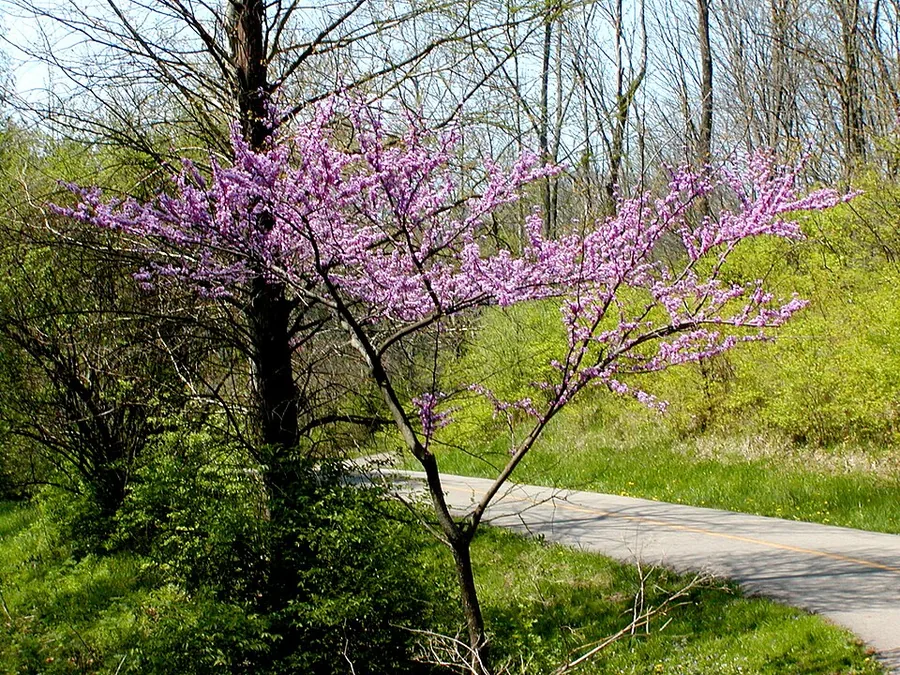
Long before the first leaf, it sets the bare spring skyline alight with rose-pink blooms clinging to the branches.
Full sun
Every 7–14 days
USDA 4–9
20–30 ft · 6.1–9.1 m
Overview
Eastern redbud is the small native tree that draws every eye in the yard come early spring, the moment rose-pink to magenta flowers open straight from the bare branches and even along the trunk while the leaves are still weeks away. It sits in the legume family beside peas and beans, which explains both the tiny pea-shaped blossoms and the flat seed pods that arrive once the season moves on.
When the bloom has passed, broad heart-shaped foliage fills in and the tree relaxes into a soft, rounded form that reads gracefully against a house or fence. Its restraint is part of the appeal, topping out around 20 to 30 feet (6 to 9 m), so it furnishes a courtyard or smaller garden where a full shade tree would feel overbearing. It takes light in stride too, from full sun to fairly deep shade, slotting neatly into a woodland edge or beneath taller canopy.
Settled in, redbud is easy company and slow to complain, content right across zones 4 through 9. The two things to mind are root disturbance, because it dislikes being relocated, and a handful of fungal diseases that prey on a tree under stress. Keep it in good form and it returns the favor season after season with very little fuss.
Care
The short version: give it full sun to part shade in average, well-drained soil, water it faithfully through its young years, and reach for the pruners only once the flowers have finished. It takes most soils in stride and laughs off the cold, yet it resents soggy ground and would rather not be moved once it has made itself at home.
Light
Redbud asks little about light and will grow in anything from full sun to full shade. Bloom is fullest and the form holds densest where it gets full sun to part shade, which makes a woodland edge with a few hours of sun a natural home for it in the garden.
Water
Hold the soil evenly moist with steady watering for the first year or two as the roots find their footing. A grown tree shrugs off a brief dry patch, yet it will not endure a long drought, nor will it tolerate soggy, waterlogged footing. Give it a deep drink any time a dry run carries on past a few weeks.
Soil
It settles happily into loam, clay, or sand so long as the drainage is sound, and it takes a broad pH span from 5.5 to 8.0 in stride. Average, medium-moisture ground is plenty. The one thing it will not put up with is soil that stays wet underfoot.
Temperature
This is a genuinely hardy tree, weathering winters as low as -29°F (-34°C) and summer heat up to 95°F (35°C). That cold tolerance is precisely what carries it across so much of the map.
Humidity
Plain outdoor air is all it wants, so there is no reading to fuss over. Moving air counts for more than moisture overhead, since still, packed surroundings are what open the door to leaf spot and other fungal bother.
Feeding
Offer a balanced slow-release tree fertilizer in early spring as growth picks back up. Feeding earns its keep beyond mere size, since a well-nourished tree stands up far better to canker and wilt.
Pruning
Take the pruners to it in late spring, just after the bloom, clearing out dead, broken, or cankered wood and tidying the shape. Cut away any cankered or wilting limb the instant it shows itself to check the spread of disease. Keep lawn weedkillers at a distance, as redbud is very sensitive to herbicide drift.
Repotting
Redbud is seldom kept in a pot and rarely calls for repotting. Should you carry a young one in a container, look out for roots circling or pushing free, water sluicing straight through, or sparse new growth, each a cue that it is ready for more room or a place in open ground.
Size & spacing
Count on a mature tree of 20 to 30 feet (6 to 9 m) tall carrying a wide, open crown of 25 to 35 feet (7.5 to 10.5 m). Set aside that much breathing space from the start, since the canopy reaches broad and the tree will resent any later move.
When to plant
Plant a young redbud in early spring, while it is still small and content to settle into a permanent place, because it has little patience for being uprooted again later. The payoff lands the next spring, when those bare branches break open in pink from March through May, opening the season well ahead of nearly anything else around it.
Northern hemisphere
Southern hemisphere
Typical months for a temperate climate: start earlier in warm zones, later where spring frosts linger.
- Plant: early spring while young, in a permanent protected site (does not transplant well)
- Harvest: early spring (March to May), pea-like rose-pink to magenta flowers on bare branches and trunk before leaves emerge
Hardiness
USDA hardiness zones: 4–9
Temperature: down to -34°C
Troubleshooting
Nearly every redbud problem comes back to a fungal disease moving into a tree already stressed or wounded. Once you can tell a serious canker or wilt from the harmless freckling of leaf spots, you will know exactly when to step in and when to simply let the tree be. Read the descriptions below, then act early on the few that truly count.
A limb going bare while sunken dark patches creep along the bark
What you are seeing is Botryosphaeria canker, a fungus that finds its way in through a cut or a stressed patch of wood and then chokes off everything on the branch beyond it. The cure is unglamorous but reliable: take the branch off well below the lesion, send the wood to the burn pile or the bin, and disinfect your tools as you go. A tree kept in good health rarely falls to it, so steady watering and attentive care remain the surest protection for the look you want.
Fix:
- Prune out and destroy all dead, dying, and cankered branches well below the lesion
- Disinfect pruning tools between cuts
- Improve vigor with proper watering, mulching, and correct fertilization
One half of the canopy drooping with undersized leaves
Verticillium wilt rises through the roots and plugs the sapwood, which is why the trouble usually settles on a single side and leaves the silhouette lopsided. Lift the bark on a fading branch and dark streaks will show in the wood beneath. Nothing cures it, so the work is preventive: keep the tree thriving, clear away the dead wood, and never set a susceptible species back into that same ground. Among the named selections, 'Forest Pansy' suffers it worst.
Fix:
- Prune out dead wood and dispose of it
- Improve host vigor with light mulching and watering during dry periods of more than a few weeks
- Fertilize when appropriate and manage other stresses
Dark speckling and blotchy marks scattered over the foliage
Those marks point to fungal leaf spot and anthracnose, which tend to surface when the leaves sit damp and the air cannot circulate through a packed canopy. They blemish the look of the foliage but seldom put an established tree at any real risk. Clear away the fallen leaves, keep the watering off the canopy itself, and the tree carries on untroubled.
Fix:
- Rake up and destroy fallen infected leaves
- Improve air circulation and avoid overhead wetting of foliage
- Maintain tree vigor with proper watering and fertilization
Toxicity
Reassuring news for households with pets or children: eastern redbud is safe through and through. It does not appear on the ASPCA toxic list, nothing about it threatens an animal, and the flowers and young pods are edible enough that they land in people's salads. Not a single part of this tree needs roping off.
Safe for
People · Cats · Dogs · Horses · Rabbits · Livestock · Birds
Cats None
With nothing on the ASPCA toxic list to flag, a household cat can sample a stray leaf or a dropped flower and come to no harm.
Dogs None
There is no toxin in play, so a dog mouthing a pod or two will be perfectly fine, though a heap of the bulky pods at once may bring on a brief spell of loose stool.
Horses Safe
Grazing horses face no threat from redbud, and the tree is on occasion browsed with no ill effect at all.
Rabbits Safe
Both the leaves and the flowers sit well with rabbits, which routinely nip at young redbud growth out in the wild.
Livestock Safe
Cattle, goats, and sheep may take the foliage and pods with nothing whatsoever to worry about.
Birds Safe
The seeds feed birds and the spring blossoms draw them in, every bit of it entirely harmless.
People Safe
Those pink spring blossoms and the tender young pods are edible, finding their way into salads and fritters.
No special handling required for pet safety; as with any plant, discourage pets from gorging on fallen pods, which can cause mild non-specific stomach upset from the bulk.
Varieties
Past the wild form, growers have singled out redbuds for their leaf color, the punch of their bloom, and a more compact stature. The named selections below are the ones you are most apt to come across at the nursery.
'Forest Pansy'
Leaves arrive a deep scarlet purple and ease toward green as the season runs on, a dramatic look that comes at a cost, since this is the selection most prone to verticillium wilt.
'Appalachian Red'
No redbud blooms brighter, its flowers a vivid magenta that edges right up to neon pink for a hot splash of spring color.
'The Rising Sun'
Young growth opens in apricot and gold before easing into lime and green, giving the canopy a layered, multi-toned look all at once.
'Hearts of Gold'
Its golden-yellow leaves are the calling card, the result of a lucky discovery in a Greensboro, North Carolina garden back in 2002.
'Ace of Hearts'
Small heart-shaped leaves on a tidy dwarf frame, it slips into a snug corner that a full-grown redbud would simply overwhelm.
How to propagate
Redbud is raised chiefly from seed or by grafting, given that it travels poorly as an established tree and is grudging to root from cuttings. None of the routes are fast, so the trait that pays off here is patience rather than any particular knack.
SeedModerate
Collect mature pods in fall; sow after pretreatment · 1-2 years to a transplantable seedling
Gather the ripe pods once fall arrives, then coax the seed awake by nicking that hard coat and following it with a stretch of cold, damp storage. Leave either step out and the seed stays reluctant to germinate. Once it does break ground, plan on 1 to 2 years before a young seedling has the size to be shifted to its place.
GraftingDemanding
Late winter to spring (budding in summer) · 1-2 seasons
Seed will not reproduce a named selection like 'Forest Pansy' faithfully, so nurseries bud or graft it onto seedling rootstock to hold the look true. The timing runs from late winter on into spring, with summer reserved for budding, and the join needs a season or two to knit firmly. It is precise work, the kind best handed to a practiced grower.
Stem cuttingsDemanding
Early summer from softwood · Several months to a season
Softwood cuttings can be taken in early summer for anyone keen to attempt it, though the odds are humbling. Redbud roots reluctantly and patchily this way, and the few cuttings that do take still want several months to a season to settle in. For most growers, seed or grafting is the wiser first choice.
Myths
Eastern redbud pods and seeds are dangerously poisonous to dogs and cats.
Eastern redbud appears nowhere on the ASPCA toxic roster, and it is regarded as safe around both cats and dogs. People happily eat the flowers and the young pods, which tells you all you need to know: this is not the perilous legume some gardeners take it for, and it deserves no place among the genuinely hazardous plants.