Herb · Fabaceae
Fenugreek
Trigonella foenum-graecum
Sown into cool spring soil, fenugreek brings fresh methi leaves to the kitchen within a month.
Full sun
Every 3–5 days
50–86°F · 10–30°C
90–120 days
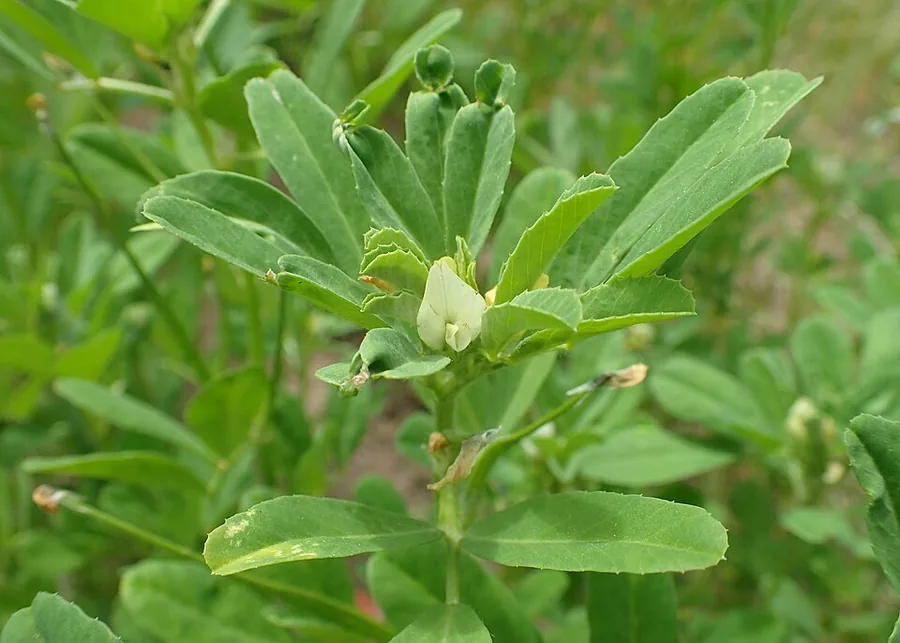
Overview
Fenugreek belongs to the kind of kitchen garden that earns its place on the plate. A quick legume, it offers two harvests for one square of soil: fragrant methi leaves for the cooking pot and golden, gently bitter seeds for the spice drawer. It comes from the pea and bean family and has had a seat at Mediterranean and South Asian tables for thousands of years, which gives any plot a quiet sense of culinary heritage.
It asks remarkably little, which is part of its charm in a busy household. As a legume it draws nitrogen from the air through its roots, so it sidesteps the feeding routine most edibles demand and even hands the next planting a richer bed. Staying low and neat at knee height at most, it slips easily into a herb border, a raised bed, or a sunny doorstep pot without crowding its neighbors.
Think of it as a cool-weather pleasure rather than a midsummer one. Heat unsettles it, sending it into early flower and seed before the leaves have earned their keep, so the trick is to fold the sowing into the calmer ends of the season. Sow it in the cool of spring or late summer and it slots neatly into the rhythm of the cooking year, herb first, then spice.
Care
The short version: set fenugreek in a sunny, well-drained spot, sow it straight into cool soil, keep the bed evenly moist but never wet, and leave the feeding light, since this self-sufficient legume makes its own nitrogen.
Light
Give fenugreek a spot in full sun, six hours a day or more, where it settles into the brightest corner of a bed or balcony and turns out its fullest leaves and best seed. It accepts partial shade without complaint, and a little afternoon shade is a quiet ally in warm weather, easing the rush to bolt.
Water
Keep the bed lightly and evenly moist through the growing weeks, a drink every 3 to 5 days or so as part of the usual routine. Waterlogging is the one thing to avoid, since soggy ground undoes the roots. As the seed pods fill and dry toward season's end, the watering can wind down.
Soil
Plant it into well-drained, fertile loam, with a pH between 6.0 and 7.0. Good drainage counts for more than a rich bed here, as the plant carries its own nitrogen, and an open, loose soil lets the taproot settle in comfortably.
Temperature
Fenugreek is content across 50°F to 86°F (10°C to 30°C), though it shows best at the cooler end of that range. Once the day pushes past roughly 80°F (27°C) it leans toward bolting, which is why the milder shoulders of the year suit it, and the cook, far better.
Humidity
Ordinary garden humidity around 40% to 60% is all it needs, so it asks nothing unusual of the spot. Airflow earns more attention, since a crowded, still, damp planting is what opens the door to powdery mildew.
Feeding
Keep the feeding light, or set it aside entirely. As a nitrogen-fixing legume it needs little more than a single low-nitrogen feed at planting, with phosphorus or potassium reserved for a genuinely poor bed. An overgenerous hand only swells the leaf at the cost of the rest of the plant.
Pruning
Pinch the growing tips to keep the plant full and shapely, and gather the outer leaves often so fresh growth keeps coming to the kitchen. When leaves are the aim, lift away the flower stalks as they rise, holding the plant's energy in the foliage.
Repotting
Repotting never enters the picture. Fenugreek lives a single season from seed, so the garden simply sows again rather than moving a plant on. In a pot, roots reaching through the drainage holes or growth that stalls are the cue that it has outgrown its container.
Size & spacing
It keeps a tidy footprint, standing 12 to 24 inches (30 to 60 cm) tall with a spread of just 6 to 12 inches (15 to 30 cm), which makes it a graceful filler among taller herbs. Thin the seedlings to that spacing so the planting breathes and stays clear of mildew.
When to plant
Fenugreek rewards a gardener who works with the seasons, since it bolts the moment the weather turns warm. Sow it into warm soil once the last spring frost has passed, then return to it in late summer for a fall cutting. Leaves arrive within three to six weeks, an easy first reward, with seed pods rounding out the later season.
Northern hemisphere
Southern hemisphere
Typical months for a temperate climate: start earlier in warm zones, later where spring frosts linger.
- Sow: Not recommended; fenugreek forms a taproot and resents transplanting, so direct sow.
- Plant: Direct sow after last frost when soil is at least 60°F (15°C); sow in spring or late summer for a cool-season crop.
- Harvest: Leaves ready 20 to 40 days after sowing; small white to pale-yellow flowers, then seed pods harvested at about 90 to 120 days when pods turn yellow.
Hardiness
USDA hardiness zones: 6–9
Temperature: down to -23°C
Troubleshooting
Most of what troubles fenugreek comes back to two familiar garden conditions: a bed that stays too wet and a stretch of weather that runs too warm. The plant signals both early through its leaves and seedlings, so a passing glance on the morning rounds is usually enough to step in. Match the picture below and adjust before it takes hold.
Lower leaves yellowing as the planting begins to wilt
The cause is usually a bed that holds too much water rather than a hungry plant. Where the soil never drains, the roots are starved of air and turn brown and soft, and root rot follows. Pull back the watering, open up the drainage, and keep the planting clear of any standing water.
Fix:
- Improve soil drainage
- Reduce watering frequency
- Avoid standing water around roots
A pale, dusty film drifting across the foliage
This is powdery mildew, a fungus that settles into a crowded, still planting when the air sits warm. The film rubs away but returns until the air moves again, so give the plants more room, lift out the worst leaves, and water at the base to keep the foliage dry.
Fix:
- Increase plant spacing and airflow
- Remove affected foliage
- Avoid overhead watering
Seedlings folding at the soil line or scarcely appearing
Cold, wet soil invites damping-off, a fungus that nips the young stems at ground level until they buckle. The remedy is warmth rather than more water, so soak the seed, sow it shallow at about 1 cm deep, and wait until the soil has reached 60°F (15°C).
Fix:
- Sow in warm (60°F or above) well-drained soil
- Avoid overwatering
- Do not sow seed too deep
Early flowers and seed with a thin, sparse crown of leaves
Warmth is at the root of it. Once the season climbs past about 80°F (27°C), fenugreek hurries into flower and stops offering tender leaves, the habit known as bolting. Sow it into the cool of early spring or late summer, lend it light afternoon shade through a heat wave, and harvest the leaves before the flower stalks rise.
Fix:
- Harvest leaves before bolting begins
- Sow during the cool season (early spring or late summer)
Toxicity
Fenugreek is a reassuring choice for a household that grows what it eats. Its leaves and seeds are everyday food, the FDA lists it as a safe spice, and it has long fed grazing animals as well. The single note of caution is the concentrated seed supplement, which can lower blood sugar when taken in quantity.
Safe for
People · Cats · Dogs · Horses · Rabbits · Livestock · Birds
Cats None
Safe to live alongside. A cat that grazes a good deal of leaves might turn a touch gassy or pass a soft stool, and that passes on its own.
Dogs None
No genuine risk from the plant itself. A large mouthful of leaves may bring mild gas, and the concentrated seed supplement is the one item to keep out of reach, since it can ease blood sugar down.
Horses Safe
Well suited to horses. The plant is a recognized forage legume, and the foliage is grazed down without bother.
Rabbits Safe
Rabbits take the fresh leaves with no harm at all. Bring any new green in gradually so their digestion has time to adjust.
Livestock Safe
Long grown as fodder for cattle, sheep, and goats. The whole plant is safe to graze or cut for hay.
Birds Safe
Both the leaves and the sprouted seeds are safe for poultry and pet birds to pick at.
People Safe
A kitchen mainstay from leaf to seed. It is worth knowing that a heavy dose of seed can lower blood sugar, a point for anyone managing diabetes to keep in mind.
Leaves and seeds are non-toxic, but seeds eaten in large amounts can lower blood sugar, and concentrated extracts or essential oils should be avoided in pets.
Varieties
Fenugreek divides, broadly, into types kept for their seed and types kept for their leaf. A handful of names recur on the seed packet rack, and the choice comes down to whether the kitchen wants the spice or the fresh herb.
Common seed fenugreek
A tall, upright type kept mainly for its golden-brown aromatic seeds, the form that reaches the spice drawer whole or ground.
Pusa Early Bunching
An Indian cultivar chosen for quick, leafy regrowth, giving the kitchen several cut-and-come-again harvests across a single season.
Kasuri (Qasuri) methi
A small-leaved type prized for its dried leaves, which carry a deeper, more aromatic flavor than the fresh herb.
Companions
Fenugreek works best as a soil-builder in rotation. Because it leaves nitrogen behind, the crops that follow it gain the most.
Plant near
Heavy-feeding leafy greens and brassicas grown after fenugreek: Fenugreek fixes atmospheric nitrogen, enriching the soil for subsequent nitrogen-hungry crops.
How to propagate
Fenugreek keeps propagation refreshingly uncomplicated, growing from seed alone. Its taproot puts cuttings and transplants out of reach, so the garden simply sows a fresh sweep each time the bed comes free.
SeedEasy
Spring after last frost or late summer for a fall crop · Germinates in about 5 to 7 days
Fenugreek grows from seed and nothing else, an arrangement that fits a plant whose taproot rules out transplanting. Soak the seed for a few hours to soften its coat, then settle it about 1 cm deep into warm, well-drained soil. Sprouts appear in 5 to 7 days, and the bed is simply resown wherever the next crop is wanted.
Myths
Fenugreek needs heavy nitrogen feeding like the leafy vegetables.
It provides its own. Being a legume, fenugreek gathers nitrogen from the air through nodules on its roots, so a heavy feed is effort wasted. Leave the nitrogen aside and let the plant supply itself, adding only phosphorus or potassium where the bed is truly poor.
Fenugreek should be started indoors and transplanted out.
That approach checks the plant. Fenugreek sends down a taproot and resents disturbance, so a moved seedling sulks or fails. Sow it where it is to grow and leave the seed trays for something else.
Fenugreek needs a long, hot season to flourish.
The reverse holds true. It is a swift cool-season crop, seed to harvest in about 90 to 120 days, and warmth only hastens it toward bolting. Sow it in the cool of spring or late summer for the finest leaves.