Shrub · Adoxaceae
Elderberry
Sambucus canadensis
Offer it sun, steady moisture, and a second cultivar nearby, and elderberry returns the favor with heavy clusters of dark fruit.
Full sun
Every 3–7 days
USDA 3–9
5–12 ft · 1.5–3.7 m
Overview
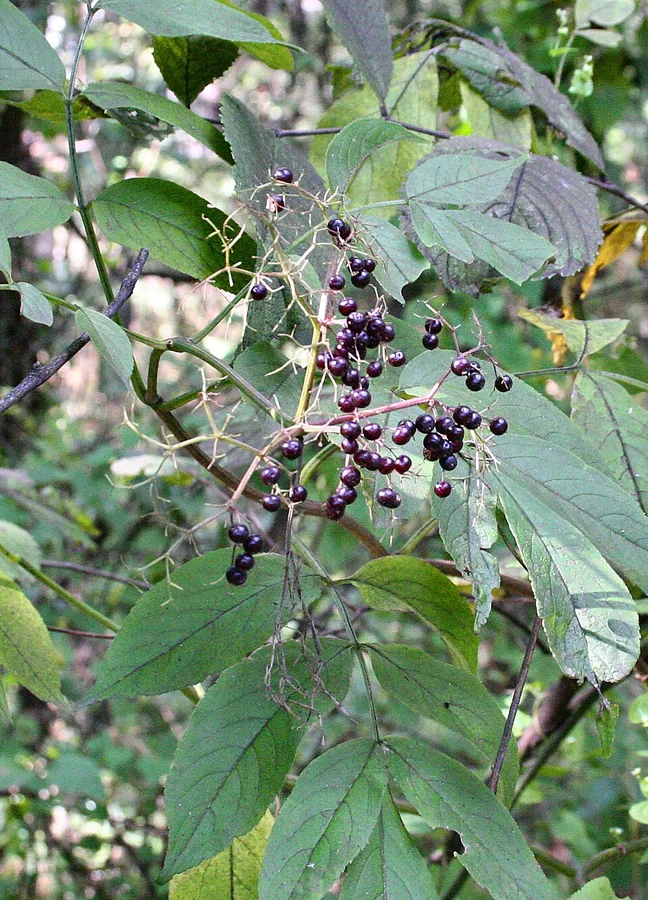
Few shrubs furnish a garden with as much grace and as little fuss as elderberry. It marks the calendar twice, with wide creamy flower heads opening in June and dark berry clusters coloring up from August into September, which makes it a quietly seasonal anchor for a relaxed border or a working kitchen plot. A member of the genus Sambucus, it grows wild across much of North America along damp ground and field edges, and given its head it reaches 5 to 12 feet (1.5 to 3.7 m), spreading just as wide into a softly layered, multi-stemmed thicket.
Its easygoing temperament is part of the appeal for a low-effort, lived-in garden. Cold holds no fear for it across zones 3 through 9, and it takes poor soil, wet ground, and partial shade in stride. One rule, though, deserves your full attention from the start: only the fully ripe berries, and only after cooking, are fit to eat. The leaves, stems, bark, roots, and any raw or unripe fruit hold cyanogenic compounds that will leave people and animals unwell.
If the harvest is what draws you, plan for a companion within easy reach, because a single plant sets only a modest crop. Pair two different cultivars that bloom together and they pollinate one another, weighing the canes down with fruit. Give it space, keep the water steady, and prune it each winter, and an elderberry settles into the rhythm of a garden remarkably fast.
Care
The short version: site it in full sun to part shade in rich, evenly moist soil, offer a balanced feed in spring, give it a firm dormant-season prune each winter, and keep a second cultivar close by for a generous crop.
Light
Elderberry carries its best crop in full sun, where the broad flower heads and berry clusters fill out completely. It will accept partial sun and even partial shade, but a shadier setting trades away fruit, so expect a lighter harvest the further it sits from open light.
Water
Hold the soil evenly moist, since the shallow, fibrous roots dry quickly and the plant notices most while it flowers and fruits. Soak it deeply through any dry stretch, every 3 to 7 days as conditions ask, while taking care that the ground never stays waterlogged.
Soil
Set it in rich, moist, well-drained loam, though elderberry is accommodating and settles into clay, sand, or ground that runs wet or dry. A broad pH range from 5.5 to 7.5 suits it, which means most garden soil will do.
Temperature
This is a truly hardy shrub, holding through winter cold to -29°F (-34°C) and summer heat to 95°F (35°C). That span carries most temperate gardens with no special attention at all.
Humidity
Ordinary humidity in the 40% to 70% range is all it asks, and outdoor air seldom falls short. Still, crowded air does open the door to powdery mildew, so good airflow counts for more than the moisture around it.
Feeding
Offer a single feeding in early spring as growth rouses, using a balanced or nitrogen-rich blend such as 10-10-10 or composted manure. For a plant this energetic, one seasonal feeding does the whole job.
Pruning
Prune through the dormant season, in late winter. On an established plant, cut dead, weak, and 3-plus-year-old canes to the base to draw out the lively 1 to 2 year wood, and some gardeners simply take the whole plant to the ground each year. Lift root suckers as you work to keep it from wandering.
Repotting
Elderberry is meant for open ground rather than a pot, so repotting barely enters the picture. Should you keep one in a container, shift it on before the roots circle, or it stalls and droops not long after each watering.
Size & spacing
A mature plant rises 5 to 12 feet (1.5 to 3.7 m) and spreads roughly to match, 6 to 12 feet (1.8 to 3.7 m). Allow each shrub generous room so air flows freely and mildew finds no foothold.
When to plant
Elderberry keeps time with the seasons, which makes it easy to fold into a garden routine. Plant dormant bare-root stock or cuttings in early spring once the hard frosts let go, look for the creamy flower heads in June, and gather the dark, ripe berries from August into September.
Northern hemisphere
Southern hemisphere
Typical months for a temperate climate: start earlier in warm zones, later where spring frosts linger.
- Sow: Late winter, only after 60-90 days of cold-moist stratification; seed is slow and erratic, so cuttings are preferred
- Plant: Early spring after the last hard frost, using dormant bare-root plants or cuttings
- Harvest: Flowers in June; dark berry clusters ripen August to September
Hardiness
USDA hardiness zones: 3–9
Temperature: down to -40°C
Troubleshooting
Elderberry is a forgiving plant, and most of what comes its way stays minor. Powdery mildew and aphids dull the look more than they wound the shrub, while cane dieback and visiting birds call for a sharper response. Match what you notice below and step in before a small concern widens.
One cane fades while the rest stay strong
A single cane failing on its own points to cane borers or fungal dieback in tired or injured wood. Take the cane off at the base and get rid of it. A yearly dormant prune that clears anything past 3 years old keeps the trouble from settling in and refreshes the whole plant.
Fix:
- Cut out and destroy affected canes at the base
- Remove old (3-plus-year) and damaged canes during dormant pruning
A pale dusting settles across the leaves
What you are seeing is powdery mildew, a fungus that takes hold where canes grow tight and shaded and the air hangs motionless. Open the plant up by thinning and pruning, clear away the worst-hit leaves, and turn to a labeled fungicide or horticultural oil only if it keeps moving. A healthy shrub shrugs it off, so the harm is mostly to appearances.
Fix:
- Thin and prune canes to improve air flow
- Remove and dispose of badly affected leaves
- Apply a labeled fungicide or horticultural oil if severe
Tacky, curling tips alive with minute insects
You are looking at aphids, pulled in by the soft new shoots that a heavy nitrogen feed tends to produce. A sharp jet of water knocks them loose, and insecticidal soap or horticultural oil finishes the job if any cling on. Left to their own devices, lady beetles and lacewings will mop up whatever remains.
Fix:
- Spray off with a strong jet of water
- Apply insecticidal soap or horticultural oil
- Encourage lady beetles and lacewings
Clusters disappearing right as they turn dark
Birds reach ripe elderberries ahead of you and can clear a cluster within hours. Lay netting over the shrub as the fruit begins to darken, then gather whole cymes the moment they are ready. Planting the cultivar Bob Gordon works in your favor as well, because its clusters tip downward and hang where birds struggle to reach.
Fix:
- Net plants as fruit begins to ripen
- Harvest whole cymes promptly when berries darken
- Grow cultivars with drooping clusters such as Bob Gordon
Toxicity
Here is where elderberry asks for genuine care. The leaves, stems, bark, roots, and any raw or unripe berries carry cyanogenic glycosides that free cyanide and unsettle the stomach, and they are toxic to people and animals without exception. Only fully ripe berries that have been cooked are safe at the table, so keep children, pets, and livestock clear of every green part of the plant.
Toxic to
Cats · Dogs · Horses · Rabbits · Livestock · Birds
Safe for
People
Cats Moderate
A cat that nibbles the leaves, stems, or raw berries tends to drool, then bring it back up, with diarrhea and a dull, withdrawn mood close behind. The genuine danger comes with a large mouthful of green plant, where the cyanide it sets free can leave the animal weak.
Dogs Moderate
Look out for vomiting, diarrhea, and a dog that loses interest in food and turns listless after getting into the plant. Most run as a simple stomach upset, yet a big serving of raw berries or leaves can take the signs deeper.
Horses Toxic
For a horse the leaves and woody growth are hazardous, and the cyanide they release may surface as drooling, colicky discomfort, strained breathing, and an unsteady gait. Keep elder fenced off from any pasture or paddock within a horse's reach.
Rabbits Toxic
Keep the foliage, stems, and raw berries away from a rabbit entirely. Even a little of the green plant can set off gut stasis and a swift decline, so the whole shrub should stay well out of their way.
Livestock Toxic
Cattle, goats, and sheep that graze the leaves or green fruit risk cyanide poisoning, which at its worst brings bloat, trembling, and collapse. Wilted prunings tossed across a fence give stock an easy path to harm.
Birds Caution
Wild birds take the ripe berries without any harm and carry off the seed, one reason the plant fruits so generously. Cyanide still lingers in the green parts and the raw, unripe fruit, so none of that should ever reach a cage bird.
People Cooked ripe fruit safe
Cooked, fully ripe berries are a safe and well-loved kitchen staple, and cooked or processed flowers pose no trouble either. Taken raw, the berries along with any leaves, stems, bark, or roots bring on nausea, vomiting, and diarrhea, so cook the fruit and discard the green parts.
Keep children and pets from chewing leaves, stems, bark, or unripe berries. Never eat raw berries or any green parts; always cook ripe berries and discard stems and leaves before eating.
Helpline numbers

United States
ASPCA Animal Poison Control: (888) 426-4435 (fee applies)
Poison Control: (800) 222-1222



Canada
Poison Centres: 1-844-764-7669
Varieties
Most home gardeners settle on a short list of proven cultivars, and since the plant relies on a pollination partner, they tend to go in as pairs. These are the names worth carrying into the garden center.
Adams
A spirited old American selection prized for its large fruit clusters, and a natural choice to set beside York so the pair can cross-pollinate.
York
Few cultivars match York for berry size, and it stands in as a dependable pollinizer for Adams.
Bob Gordon
A generous Missouri cultivar whose clusters turn over and hang downward as they ripen, tucking much of the crop beyond a bird's reach.
Sambucus nigra (European black elder)
Counted here as an alias, this European species reaches taller and more tree-like proportions and is the parent of many ornamental and medicinal forms.
Companions
Elderberry's most useful neighbor is another elderberry. A second cultivar that blooms at the same time is what turns a light crop into a heavy one.
Plant near
A second, different elderberry cultivar (for example Adams with York): Cross-pollination between two cultivars that bloom at the same time increases fruit set and yield.
How to propagate
Among shrubs, elderberry is one of the easiest to multiply, and three of the four routes succeed almost on their own. Most gardeners pass over seed and take free copies of a plant already at hand.
Stem cuttingsEasy
Hardwood cuttings in late winter while dormant; softwood cuttings in early summer · Roots in a few weeks; transplantable within one season
Nothing starts an elderberry more readily than this. Cut pencil-thick pieces holding 2 or 3 nodes, keep them evenly moist, and roots appear within a few weeks. A cutting started this year will be ready for its final spot by the close of the same season.
DivisionEasy
Dormant season, late winter to early spring · Establishes within one growing season
Because elderberry sends up rooted suckers around the parent clump, dividing it is as easy as lifting and separating those while the plant rests. Every piece arrives with roots of its own and finds its feet across a single growing season.
LayeringEasy
Spring to summer · Roots over one season before severing
The plant's long, supple canes make layering a natural fit. Hold a low cane against the soil from spring on through summer, allow it a full season to root where it meets the ground, and then sever it as its own new plant.
SeedDemanding
Sow after 60-90 days of cold-moist stratification · Slow and erratic; 1-2 or more years to a plantable shrub
Going by seed is the patient route. The seed wants 60 to 90 days of cold, moist stratification before it stirs, sprouting comes unevenly, and a plantable shrub is 1 to 2 years or more away. Seedlings drift from the parent too, so cuttings serve you better when keeping a named cultivar true to type.
Myths
Every part of an elderberry is deadly poison, so none of it can be eaten.
Once cooked, fully ripe berries and flowers are enjoyed widely and carry a deep history in the kitchen and the medicine cabinet. Only the leaves, stems, bark, roots, and raw or unripe berries are toxic, and a turn in the pot settles the ripe fruit.
Ripe elderberries are fine to eat straight off the bush.
Cyanogenic glycosides in raw and unripe berries can leave you queasy, sick to your stomach, and running for the bathroom. They are safe only after cooking, which is the reason no one grazes on them by the handful.
One elderberry bush is enough for a full crop.
A solitary plant is only somewhat self-fruitful, so it carries a sparse crop on its own. Plant two or more cultivars that bloom at the same time and both fruit set and yield rise sharply.