Shrub · Adoxaceae
Viburnum
Viburnum
Give it sun, space, and a steady drink while young, and viburnum sets a garden's seasonal mood with spring fragrance and fall berries for decades.
Full sun
Every 5–10 days
USDA 2–8
4–12 ft · 1.2–3.7 m
Overview
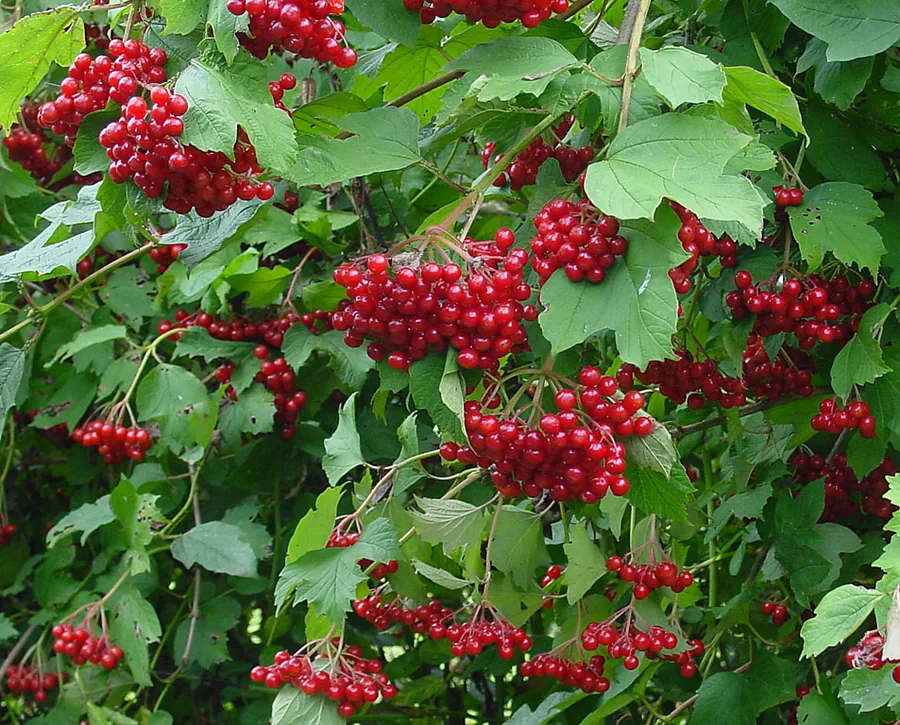
Viburnum earns a place in the garden as a deciduous shrub that carries two seasons. Spring arrives with clusters of white or pink flowers, many of them sweetly fragrant, and fall answers with bright berries and warm leaf color that shift the mood of a border. The genus spans low rounded mounds to shrubs near the size of a small tree, so it slips as easily into a tidy foundation planting as into the back of a deep bed.
Part of its appeal is how little it demands of a busy household. It stands up to cold as low as -40°F (-40°C), works in full sun or part shade, and settles into clay, loam, or sand, which makes it a forgiving choice for almost any plot. Once established, most kinds ride out a dry spell alone, an easy fit for a garden tended on weekends.
Beyond looks, viburnum shapes how a space lives. Songbirds work the berries through fall and the dense branching offers nesting cover, so a hedge along a boundary screens a plain fence while drawing life to the edges of a yard. Set it where a path or a doorway brings you close in spring, and the fragrance becomes part of the daily routine.
Care
The short version: place viburnum in full sun to part shade in average, well-drained soil, keep it watered while it settles in, and prune right after the spring flowers fade.
Light
Viburnum performs best in full sun, where the flowers and berries come on strongest, though it accepts partial sun and partial shade for a shadier corner. Push it into deep shade, though, and both the spring bloom and the fall display fade, taking much of its seasonal interest with them.
Water
Give it evenly moist, well-drained soil, especially while it settles into a new spot. Water deeply through the first season and during dry spells, every 5 to 10 days as the weather asks. Once established, most viburnums manage drought on their own, which keeps a planting low-maintenance.
Soil
Average, medium-moisture loam suits it, and it takes clay or sand without complaint. Aim for a slightly acidic to neutral pH of 5.5 to 7.0, and site it where water drains rather than pools, so the planting stays healthy season to season.
Temperature
This is a cold-hardy shrub, comfortable through winters down to -40°F (-40°C) and summer heat up to 95°F (35°C). That range covers most temperate gardens, so it rarely needs coddling to see out the cold.
Humidity
Ordinary outdoor air is all it asks, so there is no humidity target to manage. Airflow matters more, since crowded, damp leaves invite powdery mildew and leaf spot that dull the look of a planting.
Feeding
Feed in early spring with a balanced slow-release or general shrub fertilizer, with a light touch. A viburnum in decent soil often needs little to no feeding at all, which keeps upkeep simple.
Pruning
Prune right after the flowers fade, since next year's buds form on old wood and a late cut removes them along with the coming display. Take out dead, damaged, or crossing stems and shape to suit the space. An old, overgrown plant will even accept hard rejuvenation pruning when a border needs a reset.
Repotting
As a landscape shrub, viburnum rarely needs repotting. A container specimen used on a patio only wants a bigger pot when roots circle the container, escape the drainage holes, or water runs straight through.
Size & spacing
Expect a mature shrub from 4 to 12 feet (1.2 to 3.7 m) tall with a 4 to 10 foot (1.2 to 3 m) spread, depending on the choice. Give each plant room for its full width so the planting breathes and keeps its shape.
When to plant
Viburnum sets its flower buds on old wood, so the calendar turns on pruning more than planting. Establish new shrubs in the mild weather of spring or fall, let the bloom carry a garden from March into May, and watch the berries color the scene from late summer into fall.
Northern hemisphere
Southern hemisphere
Typical months for a temperate climate: start earlier in warm zones, later where spring frosts linger.
- Plant: Spring or fall
- Harvest: Spring (March to May); colorful berries ripen late summer into fall
Hardiness
USDA hardiness zones: 2–8
Temperature: down to -46°C
Troubleshooting
Most viburnum troubles show up on the leaves, whether from a chewing beetle or a fungus or bacteria. Caught early, the shrub recovers with little to spoil the display. Match the symptom below, then act before it spreads.
Leaves stripped to the veins in spring
Foliage reduced to lace is the mark of the viburnum leaf beetle, whose larvae and adults feed until only the veins remain. Three hard years running can cost you the shrub, so it pays to act early rather than lose a feature planting. Cut out and burn the egg-laid twigs over winter, then treat the young larvae soon after they hatch in spring.
Fix:
- Prune out and destroy egg-infested twigs between October and April before larvae hatch
- Treat newly hatched larvae in spring with a labeled insecticide applied shortly after emergence
- Alternatively apply a single labeled systemic soil drench in spring but no later than early July to control adults
Angular dark spots on the leaves with some dieback
Sharp-edged dark blotches that spread through cool, wet spring weather point to bacterial leaf spot, while a stressed shrub can also lose shoots to a crown borer. The angular shape sets it apart from the rounder marks of a fungus. Gather and destroy the spotted leaves, prune out the worst shoots, and keep water off the foliage so it dries quickly.
Fix:
- Remove and destroy infected leaves and prune out badly affected shoots
- Avoid overhead watering and work plants only when dry
- Improve spacing and airflow to speed leaf drying
A white powdery film across the upper leaves
That dusty gray coating is powdery mildew, a fungus that favors crowded, shaded plants when the days run warm and the nights cool. It looks worse than it is and seldom causes lasting harm to the shrub. Open the plant with selective pruning to bring in more light, and reach for a labeled fungicide only if it keeps spreading. Leave the sulfur aside, since it injures sulfur-sensitive viburnums.
Fix:
- Improve air circulation by proper spacing and selective pruning
- Reduce excessive shade
- Apply a labeled fungicide such as myclobutanil, propiconazole, or thiophanate-methyl if needed; use horticultural oil only when temperatures stay below 85 degrees F
- Do not use sulfur, which can injure sulfur-sensitive viburnums
Toxicity
Viburnum settles comfortably into a home with pets and children. The ASPCA lists it as non-toxic to cats, dogs, and horses, and its berries feed the birds rather than pose a hazard. A pet that bolts a mouthful of leaves might have a brief upset stomach, but there is no real poison to disturb the household.
Safe for
People · Cats · Dogs · Horses · Rabbits · Livestock · Birds
Cats None
Viburnum is safe for cats. A cat that works through a good many leaves might drool or bring them back up, the usual answer to greenery rather than a sign of poisoning.
Dogs None
Dogs can share a garden with viburnum without concern. A dog that bolts a pile of foliage or berries may have a passing upset stomach, but no real toxin is at work.
Horses None
The shrub is non-toxic to horses, so a curious browse along a hedge does no harm.
Rabbits Safe
Rabbits can graze viburnum safely, since the leaves and twigs hold nothing harmful, though a steady diet of any one plant is never ideal.
Livestock Safe
Cattle, goats, and sheep can browse the foliage without trouble, since none of it is poisonous to grazing animals.
Birds Safe
Birds gather at the ripe berries and clear them with pleasure. That fruit feeds songbirds through fall and is one of the shrub's quiet gifts to a garden.
People Safe
Viburnum is not dangerous to people. Eating a lot of raw fruit from some species can bring on mild stomach upset, but it is not seriously toxic.
Although not toxic, eating any plant material can cause mild, temporary stomach upset or vomiting in pets, and large quantities of raw fruit of some species may cause mild digestive upset in people.
Varieties
The genus runs to hundreds of species and cultivars, far more than any one garden needs. A few stand out for fragrance, fruit, or sheer reliability, and these are the ones worth choosing by name.
Viburnum carlesii (Koreanspice viburnum)
A slow-growing shrub of 4 to 6 foot whose pink buds open to fragrant white snowball clusters in early spring, later giving way to blue-black berries in fall.
Viburnum dentatum (Arrowwood)
A tough native at 5 to 10 feet, offering flat creamy-white flower heads, blue-black drupes the birds favor, and dependable deer resistance.
Viburnum lentago (Nannyberry / Black Haw)
A tall native viburnum the ASPCA confirms is non-toxic to cats, dogs, and horses.
Viburnum opulus (European cranberrybush)
A non-native with showy red fruit that has turned invasive across parts of the US, unlike the well-behaved native viburnums.
How to propagate
Viburnum can be increased three ways, from quick softwood cuttings to slow seed, each suited to a different plan for filling out a garden.
Stem cuttingsModerate
Late spring to early summer while growth is soft (softwood) · Roots in about 3-4 weeks under mist; transplantable plants in about 3 months
Softwood cuttings are the dependable way to reproduce a named cultivar true to type for a matched planting. Take them in late spring to early summer while growth is still soft, dip the cut end in rooting hormone, and keep them warm and humid. They root in about 3 to 4 weeks under mist and are ready to move on in roughly 3 months.
SeedDemanding
Sow fresh seed in fall outdoors · Often 1-2 years to germinate due to double dormancy
The straight species can be grown from seed, though it asks for patience. Sow fresh seed outdoors in fall, and a double dormancy can hold it back for 1 to 2 years before it sprouts, often slow and uneven. Seed saved from a cultivar will not come true to the parent.
LayeringEasy
Spring to summer · Several months to a year to root
Layering is the easy route when a shrub carries low, flexible branches. Pin one down into the soil in spring or summer, leave it attached to the parent while it roots over several months to a year, then cut it free as its own plant.
Myths
A single viburnum will set a heavy crop of berries on its own.
Most viburnums fruit well only with a second, genetically different cultivar of the same species planted nearby to pollinate them. Plant just one and the display often comes to few berries, or none at all.
Viburnum berries are dangerously poisonous.
The ASPCA lists viburnum as non-toxic to cats, dogs, and horses. Eating a good deal of the raw fruit of some species may leave a person with a mild stomach upset, but the plant is not considered seriously toxic.