Ornamental · Poaceae
Mexican Feather Grass
Nassella tenuissima
Set against gravel and open sun, this airy grass brings a quiet, shifting softness to a relaxed garden room.
Full sun
Every 10–21 days
90–120 days
USDA 7–10
Overview
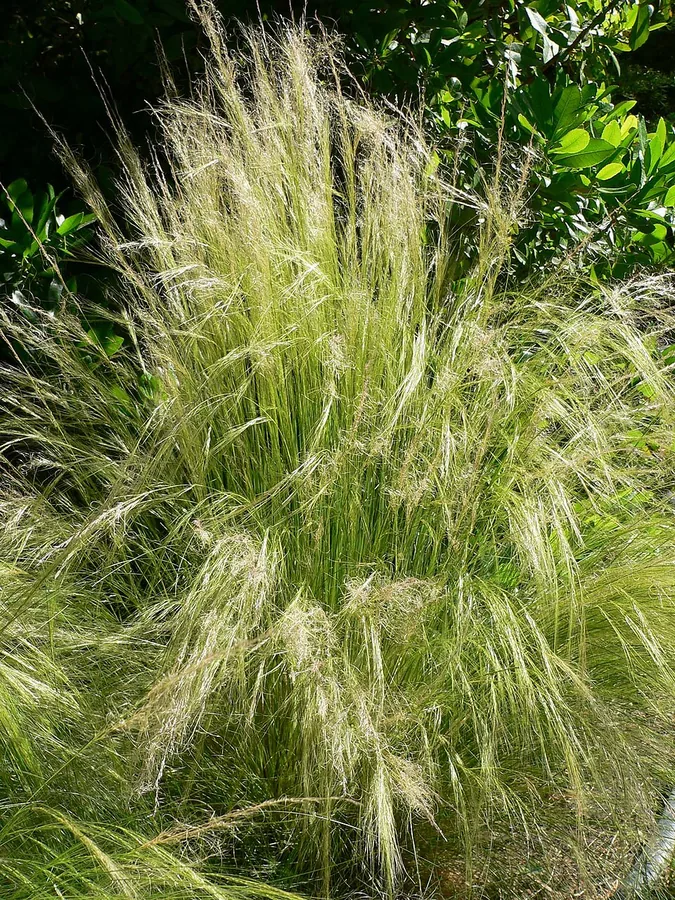
Few plants set a mood the way Mexican feather grass does. Drift it along a gravel path or let it pool at the foot of a sunny seating area, and the whole space takes on a loose, windswept softness that reads more meadow than manicured. It settles into a tidy fountain shape, so it gives a planting that easy, lived-in elegance without ever looking unkempt.
This is a grass for the kind of garden that wants to feel calm and low effort, the courtyard you pass through with morning coffee, the dry slope you would rather not fuss over. Coming from the arid southwest and Mexico, it belongs in pared-back, sun-soaked schemes built around gravel, stone, and a restrained palette, where its movement does the decorating. It even takes a quiet pause in high summer, browning gently before it returns with cooler days.
One note keeps the romance honest. A single clump scatters thousands of wind-borne seeds, and in mild-winter regions like California it has drifted past the garden and turned invasive in open grassland. Folded into a tended scheme, with the seed heads trimmed before they ripen, it stays the picture of relaxed grace. Left to its own devices, it wanders far past where the design intended.
Care
The short version: give it full sun and the sharp drainage of lean, sandy soil, water it sparingly once it has settled into the scheme, leave the fertilizer aside, comb it through each late winter, and trim the seed heads before they ripen to keep the planting composed.
Light
Place it in full sun, where it holds the warmest color and the most upright, sculptural clump that anchors a planting. A little afternoon shade is no harm, but in too much it loosens and slumps, and the clean fountain line that makes it so photogenic gives way.
Water
Once established it is very drought tolerant, asking for water only every 10 to 21 days and less still when the weather cools, which makes it a natural for a low-maintenance, water-wise scheme. Soak it occasionally through a long dry spell, but never leave it standing in wet ground, since that rots the roots.
Soil
Set it in lean, sharply drained sandy loam to suit the gravel-garden look it wears best, and it takes rocky or clay ground in stride as long as that ground stays dry. It is relaxed about pH across a broad 5.5 to 8.0 range, so the soil's chemistry rarely shapes the design; its drainage always does.
Temperature
It is hardy across a wide span, from about 0°F to 100°F (-18°C to 38°C), covering USDA zones 7 through 10. Where winters drop below that, it works as a short-lived seasonal accent rather than a permanent fixture of the scheme.
Humidity
Dry air is its element, in keeping with its arid origins. High humidity offers nothing and can even harm the crown by holding it damp, so give it an open, airy position rather than tucking it into a sheltered, muggy corner of the garden.
Feeding
Leave the fertilizer out almost entirely, which suits its understated character. It is at home in poor soil, and a light spring feed is the most it ever calls for, if that, since rich ground makes it flop and pushes out more seed than the scheme wants.
Pruning
Comb or cut the strawy old blades back in late winter or early spring before fresh growth begins, and treat the ragged summer-dormant phase as part of the plant's natural rhythm. The job that protects the look most is shearing the seed heads before they ripen so the planting holds its shape.
Repotting
In a container it rarely needs moving, an easy fit for a low-fuss terrace, but lift and divide it when roots circle the pot, the center dies out, or it dries out fast after every watering. Replant the healthy outer pieces in fresh, gritty mix and let the tired middle go.
Size & spacing
A mature clump reaches about 12 to 24 inches (30 to 61 cm) tall and just as wide, an easy scale for the front or middle of a relaxed border. Set plants the same 12 to 24 inches (30 to 61 cm) apart so each fountain has room to arch and the planting reads as a soft, continuous drift.
When to plant
Plan the season the way you would any unhurried scheme. Start seed indoors in late winter, six to eight weeks before your last frost, then move young plants into the garden once the cold has passed, from spring into early summer. The feathery heads arrive from June through September, the loveliest stretch of the display, and trimming them before they ripen keeps the planting from straying.
Northern hemisphere
Southern hemisphere
Typical months for a temperate climate: start earlier in warm zones, later where spring frosts linger.
- Sow: Late winter to early spring, 6-8 weeks before last frost
- Plant: After last frost, spring through early summer
- Harvest: June to September
Hardiness
USDA hardiness zones: 7–10
Temperature: down to -18°C
Troubleshooting
Most issues with this grass come down to the seeding wandering past the scheme or the roots sitting too wet, neither of which spoils a well-kept planting for long. That midsummer browning is simply the plant resting, not failing. Match what you notice below to know whether to step in or let the season run its course.
Seedlings drifting through the scheme and beyond the bed
This is self-seeding, and it is the plant's one real drawback in a designed planting. A single clump scatters thousands of wind-borne seeds that build a long-lived seed bank and travel into lawns, paths, and wild ground past the garden. Cut and bag the feathery seed heads before they ripen, lift young volunteers roots and all, and bin spent plants rather than composting them where the grass runs wild.
Fix:
- Cut off and bag the feathery seed heads before they ripen and shed seed
- Pull or dig volunteer seedlings while young, including the roots
- Remove and dispose of spent plants in the trash, not compost, where invasive
The heart of the clump going brown and soft
Wet soil brings on root rot, and this grass simply will not sit in damp ground. The crown and roots turn soft and dark wherever drainage is poor or watering runs heavy. Ease back the water and improve the drainage, then lift the clump, keep the healthy outer growth for the scheme, and discard the dead center. An older plant may also just be reaching the close of its short life.
Fix:
- Improve drainage and reduce watering
- Lift and divide healthy outer portions, discarding the dead center
- Replant in sharply drained, lean soil
Strawy, brown foliage looking spent by midsummer
This is usually summer semi-dormancy, the plant's natural answer to heat rather than a fault in the planting. The crown stays alive and fresh green returns once the weather cools or you cut it back. Old dead blades left to gather only dull the look, so comb them out by hand or rake and shear the clump in late winter to reset it.
Fix:
- Comb out dead blades by hand or rake
- Cut foliage back in late winter to early spring to refresh growth
Sticky blades, twisted growth, or small spots on the foliage
Sticky, distorted blades usually mean aphids are feeding, while spotting signals leaf spot disease, and neither needs to unsettle the scheme. A strong jet of water clears the aphids and they rarely return in number, while pulling the worst-spotted leaves and opening the clump for air keeps the planting looking fresh.
Fix:
- Rinse aphids off with a strong jet of water
- Remove badly spotted foliage and improve air circulation
Toxicity
There is no worry to carry into a home with animals. Mexican feather grass is not toxic to cats, dogs, horses, or anything else, and it poses no danger to people. The only small footnotes are the bristly seeds, which can catch in a coat or in a dog's paw like a foxtail, and the pollen, which may stir hay fever in those prone to it.
Safe for
People · Cats · Dogs · Horses · Rabbits · Livestock · Birds
Cats Safe
Nothing here is toxic, so a curious cat is in no danger at all. One that chews a few blades might bring them back up, and the fine seeds can catch in a long coat.
Dogs Safe
Dogs are safe around it and may nibble it freely. The bristly awns can tangle in fur and work into paws or ears like a foxtail, so a quick brush after time spent near the clump sets things right.
Horses Safe
Horses come to no harm, since it is not poisonous and is grazed without trouble.
Rabbits Safe
A rabbit can nibble the foliage with no risk of poisoning whatsoever.
Livestock Safe
Cattle, goats, and sheep can graze it freely without harm, though it gives them little real feed value.
Birds Safe
It is harmless to birds, which often work over the ripe seed and help carry it well beyond the garden.
People Safe
No part of the plant is poisonous to people. The grass pollen, though, can stir symptoms in anyone prone to hay fever.
The fine, bristly seeds and awns can cling to and tangle pets' coats (a minor foxtail-type mechanical nuisance), and pets that nibble grass may vomit. Grass pollen may bother allergy-prone people.
Varieties
The choice here is refreshingly slim, which suits a restrained scheme. A couple of names recur at the nursery, and one group of look-alikes deserves a place on the shopping list if you love the effect but would rather it stayed within bounds.
Pony Tails
Pony Tails is the selection you will meet most often, sought for its especially soft, fine foliage that drifts in the lightest breeze, though it self-seeds and spreads just as freely as the species.
Stipa tenuissima (synonym)
Stipa tenuissima is the very same plant under its older botanical name, which many nurseries still favor, so expect to find it on the label as Stipa rather than Nassella.
Native needlegrasses (Nassella / Stipa species)
Native needlegrasses such as purple needlegrass offer the same airy, atmospheric texture without the invasive habit, which makes them the more considered choice wherever the Mexican species causes problems.
How to propagate
Building up a planting of this grass is simple, with two routes to choose between. The decision rests mostly on whether you are comfortable letting it seed through the scheme.
SeedEasy
Sow indoors late winter to early spring, or it self-sows readily outdoors · One growing season
Seed is the simplest route, and the plant takes on most of the work, springing up across the bed once it sets seed. Start it indoors in late winter to early spring, or let it self-sow outdoors, and a seedling rounds out into a proper clump within one growing season. That same readiness is what carries it past the edges of the scheme, so keep the seeding in check where it tends to wander.
DivisionEasy
Spring · One growing season
Division is the considered way to build a planting without scattering seed about. Lift an established clump in spring, ease it apart, and discard any dead center, then reset the living outer pieces, which knit into the scheme over a single season.
Myths
Mexican feather grass is a polished, well-mannered ornamental in any setting.
The reality is less tidy. It self-seeds hard and is listed as invasive in California and other mild-winter regions, where it slips past the garden and crowds out native grass in open country. Some areas now discourage or restrict planting it altogether. Trim the seed heads before they ripen, and where it runs wild, choose a native bunchgrass to carry the same look.