Ornamental · Poaceae
Fountain Grass
Pennisetum alopecuroides
Set it in full sun and lean soil, and fountain grass arches into a soft, plumed mound that carries a garden gracefully through winter.
Full sun
Every 7–14 days
USDA 5–9
2–5 ft · 0.6–1.5 m
Overview
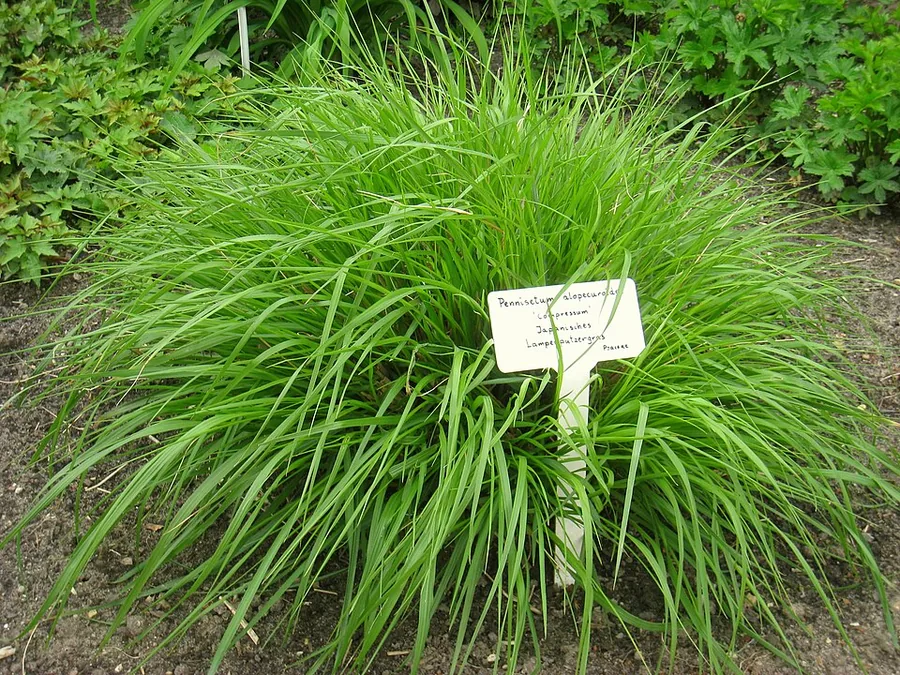
Few grasses live up to their name as plainly as this one. The foliage rises and spills back over itself in a rounded mound, and by late summer the soft, bottlebrush plumes lift above it to sway with the slightest breeze, lending movement to a still border. It is a warm-season clump-former in the grass family, at home across a broad band of cold-hardy ground from zone 5 to zone 9.
Its real charm is how undemanding it proves once it has found its footing. A settled clump shrugs off drought, asks for almost no feeding, and brings no serious pests into the bed. The plumes open in silvery to pinkish tones and the whole stand shifts to gold come autumn, holding both shape and presence well beyond the first hard frosts to anchor the late-season garden.
The one trait to keep in view is its knack for seeding itself around. Hardy fountain grass can sow into neighboring beds and even slip out into wild ground, while its tender relation, crimson fountain grass, behaves as a serious weed in warm, dry country. Cut the plumes before the seed drops and you keep all the grace with none of the bother.
Care
The short version: give it full sun and average, well-drained soil, water it regularly until it settles in and then largely leave it be, and shear the whole clump to the ground in late winter ahead of the new growth.
Light
Fountain grass shows at its finest in full sun, where it grows dense and stands tall in the bed. It will accept partial shade, but where light is short the stems turn soft and the whole clump sprawls open.
Water
Water it regularly through its first season as the roots take hold. From then on it is drought tolerant and lives on rainfall in most settings, though it sits happiest in soil kept medium to wet, so a deep soaking during a long dry stretch keeps it looking its best.
Soil
Average, well-drained soil suits it well, and it pays no mind to pH. Steer clear of the rich, heavily amended bed, since too much fertility yields floppy stems that lose the fountain shape.
Temperature
It holds up across a wide span, hardy from roughly -20°F to 100°F (-29°C to 38°C). That cold tolerance is what allows it to stand as a true perennial as far north as zone 5.
Humidity
Ordinary outdoor air is all it asks, so there is no figure to fuss over. Air moisture simply does not matter to a grass this tough.
Feeding
This is a low-feed plant through and through. A light dose of balanced fertilizer or a touch of compost in spring is ample, and plenty of gardeners forgo it entirely, since rich soil only sets the clump flopping.
Pruning
Shear the whole clump back to a few inches above the ground in late winter or early spring, before the fresh growth breaks through. Where self-seeding worries you, clip the plumes off in fall before the seed lets go.
Repotting
Divide a clump every 2 to 4 years to keep it in fine form. When the middle dies out and bare ground rings the center, it is signaling that a split is overdue.
Size & spacing
A clump reaches 2 to 5 feet (60 to 150 cm) tall and roughly the same across. Allow it that much room to spread so the fountain shape has space to arch over without pressing on its neighbors.
When to plant
This grass keeps to the warm season. Begin seed indoors in late winter or set divisions out in spring once the chill has lifted and the soil has warmed, and the plumes appear in late summer to linger through fall and on into winter.
Northern hemisphere
Southern hemisphere
Typical months for a temperate climate: start earlier in warm zones, later where spring frosts linger.
- Sow: 8 to 10 weeks before last frost
- Plant: spring after last frost once soil has warmed
- Harvest: late summer into fall, plumes often persisting through winter
Hardiness
USDA hardiness zones: 5–9
Temperature: down to -29°C
Troubleshooting
Disease is rare in fountain grass, so most of its troubles come down to habit rather than infection. The handful of things that go awry reveal themselves in the shape of the clump or in seedlings cropping up where you never put them. Match what you are seeing below and the remedy is usually a simple one.
Volunteers turning up across the border
Those graceful plumes that soften a path edge also drop a great deal of seed, and in gardens with gentle winters that seed lives on to sprout come spring. This self-seeding is how a well-placed clump quietly spreads beyond its corner and even slips into wild ground past the fence. Trim the plumes away in fall before they break apart, and lift the young volunteers while they are still small.
Fix:
- Cut off and remove flower plumes before seeds mature and shatter
- Pull or hoe volunteer seedlings while young
- Choose sterile or low-seed cultivars where available
A hollow center framed by a living ring
After a few seasons an established clump gives up at its core and carries on only around the rim, leaving a bare patch in the middle of an otherwise handsome mound. This center die-out is simply the plant showing its years, not any kind of disease. Dig the whole thing up in early spring, discard the spent core, and reset the healthy outer pieces where you want them.
Fix:
- Dig and divide the clump in early spring
- Discard the dead center and replant healthy outer divisions
A splayed mound instead of an arching one
The whole appeal of this grass is the way it lifts and pours back over itself, so a clump that sprawls flat across the bed has usually been set in too much shade or too generous a soil. Flopping traces back to low light and heavy feeding, both of which coax out soft, leggy growth that cannot hold its form. Shift it into full sun, hold back on the fertilizer, and the upright fountain returns.
Fix:
- Move or plant in full sun
- Avoid heavy fertilizing and overly rich soil
Toxicity
A relief for anyone with pets: fountain grass is not poisonous to animals or people. The only part to treat with care is the plant itself, since the leaf edges can be sharp and the bristly seed plumes carry barbed awns that may catch in fur or skin like a foxtail.
Safe for
People · Cats · Dogs · Horses · Rabbits · Livestock · Birds
Cats Safe
A cat that nibbles a blade has nothing toxic to fear from this grass. The single thing worth watching is the bristly seed head, where those barbed awns can snag in fur or work into the skin much like a foxtail.
Dogs Safe
Chewing the foliage poses no risk of poisoning for a dog. The seedy plumes are the part to keep an eye on, since the small barbed awns can settle between toes or lodge in the ears.
Horses Safe
Horses can graze it without coming to harm. Only the ripened seed heads cause bother, their stiff awns capable of irritating the mouth, so cutting or mowing it before it sets seed is wise in a pasture.
Rabbits Safe
The leaves are perfectly safe for rabbits to eat, and they favor the soft new growth that comes up in spring.
Livestock Safe
Cattle, goats, and sheep can graze it with no toxic effect at all. Watch only the sharp-edged blades and bristly seed heads, since the awns can trouble the mouth once the plumes have hardened off.
Birds Safe
There is no danger here for birds, and finches and other seed-eaters often pick over the ripe plumes through fall and into winter.
People Safe
Nothing in this plant is poisonous to people. Pull on gloves before cutting it back, as the leaf edges are sharp enough to leave a paper-cut sting.
Not chemically poisonous, but the bristly flower and seed plumes carry tiny barbed bristles and awns that can act as a mild mechanical or foxtail-type irritant, and the leaf edges can be sharp; handle plumes with care around pets and children.
Varieties
A handful of fountain grass cultivars are worth knowing, sorted chiefly by size and plume color. These are the ones you are most likely to meet.
Hameln
A neat, compact dwarf that flowers ahead of the straight species and weathers a hard winter with greater ease.
Little Bunny
The most diminutive of the group, settling at roughly 12 to 18 inches, which makes it a tidy choice for edging a path or filling a small pot.
Moudry
Prized for its almost black, purple plumes, though it sows itself more freely than any other cultivar and can turn into a nuisance.
Pennisetum setaceum 'Rubrum' (purple/crimson fountain grass)
A tender, burgundy-leaved relation grown as an annual where winters bite, but it runs genuinely invasive in warm, dry country and belongs nowhere near those gardens.
How to propagate
Fountain grass is an easy plant to increase, whether by splitting a standing clump or by sowing the plain species from seed.
DivisionEasy
Early spring before new growth · One growing season
Splitting an established clump is the standard way to make more fountain grass. Lift it in early spring before the new shoots break, toss any spent center, and divide the healthy outer ring into pieces that knit back together across a single season. It is also the only way to keep a named cultivar true, since those do not return faithfully from seed.
SeedEasy
Spring · One to two growing seasons
The plain species rises readily from seed sown in spring, needing one to two seasons to fill out a complete clump. Take care, though, because the named cultivars will not breed true this route and seed-raised plants can self-sow hard enough to become a weed.
Myths
Every fountain grass is alike and safe to set anywhere.
Two quite different plants answer to the same name. The hardy, clump-forming Pennisetum alopecuroides is the well-mannered grass for the garden, while the tender Pennisetum setaceum, 'Rubrum' among them, is treated as an annual and goes wild across warm, dry country such as California, Hawaii, and the arid Southwest. Even the hardy sort can sow itself and drift into weediness, so cut the plumes before the seed drops wherever spread is a concern.