Vegetable · Amaryllidaceae
Garlic
Allium sativum
Tuck a clove into the fall bed and leave it to the seasons, and by summer that single clove has grown into a full head.
Full sun
Every 3–7 days
240–270 days
USDA 3–8
Overview
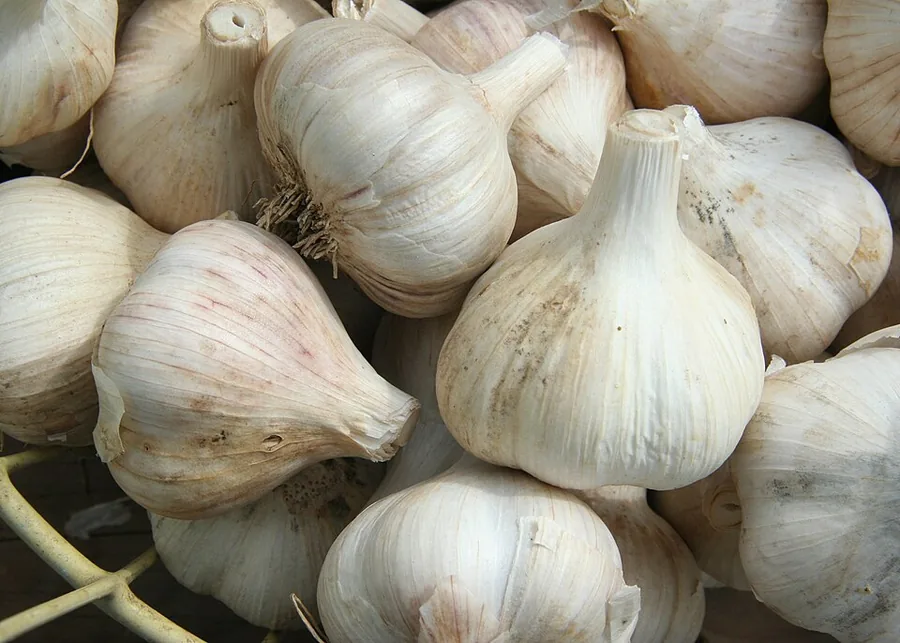
Few crops give back so generously for so little asking. A lone clove goes into the autumn bed, and across the eight or nine months that follow it roots through the cold, lifts green leaves as spring warms, and rounds into a full head by the height of summer. It keeps company with the onion family, a kinship you taste in the kitchen and read in the flat blades it raises.
The choice a gardener faces comes down to two camps. Hardneck kinds throw a firm central stalk topped by a coiling flower stem, the scape, store for a few months, and take a hard winter in stride. Softneck kinds forgo the stalk, pack more cloves into the bulb, keep far longer in the pantry, and braid up handsomely, which is why they belong to gentler regions.
Garlic will not be hurried, and making peace with that is half the pleasure. The plant needs a true winter chill before a clove will part into a proper head, so it is the calendar that sets the pace, never your effort. Time it well and what remains is little more than mulch, a spring feed, and the patience to wait.
Care
The short version: set the fattest cloves into loose, fertile, well-drained ground in full sun as fall arrives, keep the bed evenly moist while the leaves rise in spring, offer nitrogen early, then draw back the water so the bulbs cure toward harvest.
Light
Give garlic full sun, 6 or more hours of it, and the bulb rewards you with size. It carries on in partial sun, yet the heads come up smaller and the plants have less vigor to them.
Water
Hold the bed evenly moist as the leaves climb in spring, around an inch of water a week, and never let it stand waterlogged. Then draw back, stopping altogether in the last 2 weeks before harvest, which lets the bulbs cure and settle into good storage.
Soil
Choose loose, fertile, well-drained loam with generous organic matter turned through it, and a pH between 6.0 and 7.0. Where the ground runs to heavy clay, a raised bed lifts the bulbs clear of the wet that would rot them.
Temperature
Garlic takes a broad sweep of weather, from roughly 14°F to 86°F (-10°C to 30°C), and it asks for a genuine winter chill before a clove will divide into a full head. That spell of cold is the very reason the crop goes down in fall.
Humidity
Everyday outdoor humidity suits garlic well, so there is no figure to chase. What counts far more is steady airflow, since leaves left damp and crowded open the door to rust and other fungal trouble.
Feeding
Turn compost or a balanced fertilizer into the bed at fall planting, then side-dress with nitrogen early in spring as the leaves rise. Ease off once the bulbs begin to form, near scape emergence, or the plant spends itself on foliage at the bulb's cost.
Pruning
Garlic asks for next to no pruning. On the hardneck kinds, clip the scapes soon after they rise and curl, so the plant sends its strength into the bulb rather than the flower stalk, and those scapes make fine eating in their own right.
Size & spacing
Plants stand 12 to 24 inches (30 to 60 cm) tall on slim upright leaves. Space the cloves 6 to 12 inches (15 to 30 cm) apart so each has room to swell and air can pass between the rows.
When to plant
Garlic keeps to the year rather than to your schedule. Cloves go down in autumn, 4 to 6 weeks before the ground freezes, so roots take hold ahead of winter, and once the cold has done its part the bulbs come up in mid to late summer, after the lower leaves have gone brown.
Northern hemisphere
Southern hemisphere
Typical months for a temperate climate: start earlier in warm zones, later where spring frosts linger.
- Plant: Fall, about 4-6 weeks before the ground freezes (typically late September through November depending on region), so cloves root before winter
- Harvest: Hardneck scapes appear in early summer and are removed; harvest bulbs in mid-to-late summer when the lower one-third to one-half of the leaves have yellowed and browned
Hardiness
USDA hardiness zones: 3–8
Temperature: down to -40°C
Troubleshooting
Almost every garlic problem announces itself either in the leaves standing above the soil or in the bulb you meet only at lifting. Read the leaf signs early and the crop is often saved, though a rotting bulb wants pulling at once. Find your symptom below, then move before the trouble travels along the row.
Yellowing plants with white fluff and tiny black specks at the bulb
The culprit is white rot, a soilborne fungus that hollows out the bulb and can linger in the ground for decades, biding its time for the next allium you plant. Nothing rescues it mid-season, so lift the stricken plants along with the soil around them and bin the whole lot rather than composting. Its slower twin is fusarium basal rot, marked by a pinkish-white stain but none of those poppy-seed black sclerotia.
Fix:
- Remove and destroy infected plants and surrounding soil; do not compost
- There is no effective in-season chemical rescue for home gardens
Rusty orange bumps dotting the leaves
Those raised orange pustules are garlic rust, a fungus that thrives on cool, humid, crowded beds and puffs powdery spores at the brush of a leaf. Strip away the worst foliage and open up the spacing so moving air can dry what remains. Should it arrive late, harvest early, since the bulbs waiting below are still fine on the plate.
Fix:
- Remove heavily infected foliage
- Harvest promptly if infection occurs late in the season; bulbs are still edible
Undersized bulbs that never split into cloves
A bulb that stays small or will not divide has usually gone without its cold winter, set too late in fall or pushed in during spring without the rooting and chill it needed. Weeds jostling the sparse upright leaves and a missed spring nitrogen feed only deepen the shortfall. Send the runts to the kitchen, then next time plant your largest cloves 4 to 6 weeks before the ground freezes.
Fix:
- Use undersized bulbs in the kitchen; they are edible
- Adjust planting date and fertility the following season
Silvery streaks and a gray cast over the leaves in the heat
Silvery flecking that widens through hot, dry weather points to onion thrips rasping at the leaf tissue. Part the blades and search the folds for slender yellow-brown insects, or tap the foliage over white paper and watch them fall. Knock them back with a hard jet of water, turn to insecticidal soap where damage runs heavy, and keep the plants watered across the dry stretches.
Fix:
- Knock populations down with a strong spray of water
- Use insecticidal soap if damage is heavy, ensuring coverage in leaf axils
Toxicity
Garlic sits at the heart of the kitchen for people yet turns genuinely dangerous around animals. The very organosulfur compounds that lend it flavor go after the red blood cells of cats, dogs, horses, livestock, rabbits, and birds, and bring on hemolytic anemia whether the garlic is raw, cooked, or powdered. Cats feel it worst of all, and by weight garlic outdoes onion, so every form belongs well clear of pets and stock.
Toxic to
Cats · Dogs · Horses · Rabbits · Livestock · Birds
Safe for
People
Cats Severe
Vomiting, diarrhea, drooling, lethargy, weakness, pale gums, a racing heart, quickened breathing, red or brown urine, and collapse from hemolytic anemia; cats feel it acutely even from small amounts.
Dogs Moderate
Vomiting, diarrhea, belly pain, lethargy, weakness, pale gums, a lifted heart and breathing rate, and red or brown urine; large or repeated helpings can bring on severe hemolytic anemia.
Horses Moderate
Weakness, lethargy, pale mucous membranes, and discolored urine from hemolytic anemia once a meaningful quantity has been eaten.
Rabbits Toxic
Garlic has no business in a rabbit's diet. The same organosulfur compounds that harm cats and dogs go after a rabbit's red blood cells, and since no amount is safe to offer, keep every form well out of reach.
Livestock Toxic
Cattle, sheep, goats, and horses browsing garlic or its trimmings can slide into hemolytic anemia, seen as weakness, a dull manner, pale gums, and dark, discolored urine. Fence stock away from the bed and never hand them allium scraps.
Birds Toxic
Garlic is unsafe for birds, backyard poultry and pet parrots alike. Even a little breaks down their red blood cells over time, so keep bulbs, cloves, and seasoned scraps beyond their reach.
People Safe
Garlic is a kitchen mainstay and safe for people to eat, raw or cooked. The toxicity that endangers animals carries no such risk for us, so cook with it and enjoy it freely.
Store bulbs, peeled cloves, garlic powder, and garlic-seasoned foods where pets cannot reach them; fence or cover garden beds, and never feed pets table scraps containing garlic or onion. Signs of anemia can be delayed several days after ingestion.
Helpline numbers

United States
ASPCA Animal Poison Control: (888) 426-4435 (fee applies)

United Kingdom
Animal PoisonLine: 01202 509000 (fee applies)

Australia
Animal Poisons Helpline: 1300 869 738
Varieties
Garlic runs to hundreds of cultivars, yet they settle into a handful of familiar hardneck and softneck types. These are the ones most likely to reach your bed.
Music
A hardneck porcelain kind bearing 4 to 6 large, easily peeled cloves to a bulb that laughs off a hard winter, which earns it a dependable place in northern gardens.
German Extra Hardy
A hardneck porcelain kind prized for its grit through cold winters and its bold, full flavor.
Inchelium Red
A softneck artichoke kind of gentle flavor and generous cloves that favors milder climates and braids up beautifully.
Silver Rose
A softneck silverskin kind with rose-tinted cloves that outlasts nearly every other garlic in storage and is a time-honored choice for the braid.
Companions
Garlic earns its keep as a neighbor, since its sulfur compounds help drive off aphids and other soft-bodied pests, but it sets back the legumes, so keep it clear of beans and peas.
Plant near
roses: Garlic's sulfur compounds are reported by extension sources to help deter aphids and other soft-bodied pests around roses
brassicas (cabbage family): Interplanted garlic can help repel some cabbage-family insect pests
carrots: Garlic may help deter carrot pests such as rust fly, and the crops do not compete strongly
Keep apart
beans: Alliums are reported to inhibit the growth of beans and other legumes
peas: Alliums are reported to inhibit the growth of peas and other legumes
How to propagate
Garlic renews itself from its own cloves, which puts it among the simplest crops to plant, so long as you accept the unhurried timetable it repays you on.
Bulbs & cormsEasy
Fall, 4-6 weeks before the ground freezes · Roots establish in 4-8 weeks before the ground freezes; bulbs are ready to harvest about 8-9 months after planting
Garlic rises from cloves rather than seed, so break a bulb apart just before planting and leave each clove in its papery wrapper. Press the biggest ones in pointed end up, about 2 inches deep and 4 to 6 inches apart, 4 to 6 weeks before the ground freezes, then lay down mulch as the soil cools so they root through the month or two before winter. Patience is the true price, for the bulbs are not ready to lift until 8 to 9 months later in mid to late summer. The little topset bulbils from hardneck scapes will grow on too, though they want 2 to 3 seasons to reach full size.
Myths
Garlic makes a safe, natural flea and tick remedy for dogs and cats.
This belief is truly hazardous. Garlic poisons cats and dogs in every form, its thiosulfates tearing at red blood cells and capable of triggering Heinz-body hemolytic anemia, with cats bearing the worst of it. No dose is safe or shown to work against parasites, so choose a vet-approved product instead.
Garlic from the grocery store does fine as planting stock.
Supermarket garlic is often dosed with sprout inhibitors, may harbor disease, and tends to be a strain never suited to your patch. Set out certified disease-free seed garlic from a trusted grower and you begin with a clean slate.