Vegetable · Fabaceae
Pea
Pisum sativum
Sow them while the soil is still cold, give them something to climb and steady moisture, and the pods come sweet and early.
Full sun
Every 3–7 days
45–75°F · 7–24°C
55–70 days
Overview
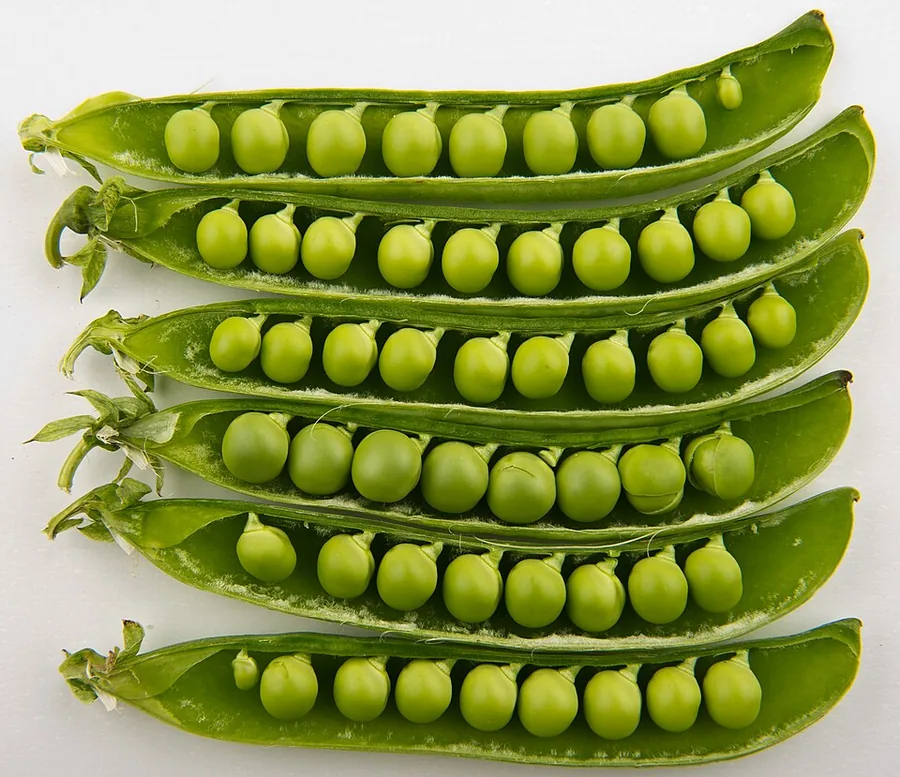
Peas are a cool-season legume and one of the first things to go into the ground each spring, a quiet green promise at the front of the year. Part of the bean family, they settle into almost any plot and send up climbing vines that lace themselves to a trellis and stand as a soft living screen along a path or the edge of a bed. The garden pea, Pisum sativum, is the familiar shelling pea, grown for the sweet seeds that make the walk out to pick them worthwhile.
Their charm lies in how lightly they live in a garden. As a legume, the plant gathers its own nitrogen from the air through bacteria in its roots, so it asks little and leaves the ground better for whatever comes after. Sow the seed where it will grow, offer the vines a frame to climb, and keep the soil evenly moist through flowering and pod fill, and the bed more or less looks after itself.
With peas, the whole experience turns on timing. They belong to the cool days of early spring and bow out as summer heat settles in, so the pleasure is in sowing early and gathering the harvest before the warmth arrives. Catch that window and the reward is sweet, tender pods for the table; let it slip, and the vines stall and the peas turn starchy.
Care
The short version: peas want full sun and cool weather, sown straight into rich, well-drained soil as soon as the ground can be worked. Keep the moisture even through flowering, lend the vines a trellis, and set the nitrogen feed aside.
Light
Peas are at their best in full sun, though a little afternoon shade does no harm and, in warmer corners, actually flatters them by holding the cool a while longer. As a rule, the more sun the spot receives, the fuller the pod set.
Water
Peas want about 1 inch of water a week, kept steady, above all through flowering and pod fill. Let the soil settle into an even rhythm rather than swinging from parched to drenched. Waterlogged ground is the one thing to avoid, since it opens the way to root rot.
Soil
Plant peas in well-drained loam worked through with compost or other organic matter. They accept a comfortable pH span of 6.0 to 7.5, but drainage counts for more than almost anything else, since roots left standing in wet soil are quick to rot.
Temperature
Peas belong to the cool weather and hold best between 45°F and 75°F (7°C to 24°C). A light frost passes over them without harm, yet once the heat climbs beyond their range, flowering falters and the pods stop forming.
Humidity
Ordinary outdoor humidity suits peas, so no particular level need be met. Air moving through the planting matters far more, since still, crowded foliage is where powdery mildew tends to settle.
Feeding
Peas see to their own feeding. As a legume, the plant fixes its nitrogen through Rhizobium bacteria in its roots, so a light hand, or none at all, is the right one. On poor ground a modest dose of low-nitrogen phosphorus and potassium at planting is ample, while too much nitrogen simply grows leaves in place of pods.
Pruning
Peas call for no real pruning. Pinch the growing tip when a vine outreaches its support, and lift away any mildewed or diseased leaves as soon as they show, to keep the trouble from spreading.
Size & spacing
The vines rise anywhere from 2 to 6 feet (60 to 180 cm) depending on the type, while each plant keeps a slender 6 to 12 inches (15 to 30 cm) across. A trellis for the taller climbers draws them cleanly upward instead of letting them sprawl across the bed.
When to plant
Peas keep to the cool weather and have no appetite for summer heat. Sow them straight into the garden in very early spring, as soon as the soil can be worked, and the pods are yours within a couple of months, well before the warmth draws the season to a close.
Northern hemisphere
Southern hemisphere
Typical months for a temperate climate: start earlier in warm zones, later where spring frosts linger.
- Plant: Direct sow in very early spring as soon as soil can be worked, when soil temperature reaches about 45°F; peas tolerate light frost.
- Harvest: Harvest shelling peas about 3 weeks after flowering when pods are well filled, plump, and bright green but before they become tough and starchy.
Hardiness
USDA hardiness zones: 2–11
Temperature: down to -46°C
Troubleshooting
Most of what troubles peas shows on the leaves or at flowering, and much of it comes down to weather and watering. Notice the early signs and the crop can usually be steered back on course before it suffers. Match what you see below, then act while it still counts for something.
Young seedlings faltering at soil level
Seedlings that never rise, or fold at soil level with brown, water-soaked stems and roots, have met root rot, the work of soil fungi such as Fusarium, Pythium, and Aphanomyces. It thrives in cold, sodden ground, and the affected plants are past saving once the roots turn, so lift them out and let them go. Correct the drainage, wait for the soil to warm before sowing again, and lean on crop rotation, well-drained beds, and treated seed to keep the trouble from returning.
Fix:
- Remove and discard affected plants
- Improve drainage and avoid overwatering
- Replant in well-drained soil once conditions warm
A powdery pale bloom clouding the vines
When a chalky pale film settles over the vines, that is powdery mildew, a fungus that tends to arrive late in the season as warm days give way to cool nights. Lifting out the worst leaves and opening the planting so air drifts through will do most of the work, with a labeled fungicide held in reserve only if it keeps advancing. The most graceful defense is simply timing: sow early, and the harvest is largely gathered before the fungus ever finds its moment.
Fix:
- Remove and destroy heavily infected foliage
- Improve air circulation by proper spacing and trellising
- Apply a labeled fungicide if infection is severe
Small green clusters gathering along the tips
The soft green clusters massing at the shoot tips and along the leaf undersides are pea aphids, and the sticky honeydew they trail soon invites ants and a shadow of sooty mold. A firm jet of water clears most of them, insecticidal soap or horticultural oil settles any that linger, and a resident cast of lady beetles and lacewings quietly keeps the balance thereafter. Restraint with nitrogen helps too, since the soft flush of new growth it encourages is exactly what draws the colonies in.
Fix:
- Dislodge aphids with a strong spray of water
- Use insecticidal soap or horticultural oil
- Encourage natural predators such as lady beetles and lacewings
A froth of bloom that never fills to pods
A vine full of blossom that never fills to pods is usually feeling heat stress, as a warm spell carries it past the cool season it prefers. An overgenerous hand with nitrogen produces the same picture, all leaf and little harvest. Steady soil moisture, a drift of afternoon shade through the hottest stretch, and a sowing schedule that sets flowering in cool weather bring the vine back to its proper rhythm.
Fix:
- Maintain even soil moisture during flowering
- Provide afternoon shade during heat waves where practical
- Time plantings so flowering avoids hot weather
Toxicity
A reassuring note to end on: the garden pea is completely safe. Its seeds, pods, and tender shoots are all edible, and no part of the plant is toxic to people or pets. The single caution is to keep it distinct from the ornamental sweet pea (Lathyrus), a different plant whose seeds are not safe to eat.
Safe for
People · Cats · Dogs · Horses · Rabbits · Livestock · Birds
Cats None
A curious cat that wanders the bed and samples a vine or pod comes to no harm, since garden peas sit off the ASPCA toxic list. A few cooked peas make an easy, harmless indulgence.
Dogs None
Peas suit dogs perfectly well, and plain shelled ones already grace the ingredient lists of many everyday dog foods. Nowhere in the plant lurks a poisoning risk.
Horses Safe
Horses may graze pea foliage without concern. As with any rich green feed, the kindest course is to fold it into the diet by degrees rather than all at once.
Rabbits Safe
Rabbits take happily to pea leaves, vines, and pods, every part of it safe to offer. The plant holds no toxins that would give them a moment's bother.
Livestock Safe
Grown as a forage and fodder crop, peas suit cattle, goats, and sheep, all of which can take the plant without risk.
Birds Safe
Chickens and other birds peck contentedly at peas with nothing to fear. The seeds make a wholesome, protein-rich morsel.
People Safe
Garden peas are a kitchen familiar, welcomed as shelled peas, whole pods, or tender shoots. The whole plant belongs happily on the table.
Pea seeds, pods, and shoots are commonly eaten; no special handling precautions are required for the edible garden pea.
Varieties
Most home gardeners keep to a small, dependable set of shelling peas. These are the ones worth knowing by name.
Little Marvel
A compact early dwarf shelling pea that keeps to about 18 inches, an easy choice where the plot is small and the season short.
Green Arrow
A generous cropper hung with long, slender, well-filled pods of 8 to 11 peas each, and untroubled by many of the usual diseases.
Wando
A shelling pea with a little extra tolerance for warmth, which allows a slightly later spring sowing than most.
Alaska
A very early, smooth-seeded type that rises willingly from cold soil and earns its place among the season's first sowings.
Companions
Peas grow happily beside quick crops and other vegetables that share the bed well, and they leave the soil richer for the nitrogen they fix. Keep them clear of onions and garlic, which are reported to stunt them.
Plant near
Carrots: Commonly grown with peas as compatible bed companions that use space efficiently.
Radishes: Quick-maturing companion harvested before peas need the space.
Cucumbers: Listed as a compatible companion that benefits from the nitrogen peas contribute to the soil.
Beans: Another legume considered a compatible companion in the vegetable bed.
How to propagate
Peas are among the simplest things to begin. They are raised from seed sown right where they will crop, and that is the only approach worth taking.
SeedEasy
Direct sow in very early spring as soon as the soil can be worked and reaches about 45°F. · Seeds typically germinate in 7 to 14 days depending on soil temperature.
Peas ask for nothing more than to be sown where they will grow, since their roots take poorly to the upheaval of transplanting. Settle the seed 1 to 1.5 inches deep once the soil can be worked in early spring, around 45°F (7°C), and the sprouts arrive within 7 to 14 days as the ground warms. Have a trellis or netting standing ready for the climbers, and in a bed that has never held peas, a dusting of Rhizobium inoculant on the seed sets the plants up to fix their own nitrogen.
Myths
All peas are interchangeable, so the ornamental sweet pea is safe to eat like the garden pea.
The two are easily confused yet entirely different: the garden pea grown for shelling, Pisum sativum, is a non-toxic vegetable, while the ornamental sweet pea, Lathyrus odoratus, is another plant altogether, its seeds toxic and capable of causing lathyrism. Never treat a sweet pea as food, however alike the names may sound.
Peas need heavy nitrogen feeding to crop well, like other vegetables.
Peas are legumes that draw their own nitrogen from the air through bacteria in their root nodules, so they ask very little at the feeding stage. Overdo the nitrogen and the reward is foliage, not pods, precisely the opposite of the intended effect.