Vegetable · Zingiberaceae
Ginger
Zingiber officinale
Give it warmth, steady moisture, and dappled light, and a single rhizome becomes a season of homegrown ginger.
Partial shade
Every 2–4 days
59–86°F · 15–30°C
240–300 days
Overview
Ginger brings a quiet tropical note into a home, a stand of tall, reed-like shoots grown for the aromatic rhizome that flavors the kitchen. It comes from the warm, humid forests of Asia, and that heritage sets the terms for where it feels at home. Give it a corner with heat, moisture, and soft, broken light and it reads as lush and settled; leave it cold and wet or too dry and the whole look falls flat.
In a warm-summer garden it earns a place in the ground, while cooler homes keep it going as a long season annual that moves with the year. The routine has a pleasing rhythm: start a rhizome indoors in late winter, carry it outdoors once frost has passed, and bring the crop in before the cold returns. A generous pot suits it just as well, turning a bright porch or sunny windowsill into a small tropical scene.
Living with ginger is an exercise in slow reward. It asks for the better part of a year, roughly 8 to 10 months from planting to a mature harvest, though tender baby ginger can grace the kitchen far sooner. Keep it warm, fed, and evenly watered through that long season, and one rhizome repays the space with a whole shelf of fresh ginger.
Care
The short version: a warm spot in bright, dappled light, soil kept evenly moist but never soggy, humid air around it, and an unhurried season before the harvest.
Light
Ginger asks for bright but filtered light, the gentle glow it would know beneath a forest canopy, which makes an east-facing window or a shaded patio corner a natural fit. Morning sun with afternoon cover flatters it, while harsh midday sun scorches the leaf edges and spoils the effect.
Water
Keep the soil evenly moist through the growing season, but stop short of a swamp, since soggy ground quietly rots the rhizomes. As the foliage yellows toward harvest, ease off the watering to let the rhizomes firm up and cure.
Soil
Set it in rich, loose, well drained loam full of organic matter so water drains cleanly away. A slightly acidic pH of 5.5 to 6.5 suits it, and good drainage counts for more here than nearly any other detail.
Temperature
Warmth is the heart of the matter. Ginger is content between 59°F and 86°F (15°C to 30°C) and falters in the cold, so it stays indoors until every frost has passed and the soil has warmed.
Humidity
This is a plant that loves a humid room, happiest at 70% to 90%. Dry indoor air crisps the leaf tips, so gather it with other greenery, stand it over a pebble tray, or give it a naturally muggy spot such as a bright bathroom.
Feeding
Feed it monthly across the spring and summer season with a balanced fertilizer or compost, side-dressed as new shoots appear. The long season draws steadily on the plant, so regular feeding shows in the harvest.
Pruning
Ginger needs no shaping to look its best. Simply lift away any yellowed or dead foliage, trim flower stalks if the rhizome is the goal, and cut back the top growth as it dies down ahead of harvest.
Repotting
Grown in a pot, refresh ginger every year or season, since the rhizomes spread fast and crowd toward the surface. When roots circle the container or slip out the drainage holes and growth eases, move it to fresh mix and a roomier pot.
Size & spacing
Expect an upright clump of reed-like shoots reaching 2 to 4 feet (60 to 120 cm) tall, spreading 12 to 24 inches (30 to 60 cm) wide as the rhizomes fan out below, so allow it a generous footprint in the room.
When to plant
Ginger keeps to a long, warm calendar and refuses any frost, so its year has a clear shape. Start a rhizome indoors in late winter, move it out once the soil has warmed past the last frost, and gather the harvest from early autumn as the foliage yellows and fades.
Northern hemisphere
Southern hemisphere
Typical months for a temperate climate: start earlier in warm zones, later where spring frosts linger.
- Sow: late winter to early spring (start rhizome pieces indoors in warmth)
- Plant: after all danger of frost has passed and soil has warmed
- Harvest: harvest young 'baby' ginger about 4-5 months after planting; mature ginger about 8-10 months when foliage yellows and dies back
Hardiness
USDA hardiness zones: 9–12
Temperature: down to -7°C
Troubleshooting
Most of ginger's troubles begin out of sight, underground or in the moisture held around the roots. Keep a watchful eye on the rhizomes and the lower foliage, where rot, wilt, and stress first show their hand. Match what you see below, then step in before it moves through the planting.
Rhizomes turning soft and sour underground
Behind the scenes, soft rot from Pythium or Fusarium fungi settles into ground that never quite dries out. The rhizomes soften to slime and sour, and by then the plant is beyond rescue. Lift and discard the affected plants, put the drainage right, and begin again with clean, healthy seed pieces in fresh media.
Fix:
- Remove and discard affected plants and rhizomes
- Improve drainage and avoid waterlogging
- Replant only clean, healthy seed pieces in fresh or pasteurized media
Shoots collapsing, with a telltale milky ooze
The most serious threat is bacterial wilt from Ralstonia solanacearum, which travels quickly through warm, wet soil. A cut stem held in clear water settles the question: a milky stream drifting from it is the tell. Take out and destroy the infected plants, and keep ginger and its relatives off that ground for good, since the bacteria linger there for years.
Fix:
- Remove and destroy infected plants
- Do not replant ginger or related crops in infested soil
- Practice long crop rotation and use clean seed
Leaf edges yellowing and browning at the tips
Scorched margins are the plant's way of flagging too much sun or heat, and the damage lands hardest on the side that takes the strongest light. Uneven watering or a light hand with feeding can dry those edges just the same. Move it into dappled shade through the hottest hours, keep the soil evenly moist, and feed if growth has stalled.
Fix:
- Provide dappled shade during the hottest part of the day
- Maintain even soil moisture
- Apply balanced fertilizer if growth is poor
Toxicity
Ginger is one of the most welcoming plants to keep in a shared home. Its rhizome is a kitchen spice enjoyed the world over, and it is safe for people and pets alike, with nothing on it the ASPCA flags as toxic. Grow it, handle it, and cook with it in complete ease.
Safe for
People · Cats · Dogs · Horses · Rabbits · Livestock · Birds
Cats Safe
A household cat can share the room with ginger and come to no harm, since it never made the ASPCA's toxic list. Should a cat sample a leaf or a scrap of the spicy root, the worst case is a passing bout of indigestion after a very large helping.
Dogs Safe
Dogs live easily alongside ginger, and a touch of it flavors many of the treats already in the cupboard. Only a greedy raid on the pungent root might loosen the stomach for a day, which is as far as it goes.
Horses Safe
Ginger sits comfortably around horses and appears in a handful of equine supplements. Nothing in the plant would give them any trouble.
Rabbits Safe
A rabbit can graze the leaves in perfect safety. The root is a little too sharp for most to fancy, so any offering is best kept to the smallest taste.
Livestock Safe
Cattle, goats, and sheep can browse the foliage without consequence. Ginger simply carries none of the compounds behind the stomach or nerve troubles of genuinely poisonous plants.
Birds Safe
Backyard hens and pet birds may peck at ginger with nothing to fear. As a kitchen spice, it belongs on the counter, not on any hazard list.
People Safe
Ginger has a permanent place in the kitchen, taken fresh, dried, or steeped into tea, and it is safe for adults and children alike. Both the rhizome and the young shoots are good to eat.
No special handling precautions; the rhizome is a common food and is safe to handle.
Varieties
Nearly all the ginger that finds its way into a home is the single culinary type, yet it helps to know just what is taking up the pot.
Common culinary ginger (Zingiber officinale)
This is the familiar market ginger, prized for the pungent, aromatic rhizome that seasons kitchens the world over.
How to propagate
Ginger multiplies with grace, since every piece of rhizome carrying a live bud is simply a new plant waiting to begin.
DivisionEasy
Late winter to early spring, before planting out after frost · About 2 to 8 weeks for sprouts to emerge under warm, moist conditions
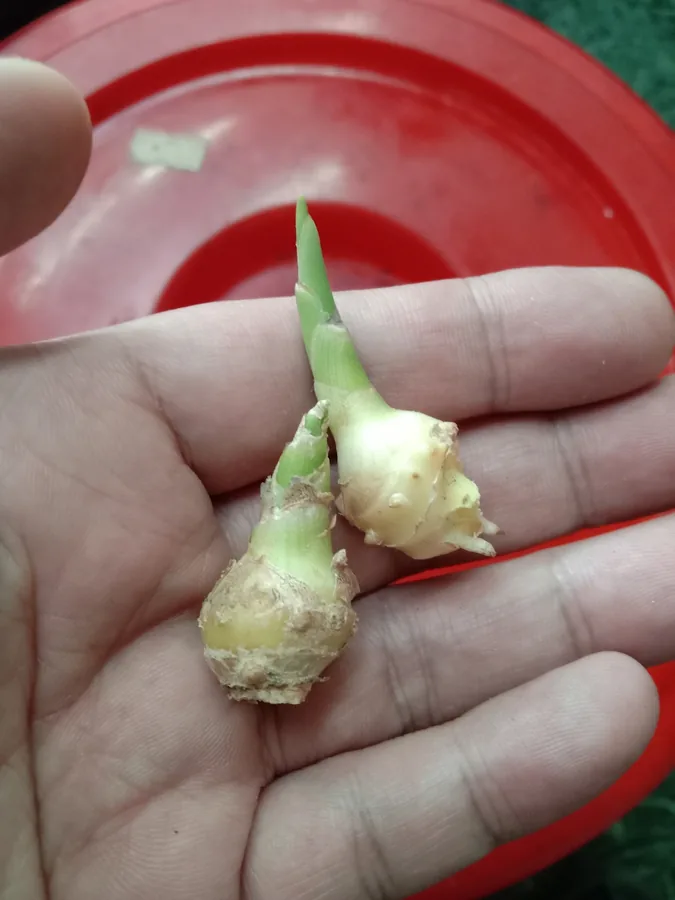
Ginger is increased by division, the simple act of starting fresh plants from pieces of the root. In late winter or early spring, part the rhizome into chunks so each keeps at least one healthy bud, then set the cut faces aside to dry and callus for a day or two before planting. Nestle the pieces shallow into warm, moist, well drained mix, and the first shoots rise in 2 to 8 weeks.
Myths
Grocery store ginger will never sprout because it has been treated.
A plump, fresh rhizome from the grocery shelf, complete with the visible buds gardeners call eyes, will often sprout without any fuss. An overnight soak and warm, moist conditions only sweeten the odds. What really stands in the way is old stock or a growth inhibitor, never the produce aisle itself.