Vegetable · Brassicaceae
Arugula
Eruca vesicaria subsp. sativa
Tuck it in during cool weather and a month later the kitchen has its own peppery cuttings.
Full sun
Every 2–3 days
41–77°F · 5–25°C
40–50 days
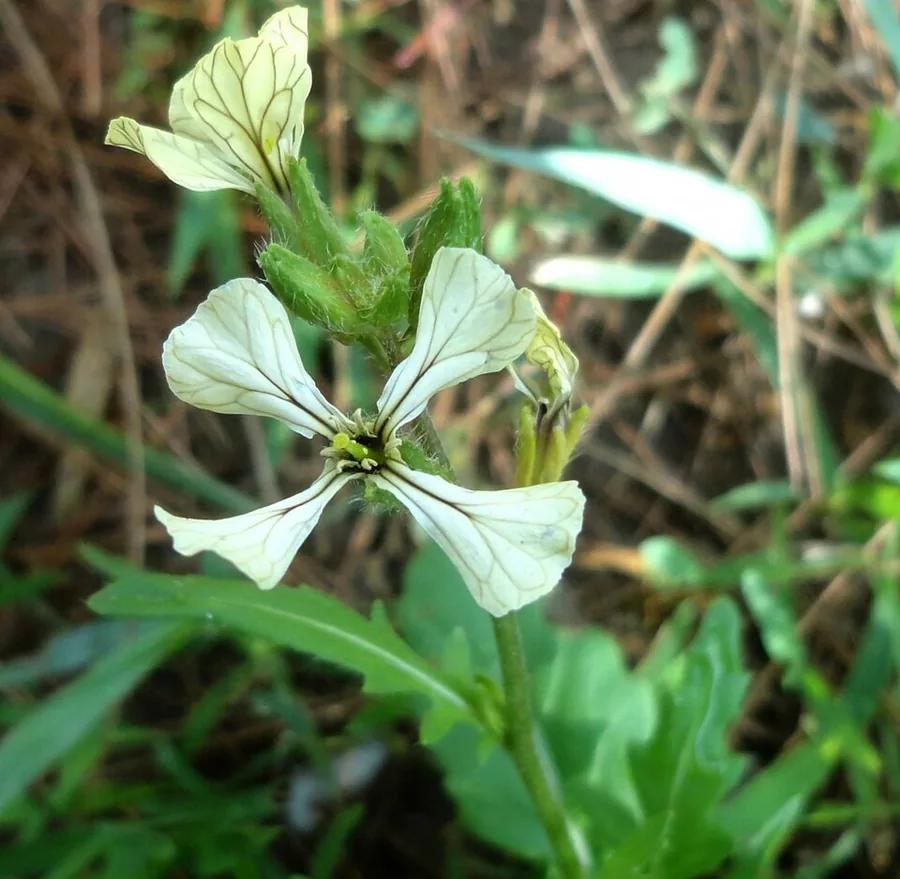
Overview
Arugula brings a quick, peppery flourish to the way a home eats. A member of the cabbage clan, sharing a table with broccoli and mustard, it owes that bright, mustardy snap to its lineage. Lay down a tidy row and a salad bowl can be drawing on it about 4 to 6 weeks later.
At its core this is a cool-season crop, and it sets the mood of a spring or autumn kitchen, when the leaves stay supple and nutty. Ask it to carry on through high summer and it gives up, throwing a flower stalk skyward while the leaves grow coarse and sharp.
Hardly any green fits more graciously into a daily routine. Arugula settles just as easily into a garden bed or a shallow pot on a sunny sill, breaks ground within days, and keeps the plate supplied so long as you take the outer leaves and sow a fresh row every week or two.
Care
The short version: offer full sun with a touch of afternoon shade, keep the soil evenly moist, and lean on cool weather to hold the leaves mild. Sow shallowly, gather the outer leaves often, and lay a fresh row every week or two.
Light
Arugula reaches for full sun through spring and fall, while the air stays cool enough to please it. As warmth builds, a place catching afternoon shade eases the rush to bolt and keeps the leaves gentler for longer.
Water
Hold the soil evenly moist and reach for the watering can every 2 to 3 days through dry stretches. Allow it to parch and the plant takes the strain, racing to flower while the leaves turn coarse and sharp.
Soil
Set it into rich, well-drained loam generous with organic matter. A pH falling between 6.0 and 7.0 agrees with it, and ground that stays moist without turning to mud keeps the leaves quick and supple.
Temperature
Arugula is at home in the cool, somewhere between 41°F and 77°F (5°C to 25°C). A light frost barely registers, yet heat is its undoing, driving it to flower and turning the flavor.
Humidity
Plain outdoor air is plenty, roughly 40% to 70% humidity, so the figure hardly merits attention. What truly counts for arugula is steady moisture at the roots, not in the air around it.
Feeding
Mix a nitrogen-rich balanced fertilizer or compost into the bed as you plant, and a crop this fleet rarely needs more. A good start in the soil will see the leaves through to a harvest only a few weeks off.
Pruning
Take the outer leaves often and the center keeps pushing out fresh ones. The moment a flower stalk rises and bolting sets in, gather what remains before the flavor sharpens.
Repotting
Arugula lives as an annual and is resown each season rather than moved up a pot size. For a container, choose one at least 4 to 6 inches deep and sow fresh seed each round instead of nursing along a tired plant.
Size & spacing
The plants keep modest proportions, reaching from 8 to 36 inches (20 to 91 cm) tall, the flower stalk claiming the top of that range. Thin or set seedlings about 6 inches apart to give each one space for a full rosette of leaves.
When to plant
Arugula keeps its own season, governed by cool air rather than the height of summer. Set seed straight into the ground as early spring softens the soil, follow with another sowing as summer wanes for an autumn harvest, and roughly a month after each you will be cutting leaves for the table. Steer clear of the scorching weeks, when the plant flowers almost before it stands.
Northern hemisphere
Southern hemisphere
Typical months for a temperate climate: start earlier in warm zones, later where spring frosts linger.
- Sow: 4-6 weeks before the last spring frost (optional; direct sowing preferred)
- Plant: Direct sow in early spring as soon as soil can be worked, then again in late summer for a fall crop
- Harvest: Leaves harvestable about 4-6 weeks after sowing, mainly in cool spring and fall
Hardiness
USDA hardiness zones: 2–11
Temperature: down to -46°C
Troubleshooting
Trouble with arugula is rare and plain to spot. Heat-driven bolting tops the short list, with a pair of familiar insects filling out the rest. Find the match below and act while there are still leaves worth bringing in.
The plant runs to flower and the salad bowl loses its star
What you are seeing is bolting, the moment the plant pivots from feeding your table to setting seed, prompted by warm afternoons and the long light of midsummer. From there, fresh growth arrives thin and aggressively peppery. Gather whatever still belongs in a salad, clear the spent plant, and tuck a new sowing into a shadier corner of the garden.
Fix:
- Harvest all usable leaves promptly before they turn bitter
- Pull bolted plants and start a fresh succession sowing
- Move new sowings to a cooler or partly shaded spot
A scatter of pinprick holes across every leaf
Those neat little punctures are calling cards from flea beetles, dark specks that vanish in a leap the instant a hand passes overhead. The tenderest seedlings suffer most. Drape the bed in floating row cover from sowing day onward, and lift the quick leaves for the kitchen before the nibbling adds up.
Fix:
- Cover plantings with floating row cover at sowing
- Harvest quickly-maturing leaves before damage accumulates
A soft, sticky huddle of insects on the tender tips
Pale green or gray gatherings tucked under leaves and along the youngest shoots point to aphids, frequently with a tacky sheen for company. A firm jet from the hose dislodges most, and any leaf truly overrun can simply be plucked and tossed. Where helpful insects settle in, the colonies tend to fade without further fuss.
Fix:
- Rinse colonies off with a strong spray of water
- Remove and discard heavily infested leaves
Toxicity
Arugula is salad greenery from leaf to stem, safe for people and pets alike. Nothing about it warrants caution, so it can share a home with cats, dogs, rabbits, and inquisitive children with ease. All it asks in return is a place at dinner.
Safe for
People · Cats · Dogs · Horses · Rabbits · Livestock · Birds
Cats None
Cats face no hazard here, since the leaves hold nothing that could harm them. A stray bite may unsettle a stomach briefly, as any unfamiliar green might, yet the plant carries no genuine danger.
Dogs None
With no toxins present, an inquisitive dog can investigate or chew the foliage freely. An enthusiastic mouthful of leafy greens may soften the stomach for a short while, and that is as far as it goes.
Horses Safe
Arugula holds no threat to horses. Like any lush green, it suits them best as an occasional treat rather than a fixture of the daily ration.
Rabbits Safe
The leaves are fine for rabbits, and plenty take to the peppery snap. Serve it sparingly beside the greens they already know.
Livestock Safe
Cattle, sheep, and goats can browse arugula with no ill effect. It is a sound leafy green that slots neatly into mixed forage.
Birds Safe
Garden hens and their feathered company can peck at the leaves without worry, and the greens lend a welcome change to the menu.
People Safe
This is a green meant for the plate. The leaves drop raw into a salad or soften in a hot pan, and not a single part of the plant needs steering clear of.
Safe to grow around pets and children; the leaves are edible raw.
Varieties
Plain salad rocket fills most seed packets, yet a handful of named picks deserve a look for their flavor and their staying power as the weather warms.
Astro
Quick to the table with a gentle, easygoing flavor, and slower than its peers to run to seed, which earns it a place in the garden when the weather turns warm.
Roquette
The classic heirloom rocket, carrying the deeply cut leaves and the bold, peppery snap that comes to mind at the very mention of arugula.
Wasabi
A line chosen for a striking, horseradish-style heat that draws notice even in a lineup of spirited rockets.
Companions
Plant near
Bush beans: Beans fix nitrogen and their canopy shades the bed, helping cool-loving arugula stay productive and delay bolting.
Lettuce: Shares arugula's preference for cool, moist conditions and interplants well in the same cool-season bed.
Root crops (beets and carrots): Listed as compatible interplanting partners that use different soil layers, allowing efficient use of cool-season bed space.
How to propagate
Seed is the whole story with arugula, and that simplicity is a large part of why the crop is so effortless to keep going.
SeedEasy
Direct sow in early spring and again in late summer/fall · Germinates in about 5-7 days; seedlings established within 2-3 weeks
Seed is nearly the only route into a crop of arugula. Strew it just below the surface of the bed as spring opens, then once more toward the close of summer for autumn cutting, and look for green breaking through in about 5 to 7 days. As the seedlings find their feet across 2 to 3 weeks, space them around 6 inches apart, and slip in a fresh short row every week or two so the leaves never run out.
Myths
Arugula is naturally bitter and unpleasant to grow.
That edge comes from warmth and bolting, never from the plant's own nature. Leaves picked young in the cool of spring or fall taste mild and nutty, worlds apart from the rough greens left to linger through a long summer.
Arugula is hard to grow from seed.
Few greens come easier or faster. Seeds sprout within days and the leaves are ready to cut in roughly 40 to 50 days, an ideal opening crop for anyone just taking up the trowel.