Vegetable · Brassicaceae
Broccoli Rabe
Brassica rapa Ruvo Group
Plant it in the cool ends of the season, cut while the buds stay tight, and broccoli rabe gives back sharp, savory greens for the table.
Full sun
Every 2–4 days
39–75°F · 4–24°C
40–60 days
Overview
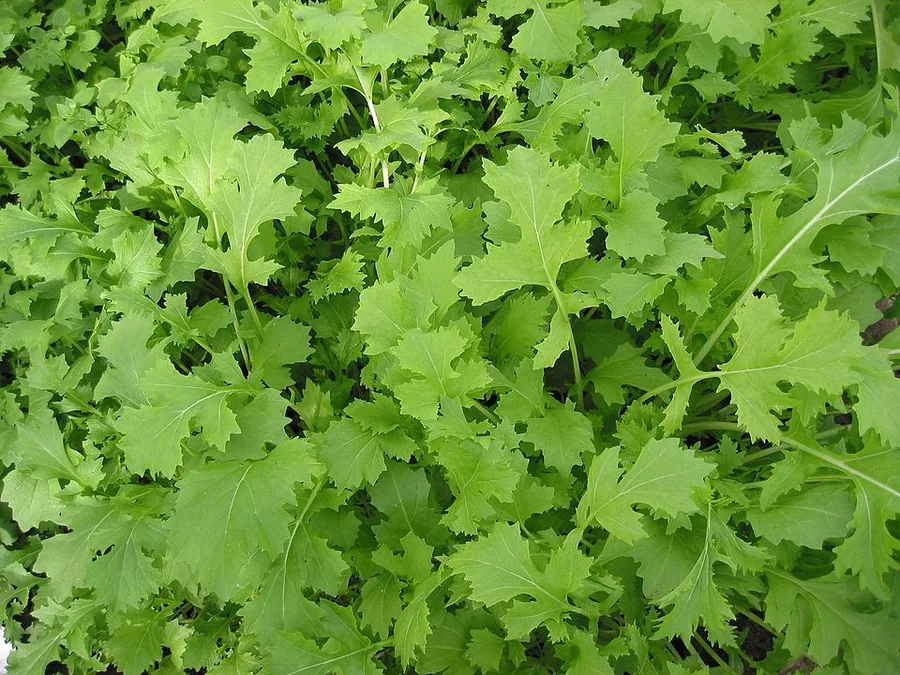
Broccoli rabe wears the look of a loose, leafy broccoli, yet it belongs to the mustard family and stands far nearer the turnip. The whole shoot earns its place in the kitchen, the leaves, the slender stems, and the tight clusters of buds, each one carrying that distinctive edge that mellows into something nutty in the pan. On the market shelf it may also wear the names rapini or cime di rapa.
Quick to grow and easy to please, it makes a generous first crop for anyone new to the garden bed. Timing is the only real demand. As a cool-season vegetable, it bolts and flowers the instant the days warm, so it gives its best in the gentle stretches of spring and fall and sulks through high summer.
Set the season right and everything else settles into rhythm. Even moisture, sound soil, and a watchful eye for the moment the buds are ready bring tender, savory greens to the kitchen in well under two months.
Care
The short version: full sun and cool days, a rich bed kept evenly moist, and a balanced feed turned in at planting. Cut the budded shoots while the buds remain tight, and plan your sowings for spring and fall to sidestep the heat.
Light
Set broccoli rabe in full sun for the sturdiest growth, though it shrugs off a touch of partial shade. As the season warms, that light dappling can buy a little grace before heat tips it toward bolting.
Water
Hold the soil evenly moist and water every 2 to 4 days, never leaving it to parch between drinks. Drought stress is the quickest road to early bolting and split, bitter heads, so steadiness counts for more than sheer volume.
Soil
Give it a bed of fertile, well-drained loam worked through with compost and organic matter. It takes acidity in stride and grows happily anywhere from a pH of 6.0 to 7.5.
Temperature
This is a cool-season crop at its best between about 39°F to 75°F (4°C to 24°C). Carry it much beyond that and it bolts, which is why it shines in spring and fall rather than the height of summer.
Humidity
Plain outdoor air agrees with it, so there is no humidity mark to chase. What matters is steady soil moisture, not the air drifting past the leaves.
Feeding
Turn compost or a balanced nitrogen fertilizer into the bed at planting and most of the work is done. A compost side-dressing midway through growth lends a helpful lift, but keep it restrained, since a glut of nitrogen calls in the aphids.
Pruning
The harvest doubles as the pruning. Cut the central budded shoot while the buds stay tight, and the plant answers with tender side shoots in its place. Clip away any stalk that begins to flower to keep the rest mild and still giving.
Repotting
not_applicable
Size & spacing
Plants climb to 18 to 30 inches (45 to 75 cm) and keep a fairly trim profile. Thin or set them about 6 to 12 inches (15 to 30 cm) apart so each has the elbow room to fill out.
When to plant
More than almost any crop in the bed, broccoli rabe lives by the calendar. Sow it in early spring as the soil stirs awake, sow it again in late summer for a fall cutting, and leave the warm heart of the year alone, when heat marches it straight to bloom.
Northern hemisphere
Southern hemisphere
Typical months for a temperate climate: start earlier in warm zones, later where spring frosts linger.
- Sow: Optional: 4-6 weeks before transplanting, though the crop is usually direct-sown
- Plant: Early spring (about 2-4 weeks before last frost) and again in late summer/fall; cool-season crop that bolts and flowers fast in heat
- Harvest: Cut the budded shoots while the flower buds are still tight and green, before the yellow flowers open
Hardiness
USDA hardiness zones: 3–10
Temperature: down to -40°C
Troubleshooting
Nearly every trouble with broccoli rabe surfaces on the leaves or in shoots that flower ahead of schedule. Spot the first hints and most are simple to head off. Find your symptom below, then move before it spreads.
A scatter of tiny round holes across the foliage
Those neat little perforations are the calling card of flea beetles, small black insects that spring out of reach the instant you touch the plant. Seedlings take the brunt of it, so drape new sowings in floating row cover and keep them well watered enough to grow past the nibbling.
Fix:
- Cover seedlings with floating row cover at sowing
- Keep plants vigorous with even moisture to outgrow damage
Tattered leaves, green caterpillars, and dark specks
The green caterpillars working through your foliage are most likely cabbage loopers, imported cabbageworms, or diamondback moth larvae, and those pale butterflies drifting overhead are setting up the next generation. Pluck the caterpillars off by hand, and turn to Bacillus thuringiensis if they outpace you.
Fix:
- Handpick caterpillars
- Apply Bacillus thuringiensis (Bt)
Buds breaking open early as the greens go bitter
When a stretch of warmth coaxes the buds into yellow bloom before you get to them, the plant is bolting, and the shoots sharpen with bitterness as it runs its course. Pick everything at once while any buds remain closed. Steer your sowings toward the cool bookends of the season and hold the soil evenly moist to slow it down.
Fix:
- Harvest immediately while buds are still tight
- Sow during the cool part of the season
An entire planting bolting to seed in the warmth
Carry this cool-season crop into warm days and the whole stand will rush to seed together, shooting up tall and flowering top to bottom. That is heat-driven bolting, and once it starts there is no reversing it. Bring in the full planting at once and steer your next round straight at the cool windows.
Fix:
- Harvest the entire planting promptly
- Time future sowings for cooler weather
Tacky, curling leaves crowded with little insects
Soft clusters huddled on the shoot tips and the underside of the leaves point to aphids, and the glossy residue they leave is honeydew. Knock them loose with a firm jet of water, and bring in insecticidal soap only if the colony refuses to thin out. Hold back on heavy nitrogen too, because all that soft new growth is what invites them to the table.
Fix:
- Wash off with a strong spray of water
- Apply insecticidal soap if populations build
Toxicity
There is no worry to carry here. Broccoli rabe is a straightforward edible vegetable, safe to grow and handle around pets, livestock, and children, and the ASPCA leaves it off any toxic list. The leaves, stems, and buds are exactly the parts that reach the plate.
Safe for
People · Cats · Dogs · Horses · Rabbits · Livestock · Birds
Cats None
No cause for concern. Should an inquisitive cat sample a leaf, it will be perfectly fine.
Dogs None
Harmless to dogs, and a few pilfered leaves are no problem at all. As with any unfamiliar treat, an enthusiastic mouthful may simply move along as a passing bit of gas.
Horses Safe
Horses may browse the leaves freely. Nothing in the plant carries a toxin that would trouble them.
Rabbits Safe
A welcome leafy green for rabbits in modest portions, served alongside their everyday hay and pellets.
Livestock Mild
Cattle, goats, and sheep handle it well as one part of a varied diet. The single caution is constant, heavy grazing on brassica forage, where the natural goitrogens may sway thyroid function over the long run.
Birds Safe
Backyard hens and other birds can nibble the leaves and buds with no risk whatsoever.
People Safe
It is a vegetable, of course. The leaves, stems, and tight flower buds all belong on the plate, most often blanched and then sauteed to soften the bitterness.
Safe to handle and grow around pets and children; the leaves, stems, and buds are commonly eaten.
Varieties
Most broccoli rabe arrives simply labeled rapini, though a couple of named selections deserve a place in the planning for how fast they finish and how firmly they resist bolting.
Spring Raab
A bolt-resistant choice suited to spring planting, ready quickly in around 40 to 45 days.
Zamboni
Forms tidy, small-leaved plants and ripens across a longer span of roughly 45 to 70 days.
How to propagate
Broccoli rabe ranks among the easiest crops to start, dropping straight into the ground from seed with no transplanting and no ceremony.
SeedEasy
Direct-sow in early spring and again in late summer for a fall crop · About 7-14 days to germinate and 40-60 days to harvest
Few crops are simpler to begin than broccoli rabe, which goes straight into its final bed from seed. Set the seed about a quarter to half an inch deep, then once it breaks ground in 7 to 14 days, thin the plants to roughly 6 inches apart. Sow once in early spring and once more in late summer, and offset small batches a couple of weeks apart for a steady stream of harvests over the 40 to 60 days each planting needs to mature.
Myths
Broccoli rabe is just a variety of broccoli.
The name and the silhouette suggest otherwise, yet it is no broccoli. It is a quick-growing turnip relative, Brassica rapa in the Ruvo Group, prized for its leaves, stems, and unopened flower buds rather than any dense green crown.
Letting the buds bloom into flowers won't hurt the flavor.
The moment those buds open, the eating quality drops and the shoots turn keenly bitter. Cut while the buds stay tight and green for the sweetest, most tender greens.