Vegetable · Brassicaceae
Bok Choy
Brassica rapa subsp. chinensis
A crop for the cooler months, bok choy repays even moisture and brisk growth by furnishing a bed inside six weeks.
Full sun
Every 2–4 days
50–77°F · 10–25°C
40–55 days
Overview
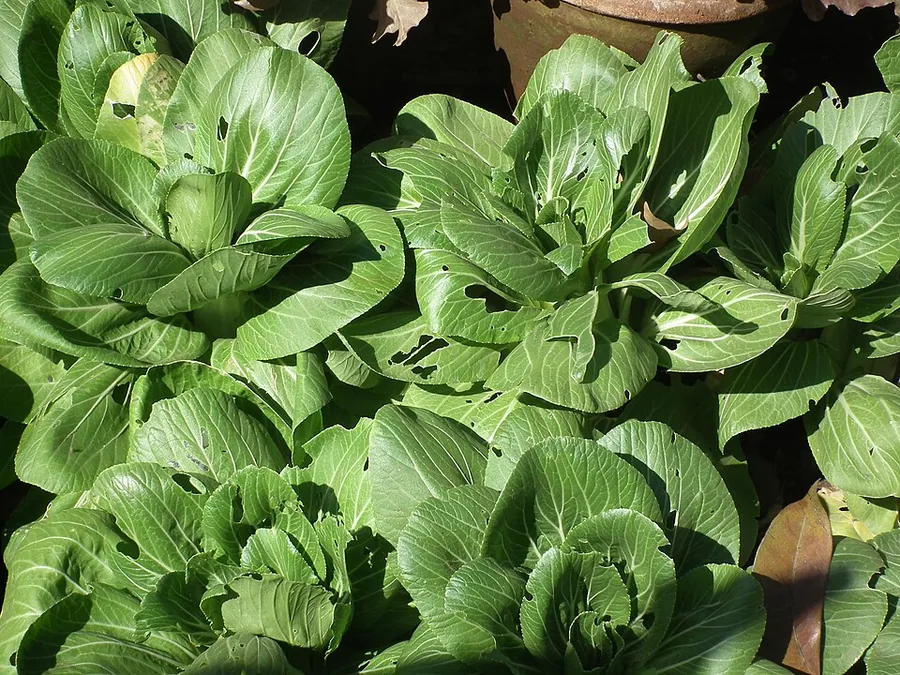
Bok choy earns its place in a kitchen garden as a member of the cabbage family grown for crisp stalks and tender leaves rather than a heavy head. It keeps pace with a busy household, going from seed to a full plant in 40 to 60 days, which makes it a natural for filling a bed in early spring or late fall when the garden could use a fresh face. Harvest suits any routine here, since you can pick the outer leaves as a meal asks for them or cut the whole plant at the 10 to 15 leaf stage.
The rhythm of this crop is set by cool weather, and that shapes how it sits in your season. It is at its best between 50°F and 77°F (10°C to 25°C), while a cold snap early on or the heat and long days of summer will send it bolting and turn it bitter. Plan your sowings for spring and fall and the plant settles comfortably into the calmer ends of the gardening year.
It carries itself with very little fuss once growing. Offer it steady moisture, fertile soil, and full sun, with partial shade a workable alternative, and within a few weeks it delivers crisp, mild greens that slip easily into stir-fries and soups at the close of a day.
Care
The short version: full sun and cool weather, even moisture at about an inch of water a week, rich soil worked with compost, and an early harvest at the 10 to 15 leaf stage before heat sets it bolting.
Light
Bok choy looks for full sun to grow at its fastest and fullest, yet it bends to the realities of a garden. It will still form usable heads on as little as 2 hours of direct sun a day, simply at an unhurried pace, which makes it a graceful choice for a part-shade corner of the plot.
Water
Keep the soil evenly moist with about 1 inch (2.5 cm) of water a week from rain or the hose, leaning toward more in sandy ground. That steadiness is what keeps the stalks crisp and holds bolting at bay, so let the bed settle into a rhythm rather than swinging from bone dry to soaked.
Soil
Give it fertile, well-drained soil that still holds a little moisture, enriched with compost or well-rotted manure. A pH of 6.0 to 7.5 suits it, and easing toward 7 lends a hand where clubroot has been a concern.
Temperature
This is a cool-weather crop, most at ease between 50°F and 77°F (10°C to 25°C). Cold below 50°F in its early weeks can prompt bolting, and summer heat pushes it to flower and turn bitter, so its place in the calendar matters.
Humidity
Ordinary outdoor humidity suits it, so there is no figure to chase. The thing to keep an eye on is the warm, wet spell that raises pest and disease pressure, and a little breathing room between plants lets the air move.
Feeding
Work plenty of compost or well-rotted manure into the bed before planting and that carries most crops gracefully. On leaner ground, a light nitrogen side-dress during growth keeps fresh leaves arriving.
Pruning
There is no real pruning to attend to. Take the outer leaves as the kitchen calls for them or cut the whole head at the 10 to 15 leaf stage, and remove any flower stalk the moment the plant begins to bolt.
Size & spacing
Plants stand 6 to 12 inches (15 to 30 cm) tall and about as wide, a tidy footprint for a small bed. Thin dwarf types to roughly 12 inches apart and full-size plants a little more, giving each the room to fill out and stay airy.
When to plant
Bok choy keeps to the cool shoulders of the year, since summer heat sends it bolting. Sow indoors a few weeks before the last spring frost or direct-sow around it, then return to it in midsummer for a fall harvest that comes into its own as the weather softens.
Northern hemisphere
Southern hemisphere
Typical months for a temperate climate: start earlier in warm zones, later where spring frosts linger.
- Sow: 4-5 weeks before the last spring frost for an early crop
- Plant: Set transplants out around the last spring frost once hard freezes have passed; direct-sow in midsummer (July) for a fall crop that matures in cool weather
- Harvest: Harvest 40-60 days after seeding at the 10-15 leaf stage, before hot weather triggers bolting; spring and fall crops
Hardiness
USDA hardiness zones: 2–11
Temperature: down to -46°C
Troubleshooting
Most bok choy setbacks announce themselves plainly, as chewed leaves, a little slime at the base, or a plant that abruptly runs to seed. Reading these cues early gives you the chance to step in before a crop slips away. Find the match below, then act while your attention still counts.
Plants droop and turn yellow though water is ample
A plant that wilts and yellows while the soil stays moist is telling you the trouble lies underground. Clubroot swells the roots into useless clubs, and cabbage maggots tunnel through and chew them apart. There is no rescuing a clubroot-struck plant, so lift it, destroy it, and keep it well away from the compost.
Fix:
- Remove and destroy infected plants; do not compost them
- There is no cure for clubroot in an infected plant
A tall flower stalk rises and leaf growth comes to a stop
When a tall stalk climbs and the leaves stop forming, the plant has begun bolting, usually after a cold spell tricked it into flowering or after the heat and long days of late spring set in. From there it commits its energy to seed instead of leaves. Cut the head before the buds open and it still earns a place at the table, carrying only a little more bitterness.
Fix:
- Harvest the head immediately, before the flowers open; it is still edible though it may be slightly bitter
Tiny round shothole holes peppering the leaves
Those neat pinprick holes are the work of flea beetles, small shiny black beetles that leap away at a touch and press hardest on seedlings. A floating row cover laid at sowing keeps them clear of the bed. Steady water and quick growth do the rest, letting plants stay ahead of the nibbling.
Fix:
- Cover plantings with floating row cover at seeding
- Keep plants growing fast with steady water so they outgrow damage
Torn leaf holes accompanied by dark green droppings
Ragged holes and scattered dark frass point to cabbage caterpillars, a set that takes in the imported cabbageworm, the cabbage looper, and diamondback moth larvae. Turn the leaves to find them tucked underneath and lift them off. Should they get ahead of you, a spray of Bacillus thuringiensis while they are still small settles the matter.
Fix:
- Handpick caterpillars
- Apply Bacillus thuringiensis (Bt) while caterpillars are small
Glistening slime marks and holes near the stalk bases
Silvery trails and gnawed stalk bases give away slugs and snails, which slip out after dark to feed in the damp, crowded base of the plant. An evening round by hand clears them, or a scatter of iron phosphate bait around the plants will do. Tidying mulch and debris from the stems removes the daytime shelter they count on.
Fix:
- Handpick at night
- Use iron phosphate slug bait around plants
- Reduce mulch and debris immediately around stems
Toxicity
Bok choy is a kitchen vegetable in every sense, safe for people and absent from the ASPCA list of plants toxic to cats and dogs, so it sits easily in a household garden. The single caveat is quantity, since the natural goitrogens shared by all cabbages can bring on gas or mild upset when an animal eats large raw amounts often. Horses are the one to keep apart from it, as extension guides count brassicas a poor fit for their diet.
Safe for
People · Cats · Dogs · Horses · Rabbits · Livestock · Birds
Cats None
A cat is free to investigate bok choy, since it never appears on the ASPCA toxic list and a curious bite does no harm. The most a large plate of raw leaves might bring is a touch of gas or a mild upset stomach.
Dogs None
A dog can share a little cooked or raw bok choy at the table without any concern. The one thing to note is gas or loose stools if a dog makes off with a large raw helping in one go.
Horses None
Horses are the exception to keep in mind, as NC State Extension marks brassicas as a poor match for their diet in any real quantity. A stray leaf is nothing, but it should not become a habit on the menu.
Rabbits None
Rabbits manage small servings of the leafy greens comfortably. Introduce it slowly and keep the portions modest, since a sudden helping of rich brassica can leave a rabbit gassy.
Livestock None
Cattle, goats, and sheep graze the leaves with no real risk. As with any brassica, a diet of it alone can unsettle rumen digestion, so it belongs in the mix rather than as the whole meal.
Birds None
Backyard hens and other birds peck contentedly at the leaves and the bolted flowers. Offered in moderation, it is a wholesome green for them.
People Safe
Bok choy is grown for the table and sits safely in the kitchen, raw in a salad or cooked in a stir-fry. Only a steady habit of large raw amounts is worth a second thought, owing to the natural goitrogens shared across the cabbage family.
No special handling needed; safe to grow in household gardens.
Varieties
Bok choy arrives in white-stemmed and green-stemmed forms and in full-size and baby types. These are the ones worth knowing by name as you plan a bed.
Shanghai (green-stem) type
The Shanghai type, called Shanghai Qing in China, sets spoon-shaped leaves on pale green stalks rather than white and is often gathered young as baby bok choy.
Dwarf types
Dwarf types suit a compact bed, reaching only about 6 inches, settling as close as 12 inches apart, and maturing fast in a small footprint.
'Joi Choi'
'Joi Choi' is a dependable white-stemmed hybrid prized for slow bolting and an easy way with both cold and warm spells.
'Mei Qing Choi'
'Mei Qing Choi' is a green-stemmed baby pak choi hybrid that holds off bolting with quiet reliability.
Companions
Bok choy grows best beside onions and aromatic herbs that throw pest-laying moths off the scent, and it shares a cool-season bed comfortably with beets.
Plant near
Onions: Extension companion-planting guides note onions get along well with all cabbage-family crops, and onion interplanting helped reduce cabbage looper and imported cabbageworm damage in brassica trials
Aromatic herbs (dill, sage, thyme, chamomile, rosemary): Cole crops do well planted with aromatic herbs; sage and thyme reduced diamondback moth pressure on brassicas in studies
Beets: Extension companion charts list beets as compatible neighbors for cabbage-family crops in the cool-season bed
How to propagate
Bok choy is grown from seed, about as straightforward as sowing gets, with a fresh row ready to begin every couple of weeks.
SeedEasy
Direct-sow or start indoors in early spring, and again in mid-to-late summer (around July) for a fall crop · Seed germinates in about 4-10 days in cool soil; plants reach transplant size in 3-4 weeks and harvest size in 40-60 days
Bok choy is grown from seed alone, which keeps the whole affair simple. Set the seed a quarter to half an inch deep in early spring, or again around July for a fall crop, and it appears in 4 to 10 days in cool soil. Thin to one plant every 6 to 12 inches to suit the variety, then allow 3 to 4 weeks to transplant size and 40 to 60 days to a full head. A fresh row every couple of weeks keeps the harvest arriving without a gap.
Myths
The moment bok choy sends up a flower stalk, it has lost all value for the table and belongs in the bin.
A bolting plant still belongs on the table if you reach it in time. Cut the head before the flowers open and it eats much like a young one, a shade more bitter at most, and the flower stalks make a fine little dish of their own.
Bok choy belongs only in a spot bathed in sun from morning until evening, or the harvest never comes.
Full sun does grow the fullest, fastest heads, yet the plant manages on much less. As little as 2 hours of direct sun a day still yields usable heads, simply on a gentler schedule.