Shrub · Rosaceae
Grandiflora Rose
Rosa
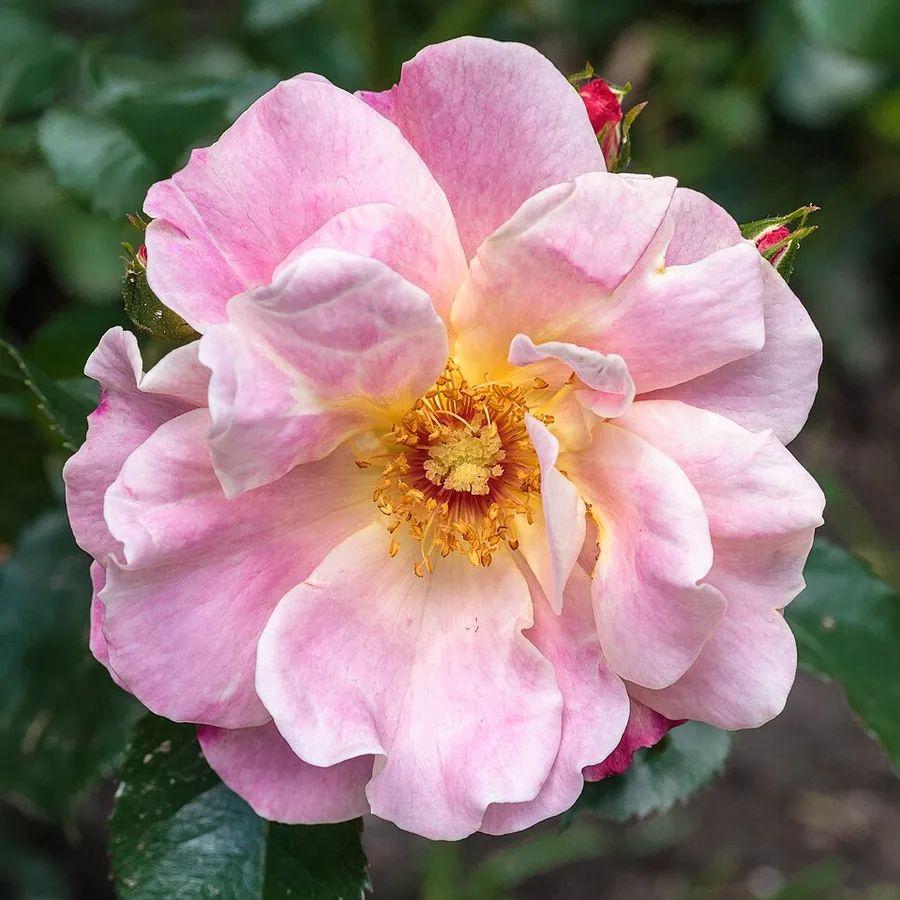
Tall, long-stemmed, and built to bloom from spring to frost, the grandiflora gives you hybrid-tea flowers on a floribunda frame.
Full sun
Every 4–7 days
USDA 5–9
4–6 ft · 1.2–1.8 m
Overview
Few roses give a garden as much presence as the grandiflora, one of the taller modern classes and the ideal choice when a border needs height and a long season of color. Bred in 1954 from a cross of hybrid tea and floribunda, it carries the refined, high-centered flower of the one on the tall, clustered frame of the other, so a single plant furnishes the vase whether cut one to a stem or gathered in full sprays. Queen Elizabeth began the class and still lends a garden its most poised anchor.
Standing 4 to 6 feet and flowering from May to frost, the grandiflora suits the back of a sunny bed, the flank of a doorway, or a rose walk that carries the eye down a path. It asks for a settled routine, mainly steady water at the roots and one confident pruning each late winter, and returns months of bloom to a home that keeps that rhythm. Set it where the air moves freely and it holds its looks all season.
The thorns give the plant a quiet formality, but they also mean gloves and long sleeves belong to the pruning ritual. Nothing about it troubles a household otherwise, since the rose is safe around pets and people with no toxin in play, an easy companion for a garden meant to be lived in.
Care
The short version: a full-sun spot with at least six hours of light, slightly acidic well-drained soil enriched with compost, a deep morning drink at the base, a monthly feed through the growing season, and one shaping cutback in late winter.
Light
Give the grandiflora full sun, six hours or more a day, and it rewards the spot with its fullest bloom. A little partial shade is tolerable, but a dimmer position means fewer flowers and more disease as the leaves stay damp longer.
Water
Water deeply and on a regular schedule, best done in the morning so the leaves dry before evening. Direct the water to the root zone rather than the foliage, since wet leaves are where black spot and mildew begin. Even, medium moisture every 4 to 7 days keeps the display steady.
Soil
Plant into well-drained loam, slightly acidic and rich in organic matter. A pH of 6.0 to 6.5 suits the rose, so work in generous compost before planting and it roots deep and grows strong.
Temperature
The grandiflora is resilient, taking conditions from -20°F to 95°F (-29°C to 35°C) across its hardy range. It carries through genuine cold once established, though a long spell of extreme summer heat can tire the blooms.
Humidity
Ordinary outdoor humidity is all it wants, so there is no figure to chase. Air movement matters far more, since still, damp air around crowded canes is precisely what the fungal diseases need to settle in.
Feeding
Feed monthly through spring and summer with a balanced rose fertilizer while growth is active. Taper off as the season closes, and keep nitrogen light, since a surplus forces the soft growth that aphids and mildew favor.
Pruning
Prune with intent in late winter to early spring, cutting the canes to roughly 12 to 18 inches from the ground. Take out anything dead, weak, or crossing, then deadhead spent blooms through the season to keep fresh flowers arriving.
Repotting
The grandiflora belongs in the ground rather than a pot, so repotting rarely enters the picture. Where one is container-grown, move it up a size once roots circle the pot or reach the drainage holes and bloom begins to fade.
Size & spacing
Plan for a plant 4 to 6 feet (122 to 183 cm) tall and 2 to 3 feet (61 to 91 cm) wide. Give each one room enough for air to move freely between the canes, the surest safeguard against leaf disease.
When to plant
The grandiflora keeps to a seasonal calendar that shapes the garden's year. Set new plants out in early spring once hard frost has passed, or in fall where winters stay gentle, and the reward arrives as a first flush in May followed by a long, unhurried run of bloom that lasts until frost draws the season to a close.
Northern hemisphere
Southern hemisphere
Typical months for a temperate climate: start earlier in warm zones, later where spring frosts linger.
- Plant: early spring after the threat of hard frost, or fall in mild climates
- Harvest: May to frost
Hardiness
USDA hardiness zones: 5–9
Temperature: down to -29°C
Troubleshooting
Most of what unsettles a rose reveals itself on the leaves and the soft new growth, and nearly all of it comes back to wet foliage or crowding. A watchful eye and an early response keep a small blemish from spreading across the planting. Find the match below, then act while the effort still counts.
Dark spots rising from the lower leaves as they yellow and fall
When dark spots start marring the lower leaves, the culprit is black spot, the fungus roses meet more often than any other, always beginning on the older inner foliage. It moves in wherever leaves stay wet, so a morning drink at the base keeps the display looking its best. Clear away the spotted leaves and the litter beneath, open the plant with pruning so light and air can pass through, and lean on a fungicide when the season turns against you.
Fix:
- Remove and dispose of infected leaves and fallen debris
- Water at the base in the morning and keep foliage dry
- Improve air circulation by proper spacing and pruning
- Apply a labeled fungicide preventively if disease pressure is high
A pale powdery veil over the new growth and curling young leaves
A soft white veil settling over the fresh growth is powdery mildew, most at home when warm days give way to cool, humid nights. Trim out the worst of the affected shoots to restore the plant's clean line, then give it more sun and a little breathing space. Easing off the nitrogen keeps the tender growth it favors in check, and a labeled fungicide or horticultural oil retires a case that refuses to move on.
Fix:
- Prune out heavily infected shoots
- Improve air circulation and sun exposure
- Avoid excess nitrogen that pushes soft growth
- Apply a labeled fungicide or horticultural oil when needed
Soft insects gathering at the buds and dulling them with sticky film
Clusters of soft little insects massing at the buds are aphids, and the sticky honeydew they leave can darken into sooty mold that dulls the whole planting. A firm rinse of water clears most of them, with insecticidal soap or horticultural oil handling whatever holds on. Lady beetles and lacewings tend the plant on your behalf when invited, so keep the nitrogen restrained and let the garden's own helpers keep the display crisp.
Fix:
- Dislodge aphids with a strong spray of water
- Apply insecticidal soap or horticultural oil to affected growth
- Encourage natural predators such as lady beetles and lacewings
Toxicity
This is reassuring company to keep: true roses are non-toxic to pets and people alike, so a curious taste from a cat, dog, or rabbit brings no poisoning. The petals and hips are even edible. The only real hazard is mechanical, the sharp thorns along the canes, so handle the plant with a measure of care.
Safe for
People · Cats · Dogs · Horses · Rabbits · Livestock · Birds
Cats None
A household cat can share the garden with a rose in peace, since the ASPCA counts true roses non-toxic and a nibbled petal won't cause harm. The thorns are the single caveat, ready to catch a curious paw or mouth.
Dogs None
A dog moving through a rose border faces no poisoning risk, even if it samples a leaf. The only thing to keep in view is a thorn scratch across the nose or paws.
Horses None
Horses share the roster of animals the ASPCA lists as unaffected by roses. One can browse the leaves untroubled, though the prickly canes may tug at the lips.
Rabbits None
Rabbits take rose leaves and petals as a safe and welcome treat, one many gardeners offer freely. A quick pass to strip the thorns is all any cutting needs first.
Livestock None
Goats, sheep, and cattle can graze rose foliage with nothing to fear on the toxic front. The sharp prickles along the canes remain the lone consideration.
Birds None
Birds face no chemical hazard from a rose, and the hips left on the canes become a graceful source of winter food for wild species.
People None
Rose petals and hips carry into the kitchen as teas, jams, and syrups, all perfectly edible. The thorns are the only real hazard, so slip on gloves before you prune.
Most grandiflora roses bear sharp thorns (prickles) on the canes that can cause scratches and puncture wounds; the hazard is mechanical, not chemical. Wear gloves and long sleeves when pruning or handling.
Varieties
Only a handful of grandifloras appear in most gardens, and these are the names worth carrying into the nursery.
Queen Elizabeth
The original grandiflora and still the standard-bearer, an upright grower of 4 to 6 feet that offers double silver-pink blooms singly and in long-stemmed clusters.
Gold Medal
A tall grandiflora admired for golden-yellow, hybrid-tea-shaped flowers poised on long stems that carry beautifully into a vase.
Tournament of Roses
A vigorous, easygoing grandiflora with dependable disease tolerance that presents coral-pink double blooms in generous clusters.
Companions
Grandifloras do best beside aromatic plants that confuse pests and share their love of sun and good drainage, and worst anywhere near a black walnut.
Plant near
garlic: Aromatic alliums interplanted near roses are a traditional companion thought to help deter aphids.
lavender: Drought-tolerant, sun-loving companion that shares full-sun, well-drained conditions and attracts pollinators without crowding roots.
Keep apart
black walnut: Black walnut releases juglone, which can harm many garden plants; keep roses away from its root zone.
How to propagate
Roses can be multiplied by a few different methods, though some ask far more skill than others. Here is how each one works and what to expect from it.
GraftingDemanding
Late summer for budding onto rootstock · One growing season
This is the route nurseries take to keep named grandifloras true to type, budding a chosen scion onto a hardier, disease-resistant wild rose rootstock in late summer. The new plant finds its place over a single growing season. It asks for a practiced hand, which is why the craft usually stays with the professionals.
Stem cuttingsModerate
Late spring through summer from semi-hardwood growth · Several weeks to a few months to root
Cuttings come from healthy, current-season stems taken any time from late spring through summer, once the growth has firmed into semi-hardwood. Rooting unfolds over several weeks to a few months, with the cultivar setting the pace. Bear in mind that patented varieties may not be legally propagated.
LayeringModerate
Spring to summer while canes are flexible · One season for roots to form
While a cane stays supple in spring or summer, draw a low one down and settle a section of it under the soil. Over a season, roots form where the buried wood rests against moist ground, and the new plant can then be parted from its parent and moved.
Myths
Roses are poisonous to cats and dogs.
There is no need to keep pets from the rose border, because the ASPCA lists true roses in the genus Rosa as non-toxic to cats, dogs, and horses, so a chewed leaf or petal will not poison a pet. The one real risk is a scratch from the thorns. Do stay alert to unrelated plants that borrow the rose name, such as desert rose or Lenten rose, since those can be toxic.
Grandiflora is a botanical species of rose.
Grandiflora names a garden class, not a species. Breeders composed it in 1954 by crossing hybrid teas with floribundas, marrying the elegant hybrid-tea bloom to the tall, clustered bearing of a floribunda.