Ornamental · Malvaceae
Hardy Hibiscus
Hibiscus moscheutos
Give it full sun and soil that never dries out, and hardy hibiscus brings dinner-plate flowers to the summer garden.
Full sun
Every 2–4 days
USDA 4–9
3–7 ft · 0.9–2.1 m
Overview
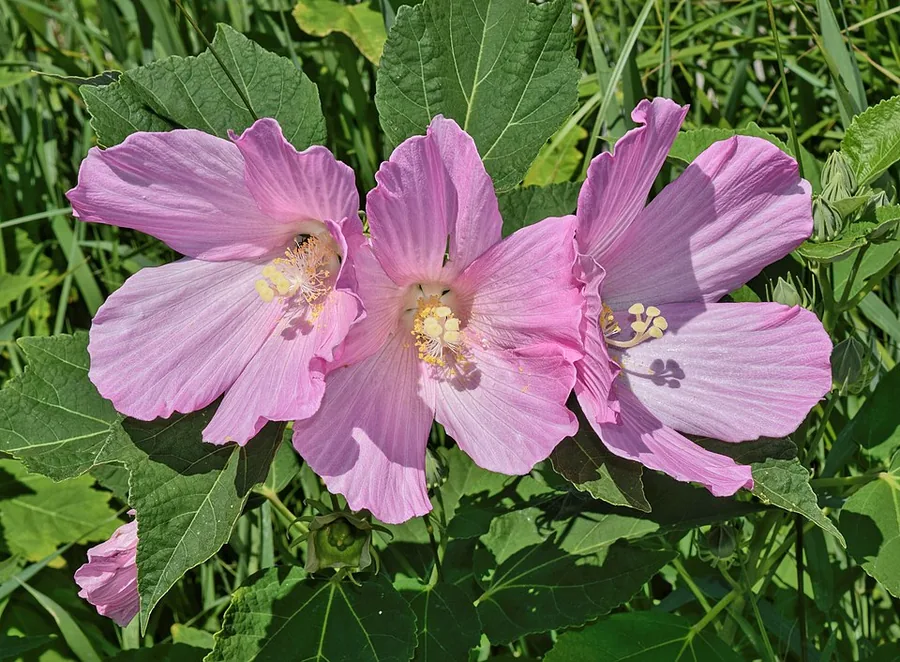
Hardy hibiscus carries the look of the tropics into a garden that knows real winters, and that quiet contradiction is its charm. Each bloom can reach the width of a dinner plate, yet the plant behind it is a tough native perennial at ease with cold down to -20°F (-29°C). It belongs to the mallow family and hails from marshes and wet meadows, a lineage that shapes where it wants to live in your landscape.
A single flower stays open only a day or two, but the planting never loses its rhythm. A mature clump can lift 20 or more blooms a day through the warmth of summer, so the display holds from midsummer into early fall as a steady presence in the bed. Its palette moves from white through soft pink to deep crimson, letting you tune the mood of a border to the variety you choose.
This is an easy plant to live with, asking one thing in return: keep the roots wet. Set it in full sun and rich, moist ground and it fills its space fast and flowers with real generosity. Let the soil run dry and the leaves scorch and the buds drop, so a reliable watering routine is the habit that keeps the picture whole.
Care
The short version: full sun and soil that stays moist to wet rather than dry, a feed through the growing season, a cutback of the dead stems after frost, and a patient eye in spring, since it makes a late, unhurried entrance.
Light
Hardy hibiscus is at its most generous in full sun, and the more it soaks up, the fuller the flowering it lends a border. It will take partial shade, though the plant grows looser and floppier there, offering fewer flowers to the scene.
Water
This is the one habit the plant will not let you neglect. Hardy hibiscus is a wetland native that wants soil kept moist to wet, and it takes standing water and short flooding in stride, which makes it a natural at a pond edge. Water deeply every 2 to 4 days in hot, dry weather, since a dry stretch scorches the leaves and drops the buds.
Soil
It settles best into rich, organic loam, silt, or sandy ground that holds moisture, though it makes do in average garden soil kept reliably damp. It stays relaxed about pH, content anywhere from 5.5 to 7.5, so most beds suit it as they are.
Temperature
The plant is far hardier than its lush flowers suggest, weathering winter cold to -20°F (-29°C) and summer heat to 95°F (35°C). That resilience is why it returns to the same spot year after year, giving a border a dependable anchor where showier flowers falter.
Humidity
Ordinary outdoor air suits it, so there is no figure to fuss over. Its comfort rests on wet roots, not damp air, which frees you to place it by the mood of a spot rather than its climate.
Feeding
Offer a balanced general-purpose fertilizer monthly through the growing season. The plant grows fast and flowers large, so a steady feed keeps the whole planting looking its best.
Pruning
After frost takes the top growth in late autumn, cut the stems back to 3 to 4 inches to close the season tidily. For a fuller, sturdier shape, pinch the stem tips at about 8 and 12 inches in early summer, and deadhead spent flowers to keep the bed looking fresh.
Size & spacing
Plants stand 3 to 7 feet (90 to 210 cm) tall and spread 2 to 5 feet (60 to 150 cm) wide, so give each one room to command its part of the border. Allowing for that full spread keeps air moving and the planting looking healthy and composed.
When to plant
Hardy hibiscus keeps a warm-season calendar and takes its time waking up. Start seed indoors in late winter, move plants into the garden once the spring frosts have passed, and the grand flowers arrive from midsummer into early fall to headline the season.
Northern hemisphere
Southern hemisphere
Typical months for a temperate climate: start earlier in warm zones, later where spring frosts linger.
- Sow: Late winter to early spring (about 8 to 10 weeks before last frost); seed started very early can flower the first year
- Plant: Spring after the last frost once soil has warmed
- Harvest: Midsummer to early fall (roughly July to September); individual flowers last only 1 to 2 days but a mature plant can open 20 or more per day
Hardiness
USDA hardiness zones: 4–9
Temperature: down to -34°C
Troubleshooting
Most of what troubles a hardy hibiscus writes itself across the leaves, whether the culprit is a beetle, a dry spell, or a fungus. Learn to read those cues and you can act while a small blemish is still just that. Match what you see below, then step in before it clouds the season's display.
Tired edges and dropped buds through a hot spell
Browning edges and falling buds are the plant's way of saying the border has gone dry, several inches down, in the heat. As a native of wet meadows, hardy hibiscus wants a steady drink, and a deep, unhurried soaking usually restores its poise. For a planting that keeps its composure all season, mulch to hold moisture in the bed and settle the plant in a low, naturally damp part of the garden where the mood stays lush.
Fix:
- Water deeply and consistently to keep soil moist to wet
- Apply mulch to conserve soil moisture
- Site the plant in a low or naturally moist part of the garden
Foliage worn to lace at the height of the season
When the leaves thin to a lacy tracery in midsummer, Japanese beetles are the usual guests, sometimes with a few sawfly caterpillars at the table. You will notice small clusters of glinting green-bronze beetles gathered on the foliage. Tip them into soapy water in the quiet of early morning, and let a little cosmetic wear pass on a settled plant, since a mature specimen carries the look with ease.
Fix:
- Hand-pick beetles into soapy water in early morning
- Tolerate minor cosmetic feeding on established plants
- Use a labeled insecticide only for severe infestations
Spots and orange rust dulling the summer picture
Spots, blotches, and orange pustules read as fungal leaf spots and rust, the sort that creep in where foliage stands crowded and damp. Lift away the marked leaves, gather any that have fallen, and give the planting the airy, open look it wears best by keeping water off the leaves. A careful clearing at season's end keeps the scene fresh and stops the spores from lingering over winter.
Fix:
- Remove and dispose of affected and fallen leaves
- Improve air circulation and avoid overhead wetting of foliage
- Clean up plant debris at season end
A sticky sheen and sooty film across the planting
A sticky sheen and warped new growth point to sap-sucking pests, most often aphids, whiteflies, or scale. Turn a leaf and study the stems, where small soft insects, faint white fliers, or bumpy scale gather, along with the honeydew that invites a dulling film of sooty mold. A firm pass of water refreshes a lightly troubled planting, and insecticidal soap or horticultural oil restores the rest to its polished self.
Fix:
- Rinse off light infestations with a strong stream of water
- Apply insecticidal soap or horticultural oil to affected foliage
- Encourage natural predators
Toxicity
For a home shared with pets and children, hardy hibiscus is a graceful, worry-free choice. The ASPCA lists hibiscus as non-toxic to cats, dogs, and horses, and the large flowers are edible for people. The worst a curious mouthful brings is a mild, passing stomach upset, the same as with any plant.
Safe for
People · Cats · Dogs · Horses · Rabbits · Livestock · Birds
Cats None
An easy companion for a home with cats. The ASPCA lists hibiscus as non-toxic to cats, so a passing nibble brings nothing worse than the mild stomach grumble any plant can cause in quantity.
Dogs None
A relaxed choice for a dog-friendly household. Hibiscus is non-toxic to dogs, and a chewed leaf or flower leaves one in no danger.
Horses Safe
It sits comfortably near a paddock, since horses may graze beside it with no toxin to trouble them.
Rabbits Safe
A worry-free neighbor for rabbits. The leaves and flowers hold nothing harmful, so a few bites pass without concern.
Livestock Safe
Cattle, goats, and sheep may browse it freely, as the plant poses no threat to grazing animals.
Birds Safe
It suits a garden alive with birds. Backyard hens and wild visitors may peck the buds and petals with no ill effect.
People Safe
It graces the table as well as the border, since the large flowers are edible. The petals lend color to teas, salads, and garnishes, so nothing here needs keeping from children.
Varieties
Breeders have shaped hardy hibiscus into a wardrobe of named hybrids, sorted mostly by flower color, foliage color, and height. These are the ones worth knowing as you compose a border.
Lord Baltimore
A tall, classic hybrid whose very large flowers arrive in a brilliant crimson red that anchors a summer border.
Lady Baltimore
At about 5 feet, it offers clear pink flowers finished with a deep red center for a softer, more romantic planting.
Kopper King
Its coppery bronze-red foliage sets a moody backdrop for large light-pink, red-veined blooms, adding drama to the bed.
Disco Belle Series
A compact, dwarf group holding to around 3 to 4 feet, ideal for a courtyard, a container, or a tighter corner of the garden.
How to propagate
You can extend hardy hibiscus through the garden by dividing a clump you already have or by starting fresh from seed, and each route suits a different plan for the season.
DivisionModerate
Spring as new growth emerges, or early fall · Establishes over one growing season
To carry a favorite planting into another corner of the garden, dividing a mature clump is the surest way to repeat the look. In spring as the new shoots appear, or in early fall, lift the clump and part the woody crown into sections, each holding its own shoots and roots. Set the pieces back in place at once, keep them moist, and they find their footing across a single growing season.
SeedEasy
Start indoors in late winter to early spring; seed started very early can bloom the first year · Several weeks to germinate and grow on before transplanting
Seed is the easy, adventurous route, with one thing to expect: the named hybrids rarely come true, so the seedlings surprise you rather than mirror the parent. Sow them indoors in late winter to early spring, and nick or soak the hard seed coats first to move things along. The young plants take several weeks to sprout and grow on before joining the garden, and seed sown very early can flower in its first year.
Myths
A hardy hibiscus that hasn't leafed out by spring is dead.
It is simply the border's late sleeper. Fresh shoots rise from the crown in late spring, long after the rest of the planting has filled in and turned green. Give it time before you dig it out, since arriving fashionably late is entirely in character for this plant.
Hibiscus flowers are poisonous to dogs and cats.
The ASPCA lists hibiscus as non-toxic to dogs, cats, and horses. The plant is safe around pets, and the most a large helping of any greenery might bring on is a brief, passing stomach upset.