Tree · Theaceae
Japanese Stewartia
Stewartia pseudocamellia
A quiet four-season centerpiece, earning its keep with summer flowers, glowing fall color, and patchwork bark.
Partial shade
Every 3–7 days
USDA 5–8
12–40 ft · 3.7–12.2 m
Overview
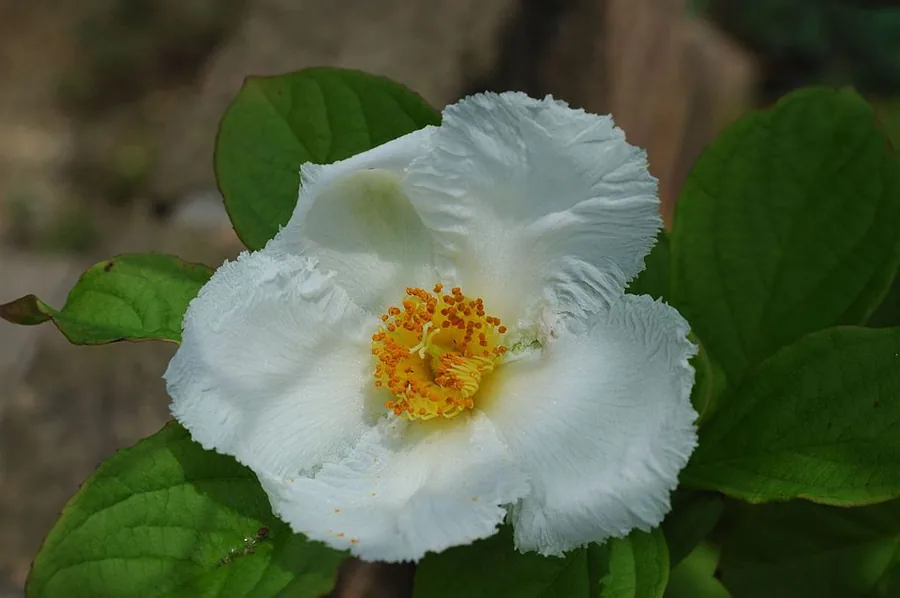
Japanese stewartia is a small deciduous tree from the tea family, the elegant lineage behind the camellias, and it makes a garden feel composed across the whole year. It works as a living focal point for a courtyard, a terrace view, or the turn of a garden path, offering white summer flowers, a warm autumn glow, and a patterned winter trunk that reads well against a wall or a stretch of lawn.
This is a tree for a considered garden rather than a quick fix. It grows slowly, settles gradually, and asks for the right position more than constant attention, which suits a home where the outdoor rooms are meant to mature over time. Place it thoughtfully and it becomes a fixture you plan the rest of the space around.
Set it where daily life passes it often, framed by a seating nook, a window, or an entry, so its changing seasons become part of the routine. Give it moist, acidic, well-drained soil and a spot with morning sun and shelter from harsh afternoon glare, and it quietly anchors the scene for years.
Care
The short version: a part-shade position sheltered from hot afternoon sun, moist and acidic well-drained soil that never dries out or stays soggy, and the patience to let it settle into the scene.
Light
Stewartia settles best in part shade with shelter from the hot afternoon sun, which makes an east-facing corner or the dappled edge of a border an ideal home. It will take full sun in cooler climates, but where summers run hot the foliage scorches, so a spot with morning light and afternoon cover keeps it looking its most poised.
Water
Keep the soil evenly moist, watering deeply every 3 to 7 days through dry weather, which turns this into a simple part of the garden rounds. The tree has no tolerance for drought, so the root zone should never run dry, and a layer of mulch holds moisture and keeps the roots cool.
Soil
Give it moist, well-drained, acidic soil rich in organic matter, ideally a sandy loam, at a pH of 5.0 to 6.5. It sulks in heavy clay or in dry, rocky, or waterlogged ground, so it pays to prepare the bed before the tree goes in.
Temperature
Hardy from about -20°F to 86°F (-29°C to 30°C), the tree carries cold winters with ease but finds extreme summer heat harder going. In warmer gardens, afternoon shelter and steady moisture keep it comfortable in its position.
Humidity
Ordinary outdoor air suits it, so there is no reading to chase. What shapes its comfort is steady soil moisture and shelter from drying heat, since baking, dry air is what leaves the foliage looking tired.
Feeding
A single feeding in early spring with a balanced or acid-forming slow-release fertilizer for acid-loving woody plants is all it needs. One seasonal application keeps things simple, and an acid-lover formula helps hold the soil to the acidic side the tree prefers.
Pruning
The tree needs almost no pruning, which suits its unfussy place in the garden. Remove only dead, damaged, or crossing branches in late winter or early spring while it is dormant, and otherwise let its naturally graceful shape define the view.
Repotting
Stewartia is rarely repotted and dislikes root disturbance, so a settled tree is best left alone. Roots circling the drainage holes, water running straight through, or stalled new growth signal that a young potted tree wants more room before it moves to its permanent spot.
Size & spacing
Plan for scale, since the tree can reach 12 to 40 feet (3.7 to 12 m) tall and spread 8 to 25 feet (2.4 to 7.5 m) wide over the years. Give it clear ground away from buildings and other trees so its open canopy and patterned bark can hold the eye across the garden.
When to plant
Stewartia would rather stay put, so place it once and place it well. Set out young container-grown trees in spring to give the roots a full season to settle into their spot, and look forward to the white flowers from June into August as the garden hits its summer stride.
Northern hemisphere
Southern hemisphere
Typical months for a temperate climate: start earlier in warm zones, later where spring frosts linger.
- Plant: Spring, using young container-grown plants for best establishment
- Harvest: White cup-shaped flowers in early-to-mid summer (June to August)
Hardiness
USDA hardiness zones: 5–8
Temperature: down to -29°C
Troubleshooting
This is a low-drama tree with few serious pests, and most of its trouble comes down to where it stands rather than to insects or disease. Keep a quiet eye on the roots and the leaves, since a wet position and dry summer heat lie behind nearly every setback. Match the sign below and adjust the setting before the tree slips out of its stride.
Wilting, yellowing foliage and a tree in slow decline
When a stewartia droops, yellows, and thins from the crown, the culprit is usually root rot in ground that holds water too long. Starved of air, the roots darken and soften and the canopy fades from the top. The remedy is to give young trees a fresh, raised, better-drained position, hold off watering while the ground stays saturated, and fold organic matter into the bed to open up heavy soil so the tree can recover its footing.
Fix:
- Improve drainage or relocate young trees to a better-drained, raised site
- Reduce supplemental watering once soil is saturated
- Amend planting area with organic matter to improve structure
Browning leaf edges in the heat of summer
Brown, brittle leaf edges in the height of summer read as leaf scorch, the mark of drought and a too-exposed, sun-baked position. It tends to settle on whichever face of the tree meets the fiercest afternoon light, usually once the root zone has run dry. Set it right with a deep soak through dry weeks, a generous layer of mulch to keep the roots cool and moist, and a little afternoon shade wherever the exposure turns harsh.
Fix:
- Water deeply during dry periods
- Apply mulch over the root zone to retain moisture and keep roots cool
- Provide afternoon shade where exposure is harsh
Toxicity
For a home that blends garden and family life, the tree is reassuring: Japanese stewartia is not toxic. It doesn't appear on the ASPCA's poison lists, and no part of it is known to harm cats, dogs, horses, or other animals. As with any plant, a large mouthful of leaves might unsettle a stomach, but there is nothing here to plan the garden around.
Safe for
People · Cats · Dogs · Horses · Rabbits · Livestock · Birds
Cats Safe
A cat weaving through the garden can brush the trunk or nose a fallen leaf in complete safety, since the tree holds no known toxins.
Dogs Safe
The family dog is safe worrying a low branch, though a large mouthful of foliage might leave it with a brief, harmless bout of stomach upset.
Horses Safe
Horses can graze the edge of a planting without concern, as the tree carries no compounds known to trouble them.
Rabbits Safe
Rabbits run no poisoning risk from the leaves or bark, so an occasional nibble along a border does no harm.
Livestock Safe
Cattle, goats, and sheep can share a paddock with this tree in safety, since no part of it is toxic to grazing animals.
Birds Safe
Birds drawn to the branches or the seed capsules come to no harm from this non-toxic tree, which makes it an easy centerpiece for a wildlife-friendly garden.
People Safe
The tree poses no poisoning risk to the household, adults or children alike. It earns its place for the flowers and bark rather than the table, so no part is meant for eating.
No special handling required; as with any plant, discourage pets from chewing foliage to avoid mild stomach upset.
Varieties
A handful of named selections and close relatives are worth knowing when you shop, chosen mostly for bigger flowers or better bark. These are the ones most likely to turn up in good nurseries.
'Ballet'
A selection chosen for its larger flowers and an open, spreading habit that fills a garden view.
'Milk and Honey'
A cultivar valued for its handsome peeling bark and its steady, dependable flowering.
Stewartia koreana (Korean stewartia)
A close relative treated as a synonym or variety of S. pseudocamellia, offering broad camellia-like white flowers that open flatter.
Stewartia monadelpha (tall stewartia)
A related species with smooth cinnamon-brown to tan peeling bark that reaches roughly 20 to 25 feet.
How to propagate
Stewartia can be raised from seed or from cuttings, though neither is quick, which fits a plant meant for the long view. Cuttings give the faster, more dependable result, while seed is a patient project for a gardener who enjoys the wait.
SeedDemanding
Collect ripe seed in fall; seed requires warm then cold stratification and may take many months to germinate · 1 to 2 years or more to a transplantable seedling
Raising it from seed is a slow, deliberate project. Gather ripe seed in fall, then give it a warm spell followed by a cold one to break its double dormancy, which is why germination arrives slowly and unevenly. Even once it sprouts, a seedling wants a year or two, sometimes more, before it is ready to take its place in the garden.
Stem cuttingsModerate
Take softwood cuttings in early summer · Several weeks to root, then grow on for a season or more
Cuttings are the more obliging route. Take softwood cuttings in early summer, treat them with rooting hormone, and keep them under mist, and they root within a few weeks. Grow them on for a season or more, and you have a young tree ready for its spot.
Myths
Stewartia is just another kind of camellia.
The blooms carry a camellia's poise, and the two do share the tea family. Yet stewartia stands as its own genus and a deciduous tree, shedding its leaves each fall rather than holding them like the evergreen camellia, which is exactly why it changes character with the seasons.
Japanese stewartia is an easy, fast-growing shade tree.
It moves at a slow, unhurried pace, takes its time to settle, and would rather not be moved once placed. Between its dislike of drought, heat, and wet ground, it reads as a considered specimen tree, not a quick beginner's shade tree.