Shrub · Theaceae
Tea
Camellia sinensis
Set in acidic soil, dappled shade, and steady moisture, this evergreen shrub turns a quiet garden corner into the source of your daily cup.
Partial shade
Every 5–10 days
USDA 7–9
3–7 ft · 0.9–2 m
Overview
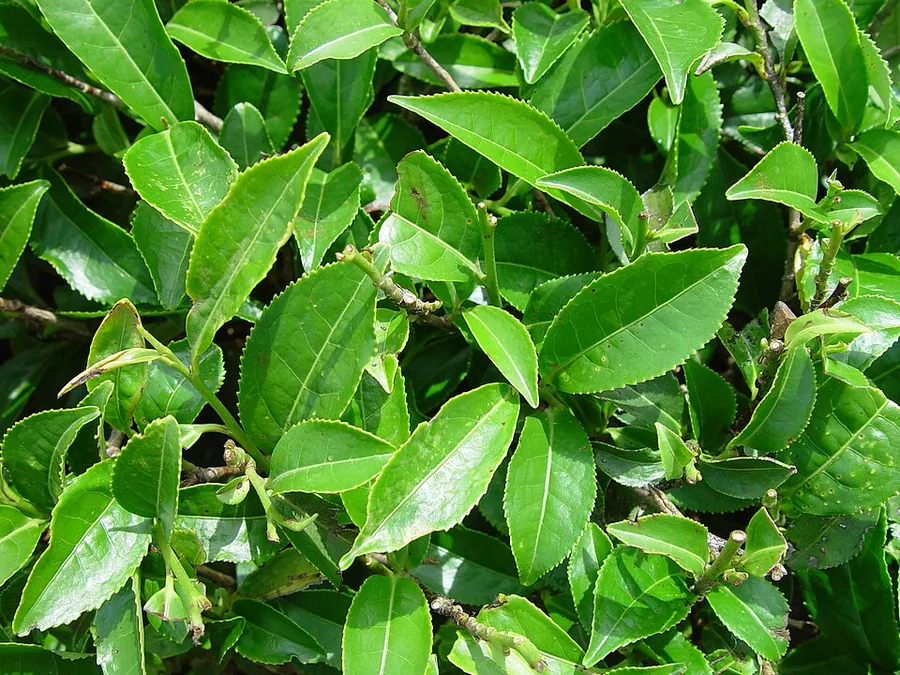
There is a certain romance to growing the shrub behind your morning ritual. Tea comes from one evergreen plant, Camellia sinensis, the same source as green, black, and oolong, and it carries the composed good looks of its cousin the garden camellia, along with a taste for acidic soil and dappled shade. Left to its own devices it rises past head height, yet clipped into a low, leafy hedge it settles gracefully into a border or a courtyard.
This is a plant for the patient household, and it rewards a slower pace. Its new growth arrives in soft flushes, a bud and the top two leaves, the very tips destined for the pot. In fall it offers fragrant white flowers, a fleeting grace note on a shrub kept mainly for its foliage.
Its reputation as a hothouse exotic undersells it. The China type takes light frost in stride and lives happily outdoors across USDA zones 7 to 9, while a potted specimen can retreat indoors where winters turn severe, earning a place by a bright window. Give it acidic soil and honest drainage, and it asks little more than time and a considered spot.
Care
The short version: a part-shade setting, acidic well-drained soil kept evenly moist, a seasonal acid feed, and a late-winter prune to hold it at an elegant, pickable height.
Light
Tea looks and grows its best in part shade, the dappled light beneath taller trees, which makes it a natural for a filtered corner or the edge of a canopy. Cooler gardens can offer it more sun, and full sun suits it where the roots stay moist, but harsh afternoon glare in a hot spot scorches the leaves and spoils the display.
Water
Keep the root zone evenly moist but never waterlogged, roughly every 5 to 10 days and more often through a dry spell or a flush of new leaves. A tidy layer of mulch holds that moisture and finishes the planting neatly. Soggy ground is the one thing to avoid, since it leads to root rot.
Soil
This is an acid lover at heart, most at ease in well-drained, organic-rich loam at a pH of 4.5 to 6.5. Work in generous organic matter when planting, and pass over any low corner where water collects.
Temperature
Once established, tea is comfortable across 5°F to 86°F (-15°C to 30°C), a range that covers most temperate gardens. The China type takes light frost, though a hard freeze marks tender new growth, so give young plants shelter or bring pots under cover in the coldest stretch of winter.
Humidity
Average humidity of 40% to 60% suits it, in step with the temperate garden it favors. There is no number to chase outdoors, but a plant kept inside looks its best with a little extra moisture in the air.
Feeding
Feed seasonally from spring through summer during active growth with an acidic azalea or camellia fertilizer. That keeps the soil in the acidic range the roots prefer and supports the leaf flushes you will be gathering.
Pruning
Prune in late winter to early spring to keep the shrub at a graceful hedge of around 90 to 120 cm, a height that reads as intentional in a border. Tipping the young flushes through the season shapes the plant and, conveniently, supplies the very leaves used for tea.
Repotting
A container plant appreciates a move up every 2 to 3 years, or sooner once roots circle the pot, escape the drainage holes, or send water straight through. Slowed growth is the other cue that fresh acidic mix and a larger, better-looking pot are due.
Size & spacing
As a hedge the shrub reaches 3 to 6.5 feet (90 to 200 cm) tall and nearly as wide, spreading 3 to 5 feet (90 to 150 cm). Allow each plant that footprint so it keeps its shape, air moves through, and pruning stays a pleasure rather than a chore.
When to plant
Tea keeps an unhurried calendar, which suits a garden meant to be lived in rather than rushed. Begin seed or cuttings in late winter, settle young plants outdoors in spring once frost has passed, and gather the young leaf flushes from spring through summer. The white flowers arrive in fall, a seasonal flourish to close the year.
Northern hemisphere
Southern hemisphere
Typical months for a temperate climate: start earlier in warm zones, later where spring frosts linger.
- Sow: late winter in a warm propagator
- Plant: spring after the last frost
- Harvest: Fragrant white flowers in fall; harvest young leaf flushes (bud and top two leaves) from spring through summer.
Hardiness
USDA hardiness zones: 7–9
Temperature: down to -18°C
Troubleshooting
Even a well-placed tea shrub has its off days, and nearly all of them trace to soil that has slipped from the acidic range or ground left too wet, with scale insects a rare third. A glance at the leaves and roots reads the situation. Match what you see below and set it right before the look suffers.
Wilting and dieback in ground that never dries
Root rot is the culprit where drainage fails and the roots stand in water, and the plant tends to slump further after every heavy rain. Check the roots for dark, mushy tissue to confirm. A plant too far gone cannot be rescued, so lift it, correct the drainage, and replant where water passes cleanly through.
Fix:
- Improve drainage and stop overwatering
- Remove and discard severely affected plants
- Replant in raised or amended well-drained beds
Leaves fading to yellow while the veins hold green
The two-tone effect is interveinal chlorosis, a sign the soil has drifted too alkaline for the plant to take up iron and manganese. Restore the acidity with elemental sulfur or an acidifying feed, then dress the base with pine bark or pine needle mulch to hold it. A dose of chelated iron brings the color back to new growth while the soil comes around.
Fix:
- Lower soil pH with elemental sulfur or an acidifying fertilizer
- Apply chelated iron for quick correction
- Mulch with pine bark or pine needles
A sticky, blackened film with small bumps beneath the leaves
Tea scale and its relatives fasten to the leaf undersides and weep honeydew, which clouds over with sooty mold and dulls the whole shrub. Turn the leaves to find small white or brown bumps near the stem. Treat with horticultural oil at the label rate, remove the worst branches, and let natural predators tidy the rest.
Fix:
- Treat with horticultural oil following label rates
- Prune out heavily infested branches
- Encourage natural predators
Toxicity
The leaves are safe for people, the whole point of the plant, yet they hold the same caffeine and theobromine as the cup they end up in. Those stimulants trouble animals, so a household with pets should site the shrub out of their reach, and treat brewed tea, dried leaves, and used grounds with even greater care, since they are far more concentrated.
Toxic to
Cats · Dogs · Horses · Rabbits · Livestock · Birds
Safe for
People
Cats Caution
The leaves hold the same caffeine and theobromine as the finished cup, and cats feel both keenly. A single nibble may pass unnoticed, but more can bring vomiting, restlessness, a racing heart, and tremors, so place the shrub where a cat cannot browse it.
Dogs Caution
A dog that chews the foliage takes in caffeine and theobromine, the very stimulants that make chocolate a hazard. After a larger mouthful, watch for vomiting, hyperactivity, a fast heartbeat, and shaking.
Horses Caution
Horses handle caffeine poorly, so keep the hedge outside their reach. A graze on the leaves can leave one jittery, with a quickened pulse and muscle tremors.
Rabbits Caution
The methylxanthines that affect cats and dogs reach rabbits too, and a small animal needs very little to feel them. Set the plant well out of reach rather than risk a racing heart or the jitters.
Livestock Caution
Cattle, goats, and sheep have no place browsing tea foliage, where the caffeine can unsettle the gut and quicken the heart. A simple fence keeps grazing animals clear of the shrubs.
Birds Caution
Birds are especially sensitive to caffeine, and even a little leaf can overstimulate a small body. Keep pet birds away from both the plant and any tea left within reach.
People Leaves safe
This is the plant behind the daily cup, its leaves picked, processed, and brewed without concern. For people the caffeine is the pleasure, not the peril.
Keep brewed tea, dried tea leaves, and used grounds well out of reach of pets, as these are the most concentrated and dangerous forms.
Helpline numbers

United States
ASPCA Animal Poison Control: (888) 426-4435 (fee applies)

United Kingdom
Animal PoisonLine: 01202 509000 (fee applies)

Australia
Animal Poisons Helpline: 1300 869 738
Varieties
Almost all tea descends from two varieties of a single species, joined by a few selections chosen for cold tolerance. These are the ones worth knowing when you plan a planting.
var. sinensis
The hardier China type, smaller in leaf, thrives in cooler gardens and yields both green and black teas.
var. assamica
The large-leaved Assam type belongs to warm, tropical settings and goes mostly into black tea.
'Sochi'
'Sochi', a cold-hardy Russian selection, is the choice for anyone growing tea in a temperate garden.
Companions
Tea grows best among the other acid-loving shrubs that want the same soil and the same dappled light.
Plant near
Azalea: Shares the same acidic, well-drained soil and part-shade preferences.
Camellia japonica: Same Theaceae cultural needs for acidic soil and dappled shade.
Rhododendron: Acid-loving understory shrub with matching light and moisture requirements.
How to propagate
Tea can be raised from cuttings or seed, though neither hurries. Both take years to reach a harvestable size, and cuttings give the more predictable plant for a considered scheme.
Stem cuttingsModerate
Late summer from semi-hardwood growth · Several months to root, then 2-3 years to harvestable size
Cuttings are the dependable route for a consistent look. Take semi-hardwood pieces in late summer, dip them in rooting hormone, and keep them warm and humid. They root over several months, and the young plant wants 2 to 3 years to reach a size worth picking from.
SeedModerate
Sow fresh seed in late winter to spring · Germinates in weeks; plants take about 3 years before leaf harvest
Seed is possible, though the outcome varies from plant to plant. Soak fresh seed and sow it from late winter into spring, and it germinates within weeks. For a uniform planting most growers favor cuttings, since seedlings differ, and either way the first leaf harvest sits about 3 years off.
Myths
Green tea and black tea come from different plants.
Both flow from the same shrub, Camellia sinensis. The difference is entirely in the processing, black tea oxidized fully and green tea scarcely at all.
The tea plant is strictly tropical and cannot survive frost.
Far from delicate, tea is an evergreen shrub hardy to about USDA zone 7 that takes light frost once settled. The Assam type does want warmth, but the China type and selections like 'Sochi' grow beautifully in a temperate garden.