Ornamental · Poaceae
Little Bluestem
Schizachyrium scoparium
Set in full sun and lean, dry soil, this native grass lends a garden its upright poise from high summer into the quiet of winter.
Full sun
Every 10–21 days
USDA 3–9
2–4 ft · 0.6–1.2 m
Overview
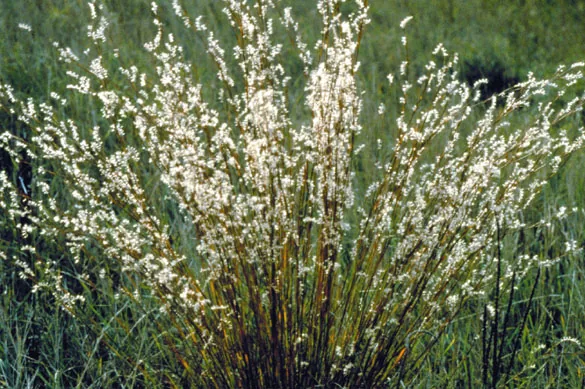
Little bluestem is one of the defining grasses of the North American prairie, a clump-forming warm-season native that ranges from Canada down into the South. In the garden it reads as a neat upright presence, usually 2 to 4 feet (60 to 120 cm) tall, with a blue-gray cast that carries an easy, natural mood through summer. It belongs in sunny, open schemes: gravel gardens, meadow plantings, and relaxed borders where a lighter touch suits the space.
The planting comes into its own late in the season. As the nights cool, the grass turns warm copper, mahogany, and burgundy, and silvery seed heads float above the border in the low autumn light, lending a room-with-a-view a slow, changing outlook. That effect holds all winter, so a bed that once went bare keeps its shape and a bit of life just when the rest of the garden falls quiet.
It suits a low-effort routine as gracefully as it suits a modern, pared-back landscape, provided one condition is met: keep the setting lean and sunny. Rich soil, shade, or generous watering coax it into a soft, sprawling habit that splays open at the center and loses its line. Ask little of it, and it gives a garden its clean upright poise in return.
Care
The short version: full sun, lean and well-drained soil, and almost no water once it has settled into the garden. Leave the fertilizer aside, and cut the old growth to the ground in late winter before the new shoots appear.
Light
Place little bluestem in full sun, and the more open the position, the better it looks. It puts up with a little light shade, but beyond that the stems weaken and lean, and the fall color that anchors an autumn scheme fades along with them.
Water
Once it has settled into its spot, this drought-tough grass gets by on rainfall alone. Water only to see it established, then step back. Plantings kept in dry, lean ground hold a far straighter line, and roughly every 10 to 21 days is ample even through a hot stretch.
Soil
Lean ground is the whole secret to its good behavior. Average, dry to medium, well-drained soil suits it, and it takes sandy, rocky, or clay conditions in its stride. Keep it out of wet or overly rich beds, where it softens and sprawls. Any pH from 5.5 to 7.5 will serve.
Temperature
Its range is remarkable, which is part of why it works in so many gardens. It shrugs off winter lows to -40°F (-40°C) and summer heat past 109°F (43°C), thriving across most of the continent.
Humidity
Ambient humidity is no concern for a prairie grass set out in the open. What matters to the look of the planting is good air movement around each clump, which keeps the occasional touch of rust from settling in.
Feeding
Leave it unfed. Fertilizer is the surest way to spoil the effect, driving soft, lush growth that sprawls and loses its color. Lean soil is exactly the setting it wants.
Pruning
The whole year's grooming comes down to one cut. Shear the old growth to the ground in late winter or early spring before the new shoots break, and the clump refreshes itself for the season ahead.
Repotting
Established clumps rarely need lifting. The cue comes when the center dies out or the clump opens up and loses its fullness, at which point you divide it in spring to restore the shape.
Size & spacing
Plan for a clump 2 to 4 feet (60 to 120 cm) tall with a spread near 18 to 24 inches (46 to 61 cm). Set plants on those spacings so each keeps its trim upright form with air and light between them in the bed.
When to plant
Little bluestem is a warm-season grass, so it takes its time and waits for real warmth before it stirs. Start seed in early spring, set young plants into the garden after the last frost, and the planting colors up and lifts its seed heads from late summer into winter.
Northern hemisphere
Southern hemisphere
Typical months for a temperate climate: start earlier in warm zones, later where spring frosts linger.
- Sow: Late winter to early spring, about 8-10 weeks before last frost
- Plant: Spring after last frost into early summer
- Harvest: August to February; reddish-brown flowers followed by fluffy silvery-white seed heads persisting through winter
Hardiness
USDA hardiness zones: 3–9
Temperature: down to -40°C
Troubleshooting
This is an undemanding grass, and the handful of issues it does meet almost always trace back to a setting that treats it too kindly. Read the early signs below and the answer is usually a matter of placement, soil, and restraint rather than anything from a bottle.
The upright silhouette collapses late in the season
When a clump loses its poise and sprawls open, that clean vertical line you planted for is gone, and the culprit is lodging. It comes from a setting that pampers the grass: too much shade, ground that is too rich, and water it never asked for, all of which soften the stems. Give the planting an open, sunny position, leave the fertilizer out of the picture, and on a comfortable site choose a dependably upright cultivar such as Standing Ovation or Blue Heaven to hold the shape.
Fix:
- Site in full sun
- Grow in lean, dry, well-drained soil with no added fertilizer
- Reduce supplemental watering once established
- Choose sturdy upright cultivars such as Standing Ovation or Blue Heaven
Seedlings wandering beyond their bed
A happy planting will drift beyond its lines, sending up young seedlings in the surrounding beds through self-seeding, the natural habit of a generous native. In a formal, tailored scheme that reads as untidiness, so hand-pull the strays while they are small to keep the composition crisp. Removing the seed heads before they ripen keeps the spread in check and preserves the arrangement you designed.
Fix:
- Remove unwanted seedlings by hand
- Cut back seed heads before they mature if spread is unwanted
Orange marks dulling the foliage
Now and then the foliage picks up an orange, powdery cast that comes off on a fingertip, and that is rust, a minor fungus that dims the look without doing real harm. It stays on the surface and fades on its own, so there is no need to fret over it. Give the planting a sunny spot with air circulating around it, water at the base rather than overhead, and clip away any blades that mar the overall effect.
Fix:
- Improve air circulation
- Avoid overhead watering
- Remove severely affected foliage
Toxicity
For a home with pets, the picture is reassuring: little bluestem is non-toxic to cats, dogs, horses, and the rest of the household. It is a native forage grass grazed by livestock and prized by seed-eating birds, so it sits easily in a family garden. The one small note is that grass pollen can trouble anyone with hay fever.
Safe for
People · Cats · Dogs · Horses · Rabbits · Livestock · Birds
Cats Safe
A household cat can share the space with it and come to no harm. Chew through enough of the blades and a cat may bring one back up, the ordinary and harmless response to any grass.
Dogs Safe
The planting holds nothing toxic, so a curious dog is free to explore it. A large mouthful of blades might prompt a little vomiting, and the story ends there.
Horses Safe
Horses graze it without any concern. Far from a hazard, it is a prized prairie forage grass in its own right.
Rabbits Safe
Rabbits may browse the foliage with no risk whatsoever.
Livestock Safe
Out on the range, cattle, goats, and sheep feed on this grass. It has long earned its place as native pasture and hay.
Birds Safe
Songbirds work the seed heads all winter and take cover in the standing clumps, and the whole scene is entirely safe for them.
People Safe
Living alongside it and tending it brings no danger. The one note is that grass pollen can trouble anyone prone to hay fever.
Pets that nibble grass blades may occasionally vomit or have mild stomach upset, as with any grass; grass pollen can affect allergy-sensitive people.
Varieties
Breeders have refined little bluestem into forms with steadier posture and richer color, which gives a designer room to choose. These are the named cultivars most often offered.
Standing Ovation
It keeps its poise in richer soil where others sprawl, holding blue blades tipped in red that mature into a clean red-maroon in fall rather than browning out.
Blue Heaven (MinnBlueA)
Bred at the University of Minnesota as a tall, narrow, upright column, its blue-gray summer foliage warms to burgundy-red with pink and purple tones as the season turns.
The Blues
Chosen for its standout blue-tinted foliage and burgundy-red autumn color, it can lose a little of its composure and splay open late in the year.
Twilight Zone
A patented selection admired for the uncommon silvery-mauve foliage washed with purple.
Carousel
A compact, smaller cultivar that gathers the same multicolor foliage into a tidier, more contained form.
Companions
Little bluestem looks most at home with other sun-loving prairie plants that share its taste for lean, dry, well-drained ground.
Plant near
Switchgrass (Panicum virgatum): Native warm-season prairie grass with the same lean, dry, full-sun requirements for naturalistic plantings
Purple coneflower (Echinacea purpurea): Drought-tolerant prairie perennial that pairs in full sun and well-drained soil
Black-eyed Susan (Rudbeckia): Sun-loving prairie companion thriving in the same dry, lean conditions
How to propagate
Little bluestem can be raised from seed to carpet a large, naturalistic space, or increased by dividing existing clumps when a particular cultivar's color is central to the design.
SeedEasy
Sow into a firm seedbed in early spring; can also start indoors 8-10 weeks before last frost · One to two growing seasons
For a sweeping, meadow-style planting on a modest budget, seed is the graceful route. Sow it into a firm seedbed in early spring, or start it indoors 8 to 10 weeks before your last frost and let the warming soil do the rest. Allow the scheme one to two growing seasons to fill out, and once it has taken to its setting it will quietly seed itself into the surrounding ground.
DivisionEasy
Spring as new growth begins · One growing season
To carry a chosen cultivar's exact color through a design, division is the reliable path, since those tones will not repeat from seed. Lift and split an established clump in spring as the new growth rises, and the divisions find their footing within a single growing season. It is also the graceful remedy for a tired old clump that has begun to hollow out at its heart.
Myths
Little bluestem needs rich, watered, and fertilized soil to grow well.
The truth runs the other way. At heart this is a prairie grass, and lean, dry ground in full sun is exactly where it carries itself tallest and colors most beautifully. Indulge it with rich soil, extra water, or fertilizer and the whole effect falls apart, as it turns soft, weakens, and splays open at the center.