Ornamental · Boraginaceae
Lungwort
Pulmonaria saccharata
Give it cool shade and steady moisture and lungwort turns the dim corners of a garden into an early, quietly polished scene of spotted leaves and pink-to-blue flowers.
Partial shade
Every 7 days
USDA 3–9
10–18 in · 25–46 cm
Overview
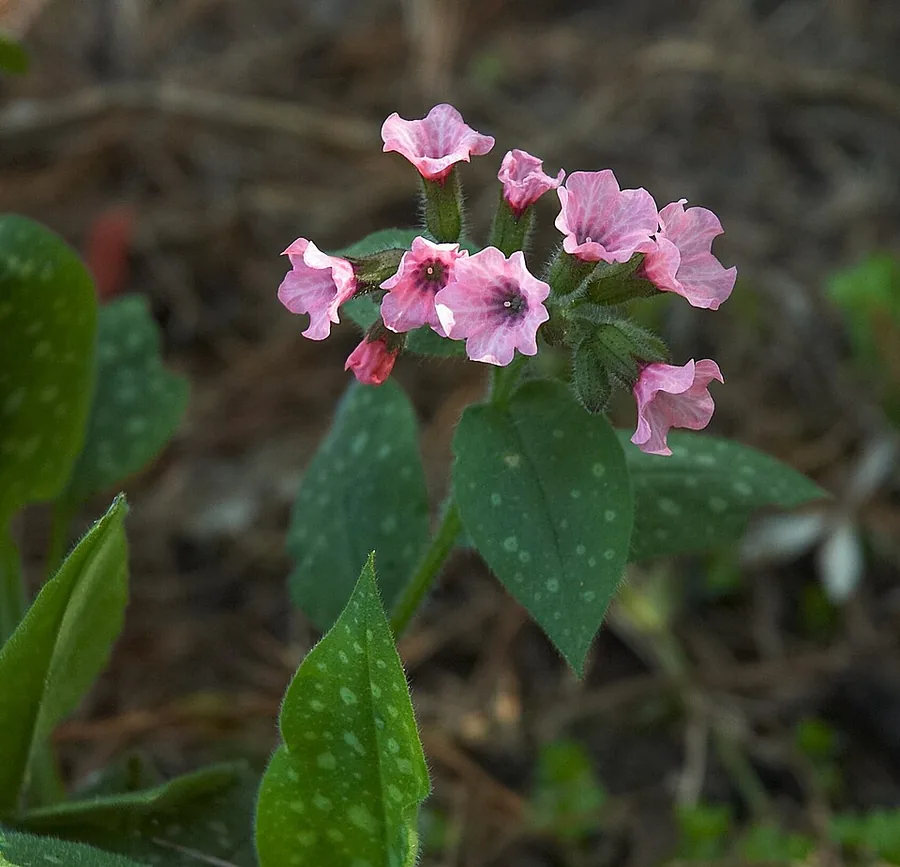
Lungwort is the plant for the corner nothing else wants, the shaded pocket beside a wall or under a tree where a garden usually falls flat. A low, clumping perennial from the borage family, it earns its place with silver-marked foliage and flowers that open pink and drift to blue, and it reads as composed rather than showy. The odd name came from old herbalists who saw diseased lungs in the speckled leaves, and it has followed the plant into the modern shade border.
What sets the mood is its timing. Lungwort opens in late winter to spring, when the rest of the beds are still bare, so it gives a quiet garden its first color of the year and a reason to look out the window with morning coffee. Set along a shaded path or under the north-facing windows, it turns a dead season into a gentle, welcoming one, and it draws the earliest bees into view.
As a fixture it asks for very little of a daily routine. Keep the soil cool and evenly moist in genuine shade and it settles into a slow, understated ground cover that frames a doorway or softens the base of a wall. The single thing that undoes the look is hot, dry sun, which scorches the leaves and pulls the plant into a sulky rest, so it belongs squarely in the shade.
Care
The short version: place lungwort in part to full shade, keep the soil cool, rich, and evenly moist, offer a light seasonal feed, and divide the clumps in fall once they crowd.
Light
Lungwort belongs in part to full shade, the deep, cool light found under trees or on the north side of a building. It holds up in full shade and still flowers, but real sun scorches the leaves and drives the plant into early dormancy, undoing the effect.
Water
Keep the soil cool and evenly moist but never waterlogged, watering about once a week through dry spells. Let it dry out and the leaves wilt and the plant retreats into dormancy, and the corner loses its polish.
Soil
Set it into cool, humus-rich ground that holds moisture yet still drains. Work in plenty of compost or leaf mold, the woodland-style soil that keeps a shaded planting looking settled.
Humidity
Average
Feeding
A slow-release all-purpose fertilizer once a season is all the routine it needs. Apply it during the growing season and let the rich, organic soil carry the rest.
Pruning
Lift away the older, tattered, or mildewed leaves as they appear through the year to keep the planting crisp. Cutting the foliage back after bloom brings on a fresh, clean flush of leaves for summer.
Size & spacing
Plants stay low at 10 to 18 inches (25 to 46 cm) tall and spread wider than they are high, reaching 18 to 24 inches (46 to 61 cm) across. Give each that much room and the planting knits into a slow, cohesive ground cover.
When to plant
Lungwort keeps to the cool edges of the year, which is part of its charm. Set new plants into a shaded bed in spring or fall, and the flowers arrive in late winter to spring, pink at first and ripening to blue, to open the garden's season well ahead of the rest.
Northern hemisphere
Southern hemisphere
Typical months for a temperate climate: start earlier in warm zones, later where spring frosts linger.
- Sow: Seldom grown from seed; if used, sow seed in early spring.
- Plant: Spring or fall in a shaded site.
- Harvest: Blooms late winter to spring (April to May), flowers opening pink and maturing to blue.
Hardiness
USDA hardiness zones: 3–9
Temperature: down to -40°C
Troubleshooting
Placed in the right corner, lungwort stays calm and healthy, so most trouble comes back to too much sun or the wrong soil moisture. A quick look over the leaves and crown catches the early signs below. Correct the setting and the planting usually composes itself again.
A planting that sinks and thins in soggy ground
A grouping that suddenly thins and sinks is usually losing its crown to crown and root rot, which takes hold where soggy soil cannot drain and the roots turn dark and soft. Open the ground with organic matter and keep the planting off any low pocket where water gathers. Lift the sound crowns, divide them, and reset them in soil that drains to bring the corner back to life.
Fix:
- Improve drainage with organic matter
- Avoid waterlogged sites
- Divide and replant healthy crowns in well-drained soil
A tired, browning look in an over-sunny spot
When a planting starts to look tired and browned at the edges, that is leaf scorch from too much sun on soil that has dried out, and it often sags through the warmest part of the day. Move the grouping into part to full shade, keep the soil evenly moist, and mulch to hold water and cool the roots. Lungwort belongs in the shaded corners of a garden, so the right placement restores the calm, settled look.
Fix:
- Move or transplant to part to full shade
- Water to keep soil evenly moist
- Mulch to keep roots cool and reduce moisture loss
A pale film dulling the foliage in the border
That washed-out film is powdery mildew, and it settles in when the soil dries out and the air goes still in a crowded planting. Lift out the worst leaves, give the grouping a little more breathing room, and keep the ground evenly moist so the display stays fresh. A firm cutback brings back the clean, polished look the corner was planted for.
Fix:
- Remove and discard affected leaves
- Improve air circulation and keep soil evenly moist
- Cut back foliage to promote clean new growth
Nibbled gaps interrupting a tidy shade planting
Those gaps that break up an otherwise composed planting are the mark of slugs and snails, busiest after a stretch of wet weather. Step out at dusk to clear them by hand, and sweep away the leaf litter where they shelter through the day. When they keep returning, a discreet bait or barrier keeps the border looking intentional.
Fix:
- Hand-pick slugs in the evening
- Remove leaf litter and debris that shelter them
- Use slug baits or barriers if damage is heavy
Toxicity
For a household that shares its garden with pets and children, the news is easy: lungwort is not toxic. The ASPCA does not list Pulmonaria as poisonous to cats or dogs, and there are no reports of harm to other animals or people. A curious nibble is nothing to disturb the peace.
Safe for
People · Cats · Dogs · Horses · Rabbits · Livestock · Birds
Cats None
A household cat can share the space with lungwort in complete comfort, since the plant holds nothing toxic if a leaf gets nibbled.
Dogs None
Dogs can move through a shaded border planted with it and come to no harm, and the ASPCA does not list it as poisonous.
Horses Safe
Horses are in no danger near it, as the plant carries nothing that would trouble a grazing animal of that size.
Rabbits Safe
Rabbits can pass through a planting without harm, and the fuzzy foliage tends to keep them moving along anyway.
Livestock Safe
Cattle, goats, and sheep are safe alongside it, with no reports of poisoning from the foliage.
Birds Safe
Garden birds face no danger from either the leaves or the flowers.
People Safe
Growing and handling lungwort is safe for people, so a family space stays worry-free with children about.
Varieties
Lungwort is chosen as much for its foliage as its flowers, and the named cultivars below sort out mainly by how silvered the leaves read and what color the blooms finally settle into.
Mrs. Moon
A timeless choice for a shaded border, offering heavily silver-spotted leaves and pink buds that settle into soft blue flowers.
Raspberry Splash
An upright grower that adds a lift to a low planting, with silver-spotted leaves and blooms in raspberry-pink to violet.
Spot On
A confident, silver-spotted selection that brings coral-pink blooms aging to blue into the shade garden.
How to propagate
Lungwort multiplies with ease, and dividing a settled clump is far more dependable than starting from seed when the aim is to carry a look across the garden.
DivisionEasy
Fall, when clumps become overcrowded · One growing season
Division is the graceful, dependable way to extend a planting into new corners of the garden. In fall, once a clump has filled its space, lift it, part the crown into sections, and tidy off the older leaves as you reset each piece. A division settles into the border across a single growing season.
SeedModerate
Early spring · Seedlings reach blooming size in about a year
Seed is the slower path, and because the named cultivars do not come true, the seedlings rarely echo the parent's look. Sow in early spring if the experiment appeals, and expect the young plants to reach blooming size in about a year.
Myths
The spotted leaves mean lungwort cures lung disease.
In the old doctrine of signatures, the leaf spots were taken as a sign the plant could heal the lungs, though the marking is simply part of the foliage. The name and the herbal lore trace to that resemblance, not to any proven effect on the lungs.
Lungwort spreads fast and turns invasive.
It moves outward at a gentle, unhurried pace on its roots and never overruns a bed the way an invasive plant does. If a clump grows wider than the design calls for, lift it and divide it to reset the arrangement.