Herb · Lamiaceae
Sweet Marjoram
Origanum majorana
Give it full sun and dry feet, and sweet marjoram brings one of the gentlest flavors in the herb garden to your kitchen.
Full sun
Every 5–10 days
50–86°F · 10–30°C
60–90 days
Overview
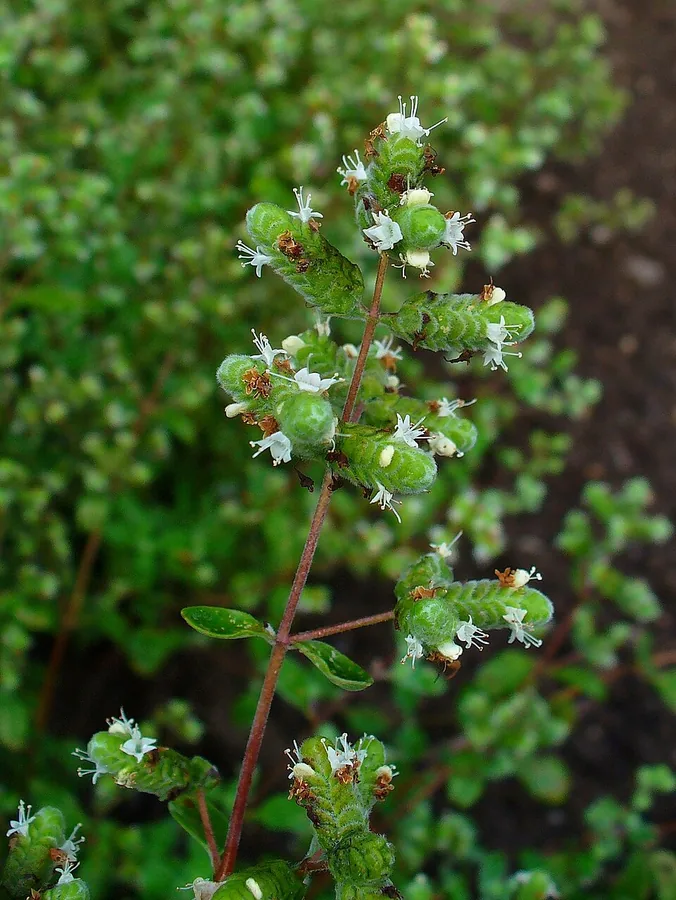
Sweet marjoram is a tender member of the mint family and a close cousin of oregano, grown for its soft, sweet, faintly piney leaves. Its home is the warm Mediterranean, and that heritage sets the scene for where it belongs in a house: a bright, sunny sill or a sheltered patio corner where the light pours in. The rounded, knot-like flower clusters along each stem are the reason you will hear it called knotted marjoram and pot marjoram.
This is a plant that lives near the kitchen rather than the mantel. Its flavor runs milder and sweeter than oregano, and because it fades once the plant flowers, it rewards a cook who reaches for it often. A pot within arm's reach of the chopping board turns everyday cooking into something a little more considered, and keeping it picked only makes it fuller.
Easygoing and low-maintenance, marjoram slips into a daily routine without demanding much in return. It weathers a forgotten watering once settled in, though it will not abide wet feet or frost. Place it in a sunny bed or a movable pot that follows the season indoors, and it lends months of quiet fragrance and flavor to the home before the cold arrives.
Care
The short version: a sunny spot, light well-drained soil, and water only once the top half has dried. Feed it now and then, harvest before it flowers, and keep it away from cold, soggy ground.
Light
Marjoram wants full sun, a good six hours a day or more, which is what keeps its leaves rich in aromatic oil and worth reaching for. It will accept a little partial sun, but the sunniest window or the brightest corner of the terrace brings out the best flavor and the neatest shape.
Water
Let the top half of the soil dry before the next watering, since this is a herb that far prefers a dry spell to wet feet. Once it has settled into its pot it needs very little attention. Cold, soggy soil is the quickest route to trouble, so when in doubt, keep it on the dry side.
Soil
A well-drained sandy loam or loam suits it best, the lighter and faster-draining the better. It is relaxed about pH across a wide band from 6.5 to 8.0 and leans happily alkaline, a nod to its Mediterranean beginnings.
Temperature
Marjoram is content between 50°F and 86°F (10°C to 30°C) and thrives in warmth, which makes it a natural for a sunlit indoor spot. It holds no cold hardiness worth relying on, so even a light frost will bring the season to a close.
Humidity
It prefers low humidity, around 30% to 50%, in keeping with its dry-country origins. Damp, still air invites rot and mildew, so give it a little space on the sill and let the air move around it.
Feeding
This is a light feeder, asking for no more than a single balanced feed in spring. A restrained hand serves it best, since too much nitrogen pushes soft leafy growth and thins the aromatic oil that makes the leaves worth having.
Pruning
Pinch and harvest the leaves often, before the knot-like flower clusters open, to keep the foliage sweet and the plant full and shapely on the sill. Cut back any leggy or woody stems, and fresh tender growth soon follows.
Repotting
Marjoram seldom needs a new pot and looks happy growing a touch snug. Move it up only when you notice roots circling the pot or slipping through the drainage holes, or when it dries out unusually fast after a watering.
Size & spacing
It keeps a compact, tidy habit, reaching 8 to 18 inches (20 to 45 cm) tall with a spread of 8 to 16 inches (20 to 40 cm), an easy scale for a windowsill or a small grouping of pots. Give each plant a little room so air moves freely and the foliage stays dry.
When to plant
Marjoram is frost-tender and takes its cue from warmth, so its season has a gentle rhythm. Start seeds indoors in late winter, move the plants outside only after the last frost when the soil has warmed, and harvest through summer, gathering leaves before the knot-like flowers open and soften the flavor.
Northern hemisphere
Southern hemisphere
Typical months for a temperate climate: start earlier in warm zones, later where spring frosts linger.
- Sow: 6-8 weeks before the last spring frost
- Plant: After all danger of frost has passed and the soil has warmed
- Harvest: Harvest leaves before or as the knot-like flower clusters open in summer for best flavor
Hardiness
USDA hardiness zones: 9–10
Temperature: down to -7°C
Troubleshooting
Marjoram asks little and rarely misbehaves, and when it does the cause is usually too much water or a chill. Keep a casual eye on the leaves and the base of the plant for the first hints. Match what you notice below and step in before it spreads.
Wilting plant with blackened stems and soft roots
A plant that wilts on the windowsill with darkened stems and soft roots has taken on root and stem rot, the near-certain result of soil left cold and wet around the crown. There is no styling around it once the roots have gone soft and dark, so let the worst plants go. Hold off watering, let the soil dry, and settle any pots into a quicker-draining mix for a fresh start.
Fix:
- Stop watering and allow soil to dry
- Improve drainage or move container plants to faster-draining mix
- Remove and discard severely affected plants
Whole plant blackens and collapses after a cold snap
Marjoram is frost-tender through and through, and one hard night will blacken and collapse the whole plant. Keeping it in a handsome pot you can move indoors ahead of the cold spares it, and a spring replanting is the graceful alternative. In colder places the easy rhythm is to enjoy it as an annual and start again each year.
Fix:
- Replant after danger of frost in spring
- Grow in containers that can be moved indoors before frost
Leaves turn bitter as the knot-like flowers arrive
Just as the plant looks its prettiest, flowering draws its energy up into the rounded, knot-like flower clusters and seed, and the leaves lose the sweet note that earned them a place by the stove. Pinching out the buds as they appear keeps that day at bay. The surest course is to gather and dry the leaves before the plant comes fully into bloom.
Fix:
- Pinch off developing flower clusters
- Harvest and dry leaves before full bloom
Curled or stippled leaves with tiny insects or webbing
A once-tidy kitchen plant can look tired when aphids settle on the soft new tips, or when spider mites drift in on hot, dry air. A firm rinse under the tap knocks most of them loose, and a pass of insecticidal soap across the leaf undersides sees off the rest. Trim away any shoot that has been left too far gone, and the plant looks presentable again.
Fix:
- Rinse plants with a strong jet of water
- Apply insecticidal soap, covering leaf undersides
- Remove heavily infested shoots
Toxicity
Marjoram is a kitchen herb, safe for you and your family to cook with and enjoy. The one thing to keep in mind is the aromatic essential oils in the leaves, which can give a pet a mild stomach upset from a real mouthful. Set a pot somewhere out of reach of any cat or dog with a taste for greenery.
Toxic to
Cats · Dogs · Horses · Rabbits · Livestock · Birds
Safe for
People
Cats Mild
A cat that helps itself to a whole mouthful of leaves may drool, bring some back up, and pass a loose stool soon after. The aromatic oils are behind it, and the pinch left on a dinner plate is nothing to fret over.
Dogs Mild
A dog that makes a meal of the plant might end up with a queasy stomach, some vomiting, or loose stools. The modest amounts that reach the table cause no bother at all.
Horses Mild
The same essential oils can unsettle a horse that grazes a real mouthful, showing up as mild diarrhea or a dull appetite. A few stray sprigs come to nothing.
Rabbits Mild
A rabbit that overindulges in the leaves may end up with soft stools or a little bloating thanks to the strong oils. A small sprig now and then is kinder than the run of the plant.
Livestock Mild
Goats, sheep, and cattle rarely seek it out, and even a generous feed of the aromatic foliage would bring only a passing spell of digestive upset.
Birds Mild
Pet and backyard birds tend to pass over the pungent leaves, and a heavy nibble would at most leave one with a brief stomach upset.
People Safe
For the household, marjoram is simply a kitchen herb, safe to cook with and eat in any amount you would reasonably use. Nothing here needs keeping away from the family.
Aromatic essential oils in the leaves can mildly irritate a pet's digestive tract if large amounts are chewed.
Helpline numbers

United States
ASPCA Animal Poison Control: (888) 426-4435 (fee applies)

United Kingdom
Animal PoisonLine: 01202 509000 (fee applies)

Australia
Animal Poisons Helpline: 1300 869 738
Varieties
Only a couple of marjorams find their way into most homes, and the choice comes down to flavor and how much cold each will take. These are the two worth knowing.
Sweet marjoram (Origanum majorana)
This is the classic culinary choice, cherished for a sweet, mild aroma with a faint pine note, and its knotted flower clusters are what lend it the name knotted marjoram.
Hardy/Italian marjoram (Origanum × majoricum)
A cross with oregano, it stands up to more cold and carries a sharper, more pungent flavor than true sweet marjoram.
How to propagate
Marjoram is easy to multiply, whether you start a tray from seed or root a few cuttings off a plant you already keep.
SeedEasy
Start indoors 6-8 weeks before the last frost, or sow outdoors after the soil warms · About 1-2 weeks to germinate; transplant outdoors after frost
Most growers raise marjoram from seed, starting a tray indoors 6 to 8 weeks before the last frost or sowing straight outdoors once the soil warms. The seed is very fine, so rest it on the surface or barely veil it with soil and keep it warm and lightly moist. It rises in about 1 to 2 weeks, and the seedlings move outdoors once frost has passed.
Stem cuttingsModerate
Late spring through summer from non-flowering shoots · Roughly 2-4 weeks to root
A favorite plant can also be carried on from cuttings taken between late spring and summer. Choose non-flowering shoots, snip the tips, strip the lower leaves, and settle them into a moist, well-drained mix. Roots take hold in roughly 2 to 4 weeks.
Myths
Marjoram and oregano are the same plant.
In fact they are two separate species that merely share a genus. Sweet marjoram (Origanum majorana) reads sweeter and milder than common oregano (Origanum vulgare), and it bows to the cold much sooner. They may pass for one another, yet they cook and grow along different lines.
Marjoram is dangerously poisonous to cats and dogs.
There is little cause for alarm, as the ASPCA rates it a mild stomach irritant rather than a serious toxin. A pet that eats a real mouthful may vomit or pass loose stools, but the pinch that seasons dinner poses no threat. The risk stays mild and hinges on quantity.