Ornamental · Berberidaceae
Mayapple
Podophyllum peltatum
A woodland native that turns a shaded garden into a green colonnade of umbrella leaves, then slips quietly offstage by midsummer.
Full shade
Every 3–7 days
730–1825 days
USDA 3–8
Overview
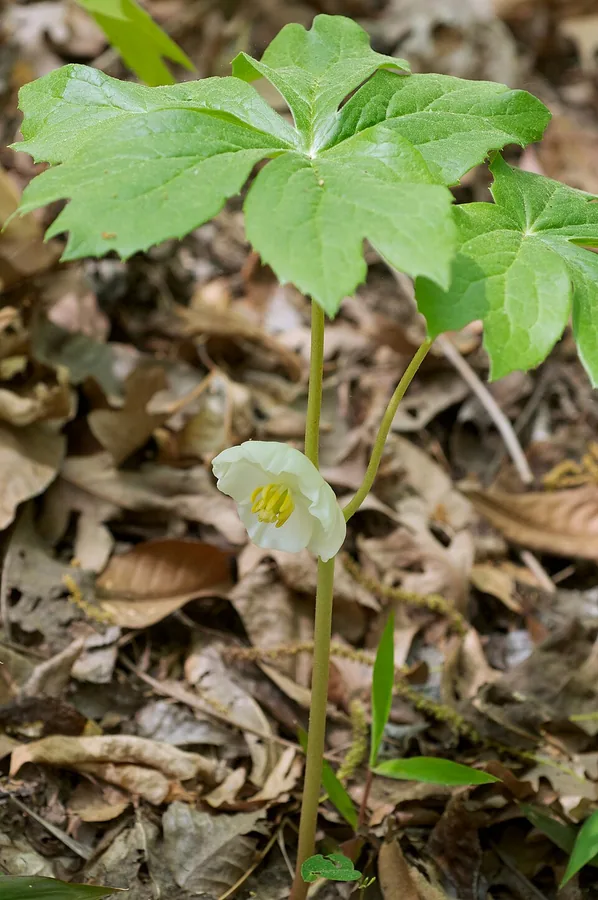
Mayapple belongs to the shaded, low-lit part of a garden, the kind of ground beneath tall trees where sun rarely reaches and most planting schemes give up. Left to spread on its creeping rhizome, it drifts into a soft green colony that reads as a single sweep rather than a set of individual plants, giving a woodland border a calm, established look. It is a true native of eastern North American woods, so it settles into a shady corner as though it has always been there.
The mood it sets is quiet and understated. Come spring, a flowering plant hides a single nodding white bloom in the fork of its leaves, a small private moment you find only by pausing and looking, which suits a slower, more contemplative garden. By late summer that flower has become one fruit ripened to golden yellow, the only part safe to eat, a subtle seasonal marker for anyone who walks the same path each day.
What makes mayapple such a distinctive design choice is its brief run. It arrives in spring, holds the scene through the warm weeks, then dies back completely as summer heat sets in, leaving the ground open again. Pair it with later plantings that step forward as it fades, and it becomes an effortless, low-upkeep groundcover for the shaded rooms of a garden.
Care
The short version: settle it into full to partial shade in moist, humus-rich, slightly acidic soil, keep it watered through spring, and let it retire into dormancy and disappear on its own once summer heat arrives.
Light
Mayapple is a true shade plant that belongs in full to partial shade beneath a tree canopy, exactly the dim, sheltered ground other plants avoid. A little morning or dappled sun is fine, but a hot, open position pushes it into early dormancy and scorches the leaves, so reserve it for the shadowed rooms of the garden.
Water
Keep the soil in steady, even moisture through spring while the foliage is up, in keeping with the damp woodland floor it comes from. An established colony tolerates some dryness because it simply retires early, though bare, exposed ground shortens its season on show.
Soil
Give it moist, humus-rich soil with good drainage, anything from sandy to loamy so long as it is rich in leaf mold and organic matter. A slightly acidic pH of 5.0 to 6.0 echoes the woodland floor that frames it in the wild.
Temperature
Mayapple is strikingly cold-hardy, weathering winters to about -29°F (-34°C) and taking summer warmth up to roughly 90°F (32°C) before it retires into dormancy. That wide comfort range lets it settle into gardens across much of the temperate world.
Humidity
Everyday outdoor humidity suits it, so there is no figure to chase. Cool, moist woodland air is its natural element, and the shade and damp soil that create that atmosphere do more for its poise than any reading on a gauge.
Feeding
This native asks almost nothing at the table. A spring top-dressing of leaf mold or compost is all it wants, and heavy fertilizer does nothing for a plant shaped by lean forest soil.
Pruning
There is no pruning to do here, which is part of its easy charm. The foliage yellows and dies back on its own as the plant retires in summer, and it can be left where it falls with no fall cleanup to schedule.
Repotting
Mayapple is seldom potted or divided, so it holds its place in a border year after year. Lift and split a colony only when it grows crowded, the vigor drops, flowering thins, or the rhizomes congest at the soil surface.
Size & spacing
Each plant keeps to a low 12 to 18 inches (30 to 46 cm) in height and about 9 to 12 inches (23 to 30 cm) across, while the rhizome quietly extends the planting outward. Set divisions roughly a spread apart and let them knit into a seamless colony over the seasons.
When to plant
Mayapple keeps an elegant woodland calendar that shapes the season around it. Set out dormant rhizome divisions in fall or container plants in spring, look for the white bloom through April and May, and mark the ripe golden fruit in late summer before the planting withdraws for the year.
Northern hemisphere
Southern hemisphere
Typical months for a temperate climate: start earlier in warm zones, later where spring frosts linger.
- Sow: Not typically sown indoors; seeds need cold stratification and are slow and erratic to germinate
- Plant: Plant dormant rhizome divisions in fall, or container plants in spring after frost
- Harvest: Blooms April to May; fruit ripens to golden yellow in late summer (August to September)
Hardiness
USDA hardiness zones: 3–8
Temperature: down to -40°C
Troubleshooting
A poised, undemanding native, mayapple asks for very little and rewards a shaded corner with reliable presence, and the one symptom that looks worrying is usually just the planting retiring for the summer. Match what you see below before reaching for any treatment.
Yellow or orange pustules on the leaves
Those blemishes are rust, a fungus that settles in when the foliage stays damp and a planting has grown too dense to breathe. Lift out the marked leaves and dispose of them, and open up a crowded patch so air moves freely through the bed. Because the planting retires underground each summer, the trouble rarely lingers into the next display.
Fix:
- Remove and dispose of affected leaves
- Improve air circulation by thinning crowded colonies
- Avoid overhead watering to keep foliage dry
Leaves yellow and vanish by midsummer
Almost always this is summer dormancy rather than any ailment, simply the planting bowing out for the season. Mayapple is designed to fold away and rest once the heat arrives, and the rhizome stays firm and alive beneath the surface. Where a dry, sunny corner is pushing the retreat early, more shade and steadier moisture keep the leafy scene going a little longer.
Fix:
- Do nothing; allow the plant to enter dormancy
- Mark colony location to avoid disturbing dormant rhizomes
- Maintain shade and soil moisture to delay decline in dry years
Toxicity
For all its grace in a shaded border, mayapple is a poisonous plant and deserves to be placed with that in mind. Every part except the fully ripe, golden-yellow fruit holds podophyllotoxin, a potent toxin that causes severe vomiting, diarrhea, and whole-body effects in people, pets, and livestock alike. Even handling it can irritate skin and eyes, so wear gloves and site it where children and animals will not reach the leaves, stems, roots, and unripe green fruit.
Toxic to
Cats · Dogs · Horses · Rabbits · Livestock · Birds · People
Cats Severe
A cat that samples any part but the ripe fruit can suffer heavy vomiting and diarrhea before turning listless and beginning to pant. In serious cases the toxin reaches the nervous system, and sap left on skin or in the eyes brings redness and ulcers, so a household cat calls for a genuinely safe corner.
Dogs Severe
Dogs run into trouble most often, since a curious digger will unearth and chew the rhizome. Forceful vomiting, diarrhea, flagging energy, and panting are the signs to watch, and a large dose can slide into collapse or, rarely, coma.
Horses Severe
A horse grazing the leaves, roots, or green fruit meets violent colic-like pain, loose stools, and deep lethargy. The podophyllotoxin acts on the whole body rather than the gut alone, so a horse can go down hard and fast.
Rabbits Severe
The same podophyllotoxin that floors dogs and horses is every bit as dangerous to a rabbit's small frame. Severe digestive distress and rapid weakness follow, so a garden shared with a browsing rabbit needs mayapple kept well out of reach.
Livestock Severe
Cattle, goats, and sheep that nibble the foliage or roots in a wooded pasture can face hard purging, dehydration, and a wider systemic collapse. The plant is bitter, yet hungry stock will take it anyway, so wooded grazing wants careful thought.
Birds Severe
Poultry and other birds are not spared either. A peck at the leaves, rhizome, or unripe fruit can trigger serious gut irritation and a steep loss of vigor, and a small bird needs very little of it to be in danger.
People Caution
Only the fully ripe, golden-yellow pulp is safe to eat, and even then in small amounts. Every other part, along with the unripe green fruit, brings severe vomiting, cramping, and systemic poisoning, so keep children well clear and let no one sample the rest of the plant.
Wear gloves when handling; sap can cause severe contact dermatitis and skin ulceration, and is especially hazardous to the eyes. Keep all plant parts and unripe fruit away from children and pets.
Helpline numbers

United States
ASPCA Animal Poison Control: (888) 426-4435 (fee applies)
Poison Control: (800) 222-1222



Canada
Poison Centres: 1-844-764-7669
Varieties
Mayapple is planted almost entirely as the wild species, with a single recognized natural form worth noting for the collector.
Podophyllum peltatum f. deamii
It stands as a naturally occurring form of the native eastern North American mayapple that botanical references set apart within the species.
How to propagate
Mayapple widens its own footprint through its spreading rhizome, and division simply guides that drift where you want it. Seed is an option too, though only for a gardener with years to give.
DivisionModerate
Fall, when the plant is dormant · 1 to 2 growing seasons
Division is the graceful way to widen a planting, working with a plant that already drifts into colonies on its own. Lift and part sections of the creeping rhizome in fall while it rests, settle them into their new places, and allow each piece 1 to 2 growing seasons to establish and begin carrying its own leaf and flower.
SeedDemanding
Sow fresh seed in fall to allow natural cold stratification · Several years to reach flowering maturity
Seed is a patient project rather than a quick one. Sow fresh seed in fall so the winter cold can break its dormancy, then wait, since germination is slow and uneven and a seedling needs several years to reach flowering size. Left to itself in the right damp shade, mayapple drifts and self-seeds anyway.
Myths
Mayapple is edible because it grows an edible fruit.
Only the fully ripe, golden-yellow pulp is safe to eat. The rhizome, roots, leaves, stems, seeds, and every unripe green fruit carry podophyllotoxin and will make a person or animal very ill. The ripe pulp is the single edible part, and everything else is poison.