Herb · Lamiaceae
Mint
Mentha spicata
Give it steady moisture and a pot to call its own, and mint dresses a kitchen with fresh leaves from spring to frost.
Partial shade
Every 2–4 days
59–77°F · 15–25°C
80–90 days
Overview
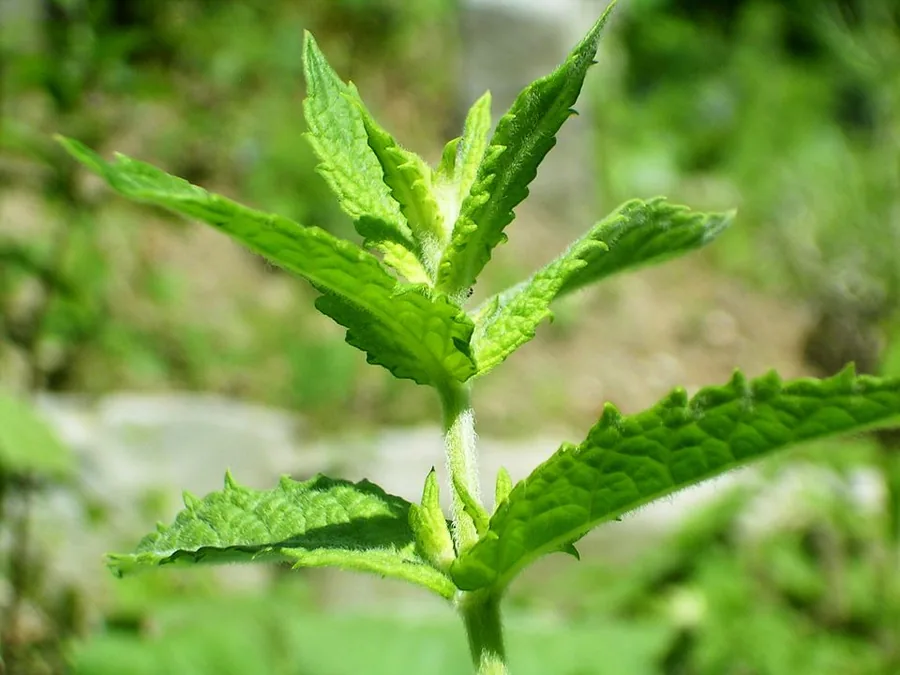
Mint has a way of settling into daily life, which is both its appeal and its one demand on your attention. It belongs to the Lamiaceae family, the square-stemmed company that includes basil and sage, and the kind most kitchens keep is spearmint. Brush past a pot on the counter and that cool, sweet scent greets the room before you have even reached for a leaf.
What gives mint character is its restlessness. It puts out runners above and below the soil, each one rooting to begin another plant, so a single sprig can furnish a whole bed in a season. That energy makes it a forgiving companion for a busy household, and it is exactly why it belongs in a handsome pot or a sunken, bottomless container that keeps its enthusiasm within the lines of a design.
Beyond the counter, mint quietly earns a place in a routine. As a hardy perennial it returns each year in cool and mild climates, forgives a missed watering, and lends a few leaves to the morning tea, a lunchtime salad, or a long summer drink on the terrace. Offer it damp soil and a shaded corner and it asks little more of the day.
Care
The short version: mint favors a part-shade corner and rich, evenly moist soil, a regular pinch to keep it shapely, and a container or edged bed that keeps its runners on the right side of your design.
Light
Mint is at its best in partial shade, especially where summers turn hot, though it will take full sun as long as the soil stays moist. A spot that catches morning light and rests in afternoon cover, an east-facing sill or a sheltered patio corner, yields the tenderest, best-flavored leaves.
Water
Keep the soil consistently moist and never let the root zone dry out, since mint wilts quickly once thirsty. In warm weather or a pot on a sunny sill that means a drink every 2 to 4 days, and a little more the moment the leaves begin to droop.
Soil
Set it in rich, moist, well-draining loam worked through with organic matter. A pH of 6.0 to 7.0 suits it, which is comfortably within the range of most ordinary potting soil and garden ground.
Temperature
Mint keeps its poise between 59°F and 77°F (15°C to 25°C), the cool-to-mild range of its origins, which happens to mirror a comfortable room. It endures heat with enough water but slows and toughens its leaves once a space grows too warm.
Humidity
Average humidity of 40% to 70% keeps mint content, and most rooms and gardens sit within that band. Dry indoor air invites spider mites, so a pot indoors appreciates a little added moisture close by.
Feeding
Mint asks very little at the table. A balanced all-purpose fertilizer or a light spring dressing of compost carries it through the season, and overfeeding only dilutes the flavor that makes it worth growing.
Pruning
Pinch the growing tips often to keep the plant full and shapely while you harvest as you go. Remove the flower spikes as they appear so the leaves hold their best taste, and cut the plant back hard after it flowers to draw out fresh tender growth.
Repotting
A potted mint fills with roots and runners quickly, so divide and repot it once a year or whenever the container feels tight. Set aside the woody center, keep the vigorous outer pieces, and start them afresh in new soil.
Size & spacing
Mint stands 12 to 35 inches (30 to 90 cm) tall and spreads 2 to 4 feet (60 to 120 cm) across, wider still where the runners run free. Give it room, or better a container, so it holds its shape without crowding what sits beside it.
When to plant
Mint takes the cold in stride once established, though young plants prefer to begin in a settled spring. Start seed indoors 6 to 8 weeks before the last frost, move plants outdoors once the hard frosts have gone, and gather leaves through the whole growing season.
Northern hemisphere
Southern hemisphere
Typical months for a temperate climate: start earlier in warm zones, later where spring frosts linger.
- Sow: 6-8 weeks before last spring frost
- Plant: Spring, after danger of hard frost has passed
- Harvest: Harvest leaves throughout the growing season; pinch off flower spikes for the best leaf flavor
Hardiness
USDA hardiness zones: 3–8
Temperature: down to -40°C
Troubleshooting
Mint asks little, so its occasional troubles trace to wet, crowded foliage, a hot dry spell, or a plant that has simply outgrown its allotted corner. Match what you see below and step in early, while the lightest touch still restores it.
Orange-brown pustules on the leaf undersides
The culprit is mint rust, a fungus that settles in when foliage stays wet and the air around the plant goes still. Lift away the marked leaves and send them to the bin rather than the compost, thin the growth so the canopy dries faster, and keep watering down at the soil. When a plant is truly overrun, cutting it to the ground and clearing the debris resets it for a fresh flush.
Fix:
- Remove and destroy infected foliage (do not compost)
- Improve air circulation by thinning growth
- Avoid overhead watering and keep foliage dry
- Cut affected plants to the ground and dispose of debris in severe cases
Mint straying beyond its corner of the bed
This is simply mint's nature at work. It travels on underground and surface runners and will lay claim to a bed within a single season if given the freedom. Follow the wandering shoots back to their runner and lift them out, then settle the plant into a sunken bottomless pot or a crisply edged bed so its ambitions meet a firm boundary.
Fix:
- Dig out and sever stray runners
- Grow mint in a sunken bottomless pot or contained bed to restrict spread
- Edge the planting deeply to block runner travel
A potted mint losing its polish
A container of mint fills with roots and runners faster than almost any herb on the sill, and once it turns rootbound the soil dries within hours and the leaves shrink back. Ease it out of the pot and a dense circling mat gives the game away. Divide the clump, let go of the tired woody center, and replant the strong outer growth in fresh soil for a plant that looks the part again.
Fix:
- Divide the clump and replant divisions
- Repot into fresh soil in a larger container
- Discard the woody center and keep vigorous outer growth
Dusty, faded leaves with a whisper of webbing
Warm, dry air on a sunny windowsill or patio is an open invitation to spider mites, which drain the leaves until they read pale and stippled. A quick tap of a leaf over white paper reveals the specks on the move. A firm jet of water clears most of them, and keeping the soil moist with a little humidity nearby keeps them from returning; insecticidal soap stays on the shelf for stubborn cases.
Fix:
- Spray foliage with a strong jet of water to dislodge mites
- Increase humidity and keep soil evenly moist
- Apply insecticidal soap if infestation persists
Toxicity
Mint is a kitchen herb people enjoy freely, and it poses little risk to the animals sharing a home. Its essential oils can leave a pet with a mild stomach upset after a large graze, so it is worth keeping curious mouths in check. The single real warning is pennyroyal, a poisonous relative that should never be confused with garden mint or kept where animals roam.
Toxic to
Cats · Dogs · Horses · Rabbits · Livestock · Birds
Safe for
People
Cats Mild
A curious nibble does no harm, though a cat that lingers over a whole pot may drool and bring a little back up. The essential oils are the irritant, so the upset stays gentle and settles once the plant sits out of reach on a higher shelf.
Dogs Mild
Most dogs give a passing sniff and lose interest. One that grazes through a patch may end up with a mild stomach upset, some vomiting or loose stools, and it usually settles without fuss.
Horses Mild
A horse would need a real mouthful before the oils registered at all. When that happens, the result is mild colic and loose droppings rather than anything of concern.
Rabbits Mild
A leaf or two makes a fine treat, yet the concentrated oils can leave a rabbit gassy and loose if it works through a heap. Keep mint to the occasional small offering.
Livestock Mild
Goats, sheep, and cattle rarely seek mint out, put off by the sharp scent. Any that do graze a stand may show a touch of digestive upset, though it stays minor.
Birds Caution
Firm information on birds and mint is thin, so the graceful move is caution. Offer only a small leaf on occasion and leave concentrated mint oil off the table entirely.
People Safe
Mint is a kitchen staple enjoyed fresh, dried, and steeped into tea without a second thought. The single caveat is its lookalike pennyroyal, which is genuinely poisonous, so the two should never be confused.
Common garden mint (Mentha spicata) causes only mild GI signs, but its dangerous relative pennyroyal (Mentha pulegium) contains high levels of pulegone and is seriously toxic, capable of causing liver damage in pets and people; do not confuse or substitute the two.
Helpline numbers

United States
ASPCA Animal Poison Control: (888) 426-4435 (fee applies)

United Kingdom
Animal PoisonLine: 01202 509000 (fee applies)

Australia
Animal Poisons Helpline: 1300 869 738
Varieties
The genus runs to dozens of mints, yet a handful carry most of the work between the kitchen and the garden. These are the ones worth knowing by name.
Spearmint (Mentha spicata)
Spearmint is the everyday culinary classic, its bright green pointed leaves carrying a sweet, mild flavor at home in the kitchen and in a tall glass alike.
Peppermint (Mentha × piperita)
A natural cross of spearmint and water mint, peppermint holds far more menthol, giving it a sharper, cooler character on the palate.
'Kentucky Colonel' Spearmint
This big-leaved spearmint is the selection bartenders reach for first when a mint julep is on the order.
How to propagate
Mint all but multiplies on its own, so a single plant supplies every copy a home could want. Take cuttings or divide a clump rather than sowing seed, since seed-grown mint seldom tastes like its parent.
DivisionEasy
Spring or early fall · 2 to 4 weeks
Division is the dependable way to keep a named mint true to type. In spring or early fall, lift a settled clump and part it into pieces that each hold roots and runners, then set them back in place. Watered in well, the divisions find their feet within 2 to 4 weeks and begin sending up fresh growth.
Stem cuttingsEasy
Spring through summer · 1 to 2 weeks to root
Cuttings could hardly be simpler from spring through summer. Take 10 to 15 cm (4 to 6 inch) stem tips, stand them in a glass of water or slip them into moist soil, and roots follow in 1 to 2 weeks. Seed is best left aside, since it comes up uneven and the flavor rarely holds true.
Myths
Every kind of mint is dangerously poisonous to pets and should never grow near animals.
There is no need to banish it from the home. Garden mint earns only a mild rating from the ASPCA, and a grazing pet gets nothing worse than a passing stomach upset. The real hazard is its relative pennyroyal, whose pulegone can damage the liver. Everyday spearmint belongs happily in the house, while pennyroyal has no place near animals.
Mint is a tidy, well-behaved herb you can drop in anywhere in the garden.
Charming as that sounds, mint travels on runners above and below the soil and will overrun a bed in a single season. A buried bottomless pot or a sharply edged bed keeps it in its lane, but let loose in open ground it becomes a years-long weeding project.