Ornamental · Poaceae
Perennial Ryegrass
Lolium perenne
Sow it and it's up in days, giving you fast, fine-bladed, hard-wearing turf that greens a lawn in a fortnight.
Full sun
Every 2–7 days
14–21 days
USDA 3–7
Overview
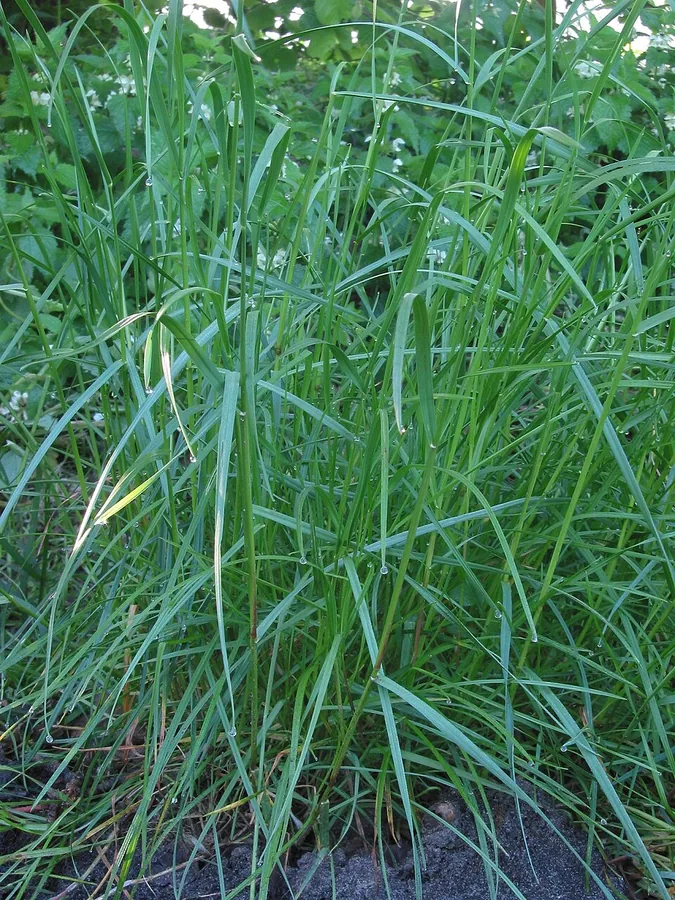
Few grasses reward a fresh start as quickly as perennial ryegrass, a cool-season turf that turns bare ground into a green front yard almost before the season changes. Sow it and the first blades appear in 3 to 7 days, ahead of every other common lawn grass, which is why it anchors so many seed mixes and quick patch kits. Its blades are fine to medium and a glossy dark green, and the turf carries hard wear with ease, at home on both the family lawn and the sports field where people gather.
Its manner in a yard comes down to how it grows. As a bunch grass it keeps to tidy clumps with no rhizomes or stolons, so each plant holds its own ground and a worn patch will not quietly close over. That is why it so often shares a lawn with Kentucky bluegrass, which spreads by rhizome to knit the open spaces while the ryegrass lends the speed and the resilience a busy household needs.
It keeps its composure in the cool and asks for steady moisture, holding a green mood from a deep chill of -20°F (-29°C) to summer heat near 95°F (35°C), though a real drought leaves it sullen. Across the South it earns a second role as a winter overseed, laid over dormant warm-season lawns so the yard stays green and gracious until spring.
Care
The short version: set it in full sun, keep the moisture even, and mow on a rhythm to about 1.5 to 2.5 inches (4 to 6 cm). Feed in spring and fall, keep nitrogen light through the summer heat, and reseed any thin spots, since this grass will not fill them on its own.
Light
Perennial ryegrass looks its best in full sun, though it accepts a measure of partial shade. The more sun a spot draws, the denser and more resilient the turf, while a deeply shaded corner tends to leave the green thin and lackluster.
Water
Keep a fresh seedbed consistently moist so it rises in 3 to 7 days, watering lightly and often until the lawn stands. Established turf still asks for moderate to high water and fades quickly in drought, so a dry spell left unchecked shows on the surface.
Soil
Give it fertile, moist, well-drained soil as its footing. A pH of 6.0 to 7.0 suits it, and ground that drains freely yet still holds moisture keeps the whole lawn looking settled.
Temperature
As a cool-season grass it takes a wide range in stride, from about -20°F (-29°C) in winter to roughly 95°F (35°C) in summer. Its finest growth comes in the cool of spring and fall, and it tends to slow and lose a little of its polish through real summer heat.
Humidity
Ordinary outdoor humidity is all it needs, so there is no figure to chase. The real concern is long spells of leaf wetness, since damp blades in warm weather open the way to gray leaf spot.
Feeding
Offer a balanced turf fertilizer in spring and fall, when the grass is growing at its strongest. Keep nitrogen light in late spring and summer, since a rush of soft growth in the heat invites gray leaf spot into an otherwise tidy lawn.
Pruning
Mow on a steady rhythm to about 1.5 to 2.5 inches (4 to 6 cm) for that even, cared-for look. If gray leaf spot appears, bag and remove the clippings so the fungus is not carried across the yard.
Repotting
none
Size & spacing
Mown blades sit only about 2 inches (5 cm) tall, and each clump reaches roughly 6 to 12 inches (15 to 30 cm). Since it keeps to bunches with no runners, sow seed thickly and evenly so the clumps draw together into one seamless carpet of green.
When to plant
Perennial ryegrass keeps to the cool season, so it settles best when the weather is mild rather than hot. Sow or overseed in early fall, or in spring where the climate runs cool, and across the South lay it over a dormant warm-season lawn in fall to carry a green mood right through the winter.
Northern hemisphere
Southern hemisphere
Typical months for a temperate climate: start earlier in warm zones, later where spring frosts linger.
- Plant: Seed or overseed in early fall (or spring) in cool-season regions; standard winter overseed for dormant warm-season lawns in the South.
- Harvest: Establishes uniform turf within about 2 weeks under ideal conditions.
Hardiness
USDA hardiness zones: 3–7
Temperature: down to -40°C
Troubleshooting
Most ryegrass troubles arrive as patches in the green, and the weather usually names the cause before anything else does. Hot and humid points one way, cool and damp another, and a plain worn gap points back to the grass itself. Match what you see below, then act while a patch is still small.
Greasy gray patches that undo a lawn in a single hot week
The look of a lawn can change in a week of high summer, and the culprit is gray leaf spot, a fungus that leans hardest on perennial ryegrass when the air is hot and humid and the blades sit wet for hours. It opens patches 4 to 12 inches (10 to 30 cm) across, matting the green into a dull, gray-fuzzy cast, and a stand can lose its composure within days. The routine that protects it is unglamorous but reliable: bag the clippings, water before sunrise so the lawn dries with the morning, and hold to a preventive fungicide every 14 to 21 days through the warm, risky stretch of the calendar.
Fix:
- Collect clippings when symptoms appear
- Apply preventive fungicide on a 14-21 day interval during high-risk periods
Bare patches that linger in an otherwise polished lawn
A tired spot in an otherwise handsome lawn tends to stay tired, and the reason is temperament rather than neglect. Perennial ryegrass is a bunch grass, growing in neat clumps with no runners to travel across an opening and quietly restore it. Where a path of foot traffic or a hard season has worn the turf thin, that break in the green stays visible until it is reseeded. The remedy is simple: scatter fresh seed across the spot, or fold in Kentucky bluegrass, whose rhizomes drift into the gap and close the line for you.
Fix:
- Overseed bare areas directly with fresh ryegrass seed
- Blend with Kentucky bluegrass so the bluegrass spreads to fill gaps
Pink-cast rings that soften the lawn in cool weather
In the mild shoulders of spring and fall, a lawn can take on faint pink-cast rings edged with fine red strands at the blade tips, the signature of red thread. It reads more like an appetite than an illness, a quiet request for nitrogen rather than a sign of real decline. A balanced feed answers it, coaxing fresh growth that overtakes the fungus, and trimming off the affected tips while easing back on evening watering returns the lawn to an even, unbroken green.
Fix:
- Apply adequate nitrogen to push recovery growth
- Mow to remove infected tips and reduce leaf wetness
Toxicity
As a backdrop for daily life, lawn ryegrass is reassuringly safe. It is a common turf and pasture grass with no toxic parts, so cats, dogs, rabbits, birds, and children are all at ease on it. The one thing worth knowing belongs to grazing rather than poison: pasture stands carrying a fungal endophyte can bring on ryegrass staggers in horses and livestock, a matter of forage keeping and never a worry in the lawn beneath your chairs.
Safe for
People · Cats · Dogs · Horses · Rabbits · Livestock · Birds
Cats None
An easy companion for the household cat. A few blades cropped from the lawn do no harm, and the odd nibble of grass is a habit many cats keep without any trouble.
Dogs None
A relaxed surface for the family dog. Lawn ryegrass sits on the non-toxic list, so an afternoon of play, rolling, and a little grazing passes without concern.
Horses None
Out in the paddock the grass grazes safely, and the only footnote is about pasture keeping rather than poison: a stand carrying a fungal endophyte can bring on ryegrass staggers, seen as muscle tremors and a wobbly, uncoordinated gait when the horse grows animated.
Rabbits None
A welcome green for rabbits. A little fresh lawn ryegrass slips gracefully into the mix of leaves they already browse.
Livestock None
A staple forage grown across many a working landscape. The single caveat is endophyte-infected pasture, where lolitrem B and ergovaline may bring staggering, incoordination, and heat stress to heavily grazed stands in late summer and fall.
Birds None
An untroubled visitor for garden birds. They take the seed and clippings without harm, and the grass holds nothing that could unsettle them.
People None
An everyday lawn and pasture grass with no toxic parts, the kind of green a family can gather on. Children are free to play across it.
Safe as a pet and family lawn; however, turf-type and forage ryegrass can carry a fungal endophyte (Epichloe festucae var. lolii) producing lolitrem B and ergovaline that cause tremors, incoordination, and heat stress in grazing horses and livestock, especially on overgrazed stands in late summer and fall.
Helpline numbers

United States
ASPCA Animal Poison Control: (888) 426-4435 (fee applies)

United Kingdom
Animal PoisonLine: 01202 509000 (fee applies)

Australia
Animal Poisons Helpline: 1300 869 738
Varieties
A few forms of perennial ryegrass turn up, and their labels are easy to blur. These are the ones worth learning to tell apart.
Turf-type cultivars
Refined selections carrying a fine-to-medium texture and a glossy dark green color, chosen for the kind of dense, well-mannered lawn that holds up to everyday life.
Winter overseeding ryegrass
The Southern habit of laying it over a dormant warm-season lawn, keeping the yard green and inviting straight through the winter.
Distinct from annual/Italian ryegrass
Not to be confused with annual ryegrass (Lolium multiflorum), a coarser and short-lived grass, where perennial ryegrass reads finer and stays graceful for years.
Companions
Perennial ryegrass pairs best with a spreading grass that can do the one thing it can't, which is fill its own gaps.
Plant near
Kentucky bluegrass: Spreads by rhizomes to fill the gaps that bunch-type ryegrass cannot self-repair.
How to propagate
Perennial ryegrass comes from seed and little else, since it keeps no runners to root from. Its charm is the speed of it, an entrance few grasses can match.
SeedEasy
Early fall (or spring) in cool regions; fall for southern winter overseeding. · Germinates in 3-7 days, the fastest of common lawn grasses; uniform turf in about 2 weeks.
Seed is the whole story here, since the grass keeps no runners to root new plants from. Lay it down in early fall or spring in cool regions, or in fall for a Southern winter overseed, and it answers in 3 to 7 days, sooner than any common lawn grass. The green draws together into even turf in about 2 weeks. Because the clumps never travel on their own, a scattering of fresh seed over thin ground is how the lawn stays full.
Myths
Perennial ryegrass and annual ryegrass are the same plant.
They are two distinct grasses that happen to share a name. Perennial ryegrass (Lolium perenne) is the fine-textured, lasting turf, while annual ryegrass (Lolium multiflorum) is coarser and short-lived, useful as a quick cover or a winter overseed. Read the species name on the bag before you commit.