Shrub · Lythraceae
Pomegranate
Punica granatum
Set in full sun, the pomegranate turns a sunny corner into a ritual of ruby fruit each fall.
Full sun
Every 7–10 days
150–210 days
USDA 7–10
Overview
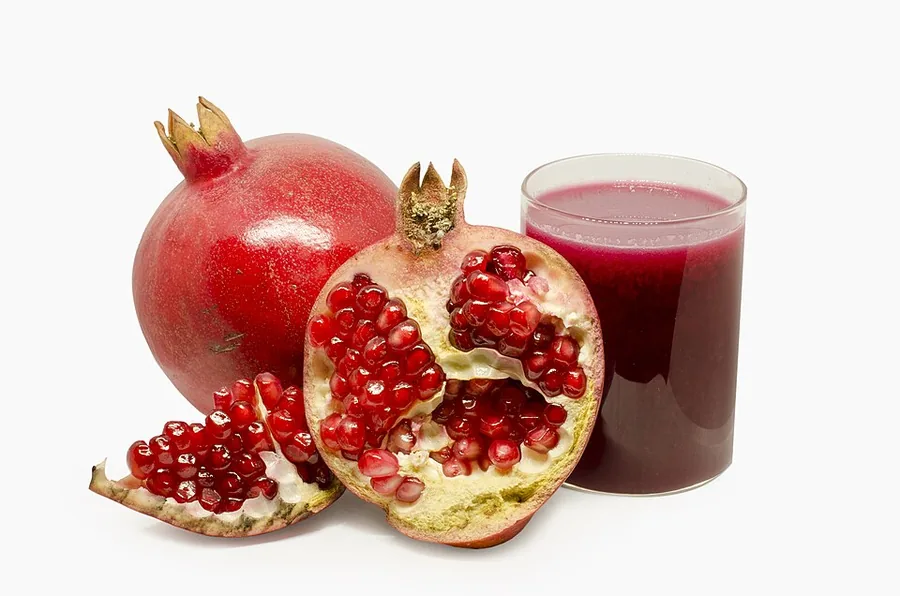
Few plants carry a garden's history like the pomegranate, a fruiting shrub grown around the Mediterranean and the Middle East for thousands of years and woven into courtyards ever since. It offers two seasons of presence, red-orange flowers that warm a summer border and fruit heavy with ruby arils that reads as decoration well into fall. Left natural it becomes a rounded, multi-stemmed shrub, or trained to a few trunks it takes on the poise of a small specimen tree at the end of a path.
As a fixture it is refreshingly low-maintenance, which makes it a natural anchor for a sunny courtyard or a gravel garden. It wants a full-sun position, ground that drains, and a deep weekly soak through the dry months, and little more attention than that. It weathers drought and a fair bite of cold, holding on through Zone 7, though a long warm season is what turns a handsome shrub into a productive one.
Its two quirks are worth planning around rather than fearing: splitting fruit and a habit of suckering. Keep the watering even and tidy the suckers as part of the seasonal routine, and the plant settles into the space as a lasting focal point, generous at the table and elegant in the border for decades.
Care
The short version: give it a full-sun spot in well-drained soil, water deeply every 7 to 10 days and keep that moisture even as the fruit ripens, prune lightly in late winter, and clear suckers as part of the routine.
Light
Give it the sunniest spot in the garden, at least 6 hours of direct light a day, and it rewards the position with flowers and fruit. A little partial shade is tolerated, but a shadier corner yields fewer blooms, and fewer blooms mean a thinner harvest to bring indoors.
Water
Once established the shrub is drought tolerant, an easy fit for a low-water garden, yet steadiness matters. Offer a deep soak every 7 to 10 days when rain is scarce, and keep the moisture even through late summer and fall, since abrupt changes are what split the ripening fruit.
Soil
It settles best into well-drained loamy soil and adapts graciously to most ground, provided it never stays wet. Aim for a pH between 5.5 and 7.0, and avoid heavy, waterlogged soil that lingers around the roots.
Temperature
The shrub is comfortable across a broad range, from 10°F to 104°F (-12°C to 40°C). A hard freeze may cut it to the ground, while a long, warm summer is exactly the climate that ripens its fruit for the autumn table.
Humidity
It prefers the dry side, around 20% to 50% humidity, which suits Mediterranean-style plantings. Damp, muggy air is the setting to avoid, as it encourages the anthracnose that spoils fruit in humid regions.
Feeding
A balanced 10-10-10 through spring and summer keeps it in form, at about 1 pound per 3 feet of plant height split between March and July. That modest seasonal feeding is enough to keep a settled plant cropping.
Pruning
Take the shears to it in late winter, before growth resumes, removing suckers, dead wood, and crossing branches. Keep the hand light, since fruit forms on 2 to 3 year old wood and heavy cutting trades away the season's harvest.
Repotting
Only the container-grown dwarf forms, the ones gracing a patio, need this every 2 to 3 years. Repot when roots circle the pot, water runs straight through, or growth stalls. In the ground, a mature plant is never lifted.
Size & spacing
At full size it commands 12 to 20 feet (3.7 to 6 m) in height and 8 to 20 feet (2.4 to 6 m) across, so plan its place with room to spare. Dwarf cultivars stay compact and slip easily into a pot or a tight corner of the terrace.
When to plant
The pomegranate keeps a leisurely, seasonal calendar. Plant it out in spring once frost has passed, let the flowers carry the display from late spring through fall, and gather the fruit from August into October, about 6 to 7 months after bloom, just as the garden turns toward autumn.
Northern hemisphere
Southern hemisphere
Typical months for a temperate climate: start earlier in warm zones, later where spring frosts linger.
- Plant: spring after the last frost
- Harvest: blooms late spring through fall; fruit harvested August to October, about 6 to 7 months after bloom
Hardiness
USDA hardiness zones: 7–10
Temperature: down to -18°C
Troubleshooting
The occasional issue tends to surface on the fruit or around the base, and it rarely disrupts the plant's role in the garden for long. Notice the early signs, adjust the watering or pruning, and step in before things spread. The guide below matches each symptom to its remedy.
Rot and sunken lesions on fruit in humid air
Those dark, sunken lesions are anthracnose, a fungus at home in warm, wet air that rots fruit before it ripens, and the reason pomegranates disappoint in humid regions. Open the shrub for airflow, keep water off the fruit, clear away and destroy anything infected, and choose resistant cultivars where the summers stay sticky.
Fix:
- Improve air circulation and avoid overhead wetting
- Remove and destroy infected fruit
- Choose disease-resistant cultivars in humid regions
Ripening fruit splitting on the shrub
A cracked pomegranate is a moisture-swing problem rather than a disease, the fruit swelling past its rind after a dry spell breaks into heavy rain or a long soak. Hold the soil at an even moisture from late summer through fall, dress the base with 2 to 3 inches of mulch, and taper the watering gradually as harvest nears rather than stopping in one step. The display stays intact and the crop reaches the table whole.
Fix:
- Maintain consistent, even soil moisture through late summer and fall
- Apply a 2 to 3 in organic mulch layer to buffer moisture
- Reduce irrigation gradually as fruit matures rather than abruptly
Sparse bloom and dropping young fruit
A reluctant pomegranate usually reflects too much shade or youth. In partial shade the flowering thins, and a plant under three years old has yet to settle into a real crop. Give it a full-sun position with 6+ hours of light, spare it the heavy pruning that removes fruiting wood, and allow until about year three before judging the show.
Fix:
- Site in full sun (6+ hours direct light)
- Be patient; better fruiting typically begins around year three
- Avoid heavy pruning that removes fruiting wood
A crowd of suckers at the base
Left to itself the pomegranate sends up suckers from roots and crown, softening a sculptural shrub into a thicket. Clip them at the base as they appear, and settle early on the look you want, whether a few clean trunks read as a specimen or a full multi-stem shrub, then prune to keep that shape.
Fix:
- Remove suckers regularly at the base
- Train to a few main trunks or allow as a multi-stem shrub
Toxicity
The pleasure of a pomegranate is also its safe part. The arils and their juice are a wholesome treat for the household, while the bitter rind, bark, and roots hold tannins that can unsettle a cat or dog that gets into the peel or overindulges. Keep the trimmings and spare fruit out of reach of pets and grazing animals, and the plant stays an easy companion to family life.
Toxic to
Cats · Dogs · Horses · Rabbits · Livestock · Birds
Safe for
People
Cats Mild
A few arils are no threat to a cat, but the rind and tannin-heavy pith can leave one queasy. Watch for vomiting or loose stools if it chews the peel or helps itself to a lot of fruit.
Dogs Mild
A dog takes the sweet arils in stride, though the tannins in the rind tend to bring on vomiting or diarrhea when eaten in quantity. The seeds and tough peel can also choke a small dog or lodge in the gut, so keep the trimmings out of reach.
Horses Caution
No account exists of a pomegranate poisoning a horse, yet the bitter, tannin-rich rind and bark are best kept away, since a large helping could turn the stomach.
Rabbits Caution
The fruit is not poisonous, though the tannins and sugar sit poorly with a rabbit's gut. Leave the rind out altogether and treat the arils as a rare indulgence at most.
Livestock Caution
Goats, sheep, and cattle are not truly poisoned by pomegranate, but the astringent rind and bark can bring loose stools or a dull appetite where they browse it heavily.
Birds Caution
Many birds take the ripe arils happily and without harm. The rind carries the tannins to skip, so set out clean fruit alone and hold back the peel.
People Fruit safe
For the household the juicy arils and their juice are a healthy pleasure, fresh or pressed. The rind and bark stay bitter and astringent and are simply not for eating.
Keep peels and large amounts of fruit away from cats and dogs; a few arils are not toxic but the rind and tannins are the irritating parts.
Helpline numbers

United States
ASPCA Animal Poison Control: (888) 426-4435 (fee applies)
Poison Control: (800) 222-1222



Canada
Poison Centres: 1-844-764-7669
Varieties
Pomegranates range from a 20-foot shrub grand enough to anchor a garden to a 2-foot dwarf made for a terrace pot. These are the selections most worth seeking out for a home planting.
Wonderful
The name behind most commercial fruit, celebrated for large, deep red pomegranates full of juicy arils, and the standard by which a garden's harvest is measured.
Nana
A refined dwarf holding at 2 to 3 feet, the natural choice for a terrace pot or a small, styled corner of the garden.
Salavatski (Russian series)
A cold-hardy selection said to hold to about Zone 6, carrying the pomegranate's presence into gardens far colder than most can claim it.
State Fair
A neat cultivar of around 5 feet that fruits dependably at a smaller scale, ideal where the planting has to stay compact.
How to propagate
Multiplying a pomegranate is a satisfying part of tending one, and the method sets the outcome: a faithful echo of the parent or a plant of its own character.
Stem cuttingsEasy
Winter (dormant season, January to February) · Roots in one growing season; 1 to 2 years in nursery rows before transplanting
Cuttings are the dependable route to a plant that mirrors its parent. In the dormant season, take pencil-thick hardwood pieces about 8 to 10 inches long, dip the bases in rooting hormone, and settle them halfway into a moist soilless mix. They root across one growing season, then spend a year or two in nursery rows before earning a place in the garden.
SeedModerate
Spring · Germinates in a few weeks; several years to first fruit
Seed is the romantic's route, though it seldom repeats the parent. Sown in spring, the seeds rise within a few weeks, but the seedlings vary, rarely match the original cultivar, and ask for several years of patience before the first fruit.
LayeringModerate
Spring to summer · One growing season to root before separating
Layering suits the unhurried gardener. Draw a low, supple branch down to the soil, pin it there from spring through summer, and it roots in place over one growing season. Once rooted, part it from the parent and set the new plant where you want it.
Myths
Pomegranates are poisonous to dogs and cats.
The reputation outruns the reality. Pomegranate is absent from the ASPCA's toxic list, and Pet Poison Helpline treats it as a mild irritant rather than a true poison. Any upset traces to the tannin-rich rind and to overindulgence, which can bring on vomiting or loose stools. A few arils are harmless; the peel is the part to keep away from pets.
A pair of pomegranates is needed for fruit.
One is all a garden needs. Pomegranates are self-pollinating, so a single shrub fruits on its own with no partner nearby. A second plant may lift the yield a little, yet it is never a condition of success.