Ornamental · Papaveraceae
Corn Poppy
Papaver rhoeas
Give it full sun and free-draining soil, sow it straight into the bed, and let drifts of silky scarlet set the mood of the border.
Full sun
Every 5–10 days
30–75°F · -1–24°C
60–90 days
Overview
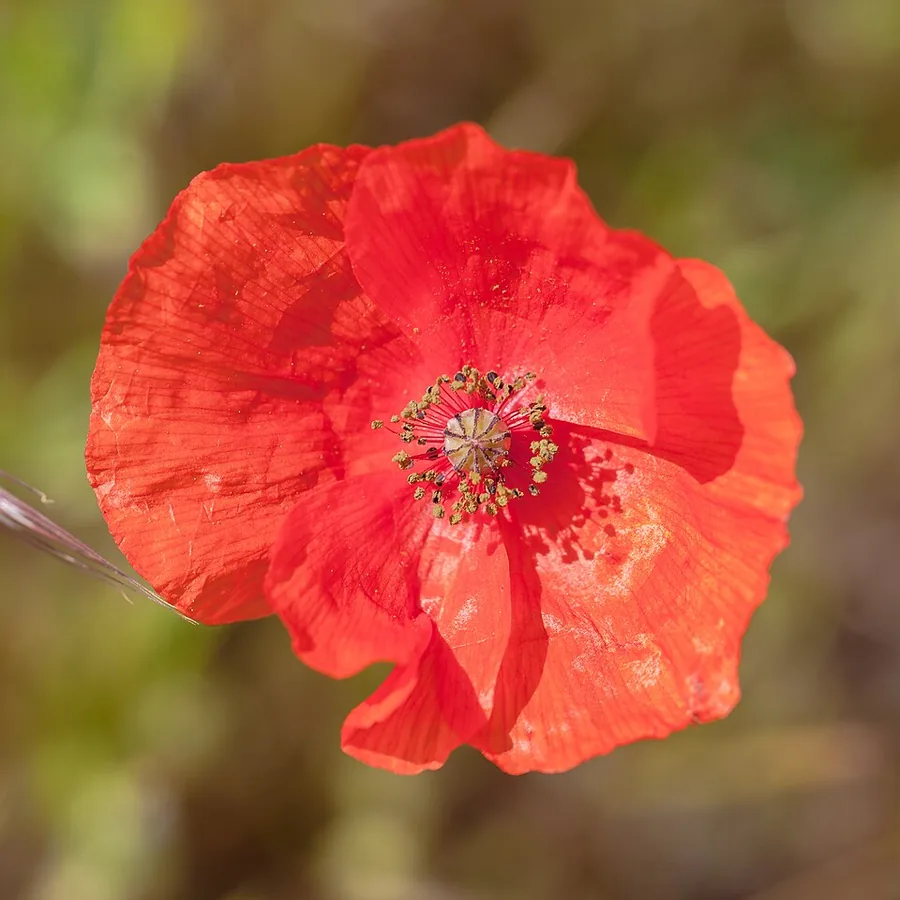
The corn poppy brings a loose, romantic ease to a planting, its papery scarlet flowers carrying the memory of the fields of Flanders into the modern border. A fast annual from the poppy family, it grows wild across Europe and reads as effortless wherever it lands. At just 9 to 18 inches (23 to 46 cm), it slips into the front of a bed or a gravel garden without demanding the spotlight.
There is a studied nonchalance to the way it flowers. Slim stems hold single, cupped blooms that last a day or two, opening in relay from late spring into mid-summer so the display never feels static. When the last flower closes, papery pods take over and the season winds down. It lives a single year, yet reseeds so freely that the look returns on its own, which suits a garden meant to feel unforced.
For all its casual charm, the corn poppy keeps a short list of preferences: open sun, a cool start to the season, and ground that stays on the dry side. It has no patience for being relocated, so the most graceful approach is to sow it exactly where it belongs in the composition and let it knit into the scheme. Placed with intent, it rewards a hands-off routine.
Care
The short version: a sunny position, light and even moisture, and sharp drainage, with seed sown straight into cool ground and left in place, since it will not tolerate being moved.
Light
Give the corn poppy full sun and it will flower longest and best, an easy anchor for an open, sun-washed border. A little afternoon shade suits hot-summer gardens, but deep shade leaves it thin and floppy with few blooms to show.
Water
Keep the moisture light and even, letting the top half of the soil dry before the next watering, which tends to fall around every 5 to 10 days. It dislikes extremes, so a prolonged drought thins the planting while wet ground rots the roots, especially through winter.
Soil
Plant into well-drained loam with a little compost, though ordinary garden soil serves as long as water passes through freely. A pH of 6.0 to 7.5 suits it. Here, drainage counts for more than richness, and a poppy on lean, quick soil looks all the more at ease.
Temperature
This is a cool-season flower, at home between 30°F to 75°F (-1°C to 24°C). It germinates and grows best in the mild light of spring or fall, and the display draws to a close as summer heat builds, a natural handoff to later performers in the bed.
Humidity
It prefers dry air, with no target to meet. Good airflow does the quiet work of keeping it healthy, since damp, crowded foliage is what invites mildew and gray mold into an otherwise tidy planting.
Feeding
Feeding is nearly beside the point. A light dose of balanced fertilizer or compost at sowing carries it through, and rich ground needs even less. Overfeed and you trade flowers for leaf, which undoes the airy effect the plant is prized for.
Pruning
Deadhead the spent blooms to keep fresh flowers coming and the planting looking its best. Removing the seed pods before they ripen also curbs the self-sowing, unless a naturalized, self-renewing look is the goal.
Repotting
There is no repotting to consider. The corn poppy is sown in place and left there, resenting root disturbance and never really settling into a container for the long term.
Size & spacing
It stays compact at 9 to 18 inches (23 to 46 cm), a graceful scale for the front of a border. Set or thin the plants to about 6 to 12 inches (15 to 30 cm) apart, which keeps the planting airy and the foliage dry.
When to plant
The corn poppy asks for cool weather and a settled spot, so its timing shapes the whole season. In mild-winter gardens, sow in late fall; where the cold runs deep, wait for early spring. Flowers arrive from late spring into mid-summer, roughly 60 to 90 days on, and slip neatly into the early-summer border.
Northern hemisphere
Southern hemisphere
Typical months for a temperate climate: start earlier in warm zones, later where spring frosts linger.
- Sow: Not recommended; seedlings resent transplanting. Sow seed directly in place.
- Plant: Direct-sow in late fall in mild/southern regions or early spring in northern regions; seed needs light, cover no more than 1/8 inch.
- Harvest: Late spring to mid-summer (June to August)
Hardiness
USDA hardiness zones: 3–10
Temperature: down to -40°C
Troubleshooting
Most of what troubles a poppy comes down to two conditions a good site avoids: soil that holds water and air that sits still. Read the early signs, and the remedy is usually a matter of better drainage or a little more room in the planting. Match the symptom below and adjust before it takes hold.
Yellowing, wilting plants let down by rotted roots
Plants that yellow, wilt, and fold are usually showing root rot, the result of soil that holds water, most often through winter or after too generous a hand with the hose. A look at the base turns up soft, brown roots in ground that never dries. The answer is drainage: pull back on watering, open up the site, and lift the failing plants before the rot travels.
Fix:
- Improve drainage and stop supplemental watering
- Remove and discard severely affected plants
- Avoid replanting poppies in the same poorly drained spot
Gray fuzzy mold settling over blooms and foliage
Cool, damp air over a crowded planting is an open door for botrytis, the gray mold that settles on fading flowers and leaves and reduces them to decay. In wet spells, look for a grayish fuzz on the spent parts. Clip out what is affected, give the plants more room, and keep water off the foliage to turn it around.
Fix:
- Remove and destroy affected plant parts
- Increase air circulation through spacing and thinning
- Avoid overhead watering
A powdery white bloom dulling the leaves
A powdery white film across the upper leaves is powdery mildew, which arrives when the air is humid and slow-moving. Brush a patch and part of it lifts away. The fix is simple and worth doing early: thin the planting, remove the worst leaves, and stop the crowding so air can circulate.
Fix:
- Improve air circulation
- Remove heavily infected foliage
- Avoid overcrowding plantings
Volunteer seedlings drifting through the planting
Corn poppy is a generous self-seeder, and once the pods ripen they cast seed well beyond the original drift. Unplanted seedlings soon gather near last season's flowers. To keep the scheme in hand, cut the pods before they mature and lift the volunteers that fall outside the plan.
Fix:
- Remove seed pods before they mature and shed seed
- Pull unwanted volunteer seedlings
Toxicity
This is a plant to place with awareness. Every part of the corn poppy holds a milky latex carrying opium-type alkaloids, which makes the living plant toxic to cats, dogs, horses, and other animals, and not something people should eat. The dried seeds used in the kitchen are safe, but the sap, stems, and green pods belong well away from pets and children.
Toxic to
Cats · Dogs · Horses · Rabbits · Livestock · Birds · People
Cats Toxic
A cat that samples the latex or seed pods can grow sluggish and unsteady, usually drooling and refusing food, all traced to the opium-type alkaloids the plant carries. Take in enough and the breathing slows toward heavy sedation.
Dogs Toxic
Foliage or pods gnawed by a dog can bring on drooling, a lost appetite, and a sleepy, unsteady gait. Larger doses bear down harder on the nervous system and can blunt the breathing.
Horses Toxic
Left to graze the plant, a horse can turn drowsy and clumsy on its feet, with a colic-like ache in the belly. Because the narcotic alkaloids target the nervous system, even an idle mouthful is worth heading off.
Rabbits Toxic
A rabbit fares no better than a cat or dog with these opium-type alkaloids, and its small body allows almost no margin for error. The plant, its sap, and the pods all belong somewhere a rabbit cannot reach.
Livestock Toxic
After grazing poppy, cattle, sheep, and goats can grow drowsy and stagger on their feet, drooling as the gut and breathing slow. Most stock refuse the bitter leaves, so the ones at risk are the hungry or the unfamiliar.
Birds Toxic
Every green part is laced with the narcotic latex and its alkaloids, which puts the plant off-limits to pet birds and poultry alike. Cut stems and dropped pods are best cleared well away from cages and runs.
People Caution
In the stems and green pods, the milky sap holds opium-type alkaloids that can bring on drowsiness and an unsettled stomach, so the fresh plant is not something to eat. The dried baking seeds are safe on the plate, though children should be kept clear of the sap and unripe seed heads.
All parts contain a white to yellowish latex and alkaloids; keep cut stems, seed pods, and plant debris away from pets.
Helpline numbers

United States
ASPCA Animal Poison Control: (888) 426-4435 (fee applies)
Poison Control: (800) 222-1222



Canada
Poison Centres: 1-844-764-7669
Varieties
The wild scarlet is only the beginning. A handful of named strains widen the palette into softer, more collectible shades, and these three turn up most often in seed catalogs.
Shirley Series
A refined seed strain in single and double forms, ranging through red, pink, white, and picotee, and free of the dark basal blotch that marks the wild poppy.
American Legion
Clear scarlet-red single flowers that remain the traditional choice for remembrance plantings.
Falling in Love
A soft, collectible blend of bicolor and pastel blooms, semi-double to double, in pink, salmon, and white.
How to propagate
There is a single way to bring it into a garden: sow the seed exactly where the flowers are wanted, since the seedlings will not survive a move.
SeedEasy
Direct-sow in late fall in mild/southern climates or early spring in northern climates · Germinates in about 7 to 28 days depending on soil temperature; blooms the same season
The corn poppy comes into a garden from seed sown straight where it will flower, since the seedlings resent transplanting and rarely take to a move. Sow in late fall in mild-winter gardens or early spring further north. Because the seed needs light to germinate, press it to the surface and cover with no more than 1/8 inch of soil, then keep it evenly moist. Seedlings appear in about 7 to 28 days with soil warmth, and the plants flower the same season.
Myths
Corn poppy is the same opium poppy behind narcotics.
The two are easy to confuse but different. Corn poppy is Papaver rhoeas, a separate species from the opium poppy, Papaver somniferum. It holds isoquinoline alkaloids such as rhoeadine rather than the heavy morphine of its relative. A cousin in the family, not the same flower.
Poppies are safe around pets because they are everyday garden flowers.
A familiar place in the border says nothing about safety. Poppy is toxic to cats and dogs, and the opium-type alkaloids can leave an animal drooling, sedated, and unsteady after a single bite.