Vegetable · Polygonaceae
Rhubarb
Rheum rhabarbarum
A handsome corner of the kitchen garden that returns each spring with tart red stalks for the dessert table, asking little in return.
Full sun
Every 5–10 days
365–730 days
USDA 3–8
Overview
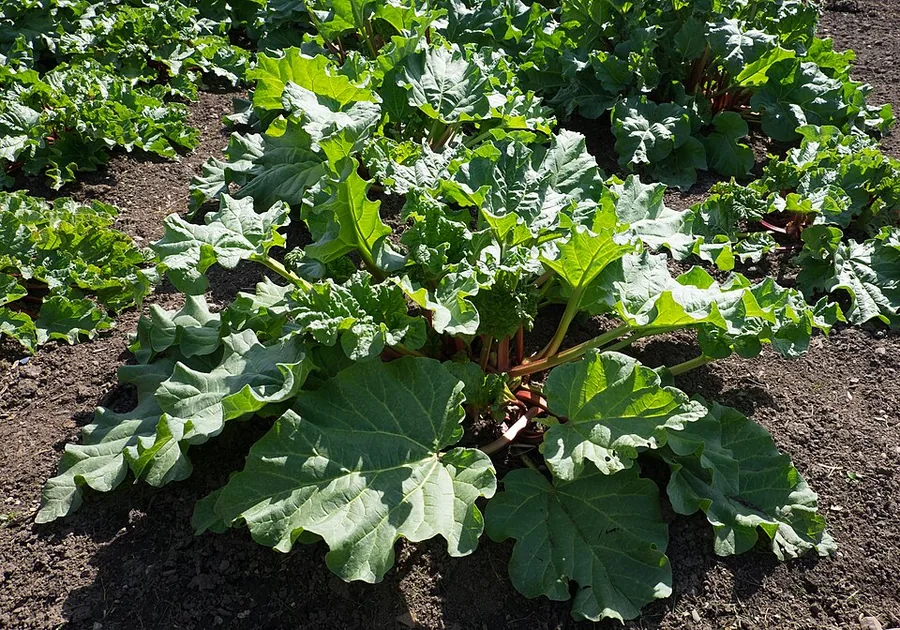
Rhubarb earns a permanent place in the kitchen garden, the crop that ends the meal rather than the main course. Its tart red and green stalks become pies, crumbles, and jam, the reason an earlier generation of cooks called it pie plant. A member of the knotweed family, it stands through cold that clears the rest of the plot, holding on through winters as low as -40°F (-40°C).
This is a plant for the patient gardener who plans a border for the long term. Set a single crown and it anchors its corner as a long-lived perennial, returning each spring for a decade or more before it asks to be divided. The first year is for settling in and the second for a light touch, and from the third year the harvest becomes part of the season's rhythm.
One habit shapes how rhubarb lives alongside the household: the stalks come to the kitchen, the leaves never do. Those broad leaf blades hold oxalic acid and stay toxic to people and pets, so they are cut away and set aside. Keep to that and rhubarb slips easily into the routine of a working garden.
Care
The short version: give rhubarb full sun and deep, fertile soil, with steady moisture at about an inch of water a week. Feed as the crown wakes in early spring, dress it with mulch to keep the corner cool, and divide the crown every few years so it stays a generous fixture of the plot.
Light
Give rhubarb an open, sunlit spot for the finest stalks, though it settles for partial shade where summers turn warm. A bright corner rewards the planting with a fuller, more generous crop.
Water
Keep the ground evenly moist but never sodden, which comes to about an inch (2.5 cm) of water a week. Water more deeply through the hot, dry stretches of the season, and finish the corner with a thick organic mulch that holds moisture and keeps the crown cool.
Soil
Set rhubarb into deep, fertile, well-drained loam worked with plenty of organic matter. A pH of 6.0 to 6.8 suits the corner, and good drainage is the one thing the plant insists on, since a crown left in wet ground rots.
Temperature
Rhubarb belongs to the colder garden, comfortable anywhere from -40°F to 86°F (-40°C to 30°C). It leans on a true winter chill to rest and return with vigor, and it fares poorly where the summer heat lingers.
Humidity
Ordinary outdoor humidity in the 40% to 60% range asks nothing of the gardener. What the corner needs instead is open air moving through the broad leaves, since still, damp conditions invite leaf spot.
Feeding
Feed the crown once in early spring as it wakes, with a balanced fertilizer or well-composted manure. Rhubarb draws heavily on the soil, so a rich bed and that yearly spring feeding keep the corner producing thick, handsome stalks.
Pruning
Cut the central flower stalk at its base the moment it rises, or the plant turns its attention to seed instead of stalks. Clear away any dead, yellowing, or frost-damaged leaves, and set the toxic blades aside rather than offer them to animals.
Repotting
Rhubarb keeps its place in the ground, but the crown wants dividing every 5 to 10 years to stay handsome and productive. Thin, spindly stalks or a clump hollowing out at the center are the corner's signal to lift, split, and replant the strongest pieces.
Size & spacing
A settled plant stands 2 to 4 feet (60 to 120 cm) tall and spreads just as wide, so allow each crown 3 to 4 feet (90 to 120 cm) in the border. That room lets air move through the broad leaves and gives the corner its full, generous shape.
When to plant
Rhubarb keeps to the calendar of the cold season. Dormant crowns go out in early spring the moment the soil can be worked, and that first year is left to the plant while it finds its footing. Stalks come in from spring into early summer, settling into a full harvest by the third year as a yearly ritual.
Northern hemisphere
Southern hemisphere
Typical months for a temperate climate: start earlier in warm zones, later where spring frosts linger.
- Sow: start seed indoors 8-10 weeks before the last spring frost (seed-grown plants are slow and variable)
- Plant: set out dormant crowns in early spring as soon as the soil can be worked (fall planting also works in mild areas)
- Harvest: harvest stalks in spring through early summer; do not harvest the first year, take only a few stalks the second year, and harvest fully from the third year onward
Hardiness
USDA hardiness zones: 3–8
Temperature: down to -40°C
Troubleshooting
Rhubarb is an easy tenant of the garden, and its occasional troubles come back to a crowded corner, wet ground, or a run of summer heat. A glance at the stalks and leaves usually tells the story in good time. Match what you see below and set the corner right before the plant slips.
A softening brown crown and a plant giving way
A crown gone soft, brown, and mushy points to crown rot, most often from ground that drains too slowly and sometimes a soil fungus such as Phytophthora. A rotted crown is past saving, so lift it out and destroy it. Replant healthy divisions on a raised, well-drained spot, and keep mulch from resting against the crown.
Fix:
- Remove and destroy affected crowns
- Improve drainage and replant healthy divisions on a raised, well-drained site
A tall flower stalk rising above the border
The tall stalk crowned with creamy bloom is bolting, the plant's move to set seed as summer warms or the crown grows old and crowded. Because it drains the energy the stalks depend on, cut the flower stalk at its base as soon as it appears. Keep the corner watered and mulched, and divide worn crowns to keep it from returning next season.
Fix:
- Cut the flower stalk off at its base as soon as it is seen
- Keep plants consistently watered and mulched
Stalks arriving thin, short, and weak
Slender stalks usually mean an overcrowded crown that has outgrown its place, with lean soil and heavy harvesting adding to the picture. Lift and divide the crown in early spring, replant the strongest pieces, and top-dress with compost or a nitrogen-rich fertilizer. Ease off the harvest for a season and let the corner recover its strength.
Fix:
- Divide the crown in early spring and replant vigorous pieces
- Top-dress with compost or a nitrogen-rich fertilizer
- Reduce or stop harvesting for a season to let the plant recover
Spots or chewed holes across the broad leaves
Round tan-to-purple spots suggest a fungal leaf spot such as Ascochyta or Ramularia, while ragged holes are the mark of slugs or the rhubarb curculio. Remove and destroy the worst leaves, open the corner for better airflow, and water at the base. Hand-pick the beetles and keep after the slugs to settle the planting.
Fix:
- Remove and destroy badly affected leaves
- Improve air circulation and avoid overhead watering
- Hand-pick beetles and manage slugs
Toxicity
Rhubarb keeps a clear boundary between what belongs on the table and what does not. The cooked stalks are a welcome part of the kitchen, but the broad leaf blades hold oxalic acid and anthraquinone glycosides that are toxic to people, cats, dogs, horses, and livestock. Trim the leaves away, set them where no animal can reach, and keep trimmings clear of pets and grazing stock.
Toxic to
Cats · Dogs · Horses · Rabbits · Livestock · Birds
Safe for
People
Cats Moderate
A cat that samples a leaf blade tends to drool and paw at its mouth, then vomit and grow listless. A larger mouthful is the real concern, since the oxalates can bring on tremors and strain the kidneys.
Dogs Moderate
After chewing the foliage, a dog often drools, turns off its food, and settles into an uneasy, sluggish rest with an upset stomach. Enough of it, and the same crystals can set off tremors and kidney damage.
Horses Moderate
The blades irritate a horse's mouth and prompt heavy drooling, colic-like cramping, and weakness. A large feed risks lasting kidney harm, so keep horses fenced clear of the foliage.
Rabbits Toxic
For rabbits the oxalic acid in the leaves is genuinely dangerous, with no safe amount. Keep every blade and trimming well out of reach.
Livestock Toxic
Cattle, sheep, and goats that graze the leaves can suffer severe oxalate poisoning, with drooling, gut pain, staggering, and kidney failure. Leaf trimmings should never be tossed into a pasture or pen.
Birds Toxic
The same oxalic acid and anthraquinone compounds leave the foliage unsafe for poultry and pet birds alike. Backyard hens should not be left to scratch through discarded blades.
People Stalks safe
Cooked rhubarb stalks are a long-loved part of the kitchen and safe to enjoy, but the leaf blades are not. They carry oxalic acid that brings a burning mouth, nausea, and vomiting, so the leaves are trimmed off and thrown out.
The red or green leaf STALKS (petioles) are safe to eat when cooked, but the large LEAF BLADES are toxic to pets and people and must never be eaten or fed to animals. Cut blades off and dispose of them; do not leave trimmed leaves where pets or livestock can reach them.
Helpline numbers

United States
ASPCA Animal Poison Control: (888) 426-4435 (fee applies)

United Kingdom
Animal PoisonLine: 01202 509000 (fee applies)

Australia
Animal Poisons Helpline: 1300 869 738
Varieties
Only a handful of rhubarb cultivars find their way into most plots, set apart by color, sweetness, and how gracefully they hold up. These are the names worth choosing between when you plan the corner.
Victoria
Victoria is a vigorous heirloom with green stalks blushed pink at the base, and the one cultivar most often raised from seed.
Canada Red
Canada Red keeps its deep red color the length of the stalk and comes to the kitchen sweeter and less stringy than most.
MacDonald
MacDonald pairs tender, bright red stalks with sound resistance to root rot, the natural choice for a plot of heavier soil.
Glaskins Perpetual
Glaskins Perpetual carries less oxalic acid, which extends the harvest later into the season than other kinds allow.
How to propagate
The graceful way to expand a rhubarb planting is to divide an established crown. Seed is there for the unhurried gardener who welcomes a longer wait and a little unpredictability.
DivisionEasy
Early spring while the crown is dormant (fall is also possible) · 1-2 years before light harvest, with full harvest by the third year
Dividing an established crown is the surest way to widen a rhubarb planting. Lift a dormant crown in early spring and cut it into pieces, each with one or two strong buds and a good chunk of root, then replant with the buds set just at or below the soil line. Allow a year or two before a light picking, with a full harvest by the third year. Every division comes true to its parent, so the character of the corner carries on.
SeedModerate
Start indoors 8-10 weeks before the last spring frost, then transplant out · 2-3 years to a full harvest
Rhubarb can be raised from seed, though it asks for patience and offers a little surprise. Sow indoors 8 to 10 weeks before the last spring frost, move the seedlings out, and expect 2 to 3 years before a full harvest. Because seedlings vary and will not come true to a named cultivar, seed suits the curious gardener while division holds the character of a known variety.
Myths
The whole rhubarb plant is poisonous and nothing from it is fit to eat.
Only the leaf blades are toxic, a matter of oxalic acid and soluble calcium oxalates. The cooked stalks are a safe, everyday food that has graced pies and crumbles for generations. Cut the blades away, set them aside, and bring the stalks to the table.
Rhubarb stalks turn poisonous once the plant flowers or after a hot summer.
Neither flowering nor heat touches the stalks. The toxin stays in the leaf blades, never the stalks, so a bolted plant is still fit for the harvest basket. Simply remove the flower stalk to keep the crop coming.