Shrub · Polygonaceae
Silver Lace Vine
Fallopia baldschuanica
The climber that turns a plain boundary into a cloud of summer white, given room and a yearly trim.
Full sun
Every 7–14 days
USDA 4–9
20–35 ft · 6.1–10.7 m
Overview
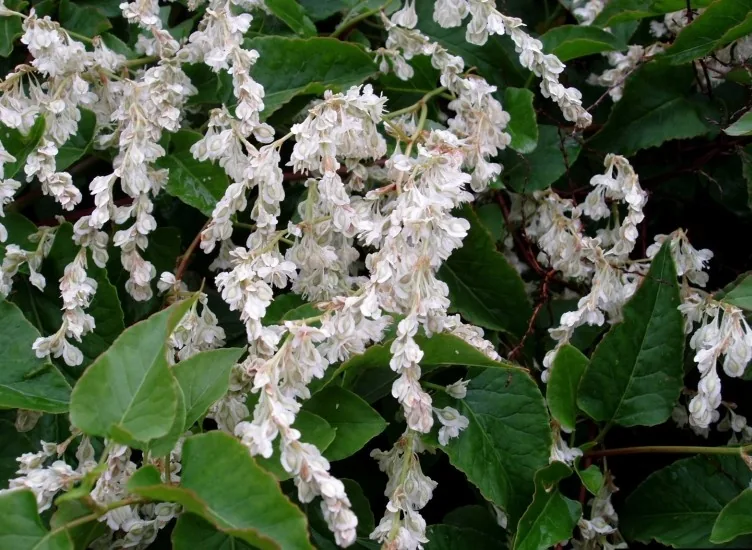
Few plants reshape a garden's mood as quickly as silver lace vine. Sent up an arbor, a pergola, or a run of fence, it softens hard lines within a season and, by late summer, veils the structure in a haze of tiny creamy-white flowers. Hardy across zone 4 to 9, it holds its easy, informal look through cold, heat, and drought alike, which makes it a natural fit for a relaxed, low-maintenance garden.
That effortless coverage comes with real presence. A single season can bring 10 to 15 feet of growth, so this is a plant for framing a space, not filling a border, and it will drift beyond its support by suckering and self-seeding into the ground around it. The old nickname mile-a-minute vine sets expectations well, and in parts of the midwestern and northeastern US it is regarded as weedy or invasive.
Placed with intent, it earns its keep. Give it a generous, sturdy structure set well clear of trees, gutters, and treasured beds, then fold one firm annual prune into the late-winter garden routine. That single ritual keeps the romance of the bloom without letting the vine dictate the rest of the plot. It is a statement climber that asks only for the right stage.
Care
The short version: stage it in full sun and any well-drained soil, water it only through its first season, leave the feeding aside, and work one hard late-winter prune into the routine to keep its exuberant growth looking intentional.
Light
Full sun is where the flowering reads at its fullest, turning the vine into the summer feature it is meant to be. It will still furnish partial sun or partial shade, though a shadier spot trades some of that signature veil of bloom for greenery.
Water
Through its first season a young plant appreciates steady water while it settles into place. After that it is very drought tolerant, quietly holding its own through dry weather with only the occasional soak during a long spell, every 7 to 14 days at most.
Soil
The vine is unfussy about its footing, thriving in any well-drained soil from loam to silt to sand across a pH of 5.5 to 8.0. Leaner ground actually flatters the planting, tempering the spread so the look stays composed rather than chaotic.
Temperature
This is a climber built for real climates, comfortable anywhere from -29°F to 100°F (-34°C to 38°C). A heat wave or a cold snap leaves its easy character untouched.
Humidity
Whatever the open air provides is enough, so humidity is nothing to manage. The vine simply keeps its look through the shifting moods of the season.
Feeding
Restraint is the elegant choice with feeding. The vine's own vigor carries it, so fertilizer is seldom warranted, and a single spring dose of a balanced or low-nitrogen feed is worth it only if growth looks genuinely thin. Excess nitrogen only amplifies the sprawl and undoes the composed effect you are after.
Pruning
Pruning is where the styling happens. Because it blooms on new wood, a hard cut in late winter or early spring both governs its size and refreshes the display, taken down to 1 to 3 feet for a full reset. A few lighter passes through the season keep the silhouette in line.
Repotting
Container life suits it poorly and it seldom needs repotting when grown that way. The cues that it has outgrown a pot are roots circling or slipping past the rim, soil that dries almost as soon as it is watered, and top growth that stalls.
Size & spacing
Plan for scale and give it architecture to match. The vine reaches 20 to 35 feet (6 to 10.5 m) in height and spreads 2 to 25 feet (61 cm to 7.5 m) across, so set it where it can command its own space without crowding a prized planting.
When to plant
The vine settles in best when planted in spring after the last frost, or in early fall while the ground still holds warmth. Its bloom arrives on the season's new growth from midsummer into fall, timing the display to the garden's most-used months, and it is why the shaping prune belongs to late winter, ahead of the flowering shoots.
Northern hemisphere
Southern hemisphere
Typical months for a temperate climate: start earlier in warm zones, later where spring frosts linger.
- Sow: Late winter to early spring, 6-8 weeks before last frost (seed propagation is uncommon; cuttings and layering are easier).
- Plant: Spring after last frost, or early fall.
- Harvest: Mid/late summer into fall (roughly July to frost).
Hardiness
USDA hardiness zones: 4–9
Temperature: down to -34°C
Troubleshooting
Trouble with this vine rarely means a plant in decline; it means a plant outgrowing its setting. Most of the attention it needs is about preserving the intended look rather than nursing it back. Read the situation below and adjust early, before the composition slips out of hand.
Vine outgrowing its structure and spilling into the garden
This is the signature exuberance that gives silver lace vine its drama, simply carried too far for the setting. Fresh growth can extend 10 to 15 feet in a season while the crown suckers and self-seeds into nearby ground. A firm late-winter cut, steady summer shaping, and early removal of stray seedlings and suckers keep the planting looking deliberate rather than overrun.
Fix:
- Prune hard in late winter and again through the growing season to keep it in bounds
- Cut back to 1-3 ft for full renovation when overgrown
- Remove suckers and pull or mow seedlings as they appear
- Install a sturdy, oversized support and keep it clear of trees, shrubs, and gutters
Summer foliage marked with ragged holes
Most of this is the work of Japanese beetles, metallic green-and-bronze insects that lace the leaves as they feed. Pale, winding lines within a leaf point instead to leaf miners. Lifting the beetles into soapy water at dawn and clearing the mined leaves is enough, since the vine's pace soon papers over the blemishes.
Fix:
- Hand-pick Japanese beetles into soapy water in early morning
- Tolerate minor damage, as the vine outgrows it
- Remove and dispose of mined leaves
Toxicity
For a garden shared with pets and children, silver lace vine is an easy conscience: it carries no toxic listing and is considered safe for cats, dogs, and people. Nothing about the planting calls for worry over poisoning. The one practical caution is the seasonal pruning it invites, not anything in the foliage.
Safe for
People · Cats · Dogs · Horses · Rabbits · Livestock · Birds
Cats Safe
A household cat is in no danger from a stray nibble, as silver lace vine appears nowhere on the ASPCA's toxic list.
Dogs Safe
Dogs share the garden safely, with no poisoning to fear, though a large helping of any plant can briefly unsettle a delicate stomach.
Horses Safe
Horses are untroubled by it and can graze the leaves and shoots without harm.
Rabbits Safe
Rabbits browse the tender new growth freely, finding nothing in the vine that would hurt them.
Livestock Safe
Cattle, goats, and sheep can share the ground with silver lace vine without any risk of poisoning.
Birds Safe
Birds come to no harm, and many take welcome shelter in the dense, fast-growing screen it forms.
People Safe
For people the planting poses no poisoning risk at all. The only real caution is the heavy pruning it invites, so keep gloves and loppers close.
No special handling for toxicity; wear gloves and use loppers for the heavy seasonal pruning this vine requires.
Varieties
The vine comes in only a couple of named forms, and the choice between them is really a styling decision, resting on leaf color and the scale each brings to a space.
Lemon Lace
A more measured, deer-resistant selection that settles around 20 to 30 feet, setting the familiar white bloom against chartreuse-to-gold foliage on red stems for a warmer palette.
Species (Fallopia baldschuanica)
The unadorned species and the most vigorous choice, its bright green heart-shaped leaves carrying frothy, lacy sprays of tiny fragrant flowers in creamy-white to greenish tones.
How to propagate
Expanding a planting of silver lace vine takes little more than intention. Cuttings, layering, and division all root with ease, the same willingness that lets it wander, so a single vine readily becomes a screen, a hedge line, or a run along the fence.
Stem cuttingsEasy
Late spring to summer (softwood/semi-hardwood) · A few weeks to root; established in one season
The most dependable approach. Softwood or semi-hardwood cuttings taken from new growth between late spring and summer root within a few weeks and fill their space by the end of the first season.
LayeringEasy
Spring to summer · One season
Simpler still, a trailing stem pressed to the soil anywhere from spring to summer roots where it rests, delivering a fresh plant within a single season, ideal for extending a run along a fence.
DivisionEasy
Late winter to early spring · One season
In late winter or early spring, the crown can be split or a rooted sucker lifted from the many the vine offers, and each piece establishes across the season.
SeedModerate
Start indoors late winter to early spring · A season or more
The least common route, and a slower one. Seed started indoors in late winter or early spring needs a season or more to establish, though the vine will also sow itself into the ground nearby.
Myths
Silver lace vine is just another label for Japanese or giant knotweed.
The two share a family but stand apart as garden plants. Silver lace vine is the climbing, white-flowered ornamental, while Japanese and giant knotweed rise stiff and bamboo-like and number among the most destructive invasives known. Silver lace vine remains the gentler relative, even if it can lean weedy.