Tree · Betulaceae
River Birch
Betula nigra
With peeling cinnamon bark and full, fast growth, river birch lends a yard an easy, natural elegance.
Full sun
Every 3–7 days
USDA 4–9
40–70 ft · 12.2–21.3 m
Overview
River birch has a way of setting the tone for a whole property. Native to the stream banks and floodplains of the eastern United States, it brings a relaxed, waterside character to a garden, at ease with wet ground and heavy clay where a more formal tree would look out of place. It reads as effortless, the kind of tree a landscape seems to grow around rather than display.
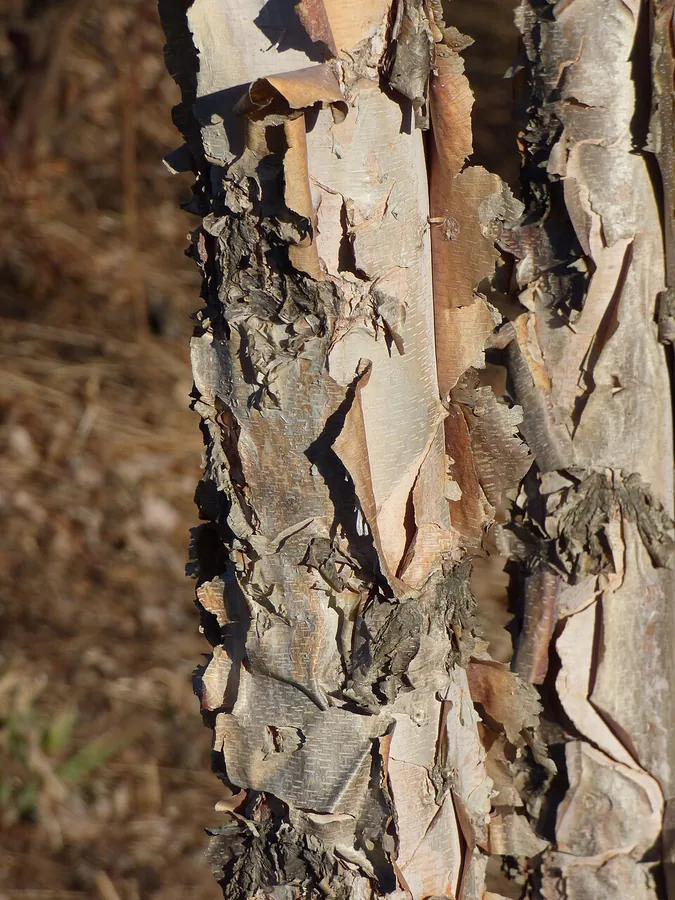
The bark gives it presence through every season. On young trees it lifts away in soft curls of salmon, cinnamon, and cream, a warm note that carries a winter garden when little else does. Grown past 40 feet and often as a multi-stemmed clump, it becomes a natural focal point, so it wants an open lawn or a wide bed where its silhouette can be seen.
Beyond its looks, it suits the way most people actually live with a garden. River birch is the most disease-free birch and shrugs off the borer that troubles its white-barked cousins, so it settles into a landscape without demanding attention. Give it acidic soil and cool, moist roots, and it becomes the low-key backdrop a home relaxes into.
Care
The short version: site it in full sun with moist to wet acidic soil, and keep the water steady while it takes hold. Mulch the roots, leave pruning for summer or fall, and give it the open space a specimen tree deserves.
Light
River birch looks its best in full sun, though it accepts partial shade with grace. Open light builds a fuller crown and the richest bark color, so an unshaded spot rewards you with the finest form.
Water
This tree wants moist to wet, acidic soil and takes flooding in stride, though a dry summer will cost it a few interior leaves. A soaker hose and a neat layer of bark mulch hold the roots cool and damp, keeping it composed through the season.
Soil
Give it moist to wet, acidic ground, loam, sand, or clay alike, since poor drainage is no obstacle. Keep the pH within 5.0 to 6.5, because more alkaline soil dulls the foliage to yellow.
Temperature
River birch is unbothered by extremes, comfortable anywhere from -29°F to 100°F (-34°C to 38°C). That range spans zones 4 through 9, making it at home in gardens across most of the country.
Humidity
There is no humidity to manage here, as ordinary outdoor air is entirely enough. Its needs sit at the root zone, in steady moisture rather than anything in the air.
Feeding
A spring feeding of balanced fertilizer or compost is plenty, and rich soil often calls for none. Keep the nitrogen light, since a surge of soft growth only invites aphids to spoil the display.
Pruning
River birch asks for little pruning, and the season matters more than the technique. Confine cuts to summer or fall, never late winter or spring, when rising sap leaves the wounds weeping.
Repotting
This is a landscape tree, never a lasting container piece, so a pot is only a waystation. Once a nursery specimen begins circling its roots or stalling, the natural next step is to plant it out.
Size & spacing
River birch grows quickly to a commanding 40 to 70 feet (12 to 21 m) tall and 40 to 60 feet (12 to 18 m) wide, a true feature tree. Set it well back from foundations and paving, and allow the full sweep its canopy will want.
When to plant
River birch settles happily into zones 4 to 9, and spring or fall, with their mild weather, is the graceful time to plant. Its yellow-brown catkins arrive in April and May, a quiet first gesture before the canopy fills in.
Northern hemisphere
Southern hemisphere
Typical months for a temperate climate: start earlier in warm zones, later where spring frosts linger.
- Plant: Spring or fall
- Harvest: April to May (catkins)
Hardiness
USDA hardiness zones: 4–9
Temperature: down to -34°C
Troubleshooting
For a tree this easy to live with, the occasional issue almost always comes back to soil pH or pruning at the wrong season. Catch the early signals and a quick response keeps the tree looking its best. Match the symptom below and act while it still counts.
Yellowing leaves over green veins
Leaves that pale to yellow while their veins hold green are showing iron chlorosis, a sign the soil has drifted too alkaline for the tree to take up iron. The remedy begins in the ground: elemental sulfur to ease the pH down, chelated iron to restore what is missing, and mulch to keep the root zone moist and acidic. River birch keeps its color only in acid soil, so a limed or chalky site is one to avoid from the outset.
Fix:
- Acidify soil with elemental sulfur to lower pH
- Apply chelated iron to soil or as foliar spray
- Mulch and keep soil moist and acidic
Curling leaves with a sticky sheen
Curled leaves under a sticky sheen point to aphids gathered along the undersides, betrayed by the honeydew they leave. A firm jet of water clears most of them, and insecticidal soap or horticultural oil takes care of any holdouts. Lady beetles tend to the rest, so keep the nitrogen restrained and the tree well watered to spare it the next flush.
Fix:
- Spray plants with a strong jet of water
- Apply insecticidal soap or horticultural oil
- Encourage beneficial predators such as lady beetles
Spotted leaves and early leaf fall
In a wet season, fungal leaf spot can freckle the leaves and drop a few early, though it rarely leaves a mark that lasts. Clear away the fallen infected leaves, open the canopy for air, and keep water off the foliage. Since river birch counts among the most disease-free birches, a resistant cultivar and simple tidiness usually keep it looking well.
Fix:
- Rake and remove fallen infected leaves
- Improve air circulation
- Avoid overhead watering
Sap weeping from a fresh cut
A cut made in late winter or early spring will weep clear sap without pause, the tree simply bleeding sap as the season stirs. It is harmless, and no sealant will settle it. The graceful course is to hold off pruning until the leaves are out, let the wounds close unaided, and keep to summer or fall thereafter.
Fix:
- Stop pruning until summer or fall
- Allow cuts to seal naturally without sealant
Toxicity
This is a tree you can live around without a second thought. Nothing in the leaves, bark, twigs, or seeds is toxic, so it sits comfortably in a garden shared by pets, livestock, and children. A stray nibble is simply nothing to note.
Safe for
People · Cats · Dogs · Horses · Rabbits · Livestock · Birds
Cats None
River birch is not toxic to cats, so a curious swat at a low leaf or twig comes to nothing.
Dogs None
A dog may chew the bark or a fallen twig with no harm at all, as the tree holds nothing poisonous to them.
Horses Safe
Horses grazing nearby are perfectly safe, the leaves and bark carrying no toxins.
Rabbits Safe
Rabbits that nibble the bark or young shoots stay unharmed, since river birch offers them nothing dangerous.
Livestock Safe
Cattle, goats, and sheep can browse the foliage in safety, as the tree is not poisonous to grazing animals.
Birds Safe
Birds feed on the small seeds in the catkins without risk, and the tree troubles them not at all.
People Safe
It poses no poisoning risk to people either, children included, even when they handle the bark or leaves.
No special handling required for toxicity; this is a large landscape tree, not a houseplant.
Varieties
A few named cultivars have been shaped for finer bark, a tidier scale, or extra heat tolerance, each suited to a slightly different setting. These are the ones a nursery is most likely to carry.
Heritage ('Cully')
A vigorous, borer-resistant selection that turns back its salmon-cream to brown bark to reveal a creamy white layer beneath.
Dura-Heat ('BNMTF')
A more compact cultivar at 30 to 40 feet, dressed in creamy white bark and unusually at ease with summer heat and disease.
Summer Cascade
The weeping form, its branches falling in a soft cascade toward the ground.
How to propagate
River birch grows from seed or softwood cuttings, both of them a patient, unhurried project. Here is how each approach works and how long before the young tree earns its place.
SeedModerate
Collect and sow seed in late spring after catkins ripen · 1 to 2 growing seasons
Seed is the customary way to raise river birch. Collect it in late spring as the catkins ripen and sow it fresh over a moist bed, since it will not keep. Allow 1 to 2 growing seasons for it to find its feet before the young tree moves to its place.
Stem cuttingsModerate
Early summer using softwood cuttings · Several weeks to root, one season to establish
Softwood cuttings offer the other path, taken in early summer and rooted under mist. They ask several weeks to root and a full season to establish, a slower route than seed and one for the patient.
Myths
The bronze birch borer kills every birch, so river birch is destined to fall to it as well.
Far from it, river birch is the most borer-resistant birch of all and turns aside the bronze birch borer that claims stressed white-barked trees. For a birch that stands up to the borer, this is the one to plant.