Herb · Lamiaceae
Rosemary
Salvia rosmarinus
A pot of sun-loving Mediterranean rosemary turns a bright sill or doorstep into something that smells of a warm afternoon.
Full sun
Every 7–14 days
USDA 7–11
2–6 ft · 0.6–1.8 m
Overview
Rosemary earns its place less as a chore and more as a mood. This woody evergreen herb carries the relaxed spirit of the Mediterranean into a home, the kind of plant that belongs on a sunny kitchen sill or by a doorstep where you brush past it and catch the scent. It sits in the mint family, yet it lives like a plant that would rather bask than be pampered.
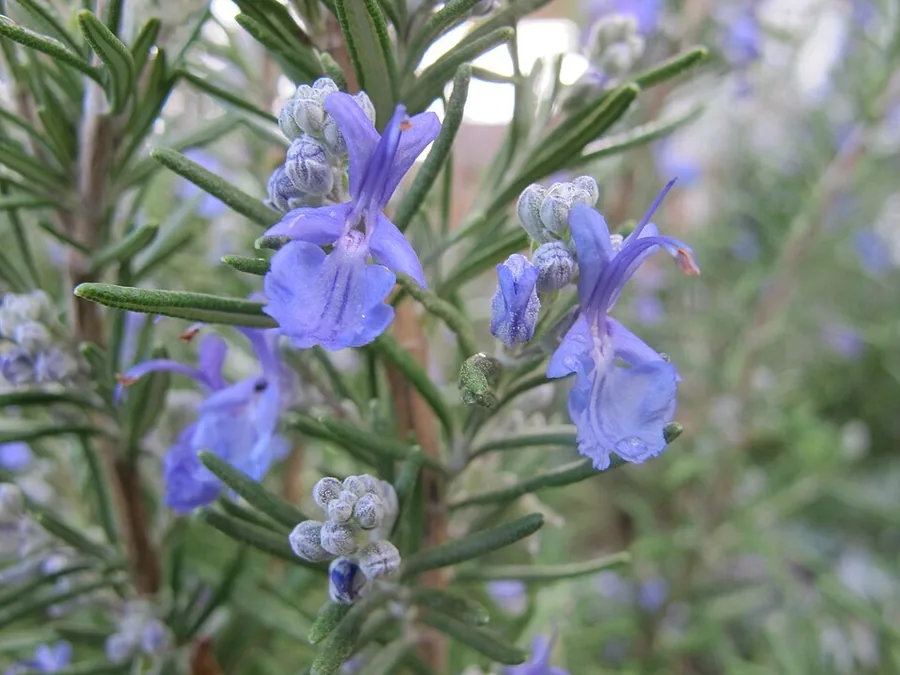
As a perennial, rosemary settles in for the long haul, growing into an easy, structural presence that anchors a herb bed or a row of terracotta pots. Small blue flowers, sometimes pink or white, arrive from late winter into spring to lift the season. In zones 7 through 11 it stays outdoors all year, while colder homes simply bring a pot inside to hold onto a little summer.
The appeal is how little it asks in return for how much it gives. Rosemary suits a hands-off routine, happiest when it is left mostly alone in a bright, dry spot rather than fussed over. Give it sun and sharp drainage, water it now and then, and it becomes the quiet, fragrant backbone of a well-lived kitchen.
Care
The short version: a bright, sunny spot and free-draining soil set the tone, with water only once it has dried well down. Feed it lightly, give it open air, and let it stay on the dry side, and it fits a low-maintenance home with ease.
Light
Rosemary wants full sun, so give it the brightest spot in the home, ideally 6 to 8 hours a day. A part-shade corner will keep it alive but leave it thin and less flavorful, which shows. Indoors, the sunniest window is where it looks and grows its best.
Water
A light touch with the watering can suits both the plant and a busy household. Let the top half of the soil dry out before watering again, roughly every 7 to 14 days, and ease off further once it has settled into its spot. When the schedule slips, rosemary would rather you waited.
Soil
Set rosemary in light, sandy, sharply drained soil for a container that never sulks. It takes poor, rocky ground in stride but resents heavy clay, so work in grit or sand where the soil holds water. A pH of 6.5 to 7.0, close to neutral, keeps it content.
Temperature
Rosemary is comfortable across a wide range, about 10°F to 86°F (-12°C to 30°C), though the tender types feel the cold. Where winters bite, a hardy selection or a pot carried indoors keeps the plant, and its place in the home, through to spring.
Humidity
Dry air suits it, around 30% to 50% humidity, in keeping with its Mediterranean roots. Damp, stagnant corners invite powdery mildew, so a spot with good air movement matters far more than any misting.
Feeding
Rosemary is a light feeder and stays at its most fragrant when kept a little lean. One modest helping of balanced fertilizer or compost in spring carries it through the year. More than that trades the scent you want for soft, sappy growth.
Pruning
A light trim after flowering, plus regular sprigs for the kitchen, keeps rosemary shapely and full. The one rule to respect: avoid cutting into old leafless wood, which is slow to green up again and may not recover, so keep to the leafy growth.
Repotting
Move a potted rosemary up a size every 1 to 2 years, or when roots circle the pot, water runs straight through, or growth stalls. A gritty, fast-draining mix in a pot with real drainage holes keeps it looking its part on the sill.
Size & spacing
24–71 in (60–180 cm) tall
When to plant
Rosemary keeps an unhurried seasonal rhythm that suits a relaxed gardener. Starting seed indoors in late winter is unreliable, so setting out young plants after spring frost is the simpler path to a full pot. In mild climates the harvest never really stops, and small blue flowers arrive from late winter into spring.
Northern hemisphere
Southern hemisphere
Typical months for a temperate climate: start earlier in warm zones, later where spring frosts linger.
- Sow: 10-12 weeks before last spring frost (germination is slow and erratic)
- Plant: after danger of frost has passed in spring
- Harvest: Small blue (occasionally pink or white) flowers in late winter to spring; leafy sprigs can be harvested year-round in mild climates.
Hardiness
USDA hardiness zones: 7–11
Temperature: down to -18°C
Troubleshooting
Most of what troubles rosemary comes down to two things a good spot solves on its own: too much water at the roots and too little air around the leaves. Notice the early signs and a fix is usually quick and painless. Match what you see below, then adjust before the plant loses its good looks.
A plant wilting and yellowing while the soil stays wet
When rosemary flags in damp soil, the trouble is root rot from overwatering or poor drainage, not thirst. Underneath, the roots have gone soft and brown with a sour smell. Stop watering, move it into a gritty, fast-draining mix, and take a few healthy cuttings as insurance if the plant is slipping away.
Fix:
- Stop watering and allow soil to dry
- Repot into fast-draining gritty mix and trim rotted roots
- Take healthy stem cuttings as a backup if the plant is failing
Fine webbing and a dull, speckled cast to the leaves
Faint webbing and pale stippling usually mean spider mites, most at home on indoor and stressed plants in dry winter air. Turn a leaf and you may catch the tiny mites among the threads. Rinse the foliage well, follow with insecticidal soap or horticultural oil, and give the plant more open air.
Fix:
- Rinse foliage with a strong stream of water
- Apply insecticidal soap or horticultural oil
- Increase airflow and reduce plant stress
Brittle brown stems shedding leaves after a cold winter
Bare, brittle wood after a cold spell is winterkill, hardest on tender cultivars grown in marginal zones. Scratch the bark to read it: green beneath means living, dry and brown means gone. Trim the dead stems back to living tissue in spring and let the plant rebuild from what came through.
Fix:
- Prune out dead wood back to living tissue in spring
- Allow plant to regrow from healthy stems
A dusty white film dulling the foliage
That chalky white coating is powdery mildew, a fungus that takes hold where the air sits still around the plant. It turns up most on crowded indoor rosemary in stale winter air. Space the plant out, lower the humidity, and remove the worst of the coated leaves to bring back its clean look.
Fix:
- Improve air circulation and spacing
- Reduce humidity and avoid overhead watering
- Remove and discard affected foliage
Toxicity
For a home shared with pets or small children, rosemary is a reassuring choice: it is non-toxic across the board. The ASPCA lists it as safe for cats, dogs, and horses, and the same herb belongs in your cooking. The only thing to store away from the kitchen is the concentrated essential oil, a separate product that is not for eating.
Safe for
People · Cats · Dogs · Horses · Rabbits · Livestock · Birds
Cats None
Rosemary is safe for cats, and the ASPCA counts it among its non-toxic plants. A curious nibble does no harm, though the strong scent keeps most cats at a polite distance.
Dogs None
Dogs can chew the leaves without trouble, and the herb even appears in some pet foods as a natural preservative. Only an unusually large helping might bring on a mild, passing stomach upset.
Horses Safe
Horses can graze rosemary safely. The aromatic foliage is no favorite of theirs, so they rarely take more than a taste.
Rabbits Safe
A little fresh rosemary suits rabbits as part of a varied diet. Hay and greens should still make up the bulk of what they eat, with the herb as an occasional treat.
Livestock Safe
Goats, sheep, and cattle can browse rosemary with no ill effect. Its pungent leaves tend to keep most stock from eating much of it anyway.
Birds Safe
The herb poses no danger to backyard hens or pet birds. A sprig in the run is harmless, even if it mostly goes ignored.
People Safe
Rosemary is a kitchen staple, safe to cook with and enjoy for adults and children alike. The one thing to keep apart is the concentrated essential oil, a different product and not for eating.
Highly concentrated rosemary essential oil is a separate product that can irritate skin or be harmful if ingested in quantity, but the culinary herb and growing plant are non-toxic.
Varieties
Rosemary comes in forms to suit different corners of a home and garden, from low trailing types that soften an edge to tall upright shrubs, with a few cultivars worth knowing when you choose for cold or for the kitchen.
Arp
One of the most cold-hardy cultivars, holding its own through winters that would set back most rosemary.
Hill Hardy
An upright, cold-tolerant selection that keeps its shape in marginal northern gardens where most rosemary struggles.
Tuscan Blue
A vigorous upright grower with deep blue flowers, prized both for the kitchen and for clipping into low, elegant hedges.
Prostratus
A low, trailing groundcover form that spills gracefully over walls and pots, though it takes cold less kindly than the upright types.
How to propagate
Stem cuttingsEasy
Spring to summer from softwood or semi-ripe growth · 4-8 weeks to root
Cuttings are the surest way to grow your collection of rosemary, and the route most gardeners favor. In spring or summer, take 8 to 15 cm pieces of soft or half-ripe growth, strip the lower leaves, and set them in a gritty, well-drained mix, where they root over 4 to 8 weeks.
SeedDemanding
Indoors 10-12 weeks before last frost · Several weeks to germinate, then a full season to establish
Seed is the slow, patient road to more rosemary. Sow indoors 10 to 12 weeks before the last frost and expect uneven, unhurried sprouting and a modest success rate, with weeks to germinate and a full season before plants establish. It is why most gardeners reach for cuttings instead.
Myths
Rosemary needs frequent watering to stay healthy.
Once it has settled in, rosemary takes drought in stride and wants very little water. Overwatering, not a dry spell, is what does most plants in, so a relaxed hand serves it far better than constant attention.
The rosemary plant is toxic to pets because rosemary oil can be harmful.
There is no need to keep it out of a pet's reach. The ASPCA lists the growing plant and culinary herb as non-toxic to cats, dogs, and horses. Only the concentrated essential oil, a separate product, carries any irritation risk, and that is not what a pet meets in the garden or on the plate.