Herb · Lamiaceae
Summer Savory
Satureja hortensis
A sun-loving kitchen herb that folds a bright sill or bean bed into the daily cooking routine.
Full sun
Every 5–10 days
59–86°F · 15–30°C
50–70 days
Overview
Summer savory belongs to the cook's windowsill and the sunny corner of the kitchen garden, a fast annual from the mint family that earns its place through use rather than display. Grown near where meals happen, it turns beans and stews warmer and more peppery with a few pinched leaves. Its Mediterranean roots set the tone for the setting it likes best: bright, dry, and unfussy, the same easy mood it lends a home. Cooks have kept it close for so long that its oldest nickname is simply the bean herb.
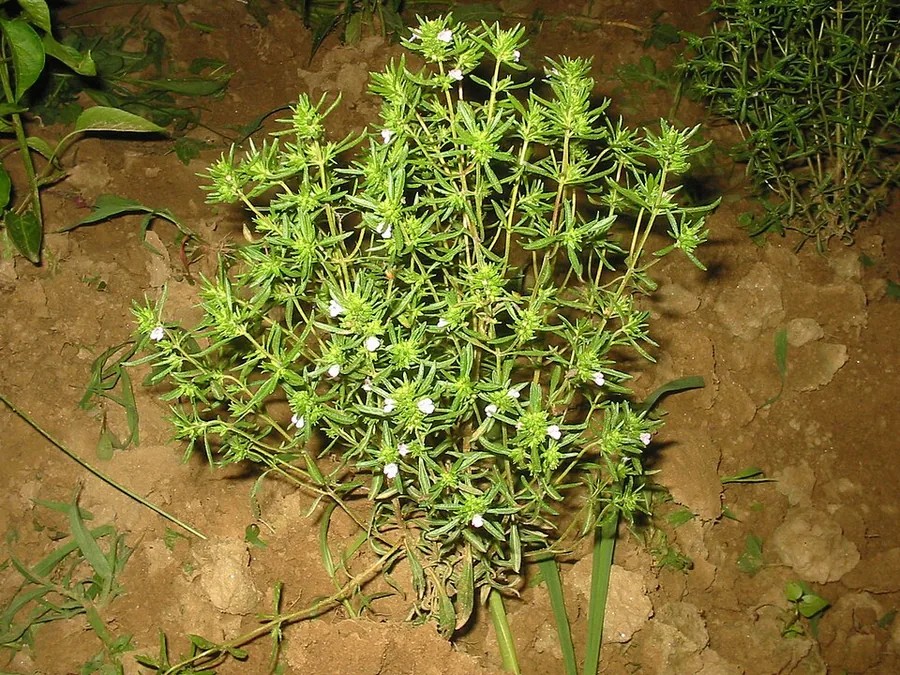
As a plant it stays modest and well-mannered, usually 10 to 18 inches (25 to 45 cm) tall, the kind of tidy scale that suits a pot on a sill, a raised bed edge, or a spot among the vegetables. Come summer it lifts small white-to-pink flowers, a quiet seasonal marker that also signals the moment to gather the leaves, since they are at their best just before those buds open. Frequent picking keeps it full and folds it neatly into the rhythm of everyday cooking.
Little about it asks much in return. It settles in quickly, wants next to no feeding, and takes dry spells in stride once established, which makes it a forgiving companion for a busy household. The two conditions it will not abide are soggy soil and deep shade, so a bright, freely draining spot is the whole secret to keeping it content.
Care
The short version: a bright, sunny spot and freely draining soil, watered with restraint. Feed it sparingly, pinch the tips to keep it shapely, and harvest the leafy tops just before it comes into flower.
Light
Give savory full sun, ideally 6 or more hours a day, the brightest spot the home offers. In dimmer light it loses its shape, stretching and flopping on thin, woody stems. Sun is what keeps it compact, handsome on a sill, and full of flavor.
Water
Let the top of the soil dry between waterings. Keep it lightly moist as it settles in, then ease off, since this Mediterranean herb is at home with dry spells and unhappy in damp ground. A restrained hand with the watering can suits it and the setting alike.
Soil
Plant it in well-drained loam with a little organic matter, though it takes poorer ground gracefully. It sits comfortably across a wide pH range, 6.0 to 8.0, so ordinary garden or potting soil, even on the alkaline side, will do.
Temperature
Savory keeps to warmth, roughly 59°F to 86°F (15°C to 30°C). As a frost-tender annual it waits for the cold to pass before going outdoors, and the first hard freeze quietly closes its season.
Humidity
This is a dry-climate herb that prefers low humidity, around 30% to 50%, which makes it an easy match for most indoor rooms. Give it space and moving air rather than a humid, crowded corner.
Feeding
A light hand with feeding suits it. Savory is a light feeder, content with a small dose of balanced or low-nitrogen fertilizer at planting and little else. Too much nitrogen only softens the growth and dulls the flavor that earns it a place in the kitchen.
Pruning
Pinch and harvest the leafy tips often, before it flowers, to keep the plant shapely and the leaves tender. Removing the flower buds as they form holds the flavor bright, since blooming turns it sharp and the foliage coarse.
Size & spacing
A mature plant stands about 10 to 18 inches (25 to 45 cm) tall with a spread of 8 to 12 inches (20 to 30 cm), a neat footprint for a pot or a bed edge. Leave a little space around each so air moves freely and the roots stay dry.
When to plant
Savory keeps to the warm season and slips away with the first frost. Sow it indoors a little ahead of the last frost or set it out once spring soil has warmed, then let the summer settle into a routine of gathering the leafy tops until flowering brings the season to a graceful close.
Northern hemisphere
Southern hemisphere
Typical months for a temperate climate: start earlier in warm zones, later where spring frosts linger.
- Sow: About 4-6 weeks before the last frost; sow shallowly because light aids germination
- Plant: After all danger of frost has passed and soil has warmed in late spring
- Harvest: Harvest leafy tops just before or as the plant comes into flower; small tubular white-to-pink flowers appear in summer
Hardiness
USDA hardiness zones: 2–11
Temperature: down to -46°C
Troubleshooting
Most of savory's off days come down to a spot that is too wet or too shaded, both easy to rethink. A glance at the roots, stems, and leaves usually tells the story, and a small change of place or habit sets it right. Match what you see below before it takes hold.
Wilting and yellowing above soft, dark roots
The culprit is root rot, brought on by soil that stays wet rather than by thirst. Savory carries a Mediterranean dislike of standing water, so the answer is a better-drained spot and longer gaps between waterings. Caught early in a container, a plant can be lifted and reset into fresh, fast-draining mix and recover its footing.
Fix:
- Improve drainage and reduce watering frequency
- Move container plants to a sunnier, better-drained spot
- Replant in well-drained soil if rot is limited
A sticky sheen and small insects on new growth
The small soft insects gathering on the tips are aphids, and the sticky sheen they leave is honeydew. A firm rinse of water clears most of them, and because this is a kitchen herb, simply harvesting the worst tips for the table is often the tidiest fix. Insecticidal soap is worth reaching for only if the problem lingers.
Fix:
- Rinse off insects with a strong spray of water
- Harvest and use affected tips
- Use insecticidal soap only if needed on an herb intended for eating
Stretched, floppy stems turning bare and woody
Long, drawn stems mean the plant has gone leggy, reaching for light it is not getting or missing regular pinching. Shifting it into full sun of 6 or more hours a day and taking the tips often coaxes it back into a fuller shape. Steady harvesting is what keeps it compact and worth a place on the sill.
Fix:
- Move to full sun (6+ hours)
- Pinch and harvest tips frequently to promote branching
Flavor slips away as the flowers arrive
This turn is simply flowering, the plant moving from leaf to seed as the season advances. Flavor sits at its finest in the leafy tops just before the buds open and fades once bloom begins, so gather at first bud and pinch the buds away to stretch the harvest. A fresh sowing every 3 to 4 weeks keeps young leaves on hand for the kitchen.
Fix:
- Harvest leafy tops before or at first bud
- Pinch off flower buds to extend the leaf harvest
Toxicity
For a home shared with pets, savory is a reassuring choice: a culinary herb that is safe from every angle. Its leaves flavor the cooking and pose no threat to cats, dogs, rabbits, or grazing animals that wander past for a taste. It can sit openly on a sill or in a bed with nothing to worry about.
Safe for
People · Cats · Dogs · Horses · Rabbits · Livestock · Birds
Cats None
Safe for cats. A curious paw or a stray nibble at this kitchen herb comes to nothing.
Dogs None
Safe for dogs. A dog that grazes past it will meet nothing in the leaves to cause harm.
Horses Safe
Horses are safe near it, the foliage they might browse carrying no toxins.
Rabbits Safe
Rabbits can share in the leaves without concern, though a varied diet still suits them.
Livestock Safe
Cattle, goats, and sheep may graze it freely, with no ill effect to speak of.
Birds Safe
Pet birds and backyard hens are at ease around it, since it holds nothing toxic.
People Safe
A treasured kitchen herb, safe to enjoy, its leaves lending warmth to beans, stews, and roasts.
Aromatic edible herb that is safe to handle and grow around people and pets.
Varieties
Two savories are worth knowing as you plan a herb corner, the tender annual grown in most gardens and its hardier perennial relative.
Winter savory (Satureja montana)
Its hardier perennial relative keeps its leaves through the year across roughly USDA zones 5 to 10 and brings a stronger, slightly bitter note, standing in for the milder annual whatever the season.
How to propagate
Savory is among the easiest herbs to raise from seed, and a few staggered sowings keep the kitchen supplied with tender leaves right through the season.
SeedEasy
Sow indoors about 4-6 weeks before the last frost, or direct-sow outdoors after frost danger passes; sow shallowly because light improves germination. · Germinates in roughly 1-2 weeks and is typically harvestable within about two months of sowing.
Few herbs reward a beginner as readily from seed. Start it indoors about 4 to 6 weeks before the last frost, or sow it straight into warm spring soil once the cold has passed, pressing the seed in shallow since a little light aids sprouting. Seedlings appear within a week or two, and leaves are ready for the kitchen in about two months. A fresh sowing every 3 to 4 weeks keeps the tender harvest, and the routine, going all season.
Myths
Setting summer savory beside beans will keep bean beetles at bay.
Savory earns its bean herb name at the table, where it flatters bean dishes, not out in the bed as a garden guardian. The notion that it repels bean beetles is a separate and shakier idea. Extension guidance cautions that companion-planting charts like this are often not supported by research.