Ornamental · Poaceae
Northern Sea Oats
Chasmanthium latifolium
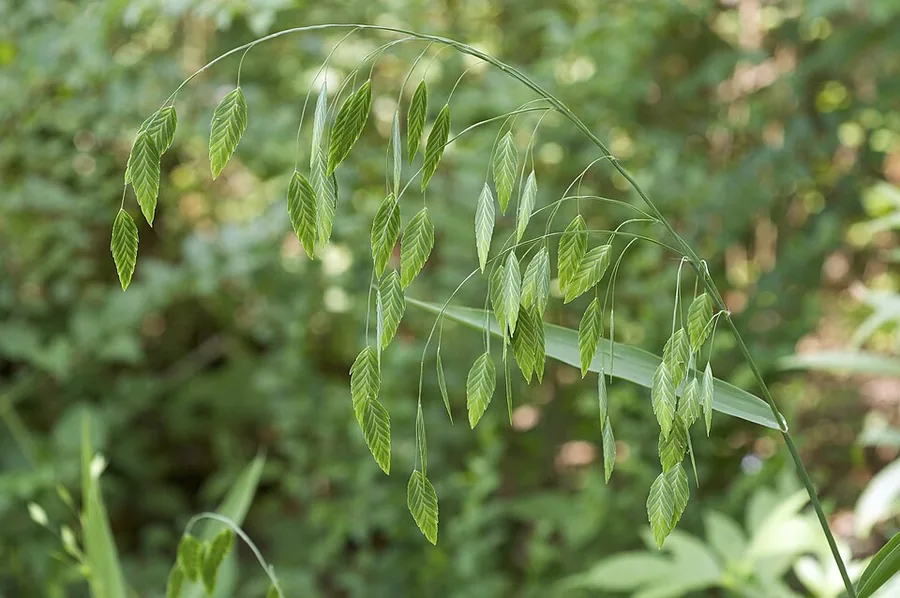
The quiet grace note of the shaded border, trailing flat oat-like seed heads from late summer well into the stillness of winter.
Partial shade
Every 3–7 days
USDA 3–9
2–5 ft · 0.6–1.5 m
Overview
Some corners of a garden ask for softness rather than statement, and that is exactly where northern sea oats belongs. A clumping native grass at ease in the dappled shade of a woodland edge, it settles into the difficult, low-lit places where showier plants lose their nerve. Its seed heads are the reason to plant it, flat oat-like spikelets swinging from arching stems, and they carry a long arc of color, green through summer, coppery bronze into autumn, then tan against the bare bones of winter.
As a companion to a space, it is wonderfully unfussy. It reads well in full sun or deep shade, tolerates the heavy or thin soils most beds present, and settles into a damp, shaded corner as if it were made for it, across a wide sweep of the country. Give it steady moisture and it looks the part, since a dry, sunny position leaves the edges browned and the effect undone.
There is a caveat that shapes how you use it. Left to its own devices it self-sows freely and drifts on short rhizomes, so a single clump can broaden into a naturalized sweep over a few seasons. In a loose, informal setting that generosity is a gift. In a tidy, composed border, cut the seed heads before they ripen and keep the planting to the shape you intended.
Care
The short version: part shade and steady moisture show it at its best, though it adapts to nearly any light and soil a garden offers. Cut the clump to the ground in late winter, and clear the seed heads before they drop wherever you want a composed, contained planting.
Light
Few grasses give a designer this much latitude, since it holds up from full sun to full shade. Part shade is where it looks most composed, the foliage greenest and the form most graceful. A sunny position works too, provided the watering keeps pace, or the leaves scorch and lose their poise.
Water
This is a plant for the moist, shaded corner most gardens struggle to fill. Keep the soil evenly damp, lean wetter rather than drier, and it will hold its looks, and it takes wet ground and brief flooding without complaint, so a low, boggy spot becomes an asset. Sunnier placements dry out sooner and want watering more often.
Soil
It asks nothing precious of the ground, settling into clay, loam, sand, or wet, heavy soil that frustrates finer plants. Average to moist, fertile, well-drained soil brings out its best form, though it makes a graceful showing in far less. There is no pH to plan around.
Temperature
It suits gardens almost anywhere, comfortable from -40°F to 100°F (-40°C to 38°C), a range that spans most of the country. Hard winters leave no mark on it, and it rises again each spring to take its place in the border.
Humidity
Ordinary outdoor air is all the humidity it needs, so it asks for no special attention on that front. The look of the planting rests instead on keeping the roots moist through the heat of summer.
Feeding
This is a light feeder that flatters a low-maintenance planting. An optional touch of balanced fertilizer or compost in spring is plenty, and richer conditions only push it to spread past the lines you drew for it.
Pruning
Give the clump a single clean cut to the ground in late winter to early spring, before new growth breaks, and the bed starts the season fresh. Where a tidy look matters, remove the seed heads before they ripen so the planting keeps to its intended footprint.
Repotting
This belongs in the ground rather than a container, so pot life is not part of the picture. The equivalent is dividing the clump every few years, once the center thins or a crowded planting begins to lose its shape.
Size & spacing
Plan for a clump around 2 to 5 feet (60 to 152 cm) tall and 12 to 30 inches (30 to 76 cm) across. Leave each one space to arch and sway, and set it knowing it will reach a little past the room you allow.
When to plant
The rhythm of this grass rewards a little planning. Sow the seed in late winter to spring after a cold, moist chill, set young plants into the border in spring once frost has passed or again in fall, and let the seed heads carry the display from late summer through the quiet months of winter.
Northern hemisphere
Southern hemisphere
Typical months for a temperate climate: start earlier in warm zones, later where spring frosts linger.
- Sow: Late winter to early spring; seed benefits from cold-moist stratification before sowing
- Plant: Spring after frost, or fall
- Harvest: Flowers August to September; showy flat oat-like seed heads emerge green in summer, turn coppery-bronze then tan and persist into winter
Hardiness
USDA hardiness zones: 3–9
Temperature: down to -40°C
Troubleshooting
Northern sea oats stays free of serious pests and diseases, which leaves only two things to keep an eye on, both about how it behaves in a setting: it spreads beyond its intended place, and it scorches where a sunny spot runs dry. Match the look below and adjust early, while the planting still holds its shape.
Seedlings drifting well beyond the border
The planting has become a prolific self-seeder, its flat oat-like heads scattering ripe seed far past the original clump, while short rhizomes broaden the base, quickest in moist, fertile soil with some sun. To hold the composition, cut and clear the seed heads before they ripen, lift the young volunteers while they pull free easily, and divide the clump to keep it to its lines.
Fix:
- Cut and remove the seed heads before they ripen and drop to stop new seed
- Pull or dig out unwanted volunteer seedlings while young; they pull easily
- Divide and reduce the clump to contain rhizomatous spread
- Keep stalks cut down low to gradually starve out an established colony
Foliage browning and losing its looks in midsummer
This is leaf scorch, the mark of a hot, dry, full-sun spot with too little water at the roots. A clump set in part shade with steady moisture keeps its color and barely shows it. Water sun-grown plantings more often and more deeply, mulch to hold that moisture, and move the worst affected into dappled shade where they will read well again.
Fix:
- Provide more frequent, deeper watering for sun-grown plants
- Apply mulch to conserve soil moisture
- Site or transplant into part shade with moist soil for best appearance
Toxicity
For a household that shares its garden with pets and children, this grass is an easy choice, because it is not poisonous. It holds no toxins for cats, dogs, horses, livestock, birds, or people. The only footnotes are gentle ones: a pet that grazes a mouthful may have a passing upset stomach, as with any grass, and grass pollen can trouble those prone to allergies.
Safe for
People · Cats · Dogs · Horses · Rabbits · Livestock · Birds
Cats None
An easy plant to live with where a cat roams. A cat that grazes a good deal of the foliage may bring it back up, the same harmless response any grass can prompt.
Dogs None
Safe company for a dog in the garden. Bolting a large mouthful might bring on a little vomiting, but nothing beyond what a turn on the lawn would cause.
Horses Safe
A harmless grass to have near horses, carrying no toxins should they graze a little where it grows.
Rabbits Safe
Rabbits can browse the leaves without harm, though as with any new green it is kind to introduce it slowly so their digestion adjusts.
Livestock Safe
Cattle, goats, and sheep can graze it freely, since it holds nothing that would trouble them at pasture.
Birds Safe
A welcoming plant for garden birds, and many will work the ripe seed heads for the small grain within.
People Safe
No hazard to the people who share the garden. The single caveat is grass pollen, which can stir allergies in those who are sensitive.
As with any grass, pets that nibble a lot of foliage may vomit or have mild stomach upset, and grass pollen can be an allergen for sensitive people; the plant itself is not poisonous.
Varieties
The plain species carries most gardens beautifully, but one named selection offers a different note worth considering.
River Mist
River Mist is the white-variegated selection, its blades marked with vertical white and green stripes and its seed heads whitish, a lighter, cooler presence than the plain species with its solid blue-green foliage and green heads.
How to propagate
Two easy methods will give you more of it, and the plant tends to begin the first on its own.
SeedEasy
Sow in late winter to spring; cold-moist stratification improves germination · One to two growing seasons
Sow seed in late winter to spring, after a spell of cold, moist chilling to rouse it. In most gardens the grass self-sows so readily that the simplest approach is to lift the volunteer seedlings it produces on its own and place them where the design calls for them, and a new plant settles into its role over one to two growing seasons.
DivisionEasy
Spring or early fall · One growing season
Lift and divide an established clump in spring or early fall, a tidy way to gain new plants while reining in a spreading one. Each division finds its feet within a single growing season, so the planting rounds back into shape quickly.
Myths
Northern sea oats is the protected dune grass it is illegal to gather at the beach.
The two plants share only a name. The one for the shaded garden is Chasmanthium latifolium, native to inland streambanks and woodland. The protected seaside plant is a separate, unrelated species, true sea oats (Uniola paniculata), a dune stabilizer that many coastal states place off limits to collection. Bringing the inland kind into a garden crosses no such line.