Herb · Lamiaceae
Shiso
Perilla frutescens
A pot of shiso brings fragrant, summer-long leaves to the kitchen, ready for pickles, garnishes, and wraps.
Full sun
Every 2–4 days
59–86°F · 15–30°C
70–90 days
Overview
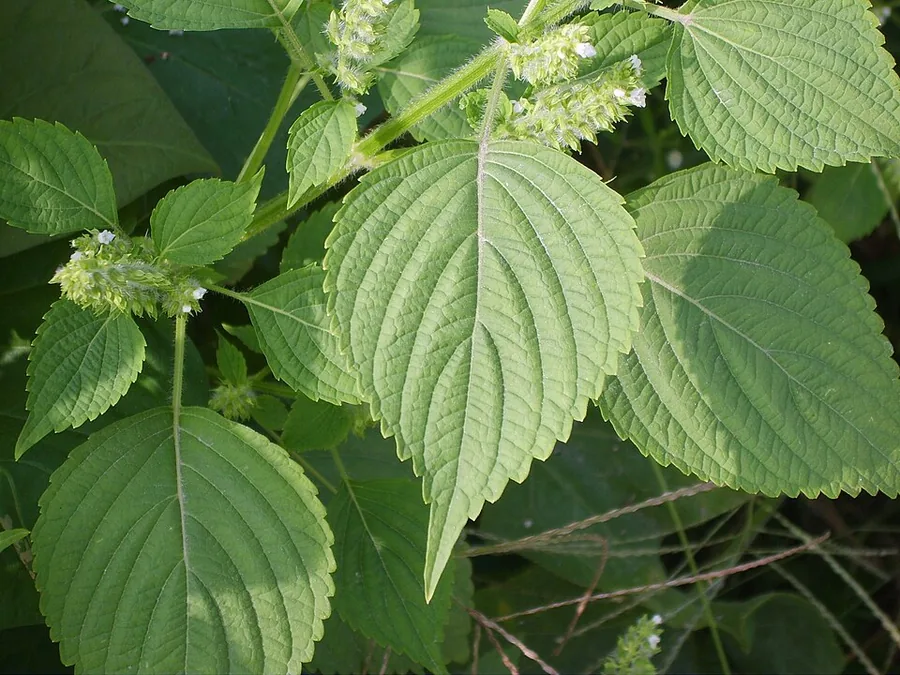
Shiso is a fragrant member of the mint family, grown for its leaves and the way it folds into daily cooking rather than for any show of flowers. It lives out a single warm-season year, rising from seed to a leafy, knee-high plant that suits a bright kitchen corner or a spot by the back door. Across Japan, Korea, and Vietnam it is a fixture of the table, served fresh, pickled, and wrapped around a meal.
It arrives in red, green, and ruffled bicolor forms, and the one you choose sets the mood as much as the menu. Red shiso lends a jewel tone to the pickle jar, while the green kind keeps things fresh and clean on the plate as a herb and garnish. All of them keep to the same easy routine, so a mixed planting looks considered without asking any more of you.
For all its charm, shiso carries two things worth planning around. Let it flower and it will bolt and lose its flavor, so a habit of regular harvest keeps both the leaves and the display at their best. It also sows itself with abandon, and because the same plant is a proven poison to grazing cattle and horses, where you keep it is a decision as much as a placement.
Care
The short version: set it in full sun to light shade, keep the soil evenly moist, and pinch it often so tender leaves keep coming and flowers never steal the show.
Light
Shiso is at its best in full sun, the kind of bright, open spot that suits a kitchen window or a patio edge, and it takes partial shade gracefully where hot afternoons would scorch the leaves. The more light it draws, the richer the leaf color and aroma it brings to the table.
Water
Keep the soil evenly moist but never waterlogged, which in warm weather usually means a drink every 2 to 4 days. Let it go dry and the leaves flag and the plant hurries to flower, so a steady watering routine is what keeps it looking and tasting its part.
Soil
Give shiso rich, well-drained loam worked with plenty of organic matter, the sort of easy, fertile mix that keeps a container looking full. It leans slightly acidic, so a pH between 5.5 and 6.5 suits it well.
Temperature
Shiso is content across 59°F to 86°F (15°C to 30°C) and comes into its own in the warmth of summer. Frost is its undoing, so let the season settle before moving it outdoors to its spot.
Humidity
Everyday humidity in the 40% to 60% range keeps shiso comfortable, the same air most summers offer without any effort. A place with gentle airflow does more for it than any exact reading.
Feeding
A monthly feed through spring and summer, with a balanced fertilizer or a diluted liquid feed, keeps the leaves coming for the kitchen. Keep a light hand with nitrogen, since too much trades aroma for a flush of soft, flavorless growth.
Pruning
Pinch the growing tips often and shiso answers with a fuller, bushier shape and a steady supply of tender leaves. Take off the flower spikes as they rise to delay bolting and keep the plant looking its best on the sill or the patio.
Repotting
Because shiso is grown fresh from seed each year, it never really needs repotting. When a container plant shows circling roots, quick wilting, or early bolting, it has outgrown its home and is ready to be replaced or given more room.
Size & spacing
Shiso settles at 18 to 35 inches (45 to 90 cm) tall with a spread of 12 to 18 inches (30 to 45 cm), an easy scale for a pot or a bed edge. Give each plant that much space and the planting keeps an open, airy look.
When to plant
Shiso keeps to the rhythm of a warm season and will not abide a frost. Start seeds indoors 6 to 8 weeks before the last frost, move the plants outdoors once the cold has lifted and the soil has warmed, then gather leaves all summer while pinching back the flower spikes to keep the season going.
Northern hemisphere
Southern hemisphere
Typical months for a temperate climate: start earlier in warm zones, later where spring frosts linger.
- Sow: 6 to 8 weeks before the last spring frost; surface-sow and do not cover, as seed needs light to germinate
- Plant: After all danger of frost has passed and soil has warmed in late spring
- Harvest: Harvest leaves through summer once plants are established; pinch flower spikes to prolong harvest. Late-summer flowering and seeding is when perilla-ketone concentration and livestock-poisoning risk peak.
Hardiness
USDA hardiness zones: 2–11
Temperature: down to -46°C
Troubleshooting
Most of what troubles shiso plays out on the leaves, whether a pest has been at them or the plant is turning to flower and the foliage has gone small and dull. A watchful eye and an early response keep the planting looking and tasting its best. Find the sign that fits below, then set it right.
Flower spikes rising as the leaves grow small and dull
This is bolting, the turn from leaf to flower that comes as the days shorten or heat and stress take hold. The fresh leaves arrive small, tough, and short on the flavor that makes shiso worth growing. Pinch out the flower spikes the moment they appear, harvest more often to draw out new growth, and start a second sowing so tender leaves are always at hand.
Fix:
- Pinch out flower spikes as soon as they appear
- Harvest leaves more frequently to encourage vegetative growth
- Make successional sowings for a continuous supply of tender leaves
Stray seedlings appearing well beyond the original planting
Allowed to flower and seed, shiso becomes a self-sowing wanderer that scatters volunteers across the garden and past its bounds. It has settled into pastures and woodland edges in parts of the country, so the spread reaches well beyond a single bed. Cut the flower spikes before the seed ripens, lift the young volunteers while they come away easily, and never compost or discard seeding plants where they might take hold in the wild.
Fix:
- Remove flower spikes before seed set
- Pull volunteer seedlings while young
- Do not compost or dump seeding plants where they can naturalize
A fine peppering of shot-hole pits on the newest leaves
The tidy little pits are the mark of flea beetles, small dark beetles that leap out of reach at the first movement. They prefer soft new growth, so the youngest leaves show the damage first. Lay a row cover over seedlings until they firm up, keep the surrounding bed clear of weeds, and let strong, steady growth carry the plant past the nibbling.
Fix:
- Cover young plants with floating row cover until established
- Remove nearby weed hosts
- Apply an approved insecticidal product only if damage is severe and the crop is not being harvested for food within the label interval
Scalloped edges and silvery trails after a damp stretch
This is the work of slugs and snails, night feeders that chew the leaf edges into ragged scallops while the household sleeps. The tell is a ribbon of dried slime catching the morning light on leaf and soil. Step out after dark to gather them, pull back any heavy mulch at the base, and ease off the watering so the ground can dry between drinks.
Fix:
- Hand-pick at night
- Set out shallow traps and remove mulch harboring slugs
- Use iron-phosphate baits where appropriate
Toxicity
On the plate, shiso is a safe and celebrated herb, a pleasure to cook with and nothing to fear. Beyond the kitchen it changes character: Perilla frutescens holds perilla ketone, a lung toxin that brings severe, often fatal breathing trouble to horses and cattle that graze it, with the danger at its height in late summer. Keep it well away from pastures, hay, and grazing animals.
Toxic to
Cats · Dogs · Horses · Rabbits · Livestock · Birds
Safe for
People
Cats Mild
A cat that samples a leaf may drool a little or seem briefly off, but nothing serious tends to follow. Keep a household cat that chews the plant in view and leave fresh water nearby.
Dogs Mild
A dog that chews a leaf might drool or pass a soft stool that soon settles on its own. Guide a curious dog away from the plant and all should be well.
Horses Toxic
A horse that grazes perilla can fall into severe respiratory distress, breathing fast and open-mouthed as fluid gathers in the lungs. The harm comes on hard and is often fatal, so keep horses well away from the plant, above all once it flowers and seeds in late summer.
Rabbits Caution
Since perilla ketone is a lung toxin in grazing mammals, a rabbit nibbling the foliage faces a genuine risk rather than a treat. Keep it off the menu and offer greens already known to be safe.
Livestock Severe
Cattle, goats, and sheep that graze perilla mint can develop acute respiratory distress, open-mouthed panting, and atypical interstitial pneumonia as the perilla ketone overwhelms the lungs. The danger peaks in late summer while the plant flowers and seeds, and the outcome is often fatal. Clear it from pastures and hay before animals can reach it.
Birds Caution
Records for birds are thin, but the same lung toxin makes shiso an unwise companion for poultry or pet birds. Keep them clear of the foliage and seed heads to be safe.
People Leaves safe
Shiso leaves are a beloved fixture of East Asian kitchens, eaten fresh, pickled, and as a garnish, and they are safe for people. The toxin that troubles grazing animals stays a concern of the pasture, not the plate.
Safe to handle and harvest for cooking; the concern is ingestion by grazing livestock, not skin contact.
Helpline numbers

United States
ASPCA Animal Poison Control: (888) 426-4435 (fee applies)

United Kingdom
Animal PoisonLine: 01202 509000 (fee applies)

Australia
Animal Poisons Helpline: 1300 869 738
Varieties
Shiso comes in a few distinct forms, and the choice is partly practical and partly a matter of taste: color for the pickle jar or fresh green leaves for the plate.
Red/Purple shiso (akajiso)
Its deep red-purple leaves are rich in anthocyanins, the very quality that makes it a cook's choice for coloring and flavoring pickles such as umeboshi.
Green shiso (aojiso)
The bright green flat leaves offer a softer citrus-anise note and belong on the plate fresh, as both a herb and a garnish.
Bicolor / ruffled (chirimen) types
The crinkled, two-toned leaves, green above and purple beneath, earn a place at the table and in the ornamental bed in equal measure.
How to propagate
Shiso is an easy thing to raise from seed, and once it has found its place it tends to return on its own the following year, often more freely than planned.
SeedEasy
Start indoors 6 to 8 weeks before last frost, or direct-sow after the soil warms in late spring · 2 to 3 weeks to germinate and several more weeks to reach harvestable size
Shiso comes easily from seed, whether started indoors 6 to 8 weeks before the last frost or sown straight into warm soil in late spring. Press the seed onto the surface and leave it uncovered, since it needs light to sprout, and a cool spell beforehand encourages it. Allow 2 to 3 weeks for germination and a few weeks more to reach picking size, after which it will return on its own for years.
Myths
Because people eat shiso, the whole plant must be safe for every animal.
The leaves are indeed a kitchen pleasure, yet Perilla frutescens holds perilla ketone, a documented cause of fatal lung poisoning in grazing cattle and horses. What graces your table has no place in a pasture.
Shiso keeps politely to the spot you give it.
In practice it sows itself hard and has naturalized as an invasive weed across the southeastern and central United States, drifting into pastures and woodlands. Cutting the flower spikes before the seed sets is what keeps it within its welcome.