Shrub · Anacardiaceae
Smoke Bush
Cotinus coggygria
With full sun and sharp drainage, smoke bush drapes a garden in summer haze and turns fiery by fall.
Full sun
Every 7–14 days
USDA 4–8
10–15 ft · 3–4.6 m
Overview
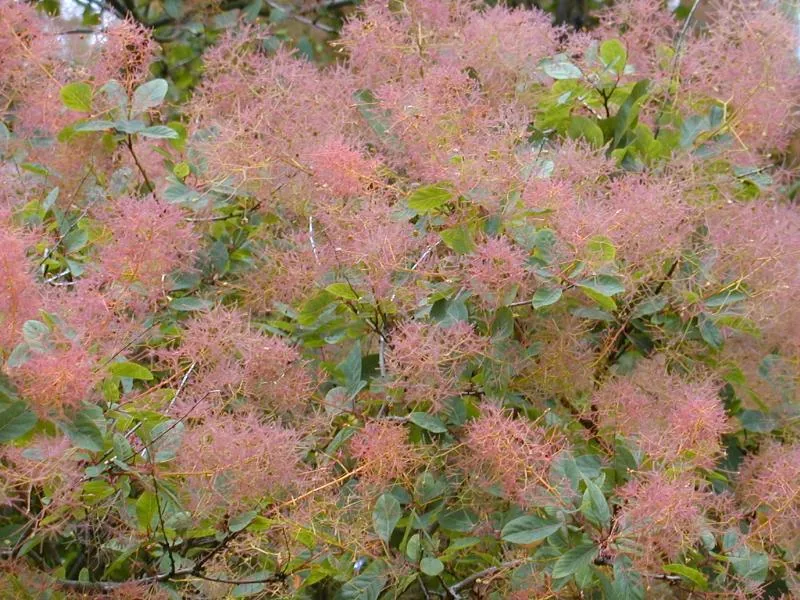
Few shrubs set a mood the way smoke bush does. Through the warm months a soft haze hovers over it, lending a border that dreamy, half-lit quality usually reserved for grand old gardens. It is a fast, easygoing deciduous shrub from the cashew and sumac family, and given room to reach its full 10 to 15 feet (3 to 4.5 m), it becomes an anchor a whole planting can gather around.
Placed with intention, it earns its keep across the seasons. Set it where the low afternoon light can pass through the smoke and the effect turns almost theatrical, a natural screen at the back of a bed or a soft division between one part of the garden and the next. Come autumn it shifts register entirely, glowing in oranges and reds that carry the view through to the first frost, a living centerpiece framed by a window or a terrace.
For all its drama, it fits an unfussy life. It wants little beyond sun, poor soil, and sharp drainage, which makes it a natural for a low-maintenance garden or a weekend retreat where no one is there to coddle it. Keep it clear of soggy ground and it asks for nothing more than the occasional admiring glance from the kitchen window.
Care
The short version: give it a sunny, sharply drained spot and a deep drink through its first season, then let it settle into the background of your garden. It shrugs off dry spells, rarely wants feeding, and needs only a pruning style chosen for the look you prefer, smoke or color.
Light
A spot in full sun rewards you with the richest leaf color and the most generous haze, which is where this shrub looks its best against an open sky. Partial sun is tolerated, but in real shade the purple forms drift toward green and the smoke grows thin, dimming the very effect you planted it for.
Water
Through its first season the soil should stay evenly moist while the plant finds its footing in your garden. After that it is drought tolerant, content with a deep soak every 7 to 14 days and happy to look after itself between visits. The one thing it will not abide is wet, poorly drained ground, which quietly rots the roots.
Soil
This is a shrub that thrives on restraint. An average, well-drained loam suits it, and it settles just as gracefully into poor, rocky ground where more demanding plants would falter. It accepts a wide pH from 5.5 to 8.0, asking only that the drainage stay sharp.
Temperature
Its easy constitution suits gardens in a broad range of climates, holding steady from -29°F to 95°F (-34°C to 35°C). That reach is what lets it feel at home in temperate borders from cold country to warmer terraces.
Humidity
Ordinary outdoor air is all it asks, so humidity is nothing to manage. What matters more to the look of the plant is open air around it, since crowded, damp foliage is where leaf spot and rust take the shine off.
Feeding
This is a shrub best left a little hungry. A light spring feeding of balanced fertilizer is the most any plant wants, and most want none, because rich ground pushes soft, leggy growth that undoes its handsome shape.
Pruning
How you prune sets the whole character of the plant. A light trim in early spring preserves the summer haze, which forms on old wood. To bring out the deepest foliage color on a purple cultivar, coppice hard in late winter to 6 to 8 inches, trading a season of smoke for a bold new flush of leaves.
Repotting
Smoke bush belongs in open ground and rarely suits life in a container. If one does hold court on a terrace in a pot, move it up only when the roots begin to circle or water slips straight through, the quiet signs it has outgrown its setting.
Size & spacing
Plan for presence. A mature smoke bush fills 10 to 15 feet (3 to 4.5 m) in height and spread, so give it a clear stage away from paths, walls, and lesser plants, and let it hold the composition without crowding its neighbors.
When to plant
A dependable shrub for zones 4 to 8, smoke bush is set out in spring or fall once hard frost has passed, timed so it can ease into its place before the season turns. Its signature haze gathers from late spring through summer, with the flowers arriving May to July ahead of the show.
Northern hemisphere
Southern hemisphere
Typical months for a temperate climate: start earlier in warm zones, later where spring frosts linger.
- Plant: Spring or fall, after the last hard frost
- Harvest: Smoke display from late spring through summer (flowers May to July)
Hardiness
USDA hardiness zones: 4–8
Temperature: down to -34°C
Troubleshooting
An established smoke bush rarely disturbs the peace of a garden, and the few issues that surface announce themselves plainly. A glance at the branches for sudden wilt and the leaves for spotting is enough to stay ahead of them. Should something look off, the notes below help you place it and respond in good time.
Half the shrub wilting and fading away
When one side of the plant wilts, yellows, and dies back for no clear reason, the likely cause is verticillium wilt, a soil fungus that blocks the plant's water channels from within and lets whole limbs fail. Cut into a struggling stem and dark streaks show in the wood beneath the bark. No spray will undo it, so the answer is careful hygiene: remove the dead wood, disinfect tools between cuts, and lift a plant beyond saving rather than replant the same ground.
Fix:
- Prune out and destroy affected branches, disinfecting tools between cuts
- Improve drainage and avoid overwatering
- Remove and destroy severely infected plants; do not replant susceptible species in the same spot
Small hard crusts along the stems
The little gray-to-brown crusts on the bark are San Jose scale, sap-feeding insects sheltering under a hard shell that slowly sap a branch's strength. A gentle scrape lifts one free. Cut out the worst-affected wood, then coat what remains with a dormant horticultural oil in late winter, before the season stirs them back to life.
Fix:
- Prune out and destroy heavily infested branches
- Apply dormant horticultural oil in late winter to smother overwintering scale
Freckled foliage or rusty undersides
Damp, crowded conditions invite leaf spot and rust, which mark the leaves with spots or leave orange-brown pustules beneath. It reads worse than it is and seldom troubles a settled shrub. Clear away the fallen leaves, open the plant to better air, and keep water off the foliage to restore its clean look.
Fix:
- Rake up and dispose of fallen infected leaves
- Improve air circulation and avoid overhead watering
Toxicity
For a household that shares its garden with pets and children, smoke bush is a reassuring choice, since it is not toxic. It sits nowhere on the ASPCA's poison lists, and no animal need be kept from it. The only footnote concerns people, as the sap may leave a mild rash on anyone sensitive to poison ivy, so gloves are a sensible companion at pruning time.
Safe for
People · Cats · Dogs · Horses · Rabbits · Livestock · Birds
Cats None
Smoke bush is not on the ASPCA's toxic list, so a cat that samples a leaf in passing has nothing to fear from it.
Dogs None
A dog can wander past or nibble the foliage with no ill effect, since the shrub holds no toxin to trouble one.
Horses Safe
No case of poisoning in horses has been linked to smoke bush, so a stolen mouthful at pasture is no cause for concern.
Rabbits Safe
Rabbits that browse the lower branches come to no harm, as the plant carries nothing that could hurt them.
Livestock Safe
Cattle, goats, and sheep may share a paddock with this shrub with no risk of poisoning whatsoever.
Birds Safe
Birds that nest or forage among its branches are safe from the leaves, the stems, and the soft seed heads alike.
People Safe
It is an easy shrub to live beside, though anyone sensitive to poison ivy may find the sap raises a mild rash, so gloves are worth keeping close at pruning time.
As a member of the Anacardiaceae (cashew and sumac family), contact with the sap may cause mild contact dermatitis in sensitive people, especially those allergic to poison ivy. Wear gloves when pruning if you are sensitive.
Varieties
Almost every smoke bush offered today is a named cultivar, chosen for the color it lends a planting or the fullness of its summer haze. These are the ones most likely to find a place in a garden.
Royal Purple
A compact purple-leaved favorite whose foliage opens maroon-red in spring and deepens to a near-black purple that holds its richness all summer.
Golden Spirit ('Ancot')
A luminous golden-yellow selection that warms to orange and red in autumn, a bright counterpoint to the familiar green and purple forms.
Young Lady
A compact green-leaved form prized for the clouds of smoky panicles it offers freely, even while still young.
Velvet Cloak
A larger shrub in deep purple, set off by big pink panicles, that can rise to the very top of the size range.
How to propagate
There are a few graceful ways to raise more smoke bushes, though only cuttings and layers keep a cultivar true to its parent. For a gardener who simply wants another plant or two for the border, layering is the calm, reliable route.
Stem cuttingsModerate
Early to mid summer · Several weeks to root; a full season to establish
Take softwood or semi-hardwood cuttings from the current season's growth in early to mid summer. Allow them several weeks to root and a full growing season to settle, a patient project that repays the wait.
LayeringEasy
Spring to early summer · One growing season or more to root
The gentlest method is layering in spring or early summer. Draw a low, supple branch down to the soil, pin it in place, and let it root across a season or more before parting it from the parent.
SeedModerate
Fall sowing or after cold stratification · Slow; seedlings of cultivars will not come true to type
Seed is best reserved for the plain species, sown in fall or given a cold spell first. Progress is slow, and seedlings of named cultivars will not match the parent, so those are better raised from cuttings or layers.
Myths
The pink haze is a canopy of flowers.
The true flowers are small, yellowish, and easily overlooked. The smoke is the spent flower stalks, which draw out into long, feathery hairs that turn from smoky pink to purplish pink as the summer unfolds.
A hard cut every spring makes the most smoke.
Because the smoke forms on old wood, an annual hard cut swaps that haze for foliage instead. Coppice in late winter and the reward is vivid leaves but no smoke that season, which is exactly why the purple cultivars are so often grown for color rather than bloom.