Shrub · Hypericaceae
Shrubby St. John's Wort
Hypericum frondosum
Effortless structure and a wash of bright yellow summer flowers, from a native shrub that carries a border with almost no upkeep.
Full sun
Every 7–14 days
730–1095 days
USDA 5–8
Overview
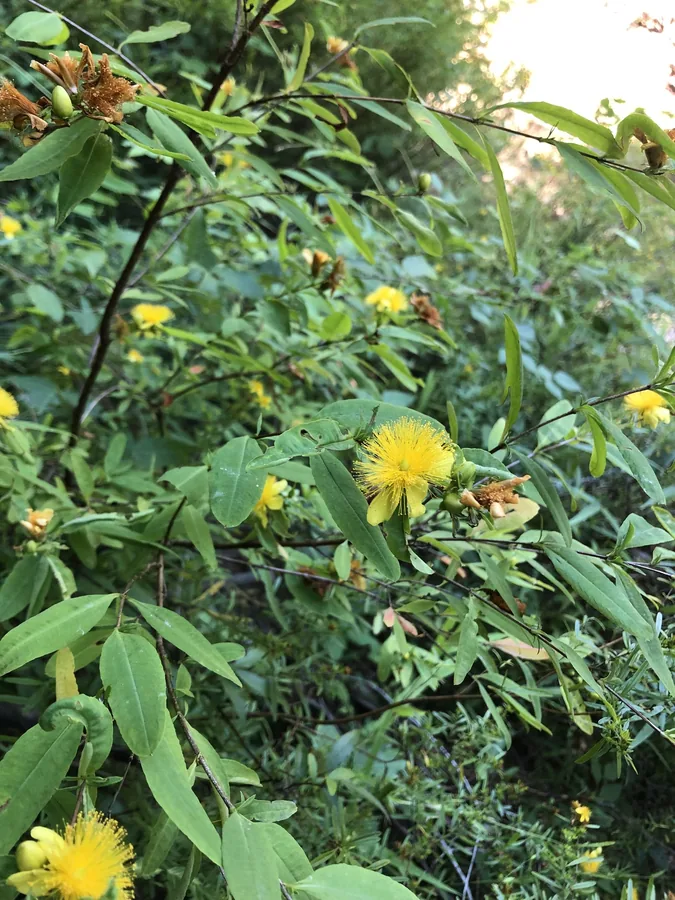
Shrubby St. John's wort earns its keep as a settled anchor in a sunny border, where its long early-summer show of bright yellow flowers over golden centers warms the whole scheme. The plant holds a calm, rounded form roughly 3 to 4 feet tall and wide, its cool blue-green tone and softly peeling reddish-brown stems giving a composed, unfussy presence. Massed in a drift or repeated along a walk, it lends a border rhythm and a reliable summer high point.
Part of its appeal is how gracefully it fits a low-maintenance life. It reads well in poor, rocky, dry ground, keeps its composure in full sun or a little shade, and once settled it carries on through drought without asking for attention. Suited to zones 5 to 8, it stands up to winters as cold as -20°F (-29°C), so it holds its place in the garden year after year.
One note of caution rounds out the picture. The plant contains hypericin, which makes animals and people more sensitive to sunlight, so it counts as toxic to pets and grazing livestock and asks for care around anyone on medication. Let that guide where it sits in a garden shared with animals or children.
Care
The short version: a sunny spot with sharp drainage is the whole recipe for this shrub. Water it as it settles into place, then leave it to its own devices once established, prune in late winter to set up the best summer display, and let feeding slide in most years.
Light
Set it in full sun for the fullest flowering, though it holds up in partial sun or light shade if the spot calls for it. The brighter the position, the denser the shrub and the more its flowers carry a bed.
Water
Water it steadily while it establishes in its new spot, then step back, since it turns drought tolerant once rooted. Let the top half of the soil dry between waterings, and keep it clear of wet, poorly drained ground, which invites root rot.
Soil
This is an accommodating shrub on soil. It looks its best in average, well-drained ground and favors a rich sandy loam, yet it takes to dry, rocky, and poor sites that would defeat more demanding plants.
Temperature
At home across zones 5 to 8, it weathers a wide range from -20°F to 95°F (-29°C to 35°C). That cold hardiness lets it hold its place through winters that would undo a more delicate shrub.
Humidity
Everyday outdoor humidity is all it needs, so there is no level to manage. What matters more to the planting is air movement, since still, muggy air around crowded foliage is what invites leaf diseases.
Feeding
Feeding is largely optional for this easygoing native. A light spring dose of balanced fertilizer or a little compost is plenty, and many plantings look their best with no feeding at all.
Pruning
Since it flowers on new wood, prune in late winter or early spring before growth begins and the summer display stays intact. When the shape needs refreshing, you can cut it back hard to reshape it or clear any winter-damaged tips.
Repotting
Planted in the ground, it rarely if ever needs repotting. In a container on a terrace, size it up only when roots circle the pot or slip through the drainage holes, or when water runs straight through without soaking in.
Size & spacing
Plan for a rounded shrub of 3 to 4 feet (91 to 122 cm) in height and spread. Allow each plant about that much room so air moves freely through the planting and the leaves stay dry.
When to plant
The plant keeps an easy seasonal cadence you can plan a garden around. Sow seed in late winter, plant out in spring once the frost lifts, and the bright yellow flowers arrive to carry June and July.
Northern hemisphere
Southern hemisphere
Typical months for a temperate climate: start earlier in warm zones, later where spring frosts linger.
- Sow: Late winter to early spring; seed benefits from cold stratification and surface sowing as it needs light to germinate.
- Plant: Spring after last frost, or early fall in milder zones.
- Harvest: June to July (summer), with showy bright yellow flowers bearing a prominent boss of golden stamens.
Hardiness
USDA hardiness zones: 5–8
Temperature: down to -29°C
Troubleshooting
Given a well-chosen spot, this shrub stays quietly healthy, and the rare problem almost always comes from wet soil or crowded, humid foliage. Read the symptom below, then adjust the setting rather than reaching for a spray.
Wilting and dieback while the ground stays wet
A shrub that declines while the watering continues is nearly always suffering root rot in soggy, poorly drained ground, and hot, humid spells make it worse. Root-knot nematodes can bring on the same failure unseen at the roots. Lift the plant and read the roots for browning, soft rot, or knotty galls, then move it to the raised, rocky, well-drained position it prefers.
Fix:
- Improve drainage and reduce watering frequency
- Remove and destroy severely affected plants and avoid replanting susceptible species in nematode-infested soil
- Plant in raised or rocky, well-drained sites the species naturally prefers
Spotted, powdery, or rust-marked foliage
Crowded, damp foliage opens the door to a few fungal diseases at once. Dark blotches suggest leaf spot, a white film points to powdery mildew, and raised orange-brown pustules on the leaf undersides mark rust. None threaten the shrub's life, so remove the marked leaves, prune to open the planting to air, and water at the base to keep the foliage dry.
Fix:
- Remove and dispose of affected foliage
- Improve air circulation by spacing and selective pruning
- Avoid wetting foliage when irrigating
Toxicity
For all its easy charm, this is a plant to place thoughtfully. It holds hypericin, which makes skin react to sunlight and poisons animals that eat it. Keep it well away from pets and grazing livestock, and bear in mind that even the medicinal form people take carries real risks.
Toxic to
Cats · Dogs · Horses · Rabbits · Livestock · Birds · People
Cats Mild
The hypericin a cat takes in from the leaves can leave it queasy, uninterested in food, and subdued. The greater concern is photosensitization, where sunlight then raises sore, sunburn-like patches on thin-furred skin and around the mouth.
Dogs Mild
A dog that chews the foliage may drool, be sick, or pass loose stools. Afterward, sun can blister the lightly furred skin of the belly, nose, and ears as the hypericin sets the skin reacting.
Horses Moderate
Grazing horses take on photosensitization that develops into ulcerated, weeping dermatitis across any pale or unpigmented skin, and time in the sun only deepens the damage.
Rabbits Moderate
For rabbits it is an unsafe nibble as well, since the same hypericin brings digestive upset along with the familiar sunburn-like reaction on exposed, thin-furred skin.
Livestock Severe
Cattle, sheep, and goats that graze heavily show the most serious effects: blistered, itching skin over unpigmented areas, a rising temperature, and quickened breathing and pulse as the photosensitization takes hold.
Birds Moderate
Keep this plant well away from birds. The hypericin brings the same poisoning and light-triggered skin trouble, so pet birds and poultry flocks are best kept clear of it.
People Caution
People do take St. John's wort medicinally, yet it still raises photosensitivity that burns skin faster in the sun. The sharper concern is how strongly it interacts with many prescription drugs, so anyone on medication should check with a doctor first.
No special handling needed for routine gardening; keep pets and grazing livestock from consuming large quantities of foliage.
Helpline numbers

United States
ASPCA Animal Poison Control: (888) 426-4435 (fee applies)
Poison Control: (800) 222-1222



Canada
Poison Centres: 1-844-764-7669
Varieties
Just two forms tend to reach the garden, and the choice between them shapes the look you end up with.
Sunburst
A favored compact form that settles near 3 feet (91 cm) and opens slightly larger flowers, up to 2 inches (5 cm) across.
Hypericum frondosum (species)
The straight native species stands 3 to 4 feet (91 to 122 cm) tall and wide, with blue-green foliage and reddish-brown bark that peels on the older stems.
How to propagate
Three routes let you build a fuller planting, from a fast clump division to the slow patience of seed, each matched to how soon you want flowers in the scheme.
Stem cuttingsEasy
Late spring to summer using softwood cuttings · 4 to 8 weeks to root
Cuttings are the dependable way to keep a named cultivar like Sunburst true to its form. Take softwood tip cuttings during active growth in late spring or summer, and they root in about 4 to 8 weeks.
DivisionEasy
Early spring before new growth emerges · One growing season
Dividing an established clump is the quick, forgiving choice. Lift and split the crown in early spring before new growth breaks, and each division settles into the garden over a single growing season.
SeedModerate
Late winter to spring · Germination in a few weeks; flowering plants in 2 to 3 years
Seed rewards patience above all. Surface sow in late winter or spring, since the seed needs light to sprout, and a spell of cold stratification improves the odds. Seedlings appear within a few weeks, though flowers wait 2 to 3 years.
Myths
Every St. John's wort is a dangerous invasive weed that has no place in a garden.
The plant that earned the reputation is common St. John's wort, Hypericum perforatum, a noxious invader of western rangelands that poisons grazing livestock. The ornamental shrub chosen for gardens is a separate plant, Hypericum frondosum, and this well-behaved native carries no noxious-weed listing at all.