Houseplant · Asteraceae
String of Dolphins
Curio × peregrinus
A trailing succulent for a high shelf or hanging corner, spilling a pod of dolphins into the room below.
Bright indirect
50–77°F · 10–25°C
USDA 9–12
12–35 in · 30–90 cm
Overview
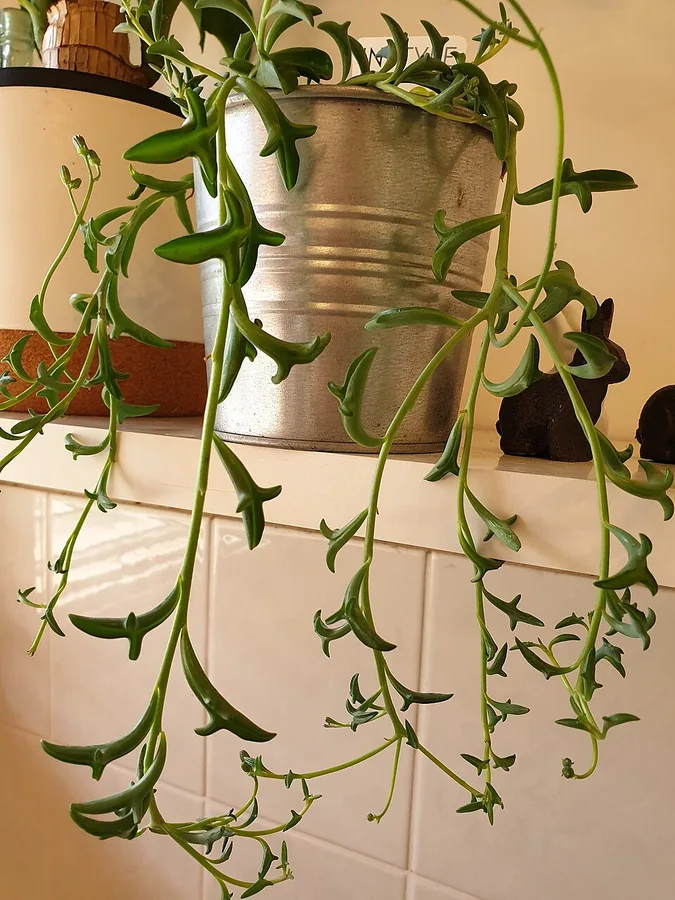
String of dolphins earns its place in a room the moment its strands begin to fall, each leaf curved into the shape of a leaping dolphin. It comes from the daisy family and is a cultivated hybrid of string of pearls and candle plant rather than a wild find, which is part of its collectible appeal. Left to trail, the strands drop 12 to 35 inches (30 to 90 cm), reading as living sculpture over a shelf edge.
As a housemate it is refreshingly undemanding. A bright, indirect window spot and a gritty mix that dries quickly cover almost everything, and it slots easily into a busy routine that would strand a needier plant. The one thing to respect is drainage, since a soggy pot rots the stems and undoes the whole look.
Placement is where this plant rewards a little thought. A hanging basket in a bright corner or a perch on a tall shelf lets the strands cascade the way they are meant to, and that same height quietly keeps the mildly toxic stems above the reach of pets and small children. The effect is calm, airy, and unmistakably its own.
Care
The short version: a bright, indirect spot, a gritty cactus mix in a pot that drains, and water only when the leaves begin to look slightly shriveled.
Light
Set it near a bright, indirect window for most of the day, out of the harsh midday sun that scorches the leaves and dulls the display. A touch of soft morning light suits it well. A dim corner is the one placement to avoid, since low light stretches the stems thin and loosens the dolphin shape that makes it worth showing.
Water
Water lightly through the growing season, then let the gritty mix dry out completely before the next round. The plant keeps its own schedule, asking for a drink only as the leaves begin to look slightly shriveled. Through winter, water barely if at all, when cold and damp together are what spoil the stems.
Soil
Pot it in a gritty, fast-draining cactus or succulent mix that never keeps water at the roots. It is easy about pH across 6.0 to 8.0, which frees you to choose a container for its look while trusting the drainage to do the real work.
Temperature
Comfortable room warmth of 50°F to 77°F (10°C to 25°C) suits it in nearly any home, all year. It has no tolerance for frost, so a summer spell on a balcony should come back indoors well before the first cold nights.
Humidity
No humidity ritual is needed here, which keeps it low-maintenance in a styled room. Ordinary air suits it, and it leans to the dry side, so leave the mister on the shelf, since damp air only encourages rot.
Feeding
A light feed once a month through the growing season, from spring into early autumn, keeps the strands full, using a half-strength general-purpose liquid fertilizer. Set feeding aside over winter, when growth quiets down.
Pruning
Reach for scissors whenever the shape needs editing or a fuller cascade is the goal, and the plant fills back in quickly. Keep gloves nearby, since the cut sap can irritate skin.
Repotting
Repot every 1 to 2 years, or sooner if roots crowd the surface or slip out the drainage holes. Move up a single pot size, ideally one that drains and flatters the trail, since an oversized container holds moisture the roots do not want.
Size & spacing
Expect the strands to fall 12 to 35 inches (30 to 90 cm) and spread about as wide, which is worth planning for above a shelf or console. Give a single plant its own hanging pot so the dolphins can pour down cleanly without tangling into the display around them.
Troubleshooting
When the look starts to slip, the plant is usually telling you one of two things, and they pull in opposite directions. Too little water leaves the dolphins shriveled, too much leaves the stems rotting, so read the room before you reach for the can. The guide below sorts one from the other.
Mushy, blackening stems collapsing at the soil
This is rot, the result of a mix kept wetter than a succulent will accept. The stems soften at the soil line, the base darkens, and a sour smell usually confirms it before the plant folds. Stop watering, cut out every soft stem and root, then restart with a few healthy cuttings in gritty mix inside a breathable clay pot.
Fix:
- Stop watering and let the mix dry out
- Remove and discard rotted stems and roots
- Take healthy stem cuttings to propagate and start fresh in a gritty, fast-draining mix
- Repot into a clay pot with drainage to improve evaporation
Shriveled or stretched strands that lose their shape
The same tired look comes from two opposite habits. A bone-dry mix leaves the dolphins soft and puckered, while a spot that is too dim stretches the stems thin and pale until the shape blurs and the display flattens. Water it well as soon as the leaves shrivel, move it into brighter light, and trim the leggy runners so it fills back in compact.
Fix:
- Water thoroughly when leaves begin to shrivel, then let the mix dry completely again
- Move to a brighter spot with bright, indirect light
- Trim leggy, distorted stems to encourage compact new growth
Toxicity
A styling caveat worth honoring: this is not a plant for low tables or open floors. Every part carries pyrrolizidine alkaloids and an irritant sap, so it is toxic to cats and dogs and a poor fit for homes with other pets, livestock, or small children. Nothing on it is edible, the sap stings skin, and gloves belong on hand at pruning time.
Toxic to
Cats · Dogs · Horses · Rabbits · Livestock · Birds · People
Cats Toxic
A cat that reaches the trailing stems and chews will usually be sick, get the runs, drool, and turn sluggish. The leaves carry pyrrolizidine alkaloids, so a spot well above the highest perch is the safest style choice.
Dogs Toxic
A dog that chews a strand can expect vomiting, loose stools, and a tired, low mood afterward. The same alkaloids are the cause, and the bitter sap may leave the mouth sore, so keep it out of reach.
Horses Toxic
The parent plant is listed as toxic to horses, and this hybrid is treated the same. Past the stomach upset, the pyrrolizidine alkaloids in these Curio succulents can burden the liver with repeated grazing.
Rabbits Toxic
A rabbit should never be left to nibble it. The alkaloids that trouble cats and dogs work the same way on a rabbit's gut, so keep the strands out of the hutch and off the floor.
Livestock Toxic
Grazing animals can react badly, since the pyrrolizidine alkaloids accumulate in the liver over repeated feeding. Fence the plant off and clear away any trimmings.
Birds Caution
Treat it as off limits around birds. The toxic compounds in the foliage make it a poor companion for pet birds, so hang it where no beak can reach.
People Caution
No part of this plant belongs on a plate, and a curious bite can upset the stomach. The sap also stings skin, so wear gloves to prune and keep small children from pulling at the strands.
Wear gloves when pruning or handling cut stems, as the milky/irritant sap can irritate skin.
Helpline numbers

United States
ASPCA Animal Poison Control: (888) 426-4435 (fee applies)
Poison Control: (800) 222-1222



Canada
Poison Centres: 1-844-764-7669
Varieties
There is a pleasing simplicity to the choice. String of dolphins is sold as a single hybrid rather than a collection of named cultivars, so styling decisions come down to the pot and the placement, not the variety.
Curio × peregrinus (typical String of dolphins)
This is the hybrid the name refers to, its curved, branched leaves arching like a pod of leaping dolphins, close kin to string of pearls apart from the forked shape.
How to propagate
Filling a second basket or gifting a cutting is simple. Two easy methods make more of it, and both ask for little beyond scissors and a gritty mix.
Stem cuttingsEasy
Spring to summer during active growth · Roots in about a month
In spring or summer while the plant is growing, take cuttings 3 to 4 inches (8 to 10 cm) long, strip the lower leaves, and lay or tuck them so the bare nodes rest against a moist, gritty mix. Roots form readily at the nodes, and a cutting settles in within about a month, ready to start a second basket.
LayeringEasy
Spring to summer · About a month to root
Layering is the quietest method of all. Pin a trailing stem down onto the compost so its nodes meet the surface, leave it joined to the parent while it roots over roughly a month, then snip it free once it has anchored.
Myths
String of dolphins is a wild species found somewhere in nature.
It has no wild home at all. It is a cultivated hybrid, Curio x peregrinus, raised by crossing string of pearls (Curio rowleyanus) with candle plant (Curio articulatus), and that pairing is the source of its leaping-dolphin leaves.