Ornamental · Asteraceae
Bidens
Bidens ferulifolia
Set it in full sun and average soil, and bidens pours out golden flowers from spring right through to the first frost.
Full sun
Every 2–4 days
USDA 8–11
10–15 in · 25–38 cm
Overview
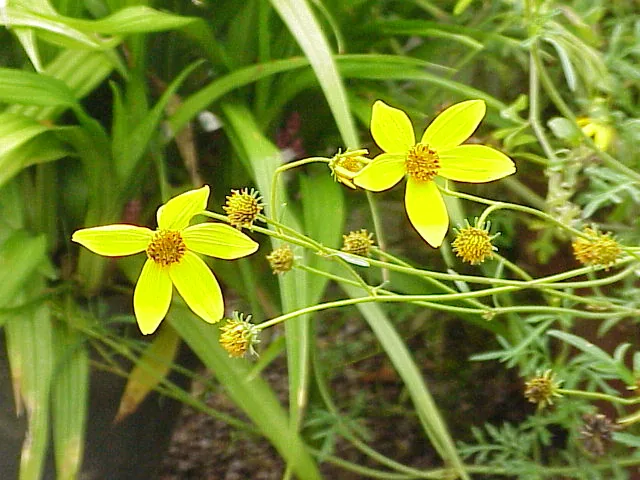
Bidens is a low, trailing member of the daisy family, kept around for months of easy bloom rather than anything you'd serve at the table. It spills from hanging baskets and patio pots and runs along the front edge of a border, dressing the spot in small flowers that usually arrive in gold. Gardeners keep coming back to it because it asks for so little while giving the whole season over to color.
Once it has its feet under it, bidens takes heat and drought in stride and keeps flowering long after the more demanding plants have called it quits. Quick to fill in yet content to stay low, it rarely tops knee height, so it knits the gaps together and drapes over the rim of a container instead of reaching for the sky. The newer named selections widen the look beyond gold into white, pink, and two-tone, opening up the palette for a more considered planting.
At heart it's a tender thing, treated as a warm-season annual in most gardens and put in fresh each spring once the cold has loosened its grip. Hand it a sunny spot with soil that drains and it more or less looks after itself. A single shearing around midsummer is repaid with a clean second wave of flower.
Care
The short version: full sun, average well-drained soil, and watering that's regular without ever sitting wet. Feed the container plants through the season, give the whole thing one pinch back in midsummer, and it keeps blooming with no deadheading to fuss over.
Light
Bidens is happiest in full sun, and a spot that catches the most of it gives the freest flowering. A little afternoon shade is something it will tolerate, but a genuinely shaded corner leaves the plant thin and reaching, with the bloom tapering off to match.
Water
Let the surface dry between drinks rather than keeping the soil constantly damp, since wet feet are the one thing this plant won't put up with. It carries heat and drought well once it's established, though the baskets and pots on a sunny patio dry out fast and want watering more often across the summer.
Soil
Ordinary, well-drained ground is the whole of what it asks, with nothing rich or fussy required. A pH anywhere across 6.0 to 7.0 suits it fine, so most garden soil does the job as long as the water keeps moving through.
Temperature
Bidens settles into warm weather happily and copes with a broad range, roughly 36°F to 86°F (2°C to 30°C). A hard frost is beyond it, though, which is why most gardens treat it as a fresh start each spring.
Humidity
Everyday outdoor air suits it well, so there's nothing to track or tweak. What counts for more is keeping the air moving freely around the planting, since still, crowded growth is what opens the door to mildew and mold.
Feeding
Plants in open ground seldom call for feeding, but the containers and baskets burn through their nutrients quickly. Treat those to a balanced water-soluble feed every two weeks through the growing season to keep the flowers rolling on.
Pruning
Bidens flowers on without any deadheading, so the spent blooms can simply be left in place. Should it sprawl or grow leggy by midsummer, shear or pinch it back and it comes again fuller and freshly covered in flower.
Size & spacing
Plants keep low, standing about 10 to 15 inches (25 to 38 cm) tall while spreading 12 to 24 inches (30 to 61 cm) across. Allow each one space to trail and the planting grows together into one unbroken sheet of flower.
When to plant
Frost is the one thing bidens won't abide, so it bides its time until the weather turns kind. Start the seed indoors in late winter, move plants out into the garden once the last frost is behind you and the soil has warmed through, and the flowers keep up their show from late spring all the way to autumn's first frost.
Northern hemisphere
Southern hemisphere
Typical months for a temperate climate: start earlier in warm zones, later where spring frosts linger.
- Sow: 6 to 8 weeks before the last spring frost
- Plant: after the last spring frost when soil has warmed
- Harvest: late spring through fall until frost
Hardiness
USDA hardiness zones: 8–11
Temperature: down to -12°C
Troubleshooting
Bidens stays largely carefree, but the odd pest or mold finds its way in when conditions tip the wrong way. Most of it surfaces first on the new growth or among the flowers. Match what you're seeing to the list below and act early, while a quick fix is all it takes.
Dull, faintly webbed foliage when the patio bakes in summer
Spider mites show up in long hot, dry stretches and quietly drain the foliage until the whole planting looks tired and washed out. Hold a leaf over white paper and tap it, and you'll catch the specks moving. A good rinse sets them back, and insecticidal soap or a labeled miticide handles anything more stubborn.
Fix:
- Rinse foliage with water to reduce populations
- Apply insecticidal soap or a labeled miticide if infestation persists
Soft gray mold on the blooms after a damp spell
A run of cool, wet weather invites botrytis, the gray mold that creeps over fading flowers and turns the tissue underneath to mush. Pinch off the spoiled blooms and leaves and bin them before it travels further. A little more breathing room helps the planting dry out quickly once the rain passes.
Fix:
- Remove and discard affected flowers and foliage
- Increase spacing and air circulation to dry foliage
Tacky tips and bunched-up little insects on the freshest growth
Those crowds are aphids, settling on the softest new tips where the feeding is easiest, and the sticky sheen they leave on the trailing stems is honeydew. A firm blast from the hose usually scatters them, and a round of insecticidal soap takes care of any stragglers that cling on.
Fix:
- Spray plants with a strong stream of water to dislodge aphids
- Apply insecticidal soap to affected growth as needed
A chalky pale haze settling over a crowded planting
That powdery cast is powdery mildew, and it favors plants packed in tight with still, stale air. Open the grouping up by thinning and giving each plant more elbow room, and pull off the most heavily coated foliage. A sunny spot with a steady breeze keeps it from returning.
Fix:
- Improve air circulation by thinning and spacing plants
- Remove and discard heavily affected foliage
Toxicity
Welcome news for a home shared with pets or grazing animals: bidens carries no known toxin. It's absent from the ASPCA list of poisonous plants, so a bitten leaf is nothing to lose sleep over. That said, it earns its keep as a flowering display rather than a snack, so there's no call to encourage the habit.
Safe for
People · Cats · Dogs · Horses · Rabbits · Livestock · Birds
Cats Safe
A cat that shares the room with bidens has nothing to worry about, since the plant stays off the ASPCA toxic list. The most a serious nibble might bring is a touch of drooling or a queasy stomach, the way too much of any greenery can, so it's fine to gently redirect a determined chewer.
Dogs Safe
A household dog can lounge beside a basket of bidens without concern, as the plant carries no known toxin. Chewing on a trailing stem might leave a pup a little off in the belly, as plant matter sometimes does, but nothing of consequence comes of it.
Horses Safe
Horses can graze in the company of bidens with no risk at all. It is not a poisonous plant, and nothing in the record points to it ever troubling them.
Rabbits Safe
A rabbit can nibble bidens without harm. As with any lush green, it's wiser not to offer a heaping pile all at once, but the plant itself holds nothing that could hurt one.
Livestock Safe
Cattle, goats, and sheep can browse alongside bidens with no trouble, as it carries no toxin that affects grazing animals.
Birds Safe
Bidens is no danger to birds, which will happily work over the faded flower heads for their seed. Backyard hens can forage around the planting at their leisure.
People Safe
Bidens is grown for the flowers it brings to a space rather than for the kitchen, but it is harmless to handle and to keep close at hand. There's no reason to fence children away from it, though it isn't meant for eating.
Varieties
The plain species comes in gold, but breeders have nudged bidens into fresh colors and tidier habits, which opens up real choice for how a planting reads. These are the named selections worth having on the shortlist.
Blazing Fire
A warm-toned pick for a sunny container, its bicolor blooms glow red-orange near the eye and ease out to gold at the edges, and it proved a steady, uniform performer in University of Georgia trials.
White Delight
For a calmer, more restrained palette than the usual gold, this one offers creamy white flowers, a softer look that won its place in the University of Georgia trials.
Pretty in Pink
A pink-flowered choice that swaps the familiar gold for something gentler and prettier in a soft color scheme, also put through the University of Georgia trials.
Mexican Gold Improved
A polished update on the classic golden-yellow species for those who want the traditional look done well, refined and trialed at the University of Georgia for a stronger garden showing.
How to propagate
Bidens is an easy one to make more of, whether you're after faithful copies of a favorite hybrid or a tray of seedlings to round out the beds.
Stem cuttingsEasy
Spring through summer during active growth · About 2 to 4 weeks to root
Taking a cutting is how you carry a favorite named hybrid forward, since the new plant comes up identical to the one it left. Clip a soft growing tip while the plant is in full stride in spring or summer, and it settles into roots in around 2 to 4 weeks.
SeedEasy
Start indoors 6 to 8 weeks before the last spring frost · Germinates in roughly 1 to 2 weeks at warm temperatures
The species and the open-pollinated kinds start readily from seed, though named hybrids tend not to come true. Sow indoors 6 to 8 weeks before the last frost, keep the tray warm on a windowsill, and the seedlings emerge in about 1 to 2 weeks.
Myths
The ornamental bidens you buy for the patio is dangerous to dogs and cats.
Bidens never turns up on the ASPCA toxic plant database, and the ornamental Bidens ferulifolia is regarded as non-toxic to pets. A dog or cat that takes a bite of a leaf is in no danger, though it's still good practice not to let pets graze on the houseplants and containers.
Garden bidens will overrun a yard by sticking its seeds to everything, just like the weedy beggarticks.
It's the wild kinds that earned the name beggarticks, with two-pronged seeds that catch on fur and clothing. The garden ferulifolia hybrids behave differently: grown as warm-season annuals and frequently bred as low-seeding selections, they stay put rather than wandering across the beds the way their weedy relatives do.