Ornamental · Asteraceae
Aster
Symphyotrichum
Give it full sun and well-drained soil, and the aster carries your garden's color in style straight into fall.
Full sun
USDA 3–8
1–5 ft · 0.3–1.5 m
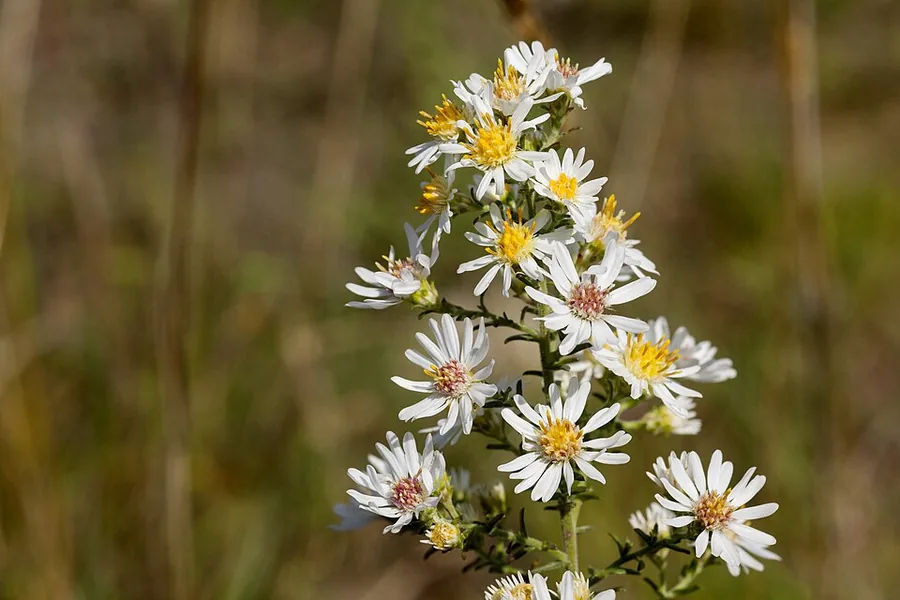
Overview
Asters arrive on cue as the rest of the planting begins to quiet, and they set the tone for a garden's last act of the year. They keep company with sunflowers and daisies in the same family, and the hardy garden kinds grow as clump-forming perennials that settle deeper into a scheme each season. From a low cushion at the path's edge to a tall column toward the back of a bed, there is an aster to suit the proportions of almost any sunny corner.
Color is what they bring to a space. The flowerheads open in blue-violet, pink, and white, often so freely that they read as a sheet of color rather than single blooms, easy to weave into a late border or a relaxed cottage scheme. Bloom carries from late summer into fall, commonly August through October, so an aster keeps a garden glowing well after the high season has passed.
They suit an unfussy routine. Full sun, ground that drains, and a single midsummer pinch to firm the stems are the whole of the upkeep, which leaves more time to simply enjoy the view. Tuck them into damp shade, though, and the look gives way to mildew and floppy growth, so a sunny, open spot keeps the planting looking composed.
Care
The short version: asters want full sun and well-drained soil of nearly any texture, with steady moisture through the growing season. Pinch the stems in June for a fuller silhouette, and divide crowded clumps every few years to keep the display generous.
Light
Asters give their fullest display in full sun and will accept a touch of partial shade where a bed demands it. Settle them into real shade, though, and the plant turns tall and floppy with only a scattering of color to show for it.
Water
Keep them in average, steady moisture through the growing season, since dry spells thin the display. A settled clump rides out a brief drought, but the bed has to drain well, as standing wet leads the planting toward wilt.
Soil
Asters take an easygoing approach to soil and flourish in loam, sandy loam, or clay so long as it drains well and holds some organic matter. They tolerate a generous pH band of 5.5 to 8.0, which suits most garden ground without fuss.
Humidity
Outdoor humidity is simply part of the season, and asters take it as it comes. Air movement carries far more weight for the look of a planting, since crowded, still air is where powdery mildew begins to dull the leaves.
Feeding
A light spring feed of balanced general-purpose fertilizer keeps a planting handsome through the season. A restrained hand with nitrogen matters, or the clump turns soft and floppy, leaning on stakes and flowering less.
Pruning
Pinch the stems back by a few inches from early to late June to coax a fuller, more self-supporting shape that needs no staking. Set the shears down after early July so the forming flower buds stay, and cut the spent growth to the ground once the display has finished.
Size & spacing
Asters range from 1 to 5 feet (30 to 150 cm) tall by species and spread 2 to 4 feet (60 to 120 cm) across, so place them with their mature footprint in mind. Allowing each clump that full width keeps the planting airy and the leaves clean.
When to plant
Asters set the rhythm of the garden at the cool ends of the year. Start seed indoors in late winter or sow outside in spring, set young plants out after the last frost once the soil has warmed, and look forward to the late flourish, with flowers from August into October.
Northern hemisphere
Southern hemisphere
Typical months for a temperate climate: start earlier in warm zones, later where spring frosts linger.
- Sow: Late winter to early spring; seed germinates in about 15 days indoors
- Plant: After last frost in spring once soil has warmed
- Harvest: Summer into late fall (commonly August to October)
Hardiness
USDA hardiness zones: 3–8
Temperature: down to -40°C
Troubleshooting
Most of what troubles a border of asters comes down to crowding, poor drainage, or too little sun. Read the early signs on the leaves and stems, and a thoughtful change of site or spacing usually puts the picture right. Match what you see below, then act before it works through the planting.
A border clump fading and folding along one flank
A planting that yellows and slumps to one side has likely met verticillium or aster wilt, a soil fungus that favors heavy, waterlogged ground and leaves no cure once it arrives. The tell is a clump that wilts while the bed stays moist underfoot. Lift and discard the worst plants, rework the drainage of the site, and give that corner of the garden to something other than susceptible asters.
Fix:
- Improve soil drainage
- Remove and destroy severely affected plants
- Avoid replanting susceptible species in the same spot
A handsome clump that simply will not put on a show
When a healthy planting refuses to flower, the reason is nearly always too little light or too little water. A clump set in shade, or one left to bake dry through summer, will never match the display of one in full sun with steady moisture. Move it into a brighter part of the garden and keep the soil from drying through, especially in a heat wave, and the show returns.
Fix:
- Relocate or site plants in full sun
- Maintain consistent soil moisture during the growing season
A chalky pale veil dulling the upper leaves
When a soft gray cast settles over the leaves and takes the polish off a planting, the culprit is powdery mildew, a fungus drawn to crowded beds and stagnant air by late summer. Open the planting up by thinning and spacing it, water at the base to spare the foliage, and clear away the worst leaves to keep the display looking its best. If it lingers, a fungicide every 10 to 14 days restores the picture.
Fix:
- Improve air circulation by thinning and spacing plants
- Avoid overhead watering
- Remove and discard heavily infected foliage
- Apply an appropriate fungicide on a 10 to 14 day schedule if needed
Fresh shoots crimped and dotted with sticky pinpoints
The little soft-bodied insects gathering at the shoot tips, and the sticky sheen they leave across the new growth, are aphids and their honeydew. A firm spray of water sweeps them off and keeps the planting tidy, with insecticidal soap held in reserve for when their numbers swell. A lighter hand with nitrogen helps as well, since the soft, eager growth it pushes is just what tempts them in.
Fix:
- Dislodge with a strong spray of water
- Apply insecticidal soap if populations are high
Toxicity
For a household that shares its garden with pets or children, asters are safe all around. The ASPCA lists them as non-toxic to cats, dogs, and horses, with no real danger to other animals or to people. The most a nibble brings is the mild stomach upset that almost any plant can cause.
Safe for
People · Cats · Dogs · Horses · Rabbits · Livestock · Birds
Cats None
A border of asters sits easily in a home that keeps cats, since the plant is safe around them and the ASPCA lists it as non-toxic. Should a cat sample a leaf on a turn through the garden, a mildly upset stomach is the most it brings, as with almost any plant.
Dogs None
Asters belong in a garden that doubles as the dog's run, because the plant holds no poison. The worst a curious chew of a stem invites is a little drooling or a brief, passing tummy upset.
Horses None
A planting near a paddock poses no concern, since asters are non-toxic to horses in and around a pasture. Grazing on the foliage leads to nothing beyond the occasional mild digestive grumble.
Rabbits Safe
Rabbits may browse a bed of asters with nothing to fear from the plant. As with any fresh greenery offered to them, keeping portions modest keeps a small gut settled.
Livestock Safe
Asters set near a grazing field cause no trouble for cattle, goats, or sheep. The plant carries no toxin that would unsettle a grazing animal.
Birds Safe
Asters are harmless to birds, and the late seedheads turn a quiet autumn border into a draw for finches and other songbirds. No part of the plant poses a hazard.
People Safe
A bed of asters poses no risk to a curious child wandering the garden, as the plant is not poisonous to people. They are grown for the eye rather than the plate, so there is no call to taste them.
Varieties
Hundreds of asters exist, but a few species earn their place in a well-planned garden time and again. These are the ones worth knowing by name.
Symphyotrichum novi-belgii (New York aster)
A polished front-of-border anchor at 3 to 4 feet, carrying blue-violet, pink, or white flowerheads from August to October and holding hardy to zone 4.
Symphyotrichum dumosum (Bushy aster)
A tidy, rounded American aster awash in small button-like flowerheads, tailor-made for edging a low border.
Symphyotrichum oblongifolium (Aromatic aster)
A graceful, drought-tolerant aster whose scented foliage and very late fall bloom carry the season's color onward, hardy through zones 3 to 8.
How to propagate
Asters lend themselves to filling a garden gracefully, whether you part an established clump or raise fresh plants from seed. Division keeps a named variety true to type, while seed is the economical way to clothe a larger sweep of bed.
DivisionEasy
In October as flowering deteriorates, or in early spring · One growing season
Division is the elegant way to keep a planting full and to spread its color through the rest of the garden. Every few years, lift a crowded clump and part it, either in October as the blooms fade or in early spring, then settle the pieces into well-drained ground. Each division roots in and rounds out over a single growing season.
SeedEasy
Sow indoors in late winter or outdoors in spring · Germinates in about 15 days indoors or 20 to 30 days outdoors
Seed offers a generous way to fill a new bed, sown indoors in late winter or outdoors in spring, with seedlings appearing in about 15 days under cover or 20 to 30 days in the open ground. For a particular named cultivar, division is the truer route, since seed-grown plants rarely echo the parent.
Myths
Asters are poisonous to dogs and cats.
A garden of asters need not be off-limits to pets, since the ASPCA lists them, China aster included, as non-toxic to dogs, cats, and horses. A pet that nibbles one is in no real danger, though a mouthful of any plant can bring a mild, passing stomach upset.
Asters need rich, constantly moist soil to thrive.
A bed of asters thrives in average, well-drained ground, takes a range of textures and pH in its stride, and rides out a short dry spell once settled. Soggy, poorly drained soil is the real undoing, since it invites the wilt and mildew that spoil the display.