Houseplant · Moraceae
Weeping Fig
Ficus benjamina
Settled in one bright, unhurried corner, the weeping fig lends a room the softness of a small indoor tree.
Bright indirect
65–85°F · 18–29°C
USDA 10–12
2–50 ft · 0.6–15.2 m
Overview
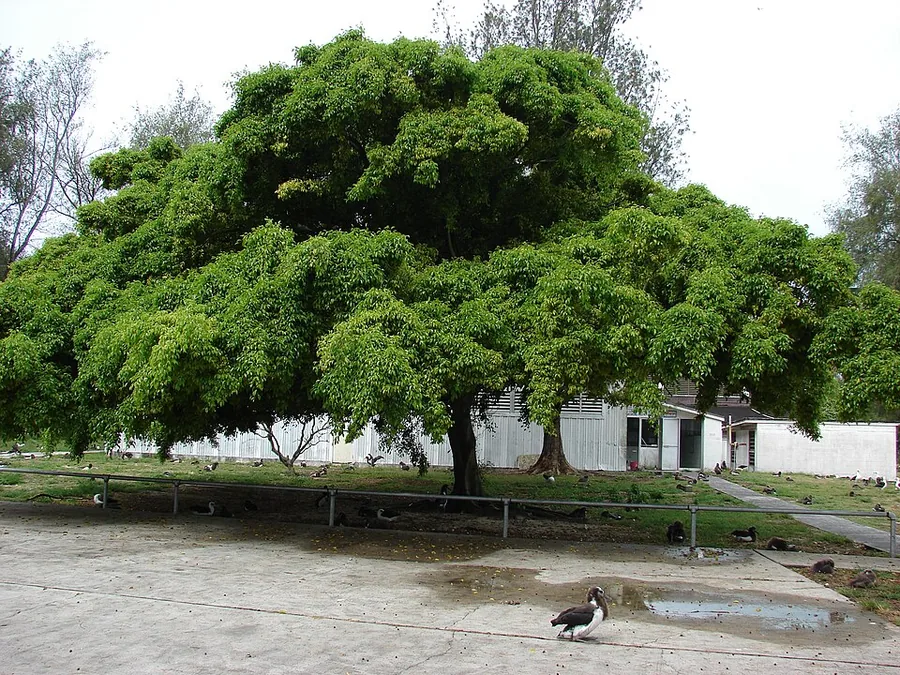
The weeping fig has long been a decorator's shorthand for a room that feels finished. Its fine, cascading branches read as a soft green sculpture, at home beside a reading chair or filling the empty corner a sofa leaves behind. Coming from the fig family and the tropics of Asia and northern Australia, it asks for the conditions a bright living room already offers: warmth, generous light, and steady care. Kept indoors it holds a graceful 2 to 10 feet (60 cm to 3 m), the ideal scale for a floor plant that anchors a space without crowding it.
One habit shapes how you live with it. Move it across the room, seat it in a draft, or let your watering wander, and it responds by shedding leaves. Think of it less as fragility and more as a preference for routine. Choose its place with intention, then let it stay, and it settles into full, weeping form that quietly holds a room together for years.
A little forethought keeps it a pleasure to own. The sap is a milky latex that irritates skin and is a documented allergen, and the plant is toxic to cats, dogs, and horses, so it suits a considered spot rather than a busy floor. Give it a calm, out-of-reach position, and it rewards you with the long-lived elegance few houseplants match.
Care
The short version: bright indirect light, a warm corner clear of drafts, and even moisture that never turns soggy. Choose its place once and leave it there, since this plant would rather stay put than travel a room.
Light
Set it where the light is bright but indirect, softened by a sheer curtain, and it looks its best. It tolerates partial shade, and the variegated forms cope with a little less, but a dim corner thins the canopy and drops leaves that spoil the effect.
Water
Keep the soil evenly moist through the growing season, then let the surface dry a touch between waterings in winter. Never leave the pot standing in water. Both extremes bring on leaf drop, so a calm, consistent routine serves it better than volume.
Soil
Plant it in a well-drained, soil-based mix and it settles in easily. pH barely matters here, since it accepts anything from acidic to alkaline, roughly 6.0 to 8.0, as long as the mix drains freely.
Temperature
Give it a steady 65°F to 85°F (18°C to 29°C), with nights a shade cooler than days. Drafts and sudden swings are what shed the leaves, so keep it away from doorways and vents and never let it fall below about 55°F (13°C).
Humidity
It prefers high humidity and sulks in dry indoor air, often inviting spider mites. Group it with other plants, rest it on a pebble tray, or run a humidifier through the dry heating months.
Feeding
Feed it monthly with a balanced liquid houseplant fertilizer across spring and summer. Ease off through fall and winter as growth slows, when a resting plant has little use for it.
Pruning
It asks only for light pruning to keep its shape, best done in late autumn or winter. Wear gloves as you work, since the cut stems weep a milky latex that irritates skin and is a known allergen.
Repotting
Repot it infrequently, as this fig prefers to sit a little root-bound. Move it up a size in late winter or early spring, when growth slows or the new leaves arrive noticeably small.
Size & spacing
Indoors it keeps to the 2 to 10 foot (60 cm to 3 m) range, far short of the 40-foot tree it becomes in the wild, which makes it easy to place. Allow room for the arching branches to spread, since it can reach several feet across once established.
Troubleshooting
Living with a weeping fig means reading one recurring signal, falling leaves, and knowing what prompted it. Consider whether it was moved, chilled, watered unevenly, or left in a dim corner. Match the pattern below, ease the cause, and give it time to recover its poise.
A flush of leaves let go after a move
This is shock leaf drop, the weeping fig's response to almost any change in its surroundings. A new corner, a cold draft off a door or vent, uneven watering, or a recent repot can each set it off, and the leaves yellow and fall within days. Settle the light, warmth, and watering, keep it above 55°F (13°C), and it stops shedding and returns to form once it feels at home.
Fix:
- Move the plant to its new location gradually, in stages, rather than all at once
- Stabilize light, temperature, and watering and keep it away from drafts and heat/AC vents
- Keep it above ~55°F (13°C)
- Be patient - once conditions are adequate it stops dropping and pushes healthy new growth
Yellow leaves falling from wet soil
Soil that stays wet points to overwatering, made worse by water lingering in the saucer. The roots cannot breathe, the lower leaves yellow, and they drop. Empty the saucer, let the surface dry a little before the next watering, and be sure the pot drains freely.
Fix:
- Empty the saucer and never let the pot stand in water
- Allow the soil surface to dry slightly before the next watering
- Ensure the pot drains freely
Speckled, sticky, or webbed leaves
Sap-sucking pests have moved in, most often spider mites in dry indoor air. Look for fine webbing and stippling, sticky honeydew, hard bumps from scale, or cottony tufts from mealybugs. Rinse the foliage, wipe away what shows, treat with insecticidal soap or horticultural oil, and raise the humidity to keep mites at bay.
Fix:
- Rinse foliage and wipe off visible pests
- Treat with insecticidal soap or horticultural oil, repeating as needed
- Raise humidity to discourage spider mites
Thin, leggy growth losing its inner leaves
Pale, stretched growth that sheds its interior leaves usually means too little light, sometimes with too little feeding. Ease the plant, in stages, to a brighter spot with indirect light. Feed it monthly through spring and summer with a balanced liquid fertilizer to bring the fullness back.
Fix:
- Move (gradually) to a bright, indirect-light location
- Feed monthly with a balanced liquid fertilizer during the growing season
Spotted leaves or twigs dying back
Clear spots can appear, a sign of leaf-spot disease, along with a little twig dieback, though disease seldom troubles a plant kept indoors. Remove the marked leaves and prune out the dead wood. A little more airflow, and keeping water off the leaves, usually settles it.
Fix:
- Remove affected leaves and prune out dead wood
- Improve air circulation and avoid wetting foliage
Toxicity
For all its polish, this is not a pet-safe plant. The milky sap holds ficin and psoralen, and the ASPCA lists the weeping fig as toxic to cats, dogs, and horses. The same latex can irritate skin and prompt allergic reactions, so place it thoughtfully, away from pets, and wear gloves whenever you prune.
Toxic to
Cats · Dogs · Horses · Rabbits · Livestock · Birds · People
Cats Toxic
The milky sap holds ficin and psoralen, which is why the ASPCA lists it as toxic to cats. A cat that chews the leaves may drool, paw at a sore mouth, and be sick.
Dogs Toxic
Dogs react much the same. After biting a leaf or stem, expect drooling, an irritated mouth and skin, and an unsettled stomach.
Horses Toxic
The ASPCA lists horses as well. The irritant sap can leave the mouth sore and bring on drooling and digestive upset.
Rabbits Caution
There is no rabbit-specific data, but the same irritant sap is reason enough to keep it well out of reach. Do not let a rabbit graze the foliage.
Livestock Caution
Grazing animals rarely share the room, yet the ficin in the leaves makes it a poor risk. Keep it away from goats, sheep, and cattle.
Birds Caution
A pet bird may nip at low leaves, and the irritant latex is not worth the gamble. Place the plant where curious beaks cannot reach.
People Caution
No part of the plant is edible. The latex can irritate skin on contact and is a known respiratory and contact allergen in sensitized people, so wear gloves when you prune and wash your hands afterward.
Cut stems and broken leaves exude a milky latex; the latex is a documented cause of contact reactions and IgE-mediated respiratory allergy (rhinitis/asthma) in sensitized people, with cross-reactivity to fig fruit and papain. Wear gloves when pruning and wash hands afterward
Helpline numbers

United States
ASPCA Animal Poison Control: (888) 426-4435 (fee applies)
Poison Control: (800) 222-1222



Canada
Poison Centres: 1-844-764-7669
Varieties
A handful of named selections suit different rooms and moods, from variegated foliage to compact forms for a side table or bonsai tray. These are the ones worth seeking out.
'Variegata'
Prized for its cream-and-green foliage, this selection, like most variegated figs, accepts a little less light than the plain species.
'Danielle'
A compact, slow grower in deep green that holds a tidy silhouette with almost no attention.
'Too Little'
A true dwarf that makes an elegant bonsai subject for a side table.
'Pandora'
A restrained selection that settles around 6 feet (1.8 m) indoors, ideal where the ceiling sits low.
How to propagate
Multiplying a weeping fig is a slow, satisfying project rather than a quick one. Stem cuttings suit a modest piece, while air-layering is the assured way to reshape a tall or leggy specimen into something new.
Stem cuttingsModerate
Best taken in summer · Several weeks to root
Take cuttings in summer for the surest result. The cut end weeps a milky latex, so wear gloves and let it stop bleeding before you pot the piece up. Then allow it several weeks to root.
Air layeringModerate
Can be done in any season · Several weeks to months to root before severing
For a tall or leggy plant, air-layering is the dependable route, and you can begin it in any season. Roots form on the wrapped stem over several weeks to a few months, and only then do you separate it from the parent.
Myths
A weeping fig that drops its leaves is dying and should be thrown out.
Leaf drop is simply how this plant meets change, not a verdict. Give it steady light, warmth, and watering, and it stops shedding and returns to full form once it settles in.
The weeping fig is a harmless, non-toxic houseplant.
The ASPCA lists it as toxic to cats, dogs, and horses, since the sap carries ficin and psoralen. The milky latex is also a proven respiratory and contact allergen for people who become sensitized, so it deserves a considered spot and careful handling.
Sources
- Plants of the World Online, Royal Botanic Gardens Kew
- NC State Extension Gardener Plant Toolbox
- ASPCA Animal Poison Control
- Missouri Botanical Garden Plant Finder
- Missouri Botanical Garden - Gardening Help FAQ
- Clemson Cooperative Extension HGIC
- PubMed - Allergy (1998): Asthma caused by Ficus benjamina latex
- Atlas of Florida Plants, Institute for Systematic Botany, University of South Florida