Shrub · Ericaceae
Wintergreen
Gaultheria procumbens
Give it acidic soil and cool shade, and wintergreen lays down a glossy evergreen carpet lit with red berries.
Partial shade
Every 4–7 days
USDA 3–8
3–8 in · 8–20 cm
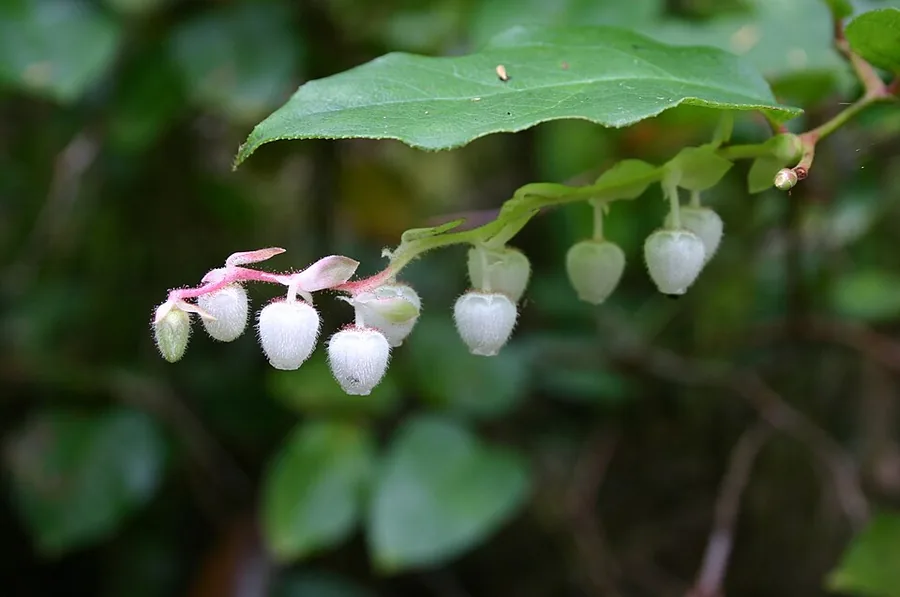
Overview
Wintergreen is the plant for the shaded, overlooked corner that never quite comes together. A low evergreen from the eastern North American woods and a member of the heath family, it spreads along the ground into a calm, glossy groundcover. Crushed underfoot it releases the teaberry scent, and its red berries carry the planting through the quiet months from fall into spring, exactly when a garden most needs a spark of color.
In the garden it reads as a refined shade groundcover, the finishing layer beneath acid-loving shrubs. Staying just 3 to 8 inches (8 to 20 cm) tall, it settles the ground at the feet of rhododendrons and azaleas and gives a woodland border its polished, unbroken floor. It moves slowly, which suits a considered, unhurried planting rather than a quick fix.
The look depends on a steady setting. Offer acidic soil, even moisture, and genuine shade and it holds its evergreen composure across the seasons, while a hot, dry, sunny spot leaves it browned and out of sorts. Placed thoughtfully, it becomes a low-maintenance backdrop that carries a shaded corner all year, berries and all.
Care
The short version: part to full shade, cool soil kept evenly moist and acidic at pH 4.5 to 6.0, and generous organic matter. Mulch to keep the roots cool, feed only rarely, and let it fill in at its own slow, unhurried pace.
Light
Wintergreen belongs in the shaded parts of a garden, happiest in part to full shade. A touch of morning sun suits it, but hot afternoon sun scorches the leaves and leaves the whole planting looking tired. For a corner that stays composed, deep shade beats an open, sunny spot every time.
Water
Keep the soil cool and evenly moist, watering every 4 to 7 days and more often through a dry stretch. An established carpet takes a brief dry spell in stride, but it browns and loses its poise in hot, dry, sunny ground. A layer of mulch keeps the setting cool and the look intact.
Soil
This is a plant for acidic ground. Give it rich, humus-rich, well-drained woodland soil at a pH of 4.5 to 6.0, the same bed that suits rhododendrons and blueberries. Sweet or alkaline soil locks up iron and yellows the foliage, undoing the tidy evergreen effect.
Temperature
Wintergreen shrugs off cold, hardy down to -40°F (-40°C) and content up to about 84°F (29°C). It looks its best in regions with cool summers, where a long heat wave, more than any winter, is what wears on it.
Humidity
There is no humidity target to manage outdoors. The mood it wants is cool, moist soil and shade, the damp, settled feel of a woodland floor, rather than dry, exposed air.
Feeding
Feeding stays light here, in keeping with a low-key planting. A single spring dose of an acidifying fertilizer for acid-loving plants is all it asks, and only when growth looks thin. More than that works against the effect.
Pruning
Pruning is barely part of the routine. A light spring trim or shear to neaten the carpet or lift out winter-damaged growth is the whole of it, and most years the planting looks after its own shape.
Repotting
In a container it seldom needs repotting. Move it on only when roots circle the pot, growth slows, or the soil dries out far too fast between waterings.
Size & spacing
Each plant stays low, at 3 to 8 inches (8 to 20 cm) tall, and creeps 6 to 12 inches (15 to 30 cm) wide by rhizome. For an unbroken carpet sooner, set the plants a little closer as you place them.
When to plant
An evergreen that never bares the ground, wintergreen keeps a shaded scheme dressed all year. Set plants in spring or early fall, look for flowers from June to August, and enjoy the red berries from September on, many holding their color through winter into the following spring.
Northern hemisphere
Southern hemisphere
Typical months for a temperate climate: start earlier in warm zones, later where spring frosts linger.
- Sow: late winter after cold stratification of seed
- Plant: spring or early fall
- Harvest: flowers June to August; bright red berries September into winter and following spring
Hardiness
USDA hardiness zones: 3–8
Temperature: down to -40°C
Troubleshooting
When wintergreen looks off, the setting is almost always to blame: soil drifting too sweet, or a corner that runs too hot and dry for a woodland plant. The foliage flags it early. Match the look below, then adjust the site rather than chasing the symptom.
Yellowing leaves with green veins and a fading look
Yellowing foliage with green veins is chlorosis, a sign the soil has drifted too sweet for an acid lover. Past pH 6.0, the roots cannot draw up iron, so the leaves pale between the veins and the planting loses its shine. Bring the pH back into the 4.5 to 6.0 range with elemental sulfur or peat, mulch with pine needles, and set aside the lime and alkaline tap water.
Fix:
- Amend soil with elemental sulfur, peat, or acidifying products to lower pH into the 4.5 to 6.0 range
- Mulch with pine needles or composted leaf litter
- Avoid lime and alkaline tap water
Browned edges and wilting in a sunny spot
Leaf scorch appears when a woodland plant is placed in too much sun or dry soil. The edges brown, the leaves wilt, and the carpet looks weary through a heat spell. Shift it into part to full shade, keep the soil evenly moist, and mulch to hold the roots cool, and its composure returns.
Fix:
- Relocate or establish in part to full shade
- Keep soil evenly moist and mulch to keep roots cool
- Water during dry spells
A carpet that fills in slowly
A planting that widens gently is showing slow spread, the plant's nature rather than a flaw. Wintergreen travels by rhizome, so even a healthy stand gains only a little ground each year. Give it the acidic, moist, shaded soil it favors, set plants closer for a quicker floor, and let the rhizomes fill in over a few seasons.
Fix:
- Be patient; allow rhizomes to creep over several seasons
- Provide ideal acidic, moist, humus-rich shade to encourage spread
- Space plants closer for faster coverage
The occasional aphid, thrip, or spotted leaf
Now and then aphids and thrips turn up on new growth, and powdery mildew or leaf spot can settle where the air stands still. On a healthy planting none of it amounts to much. Rinse off or treat light insect outbreaks, open the planting for better airflow, and keep water off the leaves.
Fix:
- Hose off or treat minor aphid and thrip infestations
- Improve air circulation and avoid overhead watering to reduce fungal disease
Toxicity
As a garden presence, wintergreen is low-risk, and a ripe red berry or two is simply the taste behind the familiar teaberry flavor. The real caution belongs to the concentrated oil of wintergreen, almost pure methyl salicylate that behaves like a heavy aspirin overdose. Keep any essential oil or liniment out of a household with pets or children, and note that cats tolerate salicylates least of all.
Toxic to
Cats · Dogs · Horses · Rabbits · Livestock · Birds · People
Cats Caution
A nibble of leaf or berry usually brings only a mildly upset stomach, but cats are the most delicate here. They cannot break down salicylates as other animals do, so even a little of the concentrated oil of wintergreen can bring on vomiting, tremors, and organ failure. Keep the essential oil and any liniments well beyond their reach.
Dogs Caution
Chewing the plant or its berries rarely leads to more than a queasy stomach. The concentrated oil is the true concern, acting like a heavy dose of aspirin and causing vomiting, gut ulcers, and kidney or liver strain.
Horses Caution
A little grazing on the leaves or berries is low-risk and seldom does more than upset the gut. A horse's size limits the plant's threat, yet the concentrated oil of wintergreen is a potent salicylate and should never reach one.
Rabbits Caution
Small amounts of foliage may pass with only mild digestive upset, but the methyl salicylate in the leaves keeps wintergreen off the list of safe browse. Steer rabbits toward their usual greens and keep any of the oil well away.
Livestock Caution
Cattle, goats, and sheep can take a casual mouthful without much harm, though the same salicylate runs through the plant. Heavier grazing, or any contact with the concentrated oil, is where the trouble begins.
Birds Caution
Wild birds eat the ripe berries through winter with no apparent harm, and that is a large part of how the seed spreads. Treat the concentrated oil as off-limits, since salicylates affect small bodies severely.
People Caution
A few ripe red berries give the well-loved teaberry flavor and are fine to nibble. The caution is for the concentrated oil of wintergreen, almost pure methyl salicylate, where even a small amount equals a large aspirin dose and is genuinely dangerous to swallow.
Keep the harmless garden plant separate in your mind from the concentrated oil of wintergreen. Store any essential oil, liniments, or wintergreen products well away from pets and children. Cats are especially vulnerable because they lack the liver enzyme needed to metabolize salicylates.
Helpline numbers

United States
ASPCA Animal Poison Control: (888) 426-4435 (fee applies)
Poison Control: (800) 222-1222



Canada
Poison Centres: 1-844-764-7669
Varieties
Only a handful of named forms reach the trade, chosen for a fuller show of berries, alongside a couple of close cousins that round out the collection.
Very Berry
A selection grown for an unusually generous show of large, bright red berries.
Berri Magic
A combination planting that sets male and female-type plants in one pot for a dependable, full display of berries.
Gaultheria shallon (salal)
A taller Pacific Northwest cousin, a broadleaf evergreen shrub that carries edible dark berries.
Gaultheria hispidula (creeping snowberry)
A tiny creeping relative with white berries and the same wintergreen flavor, its leaves far smaller than those of G. procumbens.
Companions
Wintergreen pairs naturally with the other acid-loving plants of the woodland garden, tucking in beneath shrubs that share its taste for cool, low-pH soil.
Plant near
Rhododendron: Both are acid-loving Ericaceae; wintergreen makes a low groundcover beneath rhododendrons in woodland shade.
Azalea: Shares the same acidic, moist, shaded woodland conditions as an underplanting.
Blueberry: Fellow acid-loving heath-family plant that thrives in the same low-pH soil.
Mountain laurel (Kalmia): Acid-loving shrub companion for shaded woodland and rock garden plantings.
How to propagate
The most graceful way to extend a planting is to lift what the creeping mat has already rooted, with cuttings and seed held in reserve for the patient.
DivisionEasy
Spring or early fall · One growing season
The simplest way to extend a planting is to lift and divide rooted sections of the creeping mat in spring or early fall. Reset the pieces into acidic, moist, shaded soil, where they establish over a single growing season.
LayeringEasy
Spring to summer · One season
Wintergreen layers itself without prompting, its creeping stems rooting wherever they meet the ground. From spring through summer, lift the rooted runners, separate them, and place them elsewhere, each settling within a season.
Stem cuttingsModerate
Summer · Several weeks to months
Cuttings ask for closer attention. Root semi-ripe stems in an acidic, moist medium under high humidity through the summer, allowing several weeks to a few months for roots to form.
SeedDemanding
Sow after cold stratification
Seed is the slow, patient route. It needs a cold spell to break dormancy, then germinates unevenly and takes its time to establish once it appears.
Myths
Wintergreen and its red berries are dangerously poisonous because they contain oil of wintergreen.
In the garden, the plant is low-risk, and its ripe red berries are safe for people to nibble in small amounts, holding only a trace of methyl salicylate. The genuine danger is the concentrated essential oil, almost 99 percent methyl salicylate, which acts like a strong aspirin overdose and affects cats most of all. The harmless plant and the concentrated oil are two very different things.