
Introduction
Growing your own fruit at home does not get much more rewarding than a healthy kiwi vine loaded with sweet, tangy berries. The catch is that kiwi is a vigorous woody vine, not a tree, so you cannot plant it like an apple and walk away. Get the basics right and one mature plant pays you back for decades.
First, sort out which type you want. Fuzzy kiwi is the brown, hairy grocery store fruit, and it needs warmer ground. Hardy kiwi and kiwiberry shrug off brutal winters and grow well in cold northern gardens. Beginners trip on the same three things every time. You need a male and a female plant, you need a very sturdy trellis, and you need patience across several years before the first real harvest.
The payoff is huge once a vine settles in. A single mature hardy plant yields 50 to 100 pounds (23 to 45 kilograms) of fruit, with about 50 pounds the honest average. These plants are fast too. A vine can gain up to 20 feet (6 meters) in one season, so a flimsy support will buckle under all that woody growth.
You will get the hard numbers here, plus the nutrition facts and self-fertile variety details that thin guides leave out. Every claim is backed by data from trusted garden sources. You will learn variety choice and how pollination works. We then cover trellising, pruning, the right site and soil, harvest timing, and why growing kiwi is worth the wait. Hardy types like Actinidia arguta make it possible in far more backyards than people think. Global kiwifruit production also climbed from 3.622 million tons in 2014 to 4.518 million tons in 2020. The fruit is mainstream now. Growing it at home still is not, and that gap is exactly what we close here.
How to Grow a Kiwi Vine
Year four was when my trio finally cropped. One self-fertile Issai vine, an Anna female, and a Meader male all set fruit at once on a single heavy cedar-post trellis. I had wedged that trellis into the damp back corner where the lawn meets the woods edge, half sure nothing would ever come of it.
The two seasons before that gave me nothing but leaves. The first spring I planted and watered and saw a few feet of growth, then a long winter. The second year the vines climbed hard but stayed bare, and I came close to ripping them out. Then the third year brought a handful of berries, and the fourth brought enough to fill a bowl.
So here is how to grow kiwi vines the right way, start to finish. You can follow it even if you have never grown one. Get the early choices right and a single kiwi vine can pay you back for decades. That is why the steps below matter long after planting day.
Decide on pollination before you buy, not after. A kiwi vine is dioecious, so you need both sexes unless you pick a self-fertile type. Plan on one male for every six female vines, the 1:6 ratio, because that choice is locked in the moment you load plants into your cart.
Next comes the support, and this is where most beginners go wrong. A hardy kiwi can gain up to 20 feet (6 meters) in a single season, so a flimsy fence will buckle under a mature vine. Build something permanent first.
Pick fuzzy kiwi or hardy kiwiberry for your zone, then buy both a male and a female plant, or a self-fertile variety, before you do anything else.
Select a spot with full sun, shelter from spring frost pockets, and well-drained, slightly acidic to neutral soil with a pH of 5.5 to 7.5.
Install a strong, permanent trellis, pergola, or arbor first, because a mature vine is heavy and can gain up to 20 feet (6 meters) in one season.
Set vines about 10 feet (3 meters) apart, plant at the same depth they grew in the pot, and mulch around 4 inches (10 centimeters) deep.
Keep soil evenly moist, feed in spring, and tie the strongest shoot up to the support to form the main trunk as it climbs.
Prune in the dormant season and again in summer, then expect first fruit in 3 to 5 years, with some varieties taking 5 to 9 years.
Two numbers carry a lot of weight when planting kiwi in the ground. Space the vines about 10 feet (3 meters) apart so each one has room to fill out. Lay mulch about 4 inches (10 centimeters) deep to hold moisture and feed the soil. Get the spacing wrong now and you will fight crowded, tangled vines for years.
After that, most of your kiwi vine care is patient routine. Keep the soil evenly moist, feed once each spring, and prune twice a year to keep the fruiting wood healthy. The hard work is the trellis and the pollination plan, and you handle both on day one.
Choosing Kiwi Vine Varieties
One 'Arctic Beauty' male glowed pink and white in the dim, damp back corner of my yard near the woods edge. Next to it sat a plainer 'Anna' female, all green leaves and no shine. The male had no fruit worth eating. It earned its spot on looks alone, and it pulled your eye across the whole bed.
That contrast sums up the first choice you face. Some kiwi varieties earn their keep with fruit, and a few earn it with foliage. Once you know what each plant gives you, picking the right vine for your zone gets a lot simpler.
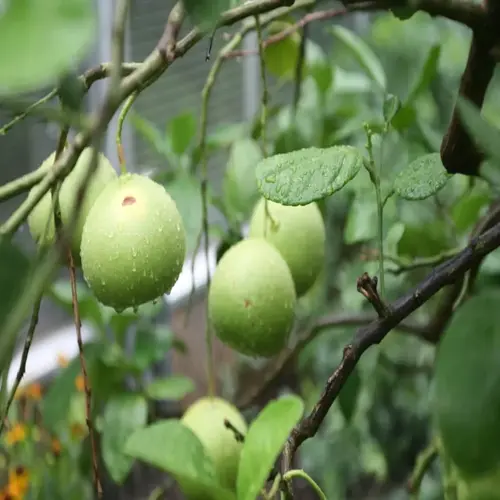
The split that matters most is fuzzy kiwi versus hardy kiwi. Fuzzy kiwi, or Actinidia deliciosa, is the brown supermarket fruit, and it wants warmth. It grows best in USDA zones 7 to 9, so cold winters can hurt it. Hardy kiwiberry shrugs off real cold and gives small, smooth fruit you can eat skin and all.
Almost every kiwi needs both a male and a female plant to set fruit. That trips up beginners who buy one vine and wait years for nothing. The big exception is Issai, the only widely sold self-fertile kiwi. A single 'Issai' will fruit on its own, so one plant can be enough for a small space.
There is a catch with 'Issai' though. It crops lighter and grows less vigorously than the male-and-female types. Plant a male hardy kiwi within range and your 'Issai' will fruit better and heavier. Here is how the main varieties stack up so you can match one to your garden.
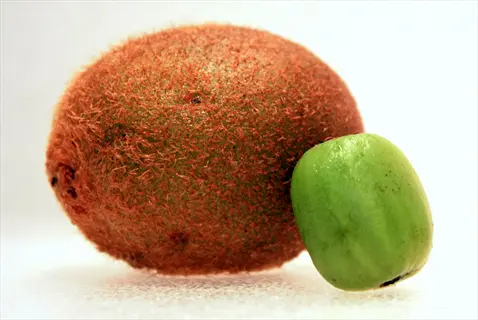
Fuzzy Kiwi (Actinidia deliciosa)
- Type: The classic grocery-store kiwi with brown fuzzy skin and bright green flesh, grown on a large vigorous vine.
- Hardiness: Best in warmer climates, roughly USDA zones 7 to 9, since cold winters can damage this less hardy species.
- Pollination: Dioecious, so you need separate male and female plants, with one male for up to six female vines.
- Named cultivars: 'Hayward' is the standard female fuzzy kiwi, often paired with a 'Tomuri' or compatible male.
- Fruit: Full-sized fruit that is usually peeled before eating because of the rough, hairy skin.
- Best for: Gardeners in mild regions who want familiar, large supermarket-style kiwi from their own vine.
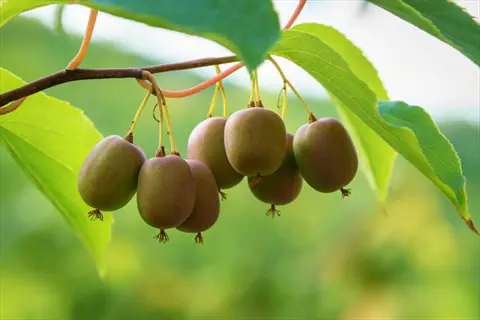
Hardy Kiwiberry (Actinidia arguta)
- Type: A cold-hardy vine bearing grape-sized, smooth, hairless berries that taste like kiwi and need no peeling.
- Hardiness: Hardy across roughly USDA zones 3 to 8 depending on variety, making it ideal for northern gardens.
- Pollination: Dioecious like fuzzy kiwi, so plant a male within range of your female vines for fruit set.
- Named cultivars: 'Anna', 'Ken's Red', 'Ananasnaja', and 'Meader' are widely grown female and male choices.
- Fruit: Sweet, smooth-skinned kiwiberries eaten whole, often reaching 18 to 25% sugar when vine-ripened.
- Best for: Cold-climate growers who want easy, snackable fruit and can give the vigorous vine strong support.
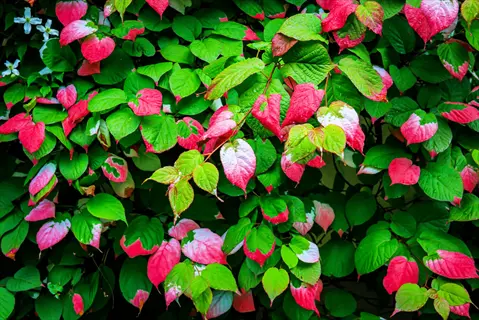
Arctic Beauty (Actinidia kolomikta)
- Type: The most cold-tolerant kiwi, prized for striking pink and white variegated leaves as well as small sweet berries.
- Hardiness: Extremely cold-hardy and recommended for very cold regions, but it needs more shade than other kiwi.
- Pollination: Dioecious, so a male is required, and the ornamental male is often planted for its colorful foliage.
- Care note: More susceptible to sunscald than Actinidia arguta, so give it some afternoon shade in hot spots.
- Fruit: Small, sweet, smooth berries that ripen early, often beginning in late July in cool climates.
- Best for: Northern gardeners who want a dual-purpose ornamental and edible vine for shadier sites.
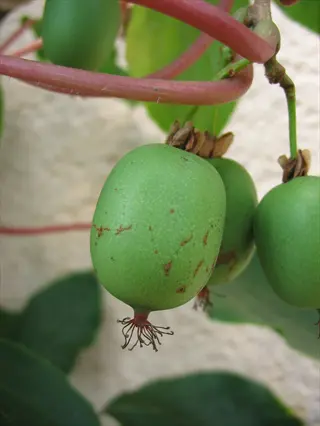
Self-Fertile Issai
- Type: A compact, self-pollinating hardy kiwi that can set fruit without a separate male plant nearby.
- Hardiness: Hardy to about USDA zone 5, slightly less cold-tolerant than the toughest arguta varieties.
- Pollination: The only commonly available self-fertile hardy kiwi, though it still crops better with a male nearby.
- Yield note: Produces a smaller harvest and is less vigorous than dioecious varieties, but suits small spaces.
- Fruit: Smooth, grape-sized kiwiberries on a tidier vine that fits a single trellis or large container.
- Best for: Beginners and small-garden growers who want fruit from just one manageable kiwi plant.
'Issai' is the only self-pollinating hardy kiwi that does not need a separate male plant for pollination.
Male and Female Pollination
Kiwi vines are dioecious, which means each plant is either male or female. The female vine grows the fruit, but it cannot do the job alone. You need pollen from a separate male plant to get a crop, so kiwi pollination starts with owning the right pair of vines.
One male vine carries plenty of pollen for the whole row. The standard guide is one male per six female vines, the classic 1:6 ratio. Commercial growers stretch it to one male per six to eight females. Think of the male as the pollen supplier for the group, so one well-placed plant keeps a cluster of female vines cropping.
Buying male and female vines can get tricky, because young plants look the same and some nurseries sell them unsexed. If you can't confirm the sex, plant 3 to 4 vines to load the odds in your favor. That way you should end up with at least one male and a few females instead of a row that never sets fruit.
Timing and distance matter as much as the count. Kiwi flowers form on current-season shoots that grow from one-year-old canes, and bees move the pollen between plants. So your male has to bloom at the same time as the females and stand close enough for the bees to work both. Plant them within the same support and you give the bees an easy trip.
- One male vine pollinates up to six female vines in the standard 1:6 ratio.
- Gives the largest, most reliable harvest from mature female vines.
- Needs at least two plants and room for both on a strong support.
- Best when you have space and want maximum fruit over many years.
- A single self-fertile vine can set fruit without a separate male plant.
- Produces a smaller harvest and grows less vigorously than paired vines.
- Fits one trellis or a large container in a small garden.
- Still crops better when a compatible male vine grows nearby.
Short on space? A self-fertile kiwi is your shortcut. Issai is the only common hardy kiwi that sets fruit without a separate male, so a single vine can crop on a small trellis. The catch is that it still yields more and grows stronger with a pollination partner nearby, so even one extra vine pays off. For most gardens this means you really do need at least two plants to fill a harvest.
Trellising and Pruning Vines
One August the top arm of my trellis hung at a sad angle, bowed almost to the ground under an 'Anna' vine in the damp back corner of the yard. The thin metal post had folded like a paper clip under all that wet green weight. I dug in a heavy cedar post that fall, then cut the vine back hard while it slept through winter.
That repair tells you what a kiwi trellis really needs to be. These plants are not delicate climbers you can hang on a fence panel and forget. A single vine can gain up to 20 feet (6 meters) in one season, and it will pile on that much again year after year for decades.
So build your sturdy support before you ever set the plant in the ground. A solid pergola, arbor, or stout wire trellis on heavy posts is the right starting point. It has to carry a heavy vine for years without sagging. Get the structure right once and you will not fight a leaning, overloaded mess every summer.
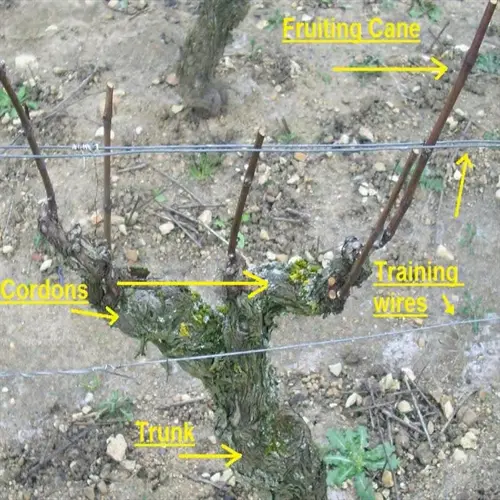
Pruning kiwi vines is the other half of the job, and it runs on a simple yearly rhythm. The reason for all that cutting comes down to one fact about the plant. Flowers form only on current-season shoots that grow from one-year-old canes, so the old wood behind those canes never fruits again. Clear it out each year and you keep the vine productive.
Your big cut is dormant pruning in winter. From December to March, while the vine is leafless and resting, you can take out up to 70% of the wood. Cut away the old canes that already fruited. Then leave fresh one-year-old canes spaced 8 to 12 inches (20 to 30 centimeters) apart along the cordons. Here is how the whole routine fits together.
In the first years, tie the strongest single shoot up the support to form a permanent trunk, and cut off the competing stems at the base so all the energy feeds one leader.
Let two strong shoots grow in opposite directions along the top wires. These become the cordons, the woody arms that carry every fruiting cane for years to come.
During dormancy from December to March, cut the vine back hard. You can take out up to 70% of the wood, clearing old non-fruiting canes so light and energy reach the rest.
Keep healthy one-year-old canes spaced 8 to 12 inches (20 to 30 centimeters) apart along the cordons. These canes carry next season's flowers and fruit, so give each one room.
Two or three times each summer, shorten the long, tangled shoots and the water sprouts. This summer pruning lets sunlight reach the developing fruit and keeps the vine from swallowing its support.
Do not skip the summer work and lean on the winter cut alone. A vine this fast outgrows its space by July, and a few quick summer pruning passes keep light on the fruit and weight off the frame. Pair that with a hard dormant cut and a post built to last, and your vine stays heavy with kiwi instead of bowing your trellis to the dirt.
A mature kiwi vine is heavy and long-lived, so anchor a permanent trellis, pergola, or arbor before planting; flimsy supports collapse under decades of vigorous growth.
Planting Site, Soil and Zones
Picking the right spot comes down to matching three things to your climate. You need the right hardiness zone, the right sun exposure, and shelter from late spring frost. Get those three right and your vine has a real shot. Miss one and you fight the plant for years.
Your kiwi growing zone drives the first choice. Fuzzy kiwi wants warm winters and fits USDA zones 7 to 9. Hardy kiwiberry shrugs off real cold, and dormant vines take -25 to -30°F (-32 to -34°C) without harm. But those tough vines have a soft spot. The new spring shoots are very frost-sensitive, so a sheltered site away from frost pockets protects that tender growth.
Sun depends on the species, and this is where many growers go wrong. Actinidia arguta takes more sun and does well in full sun. The leaves of Actinidia kolomikta burn far more easily in hot sun. Give this vine a cooler spot with some afternoon shade to dodge sunscald. The table below lines up each type so you can match a vine to your own garden.
Soil makes or breaks the whole effort. Kiwi roots want well-drained soil that stays aerated and rich in organic matter. Aim for a soil pH between 5.5 and 7.5, which runs slightly acidic to neutral. Soggy ground rots the roots fast, so skip any low spot where water sits after rain.
Once your vine is in, lay down mulch about 4 inches (10 centimeters) deep over the root zone. The mulch holds moisture, feeds the soil as it breaks down, and keeps weeds from stealing water. Keep it pulled back a few inches from the trunk so the base can breathe.
Give Actinidia kolomikta some afternoon shade, since it scorches more easily than other kiwi, and sustained heat above 86°F (30°C) can cause leaf scald and reduced fruit on any kiwi.
Time to Fruit and Harvest
Plant a kiwi vine and you sign up for a wait. Hardy kiwi fruits 3 to 5 years after planting. Some varieties hold out until year 5 to 9, so the years to fruit number is a range, not a promise. Each stage does real work, though. The vine moves from rooting to climbing to flowering even when you see no fruit yet.
Think of the journey as three phases instead of one long delay. The first years build roots and trunk. Then the vine sets its first crop. It hits full size around year 8, and the kiwi yield climbs to its peak. A single hardy vine can give you 50 to 100 pounds (23 to 45 kilograms) of fruit in a season.
Year 1 to 2
The young vine focuses on roots and climbing growth; train the trunk and cordons and expect no fruit yet.
Year 3 to 5
Hardy kiwi usually begins to flower and set its first real crop, though some varieties wait until year 5 to 9.
Around Year 8
The mature vine reaches peak production, with a single hardy vine yielding 50 to 100 pounds (23 to 45 kilograms).
Late July to October
Harvest firm fruit across the season; hardy kiwi picked firm refrigerates for up to two months and ripens indoors.
Your harvest window runs from late July through late October, so you pick across months, not in one rush. Pull the fruit while it is still firm. Firm hardy kiwi keeps in the fridge for up to two months, which beats the week or two you get from soft, fully ripe berries that bruise the moment you touch them.
Firm fruit will ripen indoors on the counter, so you bring it in early and let it soften over days. Vine-ripened fruit reaches 18 to 25% sugar and tastes the sweetest, but birds and frost often beat you to it. The smarter move for a steady kiwi harvest is to pick firm, then finish the ripening yourself where you control it.
A single mature hardy kiwi plant will yield between 50 and 100 pounds of fruit, though 50 pounds is closer to the average.
Why Grow Kiwi Vines
The trellis, the patience, the wait for a male and female pair to settle in. It all sounds like a lot of work for fruit you can buy at the store. The payoff is what makes it worth it. One mature hardy vine gives you 50 to 100 pounds (23 to 45 kilograms) of fruit a year, and it keeps doing that for decades once it gets going.
The reason to grow kiwi comes down to what is packed inside each small fruit. Kiwi nutrition beats most of what you grow in a backyard, ounce for ounce. You get a heavy dose of vitamin C, real fiber, and a low sugar hit, all from a plant that asks for little once it climbs its support.
Green kiwi holds 92.7 milligrams of vitamin C per 100 grams. The gold kiwi pushes that to 161.3 milligrams. That is close to 3 times what an orange gives you. That same 100 grams of green fruit also carries 3 grams of kiwi fiber. So you get steady digestion help with every bite. The numbers below show why this fruit earns its spot.
Kiwifruit are exceptionally high in vitamin C and contain an array of other nutrients, notably nutritionally relevant levels of dietary fibre, potassium, vitamin E and folate, as well as various bioactive components, including a wide range of antioxidants, phytonutrients and enzymes, that act to provide functional and metabolic benefits.
The fiber does real work, not just on paper. In human trials, people who ate 2 kiwifruit a day saw better stool frequency and more digestive comfort. The fruit also sits low on the glycemic scale and is certified low FODMAP, so it stays gentle even on a sensitive gut. That makes it a rare sweet fruit you can eat freely without a sugar spike.
Here is the part most growers miss when they decide why grow kiwi at home. You eat hardy kiwiberries whole, skin and all. So none of the fiber and nutrients in that skin get tossed out. With a fuzzy kiwi you peel all of that away. You pop the berries like grapes off the vine. A few good vines turn into years of fresh, vitamin-rich fruit you simply cannot match at the produce aisle.
5 Common Myths
A single kiwi vine planted on its own will reliably produce a full crop of fruit in any garden.
Most kiwi vines are dioecious, so you need both a male and a female plant; only self-fertile 'Issai' fruits alone, and even it yields more with a male.
Kiwis only grow in warm, tropical climates and cannot survive cold northern winters outdoors.
Hardy kiwi and kiwiberry tolerate dormant cold down to -25 to -30F (-32 to -34C) and grow in USDA zones as low as 3 to 5.
Kiwi grows on a tree, so you can plant it like an apple and largely leave it alone.
Kiwi is a vigorous woody vine, not a tree; it can gain 20 feet (6 meters) a season and needs a very strong trellis.
You plant a kiwi vine one spring and pick a basket of fruit by the end of that same season.
Hardy kiwi usually takes 3 to 5 years to fruit, and some varieties do not crop until they are 5 to 9 years old.
The fuzzy brown skin on a kiwi is not safe to eat and always has to be peeled off first.
Kiwi skin is edible and high in fiber; fuzzy types are often peeled for texture, while smooth kiwiberries are eaten whole.
Conclusion
Growing kiwi vine at home comes down to three things you cannot skip. You need a male and a female plant, a trellis strong enough to hold real weight, and the patience to wait a few seasons. Get those right and the rest is easy. Skip any one of them and you will end up with a leafy vine that never fruits.
Plant 1 male for every 6 females and that single male carries enough pollen for the whole group. Most vines start to fruit in 3 to 5 years, so plan for the wait rather than fight it. Once a hardy kiwi matures it can hand you 50 to 100 pounds (23 to 45 kilograms) of fruit each year. That is a huge kiwi harvest from one plant in the corner of a yard.
Two choices shape your success more than any other. Match the species to your USDA zone first, since a fuzzy kiwi in a cold region will freeze and a hardy kiwi in a warm one may sulk. Then, if your space is tight, pick self-fertile Issai so you can grow one vine without a partner. Good kiwi vine care after that is mostly steady water, yearly pruning, and not panicking during the slow early years.
A vine you plant this season can keep cropping for decades, with healthy plants reportedly living and fruiting for 40 to 50 years. That turns one weekend of digging into a lifetime of vitamin-rich fruit off your own trellis. Start the hardy kiwi you want now, give it room to climb, and let time do the heavy lifting.
Glossary
- Cordon
- A trained horizontal arm of a vine, grown along a wire, that carries the shorter fruiting canes.
- Dioecious
- A plant species in which male and female flowers grow on separate individual plants, so you need both to get fruit.
- Dormant pruning
- Cutting back a plant in winter while it is leafless and resting, before new spring growth begins.
- Fuzzy kiwi
- The familiar grocery-store kiwi (Actinidia deliciosa), a large brown hairy-skinned fruit grown on a less cold-hardy vine.
- Hardy kiwi
- Cold-tolerant kiwi vines (Actinidia arguta and kolomikta) that bear small, smooth, edible-skin berries in northern climates.
- Kiwiberry
- A grape-sized, smooth-skinned kiwi from hardy vines that is eaten whole without peeling.
- Self-fertile
- A plant, such as the Issai kiwi, that can set fruit on its own without a separate pollinating partner.
- Sunscald
- Damage to leaves or stems caused by intense sun and heat, which scorches and discolors the tissue.
External Sources
Frequently Asked Questions
How long does it take a kiwi vine to produce fruit?
Hardy kiwi usually produces fruit 3 to 5 years after planting, while some varieties and species take 5 to 9 years.
How do you know if a kiwi vine is male or female?
You tell male and female kiwi vines apart by their flowers, which only appear once the vines mature.
- Male flowers carry many pollen-bearing stamens and no central ovary
- Female flowers have a sticky central ovary with branched stigmas
- Only female vines swell into fruit after pollination
Can you grow kiwi vines in pots?
Yes, you can grow kiwi vines in large pots if you provide a big container, strong support, and the right variety.
Can kiwi vines survive winter?
Dormant hardy kiwi vines survive winter cold down to -25 to -30F (-32 to -34C), but new spring shoots are frost-sensitive.
Where is the best place to grow kiwis?
Kiwis grow best in a sheltered, full-sun spot with well-drained, slightly acidic to neutral soil and a strong support.
Are kiwi vines invasive?
Kiwi vines are not formally invasive everywhere, but hardy kiwi grows aggressively and can smother nearby trees and shrubs.
What is the lifespan of a kiwi plant?
A healthy, well-supported kiwi vine can live and produce fruit for roughly 40 to 50 years.
Can I grow kiwis indoors?
Growing kiwis fully indoors is impractical because the vines need full sun, winter chilling, pollination, and large support.
Why do people not eat kiwi skin?
Many people peel fuzzy kiwi because its skin is rough and hairy, though the skin is edible and nutritious.
Why do I feel weird after eating a kiwi?
Some people feel tingling or itching after eating kiwi because of its natural enzymes and acids, especially if sensitive.