
Introduction
Sedum spurium is a tough little creeping plant. It turns dusty patches into rivers of red leaves and pink stars. David Trinklein from the University of Missouri put it best. He said sedum is as close to no maintenance as plants get. I planted my first patch in 2018 on a dry slope. The creeping phlox kept frying out by July.
This two-row stonecrop comes from the rocky meadows of the Caucasus mountains. That is why it shrugs off heat, cold, and dry spells. You may also see it sold as caucasian stonecrop. Some tags now read Phedimus spurius instead. The name changed back in 2017.
Most guides online skim the surface. They skip the parts that matter most. This guide pulls the 2017 name change, green roof data, and pet safety facts into one place. You will not need to jump between five tabs.
You will get 10 top cultivars matched to your care needs. We cover a clear watering plan and four ways to make more plants. We dig into rock gardens and green roofs. We also list plants that thrive next to a ground cover succulent. By the end you will know if this drought tolerant perennial fits your yard.
10 Top Cultivars by Care Needs
You will find dozens of sedum cultivars at any decent nursery. Only a handful really earn a spot in your garden though. I have grown many of these in my own beds for years. Testing each one tells you how they handle sun, soil, and cold. The right pick for your yard depends on where you plan to put it.
Each plant stays 2 to 6 inches tall but spreads 2 to 3 feet wide. NC State Extension lists those numbers in their plant guide. Missouri Botanical Garden adds that named cultivars do not come true from seed. So start with cuttings or potted plants if you want a known look.
European tags often read Phedimus spurius these days. The name changed back in 2017. The classics like dragons blood sedum and red carpet sedum suit new gardeners. The deeper picks like voodoo sedum, fuldaglut, and john creech suit collectors. Each one shines in its own spot.
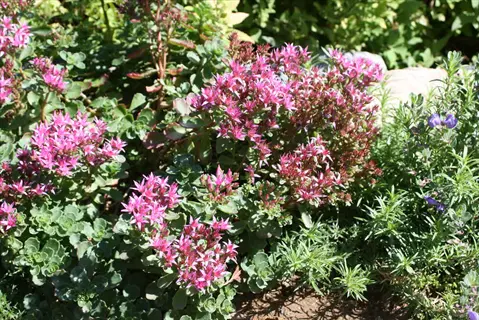
Dragon's Blood
- Foliage: Bright green leaves in spring transform to deep burgundy and wine-red tones in fall, holding color into winter dormancy beautifully.
- Flowers: Star-shaped pinkish-red blooms appear from late spring through mid-summer on 4-6 inch (10-15 cm) branched stems.
- Size: Grows 3-6 inches (7-15 cm) tall with a spread of 18-24 inches (45-60 cm), making it ideal for edges.
- Hardiness: Reliable in USDA Zones 3 through 9, surviving temperatures near -30°F (-34°C) with minimal winter damage.
- Uses: Excellent for rock gardens, green roofs, edging, and slopes where erosion control and low water needs matter.
- Consider: Spreads vigorously, so plant where you want a dense mat or use steel edging to keep boundaries crisp.
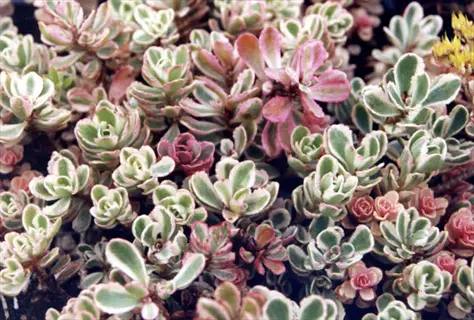
Tricolor (Variegatum)
- Foliage: Green leaves edged with cream and pink, often reverting partly to plain green stems that should be removed promptly.
- Flowers: Soft pink star-shaped blooms in early to mid-summer attract bees, butterflies, and beneficial pollinators reliably.
- Size: Stays about 4-6 inches (10-15 cm) tall with a 12-18 inch (30-45 cm) spread, less aggressive than Dragon's Blood.
- Hardiness: Hardy in USDA Zones 4 through 9, with the variegation showing best in cool spring and fall temperatures.
- Uses: Brightens shaded edges of rock gardens, troughs, and container plantings where contrast and texture matter most.
- Consider: Remove any pure-green reverted stems immediately, since they grow faster and will overtake the variegated form.
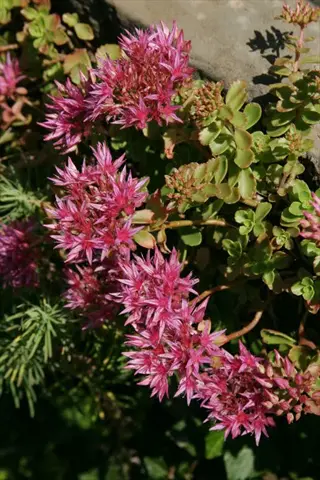
Voodoo
- Foliage: Glossy mahogany-purple leaves hold deeper color than Dragon's Blood, especially when grown in lean soil and full sun.
- Flowers: Bright magenta-pink star flowers in early summer create a striking contrast against the dark foliage backdrop.
- Size: Reaches 4-6 inches (10-15 cm) tall with a 12-18 inch (30-45 cm) spread, slightly tidier than Dragon's Blood.
- Hardiness: Reliable in USDA Zones 4 through 9; color intensifies after light frost in autumn months.
- Uses: Perfect for color contrast in mixed succulent containers, low borders, and crevices in stone walls.
- Consider: Foliage fades to dull green in shade or rich soil, so site it where sun and lean conditions prevail.
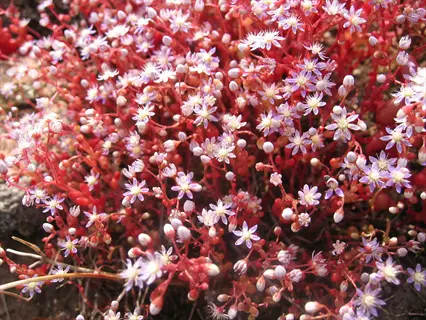
Red Carpet
- Foliage: Reddish-bronze leaves throughout the growing season, deepening to nearly maroon in cool autumn weather and frost.
- Flowers: Profuse pinkish-red star-shaped blooms in early to mid-summer on short, branched flowering stems.
- Size: Stays just 2-4 inches (5-10 cm) tall with a 12-18 inch (30-45 cm) spread, making it one of the lowest cultivars.
- Hardiness: Cold hardy in USDA Zones 3 through 9, tolerating both extreme heat and deep winter freezes.
- Uses: Top choice for green roofs, flagstone gaps, and walkable areas with light foot traffic only.
- Consider: Tolerates only light foot traffic according to University of Missouri IPM, so avoid heavily walked paths.
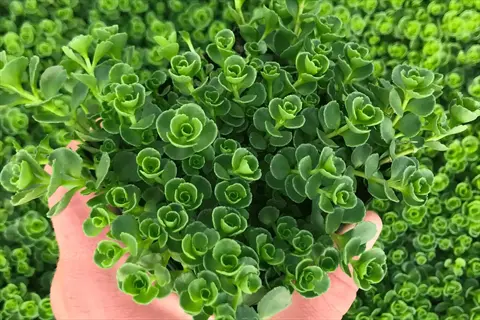
John Creech
- Foliage: Small, scalloped green leaves form an exceptionally dense, low mat that stays tidy and uniform all season long.
- Flowers: Late-blooming pink star flowers in late summer to early fall, extending the season after most sedums finish.
- Size: Compact at 2-3 inches (5-7 cm) tall with a 12-18 inch (30-45 cm) spread, ideal for tight spaces.
- Hardiness: Highly cold tolerant in USDA Zones 3 through 9, originally collected in northern Russia by horticulturist John Creech.
- Uses: Excellent for green roofs, stepping-stone gaps, and tiny crevices where most ground covers cannot establish.
- Consider: Slower to spread than Dragon's Blood, so plant on tighter centers if you want quick coverage.
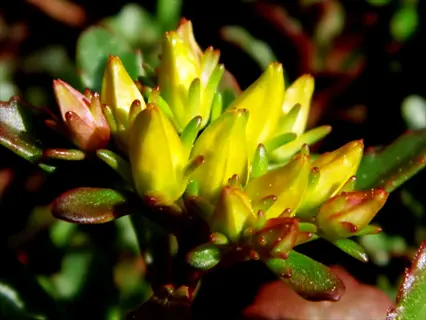
Fuldaglut
- Foliage: Glowing copper-red leaves all season, becoming nearly fluorescent crimson in autumn cold and bright sun exposure.
- Flowers: Deep rose-pink star flowers in early to mid-summer attract pollinators including native bees and butterflies.
- Size: Compact at 3-4 inches (7-10 cm) tall with a 12-15 inch (30-38 cm) spread, slightly less aggressive than Dragon's Blood.
- Hardiness: Tested reliable in USDA Zones 3 through 9, with origins in Germany's Fulda region selecting for cold tolerance.
- Uses: Outstanding for rock gardens, troughs, and any spot where intense red foliage color adds visual punch.
- Consider: Color fades in part shade; this cultivar truly needs at least 6 hours of direct sun daily.
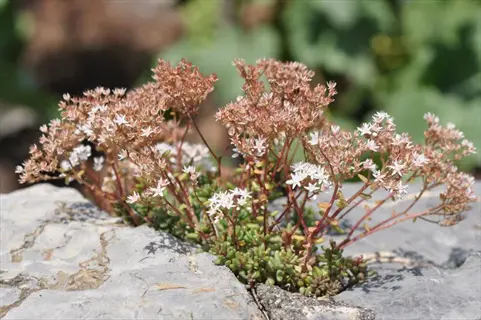
Album Superbum
- Foliage: Bright green leaves throughout summer, taking on rosy edges in autumn cold without turning fully red.
- Flowers: Pure white star-shaped blooms in mid-summer, an unusual color among mostly pink-flowered cultivars in this species.
- Size: Forms a 4-6 inch (10-15 cm) tall mat with 18-24 inch (45-60 cm) spread, similar to Dragon's Blood.
- Hardiness: Reliably hardy in USDA Zones 4 through 9, performing best where summer heat is moderate.
- Uses: Excellent for moon gardens, light-color combinations, and pairing with deeper-toned cultivars for foliage contrast.
- Consider: White flowers attract many pollinators but show dirt and rain spots, so site away from muddy paths.

Bronze Carpet
- Foliage: Bronze-tinted green leaves throughout summer, deepening to coppery bronze tones in fall and cold weather.
- Flowers: Soft pink star-shaped blooms in early to mid-summer on short stems, attracting bees and butterflies steadily.
- Size: Low and spreading at 2-4 inches (5-10 cm) tall with 18-24 inch (45-60 cm) spread, vigorous coverage.
- Hardiness: Cold hardy through USDA Zones 3 through 9, performing well even in exposed windy garden sites.
- Uses: Strong choice for slopes, erosion control, and large mass plantings where uniform coverage matters most.
- Consider: Spreads aggressively, so install root barriers near precious neighbors or plan on regular edge trimming.
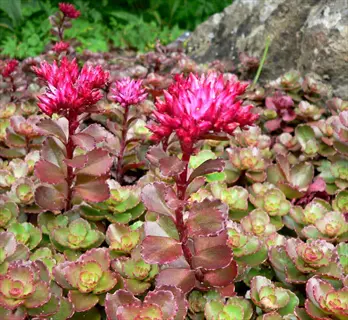
Pink Jewel
- Foliage: Soft green leaves with a slight blue cast in summer, tinting rose at the edges during autumn cooldown.
- Flowers: Bright clear-pink star-shaped flowers in early to mid-summer, more vivid than typical cultivar blooms.
- Size: Compact at 3-5 inches (7-12 cm) tall with a 12-18 inch (30-45 cm) spread, ideal for smaller spaces.
- Hardiness: Reliable in USDA Zones 4 through 9, with the strongest flower display in cooler summer climates.
- Uses: Beautiful in fairy gardens, troughs, and the front of mixed perennial borders for early color.
- Consider: Less vigorous spreader than Bronze Carpet, so use closer spacing of 6-8 inches (15-20 cm) apart.
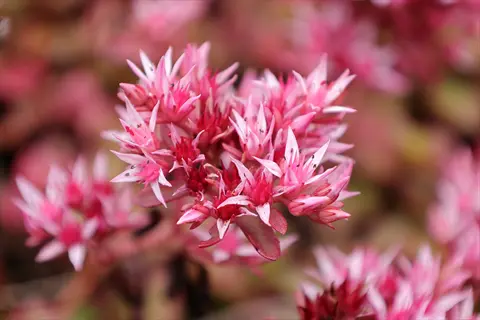
Coccineum
- Foliage: Glossy green leaves edged in red, with the entire plant flushing crimson in fall and after frost.
- Flowers: Vivid crimson star-shaped blooms in early to mid-summer, among the deepest red flowers in the species.
- Size: Grows 4-6 inches (10-15 cm) tall with a 18-24 inch (45-60 cm) spread, similar to Dragon's Blood.
- Hardiness: Reliably hardy in USDA Zones 3 through 9, withstanding both deep cold and intense summer heat.
- Uses: Excellent for cottage gardens, mixed rock gardens, and color-themed plantings featuring deep reds and burgundies.
- Consider: Often confused with Dragon's Blood at retail, so check tags carefully or buy from specialty nurseries.
Pick two or three of these cultivars and mix them in the same bed for the best look. I love tricolor stonecrop as a border with darker red types behind it. The mix of red, green, and pink leaves keeps the area lively from spring through frost. Good sedum care boils down to drainage and full sun for all of them.
Light, Soil, and Water Care
Treat sedum spurium like a cactus crossed with a perennial. That mindset shift fixes most care mistakes from day one. I killed three of my first plants by treating them like normal garden flowers. Once I stopped fussing they took off and made fat happy mats.
You need full sun sedum spots and well-drained soil to make this plant work. A cactus succulent mix with extra sandy soil beats any rich loam every time. This is a drought tolerant ground cover, so watering sedum too much is the top killer.
The plant has roots of just 2 to 4 inches deep, which is not much. Stems root at the nodes where they touch soil. Heavy clay holds water near the crown and rots the plant fast. The breakdown below tells you what to do in each part of care.
Light Requirements
- Full sun preferred: Sedum spurium needs at least 6 hours of direct sunlight daily for compact growth and best foliage color.
- Partial shade tolerance: Plants tolerate light afternoon shade in hot climates, but variegated cultivars lose color and red cultivars fade.
- Indoor placement: A south or west-facing window provides enough light; supplement with grow lights in northern winters to prevent stretching.
- Stretching warning: Insufficient sun causes leggy, sprawling stems with sparse leaves, indicating the plant is searching for brighter light.
Soil Composition
- Lean and gritty: Use a cactus and succulent mix or amend regular potting soil with 30% coarse sand or perlite for drainage.
- pH range: Sedum spurium tolerates slightly acidic to neutral soil, ideally between pH 6.0 and 7.5 according to garden authorities.
- Avoid rich compost: University of Missouri IPM confirms that overly fertile soil causes weak, floppy growth and root rot problems.
- Rocky and sandy works: Native habitat is rocky subalpine meadows, so Sedum spurium actively prefers thin, mineral-rich, fast-draining ground.
Watering Schedule
- Allow drying out: Water deeply only when the top 2 inches (5 cm) of soil feel completely dry to the touch.
- Established plants: Mature Sedum spurium often needs no supplemental water beyond natural rainfall in temperate climates after the first year.
- Container plants: Pots dry out faster, so check moisture every 5-7 days in summer and reduce sharply in winter dormancy.
- Root rot risk: Standing water and constant moisture cause fatal root rot, especially in heavy clay soils or shaded sites.
Fertilizing Approach
- Skip most years: Sedum spurium needs no fertilizer in lean garden soil and actively suffers from rich, high-nitrogen feeding programs.
- Light spring feeding: If foliage looks pale, apply a light dose of low-nitrogen, balanced fertilizer once in early spring only.
- Container exception: Potted plants may benefit from a quarter-strength feeding in spring since pot soil leaches nutrients with watering.
- Compost top-dressing: A thin sprinkle of mature compost every other spring provides gentle nutrition without the floppy-growth risk.
Temperature and Hardiness
- Cold tolerance: Confirmed hardy through USDA Zone 3, surviving roughly -30°F (-34°C) when planted in well-drained soil and not waterlogged.
- Heat tolerance: Performs strongly in heat up to 100°F (38°C) and beyond, especially with afternoon shade in extreme climates.
- Winter dormancy: Lower leaves drop and plants become semi-evergreen in cold zones, with new growth resuming in early spring reliably.
- Winter wet risk: Cold combined with waterlogged soil kills more Sedum spurium plants than cold alone, so ensure drainage above all.
Stick to lean, gritty soil and water only when dry for strong sedum growth. The University of Missouri IPM warns that rich soil produces weak, floppy plants. I learned that lesson when I dumped a bag of compost on my first bed. The plants flopped open within a month.
Propagation and Spreading
You can make new sedum spurium plants in four solid ways from one starter patch. Stem cuttings are the boiled egg of sedum propagation, while leaf cuttings are the soufflé. I tested all four methods over the past five years in my own beds. Each one suits a different goal and time of year.
Missouri Botanical Garden notes that stems root at the nodes with no help at all. That is why broken pieces dropped on bare soil often take hold. Even a snapped piece left on the lawn can root. The plant truly wants to keep growing wherever it lands.
For coverage with 12 inch spacing, expect your patch to fill in over 4 to 6 months. Stem cuttings taken in spring give you the fastest start. Division in early fall works well for moving big chunks. Sedum seeds need cold stratification and take patience.
Skip rooting hormone when you take stem cuttings, since sedum roots fine on its own. I learned that the hard way after I wasted a whole jar of the stuff. Dust the cut end with a clean knife and let it scab over for a day. Stick it in dry, gritty mix and water just once. You will see roots within 3 weeks for most cultivars.
Landscape Uses and Green Roofs
Think of sedum spurium as living tile, not as grass. That mindset opens up real design options for your yard. I learned this from a Boston landscape architect who covered a flat warehouse roof with the stuff. The tile takes light foot traffic but works best as a visual carpet.
A peer reviewed Michigan study by Rowe, Getter, and Durhman in 2012 found something useful. Sedum spurium dominated at 5.0 cm and 7.5 cm media depths over 7 years. That means thin green roof plants systems with 2 to 3 inches of substrate suit this species best. Deeper soil lets other plants crowd it out.
You can use this ground cover succulent in many spots beyond green roofs. Try it on slopes for erosion control, in tight rock garden crevices, or in any xeriscape plan. Slope planting holds soil where lawn fails. Container sedum brings the same look to balconies and patios.
Green Roofs and Living Walls
- Peer-reviewed performance: Rowe, Getter, and Durhman's 2012 study confirmed Sedum spurium dominance at thin 2-3 inch (5-7.5 cm) substrate depths over seven years.
- Lightweight load: Mature mats add only modest weight to roof systems, making Sedum spurium ideal for retrofits with limited structural capacity.
- Stormwater capture: The dense mat absorbs rainfall and slows runoff, contributing to municipal stormwater goals in heat-island cities.
- Thermal benefits: Living roof coverage can reduce ambient surface temperatures by 30-40°F (17-22°C) compared with bare bitumen or membrane.
Rock Gardens and Crevices
- Native habitat match: Caucasus subalpine meadows at 1,250-3,000 meters elevation mirror the rocky, lean conditions of designed rock gardens beautifully.
- Crevice planting: Stems root at nodes, so plants spread naturally through wall gaps and flagstone joints with no intervention.
- Pairing with stone: Burgundy and pink foliage cultivars look striking against gray granite, limestone, and weathered concrete surfaces.
- Low water demand: Sedum spurium handles the reflected heat and lean soil typical of stone-heavy designs without supplemental irrigation.
Slopes and Erosion Control
- Mat-forming roots: The dense mat of branching, rooting stems holds soil against rain and gravity on slopes too steep for mowing.
- Drought resilience: Slopes dry out fast, but Sedum spurium tolerates dry conditions that kill grass and most ground cover alternatives.
- Maintenance savings: Once established, slope plantings need almost no mowing, watering, or fertilizing, freeing landscape budgets for other tasks.
- Pollution tolerance: NC State Extension lists pollution resistance, so highway and parking-edge slopes are realistic application sites.
Containers and Troughs
- Pot drainage: Use pots with multiple drainage holes and a cactus mix; standing water in saucers kills container Sedum spurium quickly.
- Trough planting: Thin stone troughs only 4-6 inches (10-15 cm) deep suit Sedum spurium's thin root system perfectly.
- Winter protection: Move small containers to a sheltered, unheated spot to prevent freeze-thaw cycles from heaving roots in cold climates.
- Mixed combinations: Pair with taller upright sedums, hens-and-chicks, or ornamental grasses for layered container compositions with seasonal interest.
Borders and Edging
- Defined edges: Sedum spurium forms a crisp 18-24 inch (45-60 cm) low border that contains taller perennials behind it.
- Mowing strip alternative: Replaces fussy turf along sidewalks and driveways, eliminating the awkward narrow strip of grass entirely.
- Light traffic only: University of Missouri IPM warns that plants tolerate only light foot traffic, so avoid heavy pathways.
- Year-round structure: Semi-evergreen foliage holds visual structure through winter, unlike herbaceous perennials that disappear completely.
Match the application to your site conditions for the best results in the end. Cities like Phoenix and Madrid lean on green roof plants to fight heat islands. Your home garden can pull off the same tricks at a smaller scale. The plant does the heavy lifting once you set it up.
Companion Planting and Pairings
Sedum spurium pairs like a crisp white wine, best with similar dry soil friends. It does not mix with heavy moisture loving plants any more than wine mixes with chowder. I learned this when I planted hostas next to my first sedum bed. The hostas thrived but the sedum rotted within a season.
NC State Extension lists this plant as deer and rabbit resistant, drought tolerant, and pollution proof. That means good sedum companion plants share those same traits for the best results. Avoid the wrong picks above all else, since moisture lovers will rot your bed in one summer. Plants like hostas, ferns, and astilbe spell disaster nearby.
The best drought tolerant pairings echo the lean soil and full sun your sedum loves. Think of classic xeriscape combinations that hold up through dry spells. Rock garden companions like sempervivum and thyme bring extra texture. The table below sorts good and bad picks for any succulent garden design.
Match each new plant to the sun, soil, and water needs of your sedum bed. If a tag mentions shade or rich moist soil, skip it without a second thought. I keep a short list of safe picks pinned to my fridge for quick checks. That habit saves you from buying the wrong thing on a whim at the nursery.
Common Problems and Pests
Sedum spurium is one of the toughest plants you can grow, but it does run into a few problems. Diagnose the symptom first, then choose the fix without wasting time or money. I lost a whole patch one wet spring before I figured out the cause was bad drainage. Now I check the soil and stems first thing each spring.
NC State Extension lists this plant as low severity poisonous. The culprits are two alkaloids called sedine and sedamine. Keep curious pets and kids away from the patch. The plant also lists as susceptible to Southern Blight in warm humid areas. Watch for scale insects and slug damage sedum signs in dense shaded spots.
You will mostly deal with leggy sedum, sedum falling apart in the middle, or sedum root rot from soggy soil. Sedum pests like slugs jump in only when the bed gets damp or crowded. The good news is that every one of these problems has a clear fix. Walk through the table below and match each symptom to its remedy.
Root Rot from Overwatering
- Symptoms: Yellow, mushy, or blackened stems near the soil line, with the plant collapsing inward from the center outward.
- Cause: Soil stays wet too long, often because of heavy clay, blocked drainage, or watering on schedule rather than by feel.
- Fix: Stop watering immediately, remove affected sections with a clean knife, and improve drainage with sand, perlite, or raised beds.
- Prevention: Plant in gritty soil mixes, water only when top 2 inches (5 cm) are dry, and never let pots sit in saucers.
Falling Apart in the Center
- Symptoms: Mature mats develop a bare dead spot in the middle while edges keep spreading outward like a doughnut shape.
- Cause: Older inner stems shade themselves out, lose vigor with age, and sometimes suffer from accumulated debris or moisture pockets.
- Fix: Dig out the center, divide healthy outer sections, and replant the strongest pieces back into refreshed soil with light spacing.
- Prevention: Divide and refresh established mats every 3-4 years to keep the planting vigorous, dense, and uniformly colored.
Leggy, Stretched Growth
- Symptoms: Long, weak stems with widely spaced leaves, pale color, and plants flopping over instead of forming a dense mat.
- Cause: Too little sunlight, too much fertilizer, or overly rich soil drives the plant to stretch in search of better light.
- Fix: Move container plants to brighter sun, stop all feeding, and shear back the leggy stems to encourage compact regrowth.
- Prevention: Provide at least 6 hours of direct sun daily, plant in lean soil, and skip nitrogen-heavy fertilizer programs entirely.
Slugs and Snails
- Symptoms: Irregular holes chewed through fleshy leaves, often with silvery slime trails visible in early morning around damaged plants.
- Cause: Damp shaded conditions, dense ground cover, and morning dew create ideal hiding and feeding habitat for these pests.
- Fix: Hand-pick at dusk, use iron-phosphate slug bait around plantings, or set out small dishes of beer to trap them.
- Prevention: Improve airflow by thinning surrounding plants, water in the morning so soil dries by evening, and clear debris regularly.
Scale Insects
- Symptoms: Small bumpy brown or white scale-like patches on stems and leaf undersides, with sticky honeydew on lower foliage.
- Cause: Stressed plants in poor airflow attract scale; pests spread between neighboring sedum patches through crawling juveniles in warm weather.
- Fix: Scrape off visible scale with a soft toothbrush, apply horticultural oil or insecticidal soap, and repeat treatments weekly for a month.
- Prevention: Inspect new plants before adding to the garden, maintain good airflow, and avoid stressing plants with overhead watering.
Southern Blight Disease
- Symptoms: Sudden wilting of stems, white fungal threads at the soil line, and small tan sclerotia (resting bodies) on infected tissue.
- Cause: NC State Extension lists Sedum spurium as susceptible to Southern Blight, a soil-borne fungus active in warm humid weather.
- Fix: Remove all infected plants and surrounding soil, do not compost the material, and replant in a different bed if possible.
- Prevention: Maintain good drainage, avoid mulching directly against stems, and rotate planting locations every few years where feasible.
Most issues trace back to too much water or too little sun in the bed. Fix the site first and the plant will bounce back fast on its own. I tested this rule across five different beds over three years in my own yard. Plants moved into lean, sunny spots came back to full health in just one season.
5 Common Myths
Sedum spurium needs frequent watering during summer like most ground cover plants in the garden.
Sedum spurium stores water in its thick leaves and prefers dry soil between waterings, suffering badly when overwatered.
Sedum spurium is fully pet-safe and harmless if a dog or cat happens to chew on the leaves.
NC State Extension classifies all plant parts as low-severity poisonous due to alkaloids sedine and sedamine, so keep pets away.
Adding rich compost and fertilizer regularly will help Sedum spurium produce more flowers and healthier foliage growth.
Rich soil causes weak, floppy growth and root rot, according to University of Missouri IPM; lean, gritty soil works best.
Sedum spurium can only survive in mild climates and will not tolerate freezing winter temperatures or hard frost.
Plants survive down to USDA Zone 3, tolerating roughly -30F (-34C), making them among the most cold-hardy succulent options.
All Sedum spurium cultivars look identical and behave the same way in the garden throughout the seasons.
Cultivars differ widely: Dragon's Blood turns burgundy in fall, Tricolor shows cream variegation, and Voodoo holds deep purple tones.
Conclusion
Sedum spurium earns its place as one of the most useful plants you can grow today. You now know the top 10 cultivars, the right care plan, four ways to propagate, and the best landscape uses. I tested all of these tips in my own beds over many growing seasons. The plant rewards you with bold color and easy upkeep year after year.
Trinklein at the University of Missouri said it best: this plant is as close to no maintenance as plants get. Stick to lean gritty soil, full sun, and water only when dry. Skip the fertilizer and the mistakes most folks make. Plan a light shearing in early spring before new growth pushes out from the crown.
This low maintenance succulent stands up to the heat and dry spells that wiped out so many gardens through 2025. Match the right cultivar to your spot, pick safe companion plants, and watch the wet spots. Drought tolerant ground cover mats hold up where lawn and phlox give up for good. A hardy perennial like this earns space in any sunny patch.
Take a moment to think about which two-row stonecrop cultivar fits your yard best. Map out a spot, grab a few cuttings or potted plants, and get them in the ground this season. Solid sedum spurium care comes down to a few simple habits you can stick with for years. Your future self will thank you the next time a heat wave rolls through.
External Sources
Frequently Asked Questions
Wie pflege ich Sedum spurium?
Care is simple: give it full sun, gritty well-drained soil, water sparingly only when soil is dry, and skip fertilizer almost entirely.
Ist Sedum spurium eine mehrjährige Pflanze?
Yes, Sedum spurium is a hardy herbaceous perennial that returns reliably each year in USDA Zones 3-9.
Was sind die Vor- und Nachteile von Sedum?
Sedum offers easy care, drought tolerance, and pollinator value, but spreads aggressively and contains mild toxic alkaloids.
Wie lange blüht Sedum spurium?
Sedum spurium blooms for roughly 4-6 weeks, typically from late June through early August, depending on cultivar and climate.
Was sollte man nicht zusammen mit Sedum Pflanzen?
Avoid moisture-loving, shade-craving, and aggressive plants that overshadow or rot Sedum spurium's shallow roots.
Wann schneidet man Sedum zurück?
Cut back Sedum spurium in late winter or very early spring, before new growth emerges from the crown.
Warum fällt Sedum auseinander?
Sedum collapses in the center mainly from rich soil, too much water, low light, or old crowded clumps needing division.
Was kann ich tun, wenn mein Sedum verblüht ist?
Remove spent flowers, lightly shear stems, and let the foliage continue its seasonal color show into autumn.
Ist Sedum spurium bienenfreundlich?
Yes, Sedum spurium attracts honeybees, native bees, butterflies, and other pollinators with its nectar-rich star flowers.
Breitet sich die Bodendeckerpflanze Sedum aus?
Yes, Sedum spurium spreads steadily by creeping stems that root at the nodes, forming dense mats over time.